

Cereals, oats, instant, fortified, plain, dry
Whole food · Breakfast Cereals

Photo: Wikipedia
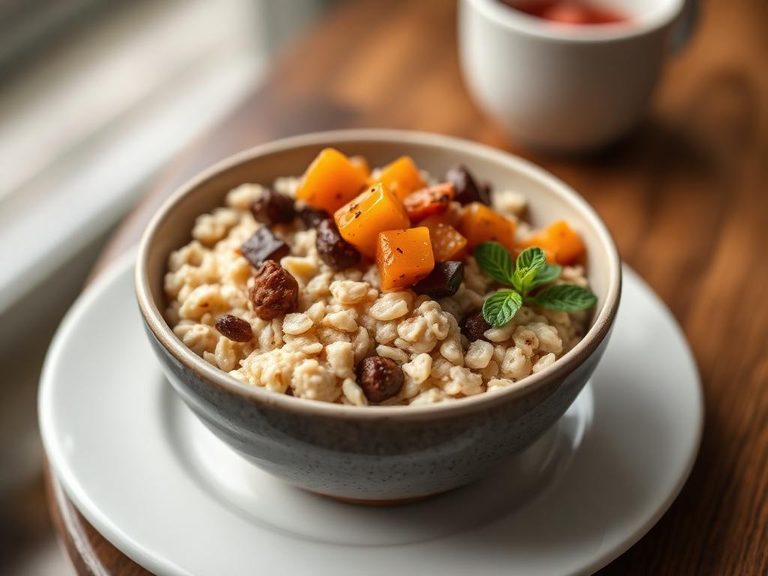
Instant fortified oats are pre-cooked, rolled, and dried oat flakes designed for a near-instant, creamy hot cereal. They have a mild, slightly nutty flavor and a soft, porridge-like texture when prepared. Nutritionally, they offer a high-fiber, moderate-protein base with added vitamins and minerals.
Calorie split: 12% protein · 72% carbs · 16% fat
↓ Full nutrition💚 Why it's loved
People love it for its comforting, warm simplicity and the ability to create a hearty, customizable breakfast in under two minutes. Its mild flavor makes it a perfect canvas for both sweet and savory toppings.
⚠️ Watch-outs & how to enjoy it better
The rapid processing can lead to a higher glycemic index than steel-cut oats, potentially causing quicker blood sugar spikes. Some brands contain added sugars or high sodium. To counteract this, always pair with protein (like nuts, yogurt, or an egg) and healthy fats (like seeds or nut butter) to slow digestion and stabilize energy.
Key benefits
- Excellent source of soluble fiber (beta-glucan) for heart health.
- Fortified with essential vitamins like iron, B vitamins, and zinc.
- Provides sustained energy from complex carbohydrates.
- High in plant-based protein (11.92g per 100g dry).
- Convenient, quick-cooking base for a nutritious meal.
🍽️ Popular dishes
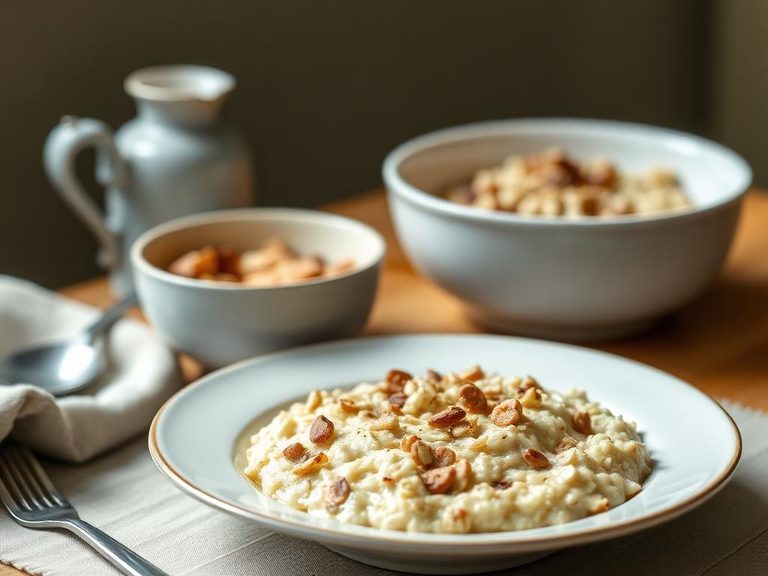
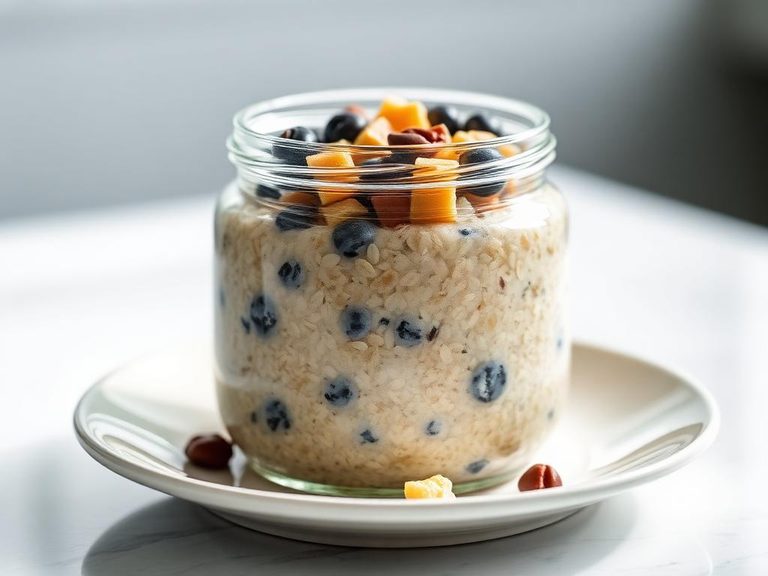
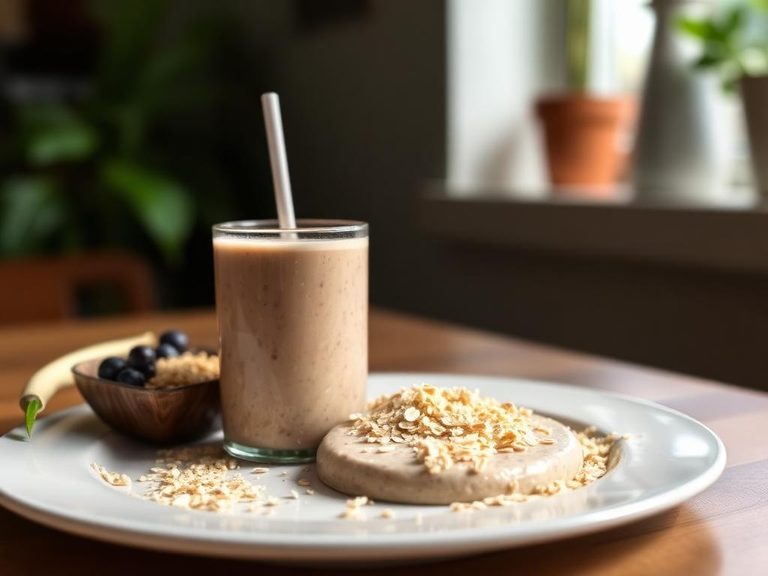
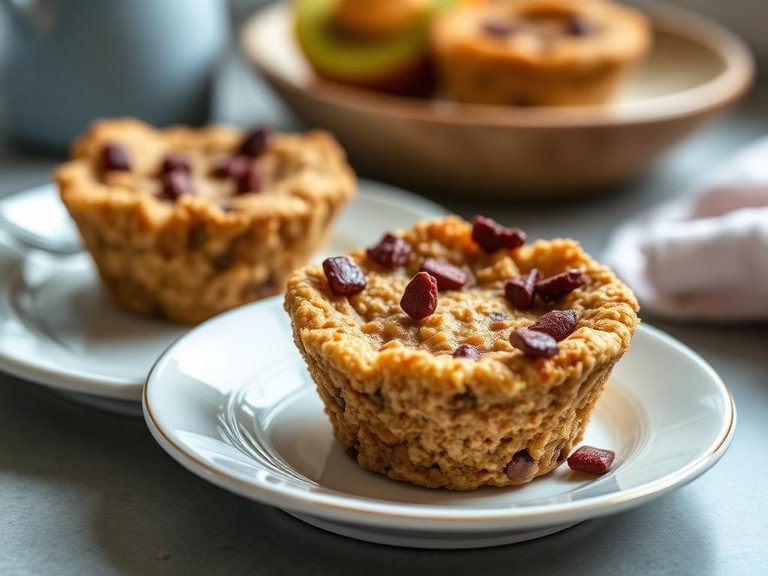

🌍 Where it's eaten
💡 Did you know?
The fortification process for instant oats often adds back nutrients lost during the rapid-cooking dehydration, sometimes making them more nutrient-dense per calorie than their less-processed counterparts.
Full nutrition (USDA data · scales with serving)
| Water | 8.9 g |
| Energy | 362 kcal |
| Energy | 1515 kj |
| Protein | 11.9 g |
| Total lipid (fat) | 6.9 g |
| Ash | 2.8 g |
| Carbohydrate, by difference | 69.5 g |
| Fiber, total dietary | 10.0 g |
| Total Sugars | 1.5 g |
| Sucrose | 1.0 g |
| Glucose | 0.10 g |
| Fructose | 0.10 g |
| Lactose | 0.10 g |
| Maltose | 0.10 g |
| Galactose | 0.10 g |
| Starch | 56.6 g |
| Calcium, Ca | 351 mg |
| Iron, Fe | 24.7 mg |
| Magnesium, Mg | 128 mg |
| Phosphorus, P | 423 mg |
| Potassium, K | 366 mg |
| Sodium, Na | 220 mg |
| Zinc, Zn | 2.5 mg |
| Copper, Cu | 0.36 mg |
| Manganese, Mn | 3.4 mg |
| Selenium, Se | 23.2 ug |
| Vitamin C, total ascorbic acid | 0.00 mg |
| Thiamin | 0.45 mg |
| Riboflavin | 0.05 mg |
| Niacin | 1.0 mg |
| Pantothenic acid | 1.2 mg |
| Vitamin B-6 | 0.08 mg |
| Folate, total | 32.0 ug |
| Folic acid | 0.00 ug |
| Folate, food | 32.0 ug |
| Folate, DFE | 32.0 ug |
| Choline, total | 27.7 mg |
| Betaine | 25.4 mg |
| Vitamin B-12 | 0.00 ug |
| Vitamin B-12, added | 0.00 ug |
| Vitamin A, RAE | 772 ug |
| Retinol | 772 ug |
| Carotene, beta | 0.00 ug |
| Carotene, alpha | 0.00 ug |
| Cryptoxanthin, beta | 0.00 ug |
| Vitamin A, IU | 2574 iu |
| Lycopene | 0.00 ug |
| Lutein + zeaxanthin | 0.00 ug |
| Vitamin E (alpha-tocopherol) | 0.51 mg |
| Vitamin E, added | 0.00 mg |
| Tocopherol, beta | 0.20 mg |
| Tocopherol, gamma | 0.00 mg |
| Tocopherol, delta | 0.00 mg |
| Tocotrienol, alpha | 1.0 mg |
| Tocotrienol, beta | 0.15 mg |
| Tocotrienol, gamma | 0.00 mg |
| Tocotrienol, delta | 0.00 mg |
| Vitamin D (D2 + D3), International Units | 0.00 iu |
| Vitamin D (D2 + D3) | 0.00 ug |
| Vitamin K (phylloquinone) | 1.9 ug |
| Alcohol, ethyl | 0.00 g |
| Caffeine | 0.00 mg |
| Theobromine | 0.00 mg |
Fat & fatty acid profile (per 100g)
| Fatty acids, total saturated | 1.3 g |
| SFA 4:0 | 0.00 g |
| SFA 6:0 | 0.00 g |
| SFA 8:0 | 0.00 g |
| SFA 10:0 | 0.00 g |
| SFA 12:0 | 0.00 g |
| SFA 14:0 | 0.01 g |
| SFA 15:0 | 0.00 g |
| SFA 16:0 | 1.2 g |
| SFA 17:0 | 0.00 g |
| SFA 18:0 | 0.11 g |
| SFA 20:0 | 0.01 g |
| SFA 22:0 | 0.00 g |
| SFA 24:0 | 0.01 g |
| Fatty acids, total monounsaturated | 2.3 g |
| MUFA 14:1 | 0.00 g |
| MUFA 15:1 | 0.00 g |
| MUFA 16:1 | 0.01 g |
| MUFA 16:1 c | 0.01 g |
| MUFA 17:1 | 0.00 g |
| MUFA 18:1 | 2.3 g |
| MUFA 18:1 c | 2.3 g |
| MUFA 20:1 | 0.05 g |
| MUFA 22:1 | 0.01 g |
| MUFA 22:1 c | 0.01 g |
| MUFA 24:1 c | 0.00 g |
| Fatty acids, total polyunsaturated | 2.5 g |
| PUFA 18:2 | 2.4 g |
| PUFA 18:2 n-6 c,c | 2.4 g |
| PUFA 18:2 CLAs | 0.00 g |
| PUFA 18:3 | 0.07 g |
| PUFA 18:3 n-3 c,c,c (ALA) | 0.07 g |
| PUFA 18:3 n-6 c,c,c | 0.00 g |
| PUFA 18:4 | 0.00 g |
| PUFA 20:2 n-6 c,c | 0.00 g |
| PUFA 20:3 | 0.00 g |
| PUFA 20:3 n-3 | 0.00 g |
| PUFA 20:3 n-6 | 0.00 g |
| PUFA 20:4 | 0.00 g |
| PUFA 20:5 n-3 (EPA) | 0.00 g |
| PUFA 22:4 | 0.00 g |
| PUFA 22:5 n-3 (DPA) | 0.00 g |
| PUFA 22:6 n-3 (DHA) | 0.00 g |
| Fatty acids, total trans | 0.02 g |
| Fatty acids, total trans-monoenoic | 0.01 g |
| TFA 16:1 t | 0.00 g |
| TFA 18:1 t | 0.01 g |
| TFA 22:1 t | 0.00 g |
| TFA 18:2 t not further defined | 0.01 g |
| Fatty acids, total trans-polyenoic | 0.01 g |
| Cholesterol | 0.00 mg |
Amino acid profile (per 100g)
| Tryptophan | 0.18 g |
| Threonine | 0.37 g |
| Isoleucine | 0.49 g |
| Leucine | 0.96 g |
| Lysine | 0.68 g |
| Methionine | 0.21 g |
| Cystine | 0.43 g |
| Phenylalanine | 0.66 g |
| Tyrosine | 0.38 g |
| Valine | 0.70 g |
| Arginine | 0.84 g |
| Histidine | 0.28 g |
| Alanine | 0.56 g |
| Aspartic acid | 1.2 g |
| Glutamic acid | 2.7 g |
| Glycine | 0.63 g |
| Proline | 0.39 g |
| Serine | 0.63 g |
FAQ
Are instant oats less healthy than rolled or steel-cut oats?
They have a similar core nutrition profile (fiber, protein, minerals). The main difference is texture and glycemic index due to processing. Instant oats digest faster, but pairing them with protein/fat mitigates this. Fortification can make them a more complete micronutrient source.
Why do instant oats sometimes taste mushier?
They are pre-cooked and rolled thinner to absorb water quickly, which breaks down more of the oat's structure, resulting in a softer, less chewy texture compared to steel-cut or old-fashioned rolled oats.
Can I use instant oats in baking?
Yes, but they will create a softer, more cake-like texture. They are excellent for muffins, pancakes, and energy bars where a fine, absorbent flour-like ingredient is desired. For chewier cookies, old-fashioned oats are typically preferred.
Nutrient density (calculated · NRF9.3)
Nutrient Rich Foods index: beneficial nutrients (protein, fiber, vitamins, minerals) minus saturated fat, added sugar & sodium, per 100 kcal.
NRF9.3 index — Fulgoni, Keast & Drewnowski, 2009. Computed from USDA nutrients.
Weight-loss friendliness (composite index)
Energy density 3.62 kcal/g · 13% calories from protein · 10.0 g fiber · 1.5 g sugar per 100 g.
Composite of energy density (Rolls et al., 1999), protein & fiber satiety, minus sugar. A calculated heuristic — ranks satiety-per-calorie, not a clinical measure.
Dietary load (calculated from USDA values)
Potential renal acid load. Positive = acid-forming, negative = alkaline-forming.
Sodium-to-potassium ratio: 0.60 (lower is better — aim for ≤ 1)
Sodium:potassium per WHO potassium guidance. Computed from USDA nutrients.