

Overnight oats
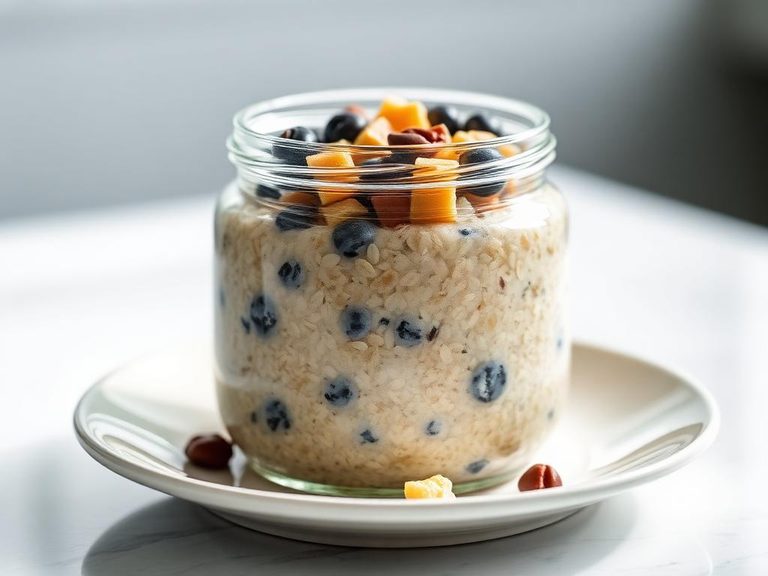
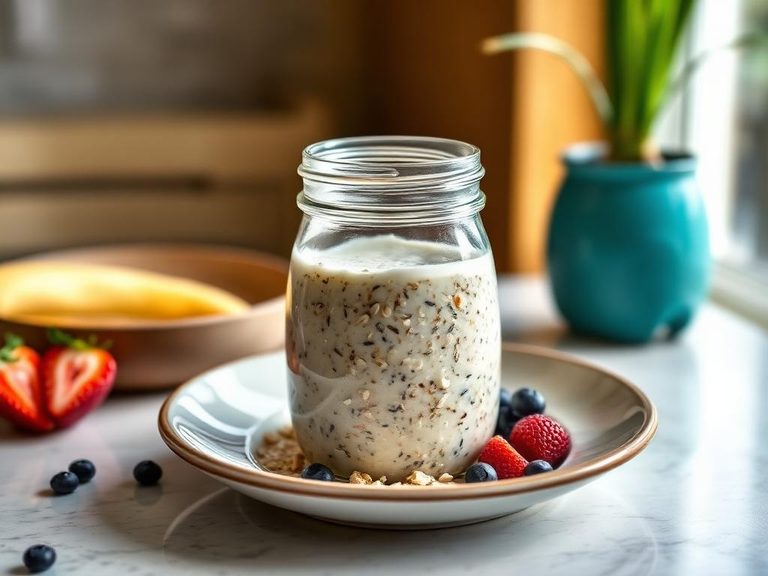
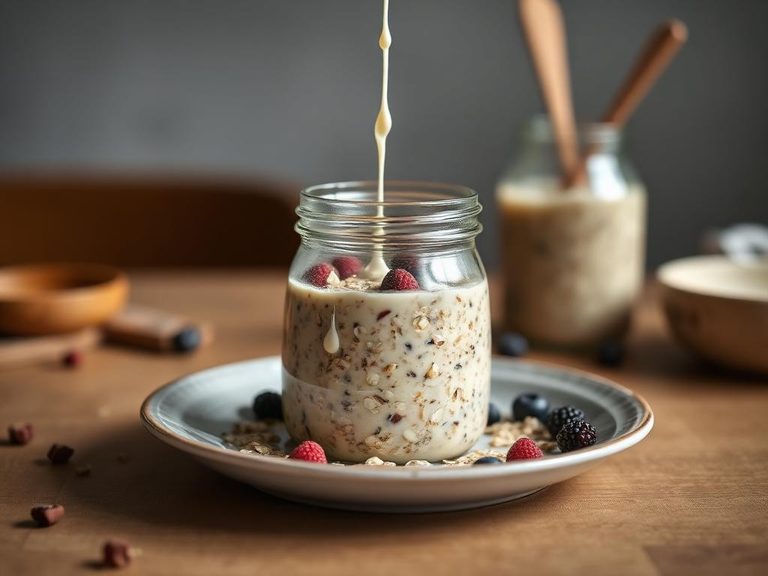
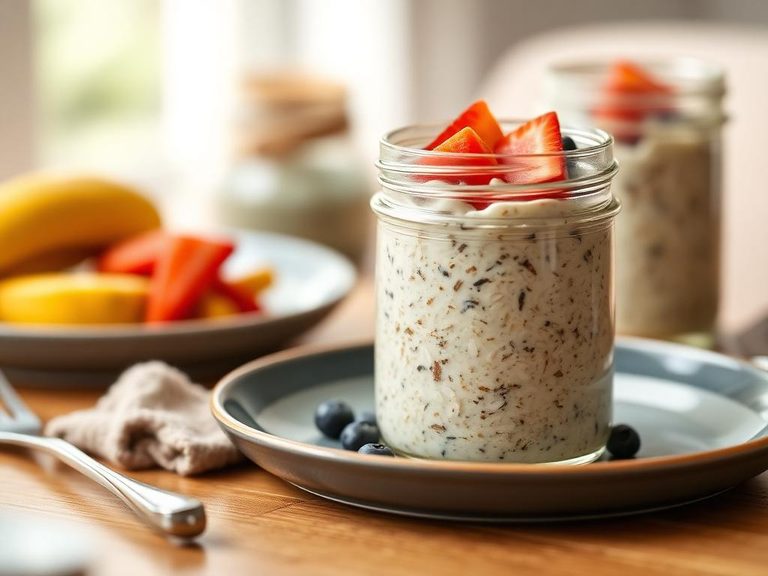
Overnight oats are a no-cook breakfast dish made by soaking rolled oats in liquid (like milk or yogurt) in the refrigerator overnight, allowing them to soften and thicken into a creamy, pudding-like consistency. Typical ingredients include oats, a liquid base, chia seeds for texture, and toppings like fresh fruit, nuts, or sweeteners. This preparation method has roots in traditional European and American oatmeal dishes but has become a modern, convenient health food trend.
🍳 View the full Overnight oats recipe →
🍽️ Nutrition at a glance
A standard serving is moderate in carbohydrates from the oats, with a good amount of fiber and plant-based protein, and can be adjusted for fat content depending on the milk or yogurt used. It provides key nutrients like beta-glucan (a soluble fiber), iron, and B vitamins, with a rough calorie ballpark of 300-400 per serving.
Nutrition breakdown
| Calories | 250 kcal |
| Protein | 10 g |
| Carbs | 42 g |
| Fat | 6 g |
| Fiber | 8 g |
| Sugar | 10 g |
| Sodium | 150 mg |
| Potassium | 350 mg |
| Magnesium | 120 mg |
| Phosphorus | 250 mg |
| Iron | 3 mg |
| Zinc | 2.5 mg |
| Manganese | 1.5 mg |
| Thiamin (B1) | 0.3 mg |
| Copper | 0.3 mg |
Per 1 cup (240 g) · estimated, varies by recipe
💡 What's interesting
Culturally, it represents a shift towards 'meal prep' and convenience in healthy eating, requiring no morning cooking. Nutritionally, the soaking process can make the oats' nutrients more bioavailable and may reduce cooking-related nutrient loss.
🍽️ Related dishes
AI estimate may be inaccurate · Terms