

Oats, whole grain, rolled, old fashioned
Whole food · Cereal Grains and Pasta
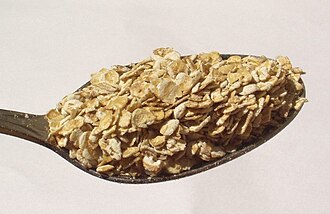
Photo: Wikipedia
Old-fashioned rolled oats are whole oat groats that have been steamed and flattened between large rollers, creating a flat, chewy flake. They have a mild, nutty, and slightly sweet flavor, and when cooked, they develop a creamy, hearty texture that is less mushy than instant oats. Nutritionally, they are a dense source of complex carbohydrates and plant-based protein, providing sustained energy.
Calorie split: 14% protein · 72% carbs · 14% fat
↓ Full nutrition💚 Why it's loved
People love their satisfying, chewy texture and the comforting, warm bowl they create, which feels like a wholesome start to the day. Their incredible versatility makes them a blank canvas for both sweet and savory flavors, from classic brown sugar to modern savory bowls.
⚠️ Watch-outs & how to enjoy it better
While nutritious, their high carbohydrate content can cause blood sugar spikes if eaten alone in large portions, especially for those with insulin sensitivity. To counteract this, always pair them with a source of protein (like nuts, seeds, or yogurt) and healthy fat (like nut butter or avocado) to slow digestion and stabilize blood sugar. Some may also have a mild gluten cross-contamination risk if processed in shared facilities.
Key benefits
- Excellent source of complex carbohydrates for steady energy
- Good plant-based protein content (13.5g per 100g dry)
- Rich in minerals like manganese, phosphorus, and magnesium
- Contains beta-glucan, a soluble fiber known for heart health benefits
- Provides a filling, low-glycemic base for meals
🍽️ Popular dishes
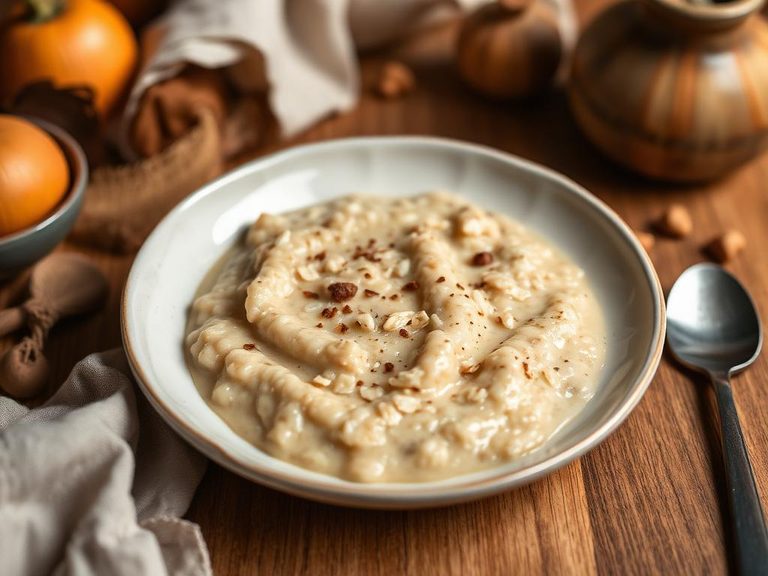
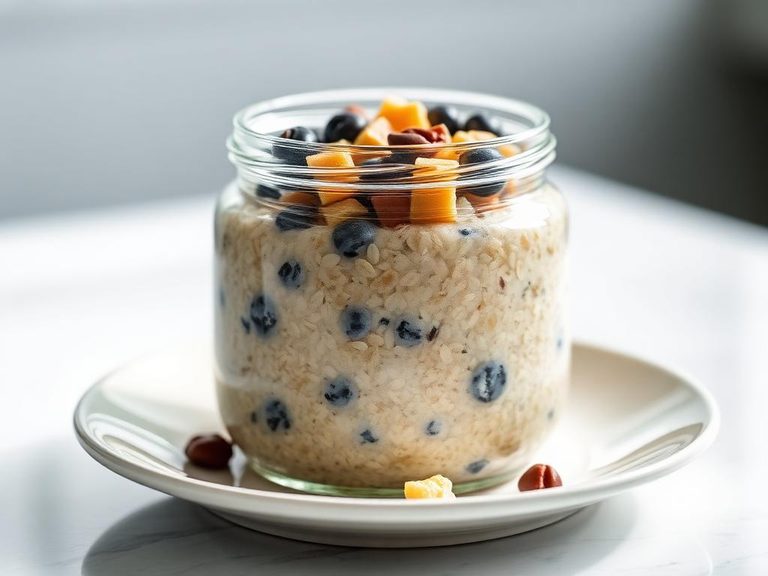
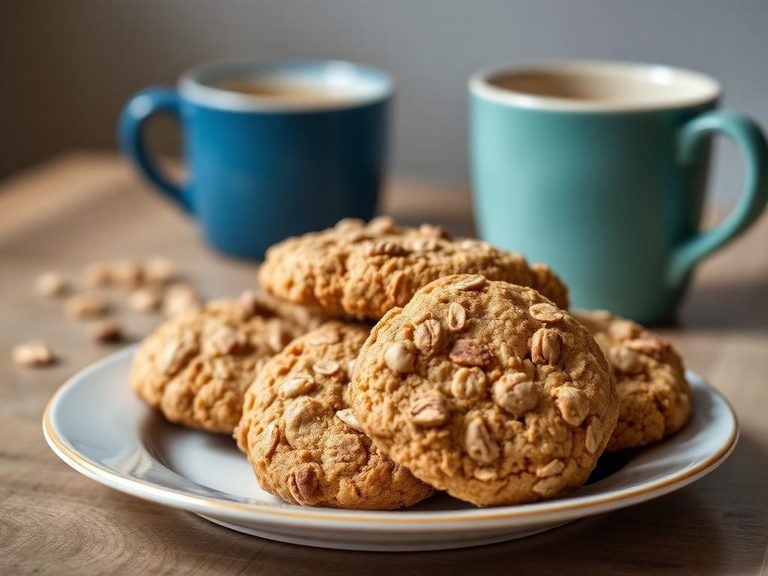
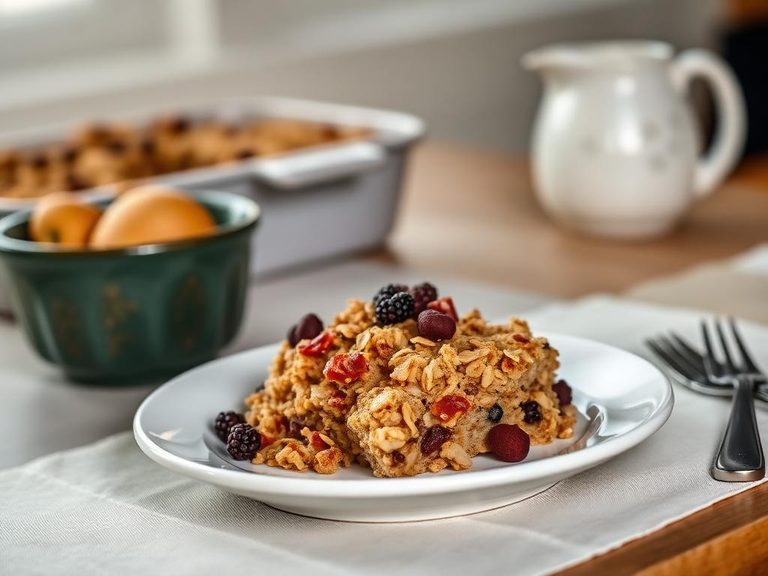
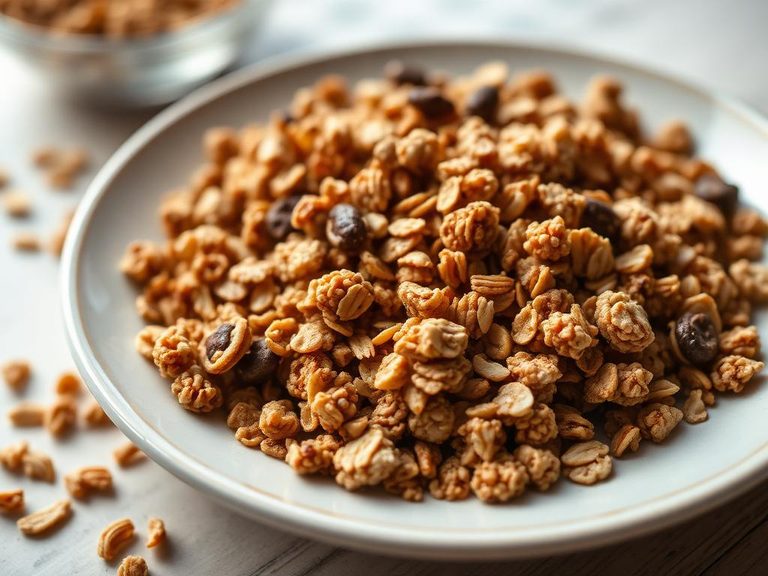
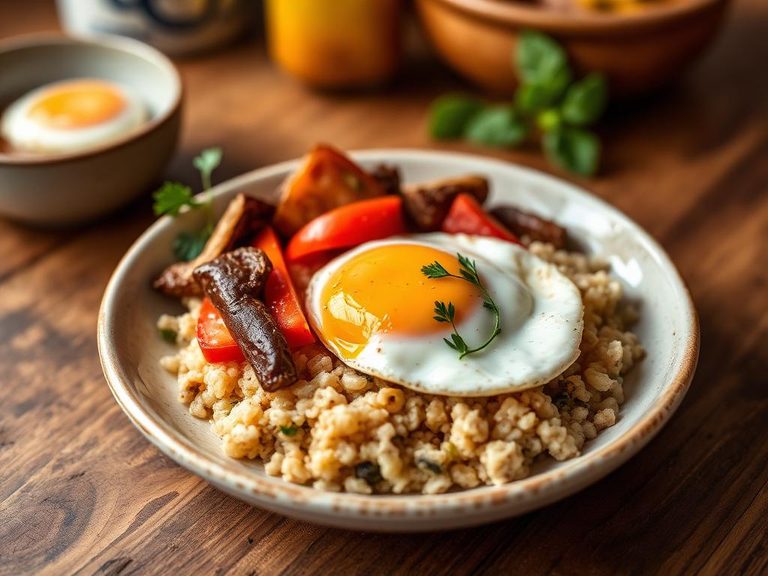
🌍 Where it's eaten
💡 Did you know?
The process of rolling oats was patented in 1889 by Henry Parsons Crowell, who also pioneered the Quaker Oats company's iconic cylindrical canister.
Full nutrition (USDA data · scales with serving)
| Water | 10.3 g |
| Energy (Atwater General Factors) | 382 kcal |
| Energy (Atwater Specific Factors) | 379 kcal |
| Nitrogen | 2.3 g |
| Protein | 13.5 g |
| Total lipid (fat) | 5.9 g |
| Ash | 1.7 g |
| Carbohydrate, by difference | 68.7 g |
| Total dietary fiber (AOAC 2011.25) | 10.4 g |
| High Molecular Weight Dietary Fiber (HMWDF) | 9.7 g |
| Low Molecular Weight Dietary Fiber (LMWDF) | 0.70 g |
| Beta-glucan | 7.5 g |
| Starch | 53.8 g |
| Calcium, Ca | 45.5 mg |
| Iron, Fe | 4.3 mg |
| Magnesium, Mg | 126 mg |
| Phosphorus, P | 387 mg |
| Potassium, K | 350 mg |
| Sodium, Na | 0.67 mg |
| Zinc, Zn | 2.7 mg |
| Copper, Cu | 0.43 mg |
| Manganese, Mn | 3.2 mg |
| Selenium, Se | 25.4 ug |
| Molybdenum, Mo | 160 ug |
| Thiamin | 0.41 mg |
| Niacin | 0.99 mg |
| Vitamin B-6 | 0.13 mg |
| Biotin | 21.9 ug |
| Folate, total | 32.0 ug |
Fat & fatty acid profile (per 100g)
Estimated from Oats (Includes foods for USDA's Food Distribution Program) — USDA does not publish this profile for Oats.
| Fatty acids, total saturated | 1.2 g |
| SFA 12:0 | 0.02 g |
| SFA 14:0 | 0.01 g |
| SFA 16:0 | 1.0 g |
| SFA 18:0 | 0.07 g |
| Fatty acids, total monounsaturated | 2.2 g |
| MUFA 16:1 | 0.01 g |
| MUFA 18:1 | 2.2 g |
| Fatty acids, total polyunsaturated | 2.5 g |
| PUFA 18:2 | 2.4 g |
| PUFA 18:3 | 0.11 g |
| Cholesterol | 0.00 mg |
Amino acid profile (per 100g)
Estimated from Oats (Includes foods for USDA's Food Distribution Program) — USDA does not publish this profile for Oats.
| Tryptophan | 0.23 g |
| Threonine | 0.57 g |
| Isoleucine | 0.69 g |
| Leucine | 1.3 g |
| Lysine | 0.70 g |
| Methionine | 0.31 g |
| Cystine | 0.41 g |
| Phenylalanine | 0.90 g |
| Tyrosine | 0.57 g |
| Valine | 0.94 g |
| Arginine | 1.2 g |
| Histidine | 0.41 g |
| Alanine | 0.88 g |
| Aspartic acid | 1.4 g |
| Glutamic acid | 3.7 g |
| Glycine | 0.84 g |
| Proline | 0.93 g |
| Serine | 0.75 g |
FAQ
What's the difference between old-fashioned, quick, and steel-cut oats?
Old-fashioned (rolled) oats are steamed and flattened, offering a chewy texture and moderate cooking time. Quick oats are rolled thinner and cut smaller for faster cooking, resulting in a softer, mushier texture. Steel-cut oats are whole groats chopped into pieces, not rolled, and have the chewiest texture and longest cooking time.
Are rolled oats gluten-free?
Pure oats are naturally gluten-free, but they are often processed in facilities that also handle wheat, barley, and rye, leading to cross-contamination. For a strict gluten-free diet, always look for oats certified as gluten-free.
Can I eat them raw?
Yes, they are safe to eat raw, most commonly in overnight oats where they soak in liquid, or blended into smoothies. However, cooking them improves digestibility and gives them a warmer, creamier texture.
Nutrient density (calculated · NRF9.3)
Nutrient Rich Foods index: beneficial nutrients (protein, fiber, vitamins, minerals) minus saturated fat, added sugar & sodium, per 100 kcal.
NRF9.3 index — Fulgoni, Keast & Drewnowski, 2009. Computed from USDA nutrients.
Weight-loss friendliness (composite index)
Energy density 3.82 kcal/g · 14% calories from protein · 0.0 g fiber · 0.0 g sugar per 100 g.
Composite of energy density (Rolls et al., 1999), protein & fiber satiety, minus sugar. A calculated heuristic — ranks satiety-per-calorie, not a clinical measure.
Dietary load (calculated from USDA values)
Potential renal acid load. Positive = acid-forming, negative = alkaline-forming.
Sodium-to-potassium ratio: 0.00 (lower is better — aim for ≤ 1)
Sodium:potassium per WHO potassium guidance. Computed from USDA nutrients.