

Bread, wheat
Whole food · Baked Products
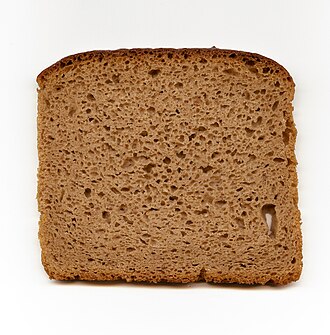
Photo: Wikipedia
Wheat bread is a staple loaf made from milled wheat flour, offering a soft, chewy crumb and a subtly nutty, yeasty flavor. With 274 kcal and 10.67g protein per 100g, it provides a solid energy base and moderate protein for a grain product. Its 4g of fiber per 100g contributes to digestive health, though it is often less fibrous than whole-grain varieties.
Calorie split: 16% protein · 70% carbs · 15% fat
↓ Full nutrition💚 Why it's loved
People love wheat bread for its comforting, familiar taste and its incredible versatility—it's the perfect canvas for everything from a simple buttered slice to a loaded sandwich. It's deeply embedded in many cultures as a daily staple, symbolizing home and sustenance.
⚠️ Watch-outs & how to enjoy it better
As a refined carbohydrate, it can cause blood-sugar spikes, especially for those with insulin sensitivity. It's also a common allergen (gluten) and may contain added sodium. To counteract, pair it with protein (like eggs or cheese) or healthy fats (like avocado) to slow digestion, choose whole-wheat versions for more fiber, and be mindful of portion sizes.
Key benefits
- Good source of complex carbohydrates for sustained energy.
- Contains moderate protein (10.67g/100g) for muscle maintenance.
- Provides dietary fiber (4g/100g) to support digestion.
- Versatile base for both sweet and savory meals.
- Often fortified with B vitamins and iron in commercial varieties.
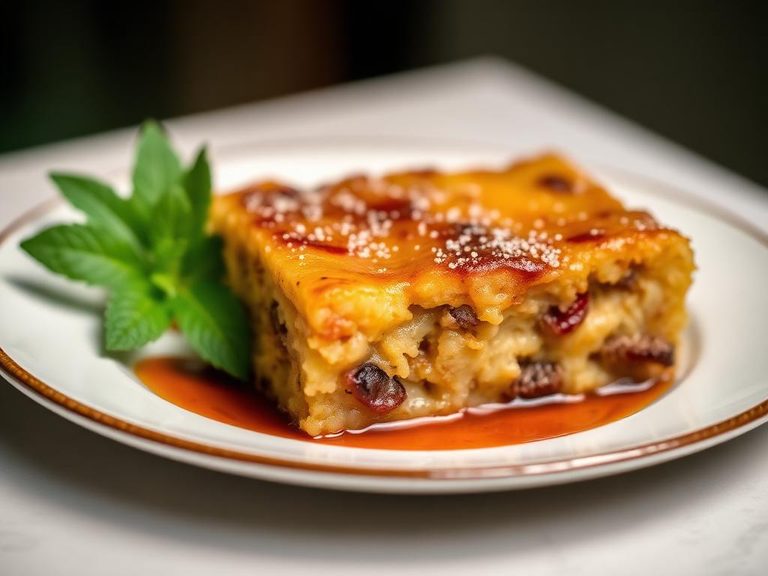
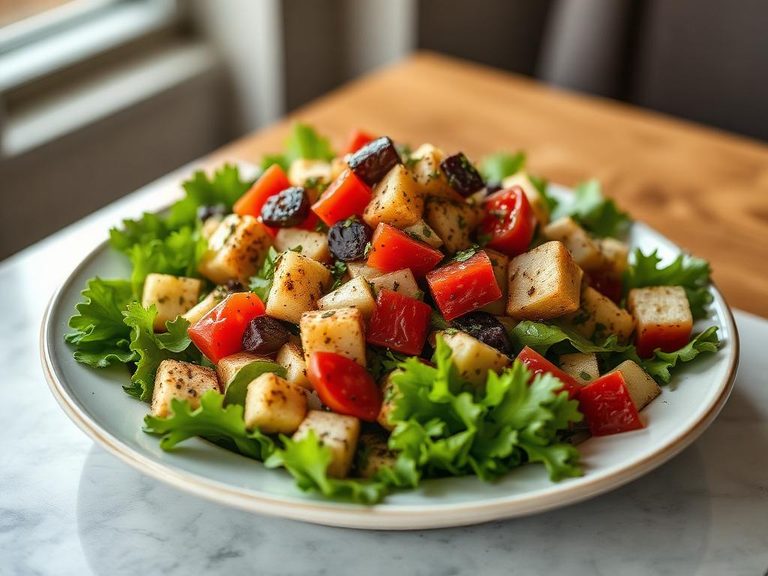
🍽️ Popular dishes




🌍 Where it's eaten
💡 Did you know?
The practice of leavening bread with yeast, which gives wheat bread its airy texture, was discovered by accident in ancient Egypt around 3000 BCE when wild yeast spores contaminated dough left out in the open.
Full nutrition (USDA data · scales with serving)
| Water | 35.3 g |
| Energy | 274 kcal |
| Energy | 1145 kj |
| Protein | 10.7 g |
| Total lipid (fat) | 4.5 g |
| Ash | 2.0 g |
| Carbohydrate, by difference | 47.5 g |
| Fiber, total dietary | 4.0 g |
| Total Sugars | 5.7 g |
| Sucrose | 0.00 g |
| Glucose | 1.7 g |
| Fructose | 2.3 g |
| Lactose | 0.00 g |
| Maltose | 1.7 g |
| Galactose | 0.00 g |
| Starch | 36.3 g |
| Calcium, Ca | 125 mg |
| Iron, Fe | 3.6 mg |
| Magnesium, Mg | 41.0 mg |
| Phosphorus, P | 129 mg |
| Potassium, K | 141 mg |
| Sodium, Na | 473 mg |
| Zinc, Zn | 1.0 mg |
| Copper, Cu | 0.15 mg |
| Manganese, Mn | 1.0 mg |
| Selenium, Se | 28.8 ug |
| Vitamin C, total ascorbic acid | 0.20 mg |
| Thiamin | 0.41 mg |
| Riboflavin | 0.25 mg |
| Niacin | 5.6 mg |
| Pantothenic acid | 0.82 mg |
| Vitamin B-6 | 0.11 mg |
| Folate, total | 85.0 ug |
| Folic acid | 20.0 ug |
| Folate, food | 65.0 ug |
| Folate, DFE | 99.0 ug |
| Choline, total | 18.7 mg |
| Betaine | 85.2 mg |
| Vitamin B-12 | 0.00 ug |
| Vitamin B-12, added | 0.00 ug |
| Vitamin A, RAE | 0.00 ug |
| Retinol | 0.00 ug |
| Carotene, beta | 1.0 ug |
| Carotene, alpha | 0.00 ug |
| Cryptoxanthin, beta | 0.00 ug |
| Vitamin A, IU | 2.0 iu |
| Lycopene | 0.00 ug |
| Lutein + zeaxanthin | 44.0 ug |
| Vitamin E (alpha-tocopherol) | 0.19 mg |
| Vitamin E, added | 0.00 mg |
| Tocopherol, beta | 0.06 mg |
| Tocopherol, gamma | 1.5 mg |
| Tocopherol, delta | 0.33 mg |
| Tocotrienol, alpha | 0.11 mg |
| Tocotrienol, gamma | 0.00 mg |
| Tocotrienol, delta | 0.00 mg |
| Vitamin D (D2 + D3), International Units | 0.00 iu |
| Vitamin D (D2 + D3) | 0.00 ug |
| Vitamin K (phylloquinone) | 4.9 ug |
| Alcohol, ethyl | 0.00 g |
| Caffeine | 0.00 mg |
| Theobromine | 0.00 mg |
Fat & fatty acid profile (per 100g)
| Fatty acids, total saturated | 0.70 g |
| SFA 4:0 | 0.00 g |
| SFA 6:0 | 0.00 g |
| SFA 8:0 | 0.00 g |
| SFA 10:0 | 0.00 g |
| SFA 12:0 | 0.01 g |
| SFA 14:0 | 0.01 g |
| SFA 15:0 | 0.00 g |
| SFA 16:0 | 0.44 g |
| SFA 17:0 | 0.01 g |
| SFA 18:0 | 0.21 g |
| SFA 20:0 | 0.01 g |
| SFA 22:0 | 0.01 g |
| SFA 24:0 | 0.00 g |
| Fatty acids, total monounsaturated | 0.61 g |
| MUFA 14:1 | 0.00 g |
| MUFA 15:1 | 0.00 g |
| MUFA 16:1 | 0.02 g |
| MUFA 16:1 c | 0.02 g |
| MUFA 17:1 | 0.00 g |
| MUFA 18:1 | 0.58 g |
| MUFA 18:1 c | 0.55 g |
| MUFA 20:1 | 0.01 g |
| MUFA 22:1 | 0.00 g |
| MUFA 22:1 c | 0.00 g |
| MUFA 24:1 c | 0.00 g |
| Fatty acids, total polyunsaturated | 1.6 g |
| PUFA 18:2 | 1.4 g |
| PUFA 18:2 n-6 c,c | 1.4 g |
| PUFA 18:2 CLAs | 0.00 g |
| PUFA 18:3 | 0.16 g |
| PUFA 18:3 n-3 c,c,c (ALA) | 0.15 g |
| PUFA 18:3 n-6 c,c,c | 0.01 g |
| PUFA 18:3i | 0.00 g |
| PUFA 18:4 | 0.00 g |
| PUFA 20:2 n-6 c,c | 0.00 g |
| PUFA 20:3 | 0.00 g |
| PUFA 20:3 n-3 | 0.00 g |
| PUFA 20:3 n-6 | 0.00 g |
| PUFA 20:4 | 0.00 g |
| PUFA 20:5 n-3 (EPA) | 0.00 g |
| PUFA 22:4 | 0.00 g |
| PUFA 22:5 n-3 (DPA) | 0.00 g |
| PUFA 22:6 n-3 (DHA) | 0.00 g |
| Fatty acids, total trans | 0.03 g |
| Fatty acids, total trans-monoenoic | 0.03 g |
| TFA 16:1 t | 0.00 g |
| TFA 18:1 t | 0.03 g |
| TFA 22:1 t | 0.00 g |
| TFA 18:2 t not further defined | 0.01 g |
| Fatty acids, total trans-polyenoic | 0.01 g |
| Cholesterol | 0.00 mg |
Amino acid profile (per 100g)
Estimated from Bread, salvadoran sweet cheese (quesadilla salvadorena) — USDA does not publish this profile for Bread.
| Tryptophan | 0.07 g |
| Threonine | 0.21 g |
| Isoleucine | 0.30 g |
| Leucine | 0.65 g |
| Lysine | 0.50 g |
| Methionine | 0.28 g |
| Cystine | 0.06 g |
| Phenylalanine | 0.37 g |
| Tyrosine | 0.23 g |
| Valine | 0.43 g |
| Arginine | 0.25 g |
| Histidine | 0.15 g |
| Alanine | 0.36 g |
| Aspartic acid | 0.59 g |
| Glutamic acid | 1.3 g |
| Glycine | 0.20 g |
| Proline | 0.83 g |
| Serine | 0.45 g |
| Hydroxyproline | 0.00 g |
FAQ
What's the difference between white and whole-wheat bread?
White bread is made from refined wheat flour with the bran and germ removed, while whole-wheat bread uses the entire wheat kernel, providing more fiber, vitamins, and minerals.
Is wheat bread a good source of fiber?
It contains 4g of fiber per 100g, which is moderate. For higher fiber, look for whole-grain or whole-wheat varieties, which can have 6-8g per 100g.
Can I freeze wheat bread to keep it fresh?
Yes, bread freezes very well. Slice it before freezing, then toast slices directly from the freezer for convenience.
Why does some wheat bread have a high glycemic index?
Refined wheat flour is digested quickly, leading to faster blood sugar rises. Choosing bread with added seeds, nuts, or whole grains can lower the glycemic impact.
Nutrient density (calculated · NRF9.3)
Nutrient Rich Foods index: beneficial nutrients (protein, fiber, vitamins, minerals) minus saturated fat, added sugar & sodium, per 100 kcal.
NRF9.3 index — Fulgoni, Keast & Drewnowski, 2009. Computed from USDA nutrients.
Weight-loss friendliness (composite index)
Energy density 2.74 kcal/g · 16% calories from protein · 4.0 g fiber · 5.7 g sugar per 100 g.
Composite of energy density (Rolls et al., 1999), protein & fiber satiety, minus sugar. A calculated heuristic — ranks satiety-per-calorie, not a clinical measure.
Dietary load (calculated from USDA values)
Potential renal acid load. Positive = acid-forming, negative = alkaline-forming.
Sodium-to-potassium ratio: 3.35 (lower is better — aim for ≤ 1)
Sodium:potassium per WHO potassium guidance. Computed from USDA nutrients.