

Bread, roll, Mexican, bollilo
Whole food · Baked Products

Photo: Wikipedia
The bolillo is a Mexican white bread roll with a crisp, golden crust and a soft, airy, slightly chewy interior. It's a staple of Mexican cuisine, prized for its neutral flavor that perfectly complements savory fillings. Nutritionally, it's a carbohydrate-dense food, providing quick energy with moderate protein.
Calorie split: 13% protein · 70% carbs · 16% fat
↓ Full nutrition💚 Why it's loved
People love the bolillo for its perfect textural contrast—a satisfying crunch giving way to a pillowy inside—and its incredible versatility. It's the essential, flavorful canvas for everything from simple beans to complex tortas, deeply woven into daily Mexican life.
⚠️ Watch-outs & how to enjoy it better
As a refined white bread, it can cause rapid blood-sugar spikes and offers limited fiber. To counteract this, pair it with protein (like beans, eggs, or meat) and healthy fats (like avocado or cheese) to slow digestion. Those watching carb intake should practice portion control, perhaps using only half a roll.
Key benefits
- Excellent source of quick energy from complex carbohydrates.
- Provides moderate plant-based protein for muscle maintenance.
- Low in fat, making it a lighter bread option.
- Versatile base for both sweet and savory dishes.
- A cultural staple, central to many traditional Mexican meals.
🍽️ Popular dishes
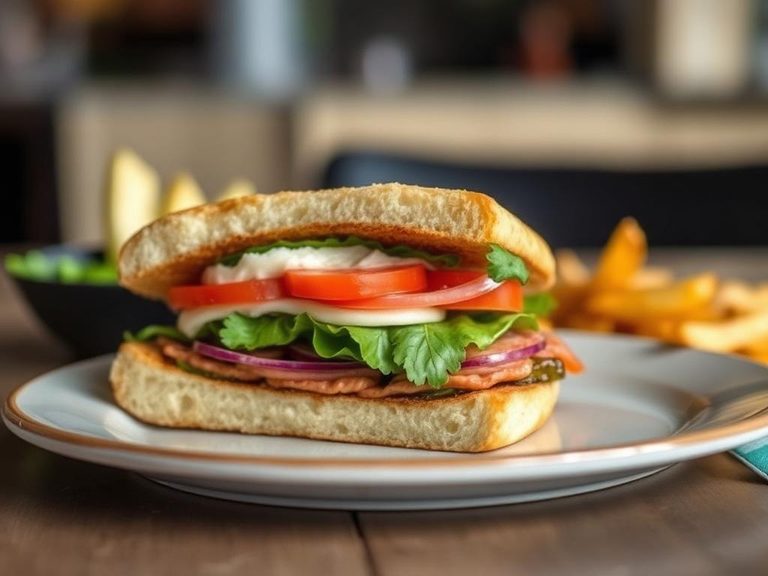
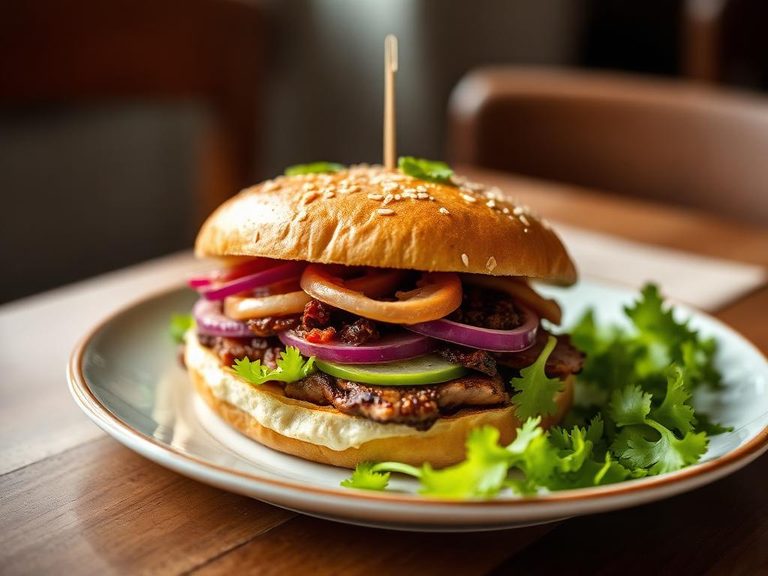
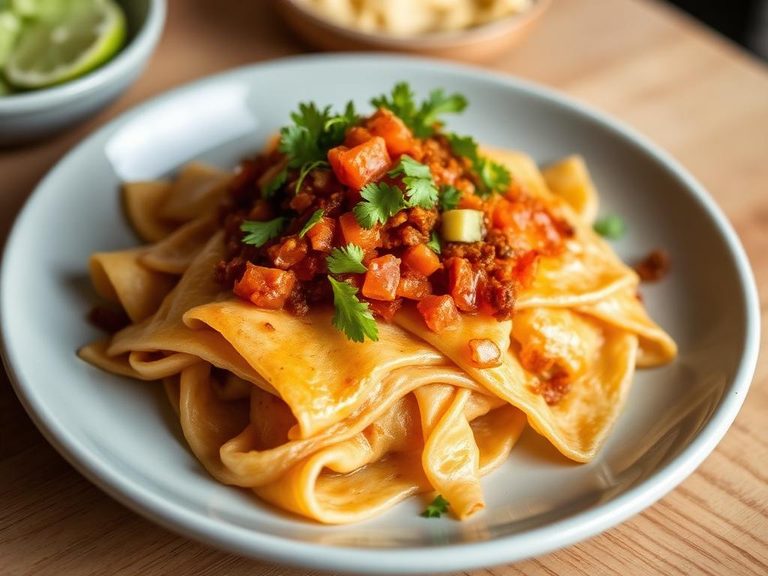
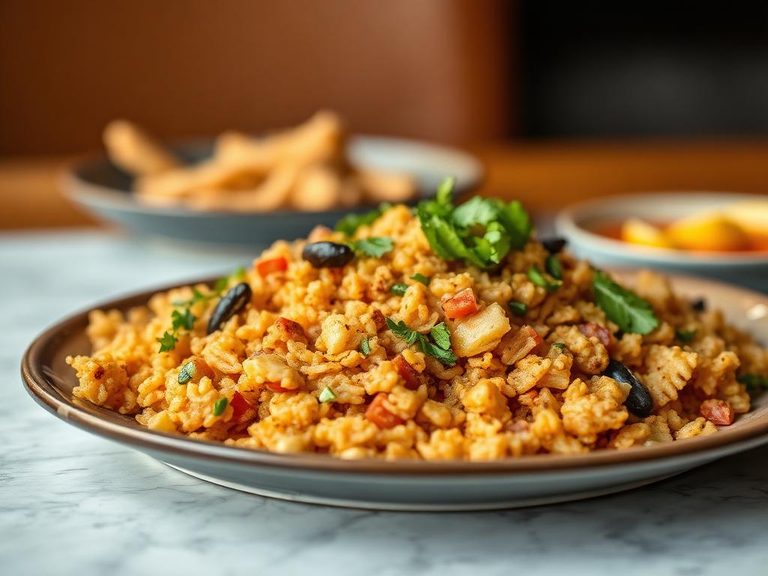
🌍 Where it's eaten
💡 Did you know?
The bolillo's distinctive football shape with a single deep slash on top is said to have been inspired by a French baguette, introduced during the brief French intervention in Mexico in the 1860s.
Full nutrition (USDA data · scales with serving)
| Water | 26.1 g |
| Energy | 318 kcal |
| Energy | 1330 kj |
| Protein | 10.7 g |
| Total lipid (fat) | 5.8 g |
| Ash | 1.7 g |
| Carbohydrate, by difference | 55.8 g |
| Fiber, total dietary | 2.2 g |
| Total Sugars | 3.5 g |
| Sucrose | 0.00 g |
| Glucose | 0.40 g |
| Fructose | 1.1 g |
| Lactose | 0.00 g |
| Maltose | 2.0 g |
| Galactose | 0.00 g |
| Starch | 47.0 g |
| Calcium, Ca | 41.0 mg |
| Iron, Fe | 3.9 mg |
| Magnesium, Mg | 30.0 mg |
| Phosphorus, P | 111 mg |
| Potassium, K | 131 mg |
| Sodium, Na | 506 mg |
| Zinc, Zn | 0.88 mg |
| Copper, Cu | 0.14 mg |
| Manganese, Mn | 0.68 mg |
| Selenium, Se | 38.8 ug |
| Vitamin C, total ascorbic acid | 0.20 mg |
| Thiamin | 0.68 mg |
| Riboflavin | 0.43 mg |
| Niacin | 5.6 mg |
| Pantothenic acid | 0.52 mg |
| Vitamin B-6 | 0.10 mg |
| Folate, total | 127 ug |
| Folic acid | 70.0 ug |
| Folate, food | 57.0 ug |
| Folate, DFE | 176 ug |
| Choline, total | 14.3 mg |
| Vitamin B-12 | 0.13 ug |
| Vitamin B-12, added | 0.00 ug |
| Vitamin A, RAE | 1.0 ug |
| Retinol | 1.0 ug |
| Carotene, beta | 0.00 ug |
| Carotene, alpha | 0.00 ug |
| Cryptoxanthin, beta | 0.00 ug |
| Vitamin A, IU | 5.0 iu |
| Lycopene | 0.00 ug |
| Lutein + zeaxanthin | 14.0 ug |
| Vitamin E (alpha-tocopherol) | 0.00 mg |
| Vitamin E, added | 0.00 mg |
| Tocopherol, beta | 0.00 mg |
| Tocopherol, gamma | 0.14 mg |
| Tocopherol, delta | 0.13 mg |
| Tocotrienol, alpha | 0.00 mg |
| Tocotrienol, beta | 0.19 mg |
| Tocotrienol, gamma | 0.00 mg |
| Tocotrienol, delta | 0.00 mg |
| Vitamin D (D2 + D3), International Units | 0.00 iu |
| Vitamin D (D2 + D3) | 0.00 ug |
| Vitamin K (phylloquinone) | 10.9 ug |
| Alcohol, ethyl | 0.00 g |
| Caffeine | 0.00 mg |
| Theobromine | 0.00 mg |
Fat & fatty acid profile (per 100g)
| Fatty acids, total saturated | 1.4 g |
| SFA 4:0 | 0.00 g |
| SFA 6:0 | 0.00 g |
| SFA 8:0 | 0.00 g |
| SFA 10:0 | 0.01 g |
| SFA 12:0 | 0.01 g |
| SFA 14:0 | 0.01 g |
| SFA 15:0 | 0.01 g |
| SFA 16:0 | 0.69 g |
| SFA 17:0 | 0.01 g |
| SFA 18:0 | 0.63 g |
| SFA 20:0 | 0.02 g |
| SFA 22:0 | 0.02 g |
| SFA 24:0 | 0.01 g |
| Fatty acids, total monounsaturated | 2.7 g |
| MUFA 14:1 | 0.00 g |
| MUFA 15:1 | 0.00 g |
| MUFA 16:1 | 0.02 g |
| MUFA 16:1 c | 0.02 g |
| MUFA 17:1 | 0.00 g |
| MUFA 18:1 | 2.6 g |
| MUFA 18:1 c | 1.9 g |
| MUFA 20:1 | 0.01 g |
| MUFA 22:1 | 0.00 g |
| MUFA 22:1 c | 0.00 g |
| MUFA 24:1 c | 0.00 g |
| Fatty acids, total polyunsaturated | 1.0 g |
| PUFA 18:2 | 0.97 g |
| PUFA 18:2 n-6 c,c | 0.85 g |
| PUFA 18:2 CLAs | 0.01 g |
| PUFA 18:3 | 0.05 g |
| PUFA 18:3 n-3 c,c,c (ALA) | 0.05 g |
| PUFA 18:3 n-6 c,c,c | 0.00 g |
| PUFA 18:3i | 0.00 g |
| PUFA 18:4 | 0.00 g |
| PUFA 20:2 n-6 c,c | 0.00 g |
| PUFA 20:3 | 0.00 g |
| PUFA 20:3 n-3 | 0.00 g |
| PUFA 20:3 n-6 | 0.00 g |
| PUFA 20:4 | 0.00 g |
| PUFA 20:5 n-3 (EPA) | 0.00 g |
| PUFA 22:4 | 0.00 g |
| PUFA 22:5 n-3 (DPA) | 0.00 g |
| PUFA 22:6 n-3 (DHA) | 0.00 g |
| Fatty acids, total trans | 0.87 g |
| Fatty acids, total trans-monoenoic | 0.76 g |
| TFA 16:1 t | 0.00 g |
| TFA 18:1 t | 0.76 g |
| TFA 22:1 t | 0.00 g |
| TFA 18:2 t not further defined | 0.11 g |
| Fatty acids, total trans-polyenoic | 0.11 g |
| Cholesterol | 1.0 mg |
Amino acid profile (per 100g)
Estimated from Bread, salvadoran sweet cheese (quesadilla salvadorena) — USDA does not publish this profile for Bread.
| Tryptophan | 0.07 g |
| Threonine | 0.21 g |
| Isoleucine | 0.30 g |
| Leucine | 0.65 g |
| Lysine | 0.50 g |
| Methionine | 0.28 g |
| Cystine | 0.06 g |
| Phenylalanine | 0.37 g |
| Tyrosine | 0.23 g |
| Valine | 0.43 g |
| Arginine | 0.25 g |
| Histidine | 0.15 g |
| Alanine | 0.36 g |
| Aspartic acid | 0.59 g |
| Glutamic acid | 1.3 g |
| Glycine | 0.20 g |
| Proline | 0.83 g |
| Serine | 0.45 g |
| Hydroxyproline | 0.00 g |
FAQ
What's the difference between a bolillo and a telera?
A bolillo is a single, crusty roll with a slash. A telera is a softer, flatter roll with two parallel slashes, often used for different types of tortas.
Can I use a bolillo for sweet dishes?
Absolutely. It's commonly sliced and toasted for 'pan dulce' preparations, used for French toast, or served alongside sweet hot chocolate for dipping.
How do I keep a bolillo fresh?
It's best eaten the day it's bought. Store at room temperature in a paper bag for up to 2 days. To refresh a day-old roll, sprinkle with water and warm briefly in a hot oven.
Nutrient density (calculated · NRF9.3)
Nutrient Rich Foods index: beneficial nutrients (protein, fiber, vitamins, minerals) minus saturated fat, added sugar & sodium, per 100 kcal.
NRF9.3 index — Fulgoni, Keast & Drewnowski, 2009. Computed from USDA nutrients.
Weight-loss friendliness (composite index)
Energy density 3.18 kcal/g · 13% calories from protein · 2.2 g fiber · 3.5 g sugar per 100 g.
Composite of energy density (Rolls et al., 1999), protein & fiber satiety, minus sugar. A calculated heuristic — ranks satiety-per-calorie, not a clinical measure.
Dietary load (calculated from USDA values)
Potential renal acid load. Positive = acid-forming, negative = alkaline-forming.
Sodium-to-potassium ratio: 3.86 (lower is better — aim for ≤ 1)
Sodium:potassium per WHO potassium guidance. Computed from USDA nutrients.