

Turkey, ground, fat free, patties, broiled
Whole food · Poultry Products

Photo: Wikipedia
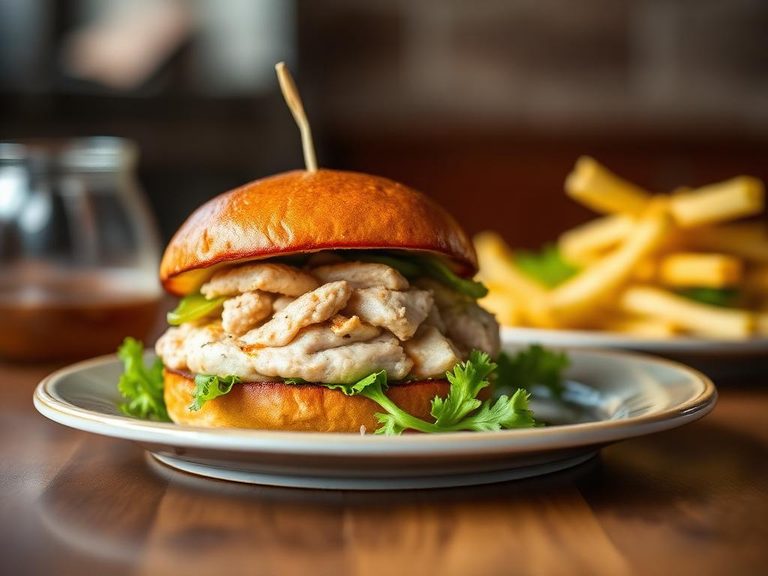
This is a lean, protein-packed ground turkey patty, broiled to a firm, slightly springy texture with a mild, savory flavor. Its near-zero fat content makes it a remarkably clean canvas for bold seasonings, delivering a substantial 29 grams of protein per 100g with minimal calories.
Calorie split: 84% protein · 0% carbs · 16% fat
↓ Full nutrition💚 Why it's loved
People love it as a blank slate for global flavors—from spicy Thai larb to classic American sliders—and for fitting seamlessly into high-protein, low-fat dietary goals without sacrificing the satisfying heft of a burger.
⚠️ Watch-outs & how to enjoy it better
The extreme leanness can result in a dry, dense texture if overcooked, making it less juicy than higher-fat patties. To counteract this, mix in finely diced vegetables (like mushrooms or onions) or a tablespoon of broth before cooking, and avoid over-handling the meat. It is also very low in dietary fat, so pairing it with a small amount of healthy fat (like avocado or olive oil) can aid in the absorption of fat-soluble vitamins.
Key benefits
- Extremely high protein-to-calorie ratio
- Virtually fat-free and carbohydrate-free
- Excellent source of lean protein for muscle maintenance
- Quick-cooking and versatile base for meals
- Lower in saturated fat than many red meat alternatives
🍽️ Popular dishes
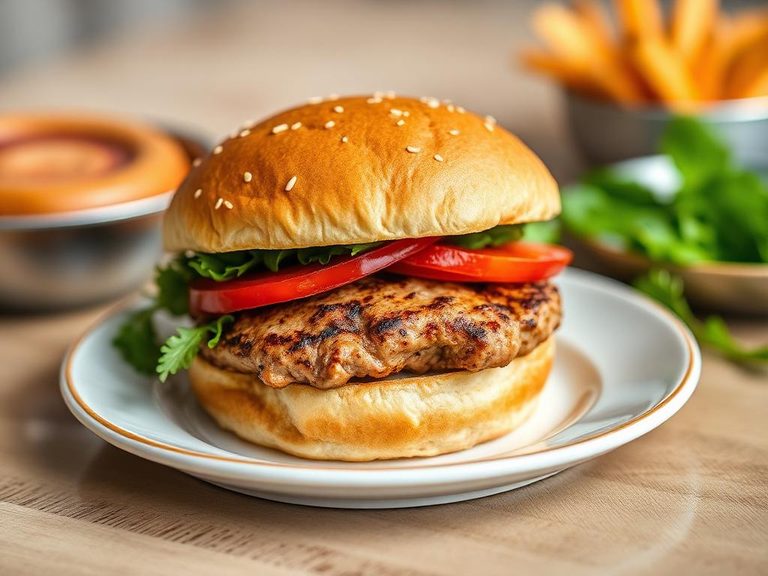
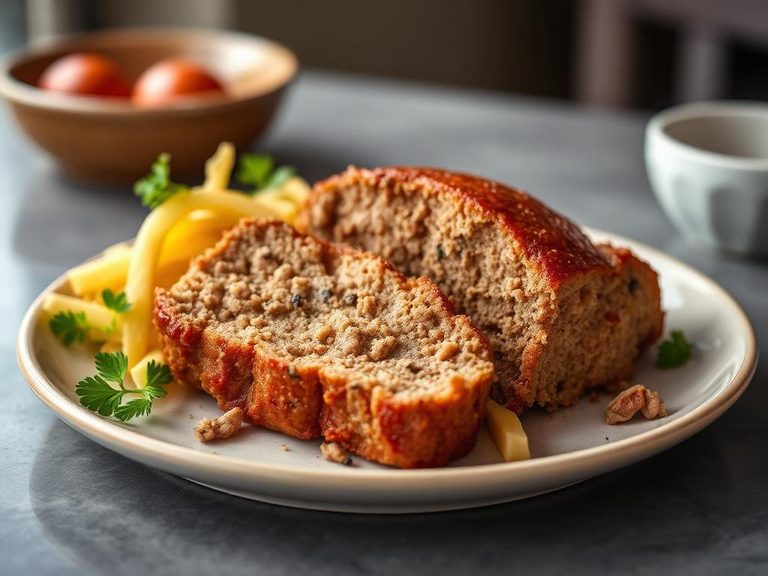
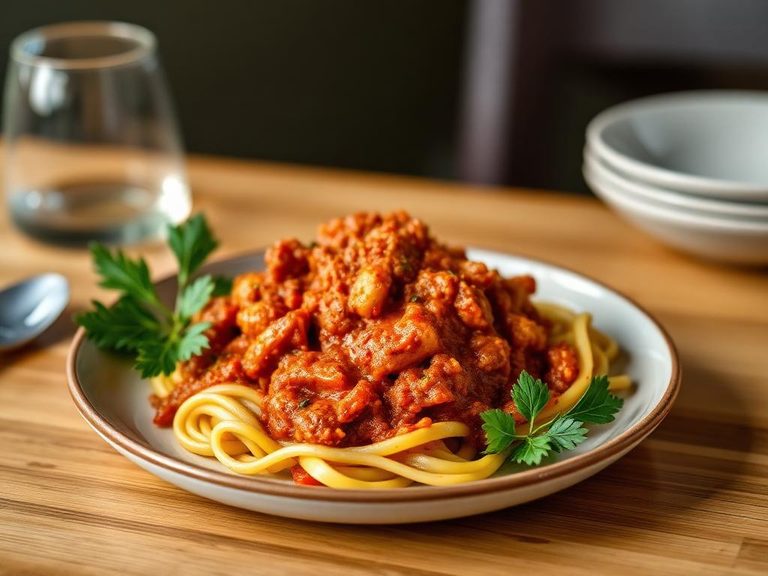
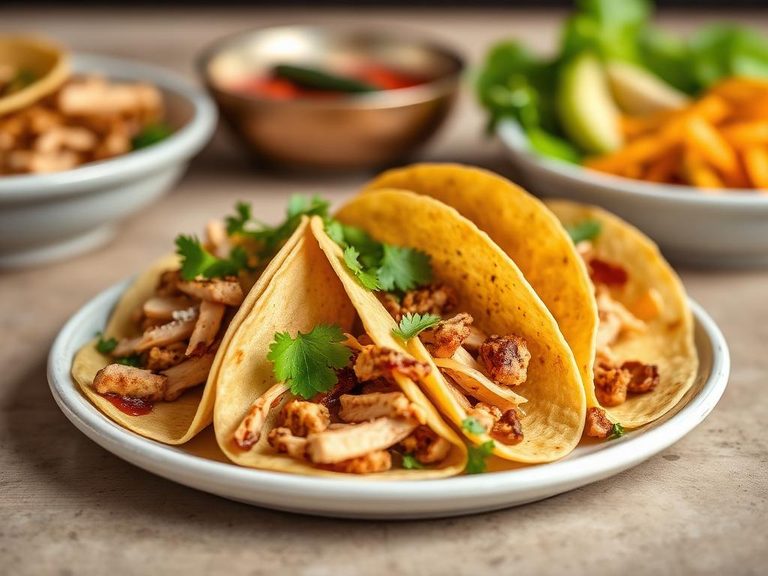
🌍 Where it's eaten
💡 Did you know?
Broiling this patty uses intense, direct overhead heat, which can create a desirable sear on the surface while keeping the interior lean and fast-cooking, a method often preferred for very low-fat meats to prevent them from stewing in their own juices.
Full nutrition (USDA data · scales with serving)
| Water | 68.4 g |
| Energy | 138 kcal |
| Energy | 578 kj |
| Protein | 29.0 g |
| Total lipid (fat) | 2.5 g |
| Ash | 1.3 g |
| Carbohydrate, by difference | 0.00 g |
| Fiber, total dietary | 0.00 g |
| Total Sugars | 0.00 g |
| Calcium, Ca | 6.0 mg |
| Iron, Fe | 0.78 mg |
| Magnesium, Mg | 35.0 mg |
| Phosphorus, P | 264 mg |
| Potassium, K | 339 mg |
| Sodium, Na | 59.0 mg |
| Zinc, Zn | 2.2 mg |
| Copper, Cu | 0.06 mg |
| Manganese, Mn | 0.01 mg |
| Selenium, Se | 28.0 ug |
| Vitamin C, total ascorbic acid | 0.00 mg |
| Thiamin | 0.07 mg |
| Riboflavin | 0.14 mg |
| Niacin | 10.7 mg |
| Pantothenic acid | 0.90 mg |
| Vitamin B-6 | 0.91 mg |
| Folate, total | 7.0 ug |
| Folic acid | 0.00 ug |
| Folate, food | 7.0 ug |
| Folate, DFE | 7.0 ug |
| Choline, total | 58.9 mg |
| Betaine | 6.6 mg |
| Vitamin B-12 | 0.67 ug |
| Vitamin B-12, added | 0.00 ug |
| Vitamin A, RAE | 8.0 ug |
| Retinol | 8.0 ug |
| Carotene, beta | 0.00 ug |
| Carotene, alpha | 0.00 ug |
| Cryptoxanthin, beta | 0.00 ug |
| Vitamin A, IU | 25.0 iu |
| Lycopene | 0.00 ug |
| Lutein + zeaxanthin | 0.00 ug |
| Vitamin E (alpha-tocopherol) | 0.09 mg |
| Vitamin E, added | 0.00 mg |
| Tocopherol, beta | 0.01 mg |
| Tocopherol, gamma | 0.11 mg |
| Tocopherol, delta | 0.02 mg |
| Tocotrienol, alpha | 0.01 mg |
| Tocotrienol, beta | 0.00 mg |
| Tocotrienol, gamma | 0.01 mg |
| Tocotrienol, delta | 0.00 mg |
| Vitamin D (D2 + D3), International Units | 8.0 iu |
| Vitamin D (D2 + D3) | 0.20 ug |
| Vitamin D3 (cholecalciferol) | 0.20 ug |
| Vitamin K (phylloquinone) | 0.00 ug |
| Alcohol, ethyl | 0.00 g |
| Caffeine | 0.00 mg |
| Theobromine | 0.00 mg |
Fat & fatty acid profile (per 100g)
| Fatty acids, total saturated | 0.67 g |
| SFA 4:0 | 0.00 g |
| SFA 6:0 | 0.00 g |
| SFA 8:0 | 0.00 g |
| SFA 10:0 | 0.00 g |
| SFA 12:0 | 0.00 g |
| SFA 14:0 | 0.01 g |
| SFA 15:0 | 0.00 g |
| SFA 16:0 | 0.42 g |
| SFA 17:0 | 0.01 g |
| SFA 18:0 | 0.22 g |
| SFA 20:0 | 0.00 g |
| SFA 22:0 | 0.00 g |
| SFA 24:0 | 0.00 g |
| Fatty acids, total monounsaturated | 0.71 g |
| MUFA 14:1 | 0.00 g |
| MUFA 15:1 | 0.00 g |
| MUFA 16:1 | 0.05 g |
| MUFA 16:1 c | 0.05 g |
| MUFA 17:1 | 0.01 g |
| MUFA 18:1 | 0.64 g |
| MUFA 18:1 c | 0.63 g |
| MUFA 20:1 | 0.01 g |
| MUFA 22:1 | 0.00 g |
| MUFA 22:1 c | 0.00 g |
| MUFA 24:1 c | 0.00 g |
| Fatty acids, total polyunsaturated | 0.76 g |
| PUFA 18:2 | 0.60 g |
| PUFA 18:2 n-6 c,c | 0.60 g |
| PUFA 18:2 CLAs | 0.00 g |
| PUFA 18:3 | 0.03 g |
| PUFA 18:3 n-3 c,c,c (ALA) | 0.03 g |
| PUFA 18:3 n-6 c,c,c | 0.00 g |
| PUFA 18:3i | 0.00 g |
| PUFA 18:4 | 0.00 g |
| PUFA 20:2 n-6 c,c | 0.01 g |
| PUFA 20:3 | 0.00 g |
| PUFA 20:3 n-3 | 0.00 g |
| PUFA 20:3 n-6 | 0.00 g |
| PUFA 20:4 | 0.08 g |
| PUFA 20:5 n-3 (EPA) | 0.00 g |
| PUFA 22:4 | 0.02 g |
| PUFA 22:5 n-3 (DPA) | 0.01 g |
| PUFA 22:6 n-3 (DHA) | 0.01 g |
| Fatty acids, total trans | 0.02 g |
| Fatty acids, total trans-monoenoic | 0.02 g |
| TFA 16:1 t | 0.00 g |
| TFA 18:1 t | 0.02 g |
| TFA 22:1 t | 0.00 g |
| TFA 18:2 t not further defined | 0.01 g |
| Fatty acids, total trans-polyenoic | 0.01 g |
| Cholesterol | 65.0 mg |
Amino acid profile (per 100g)
| Tryptophan | 0.33 g |
| Threonine | 1.3 g |
| Isoleucine | 1.3 g |
| Leucine | 2.4 g |
| Lysine | 2.6 g |
| Methionine | 0.85 g |
| Cystine | 0.31 g |
| Phenylalanine | 1.1 g |
| Tyrosine | 1.0 g |
| Valine | 1.3 g |
| Arginine | 2.1 g |
| Histidine | 0.86 g |
| Alanine | 1.8 g |
| Aspartic acid | 2.8 g |
| Glutamic acid | 4.6 g |
| Glycine | 1.6 g |
| Proline | 1.3 g |
| Serine | 1.2 g |
| Hydroxyproline | 0.24 g |
FAQ
Why does my fat-free turkey patty turn out so dry?
Fat provides moisture and tenderness. Without it, the protein fibers can tighten and squeeze out moisture quickly. To prevent this, don't overmix the meat, add a splash of broth or finely grated vegetables for moisture, and cook just until the internal temperature reaches 165°F (74°C).
Can I use this for meatballs or meatloaf?
Yes, but you'll likely need to add a binder and moisture. Mix in an egg, some breadcrumbs (or a low-carb alternative), and a liquid like broth or tomato sauce to keep the final product from being tough and crumbly.
Is this suitable for a low-sodium diet?
The plain, unseasoned patty itself is very low in sodium. However, it is often sold pre-seasoned or used in dishes with salty sauces. Always check labels and control seasoning at home to keep sodium in check.
Nutrient density (calculated · NRF9.3)
Nutrient Rich Foods index: beneficial nutrients (protein, fiber, vitamins, minerals) minus saturated fat, added sugar & sodium, per 100 kcal.
NRF9.3 index — Fulgoni, Keast & Drewnowski, 2009. Computed from USDA nutrients.
Weight-loss friendliness (composite index)
Energy density 1.38 kcal/g · 84% calories from protein · 0.0 g fiber · 0.0 g sugar per 100 g.
Composite of energy density (Rolls et al., 1999), protein & fiber satiety, minus sugar. A calculated heuristic — ranks satiety-per-calorie, not a clinical measure.
Dietary load (calculated from USDA values)
Potential renal acid load. Positive = acid-forming, negative = alkaline-forming.
Sodium-to-potassium ratio: 0.17 (lower is better — aim for ≤ 1)
Sodium:potassium per WHO potassium guidance. Computed from USDA nutrients.