

Soup, chicken and vegetable, canned, ready-to-serve
Whole food · Soups, Sauces, and Gravies

Photo: Wikipedia
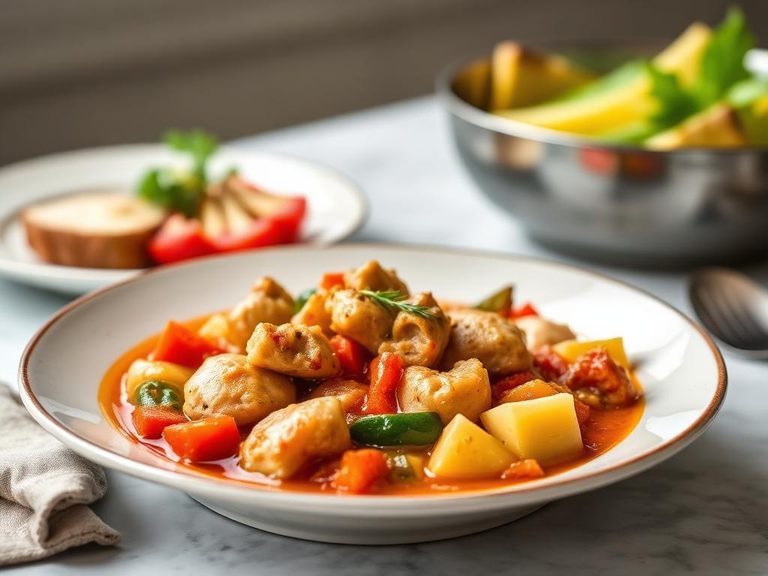
A classic, shelf-stable comfort food, this canned soup features tender shredded chicken and soft-cut vegetables like carrots, celery, and corn in a savory, lightly seasoned broth. The texture is smooth and easy to eat, with a mild, familiar chicken soup flavor. Nutritionally, it's a very low-calorie option, providing light protein and minimal fat per serving.
Calorie split: 24% protein · 56% carbs · 20% fat
↓ Full nutrition💚 Why it's loved
People love it for its nostalgic, comforting warmth and unmatched convenience—a hot, savory meal ready in minutes from the pantry. Its mild flavor and soft texture make it a gentle, soothing choice for all ages.
⚠️ Watch-outs & how to enjoy it better
The primary downside is often high sodium content, which can contribute to water retention and isn't ideal for those monitoring blood pressure. To counteract this, choose low-sodium versions when available, and pair the soup with a fresh, potassium-rich side like a banana or a simple salad to help balance electrolytes. Some may also find it less satisfying due to its light texture, so adding a handful of whole-grain crackers or a side of whole-wheat bread can boost satiety.
Key benefits
- Extremely low in calories (33 kcal per 100g)
- Provides a source of lean protein from chicken
- Contains dietary fiber from vegetables
- Shelf-stable and requires no preparation
- Convenient source of hydration and electrolytes
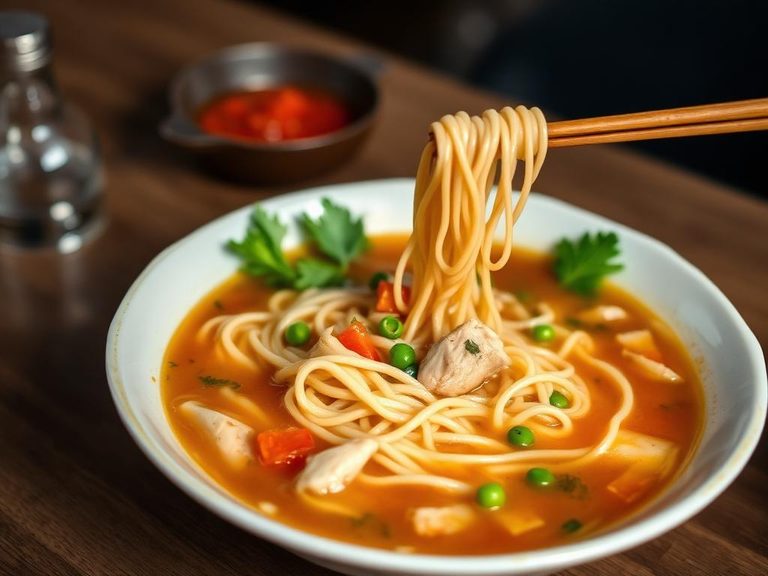
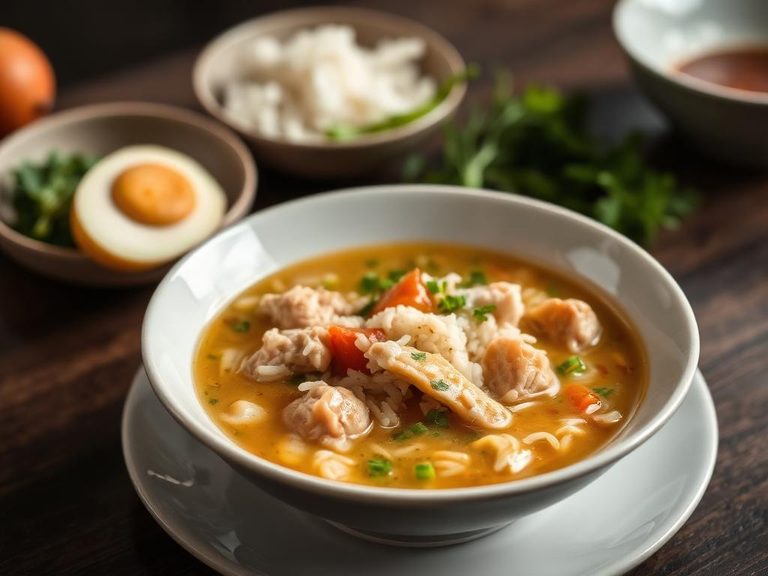
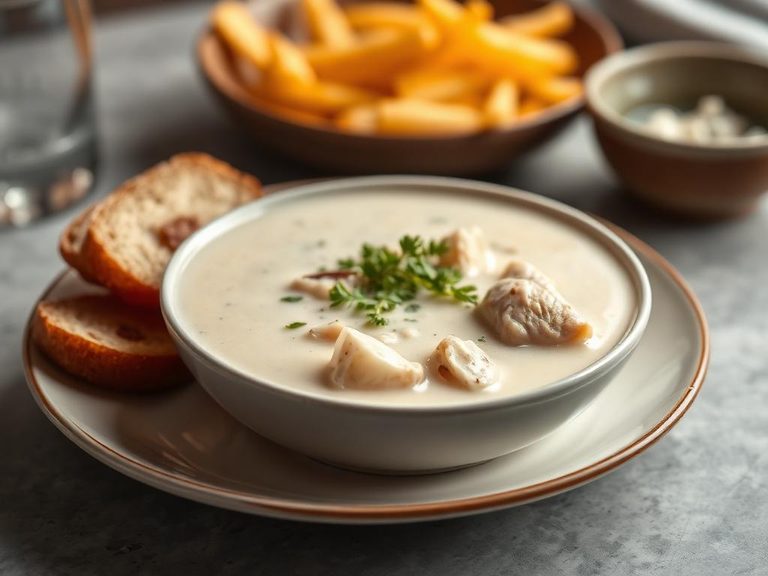
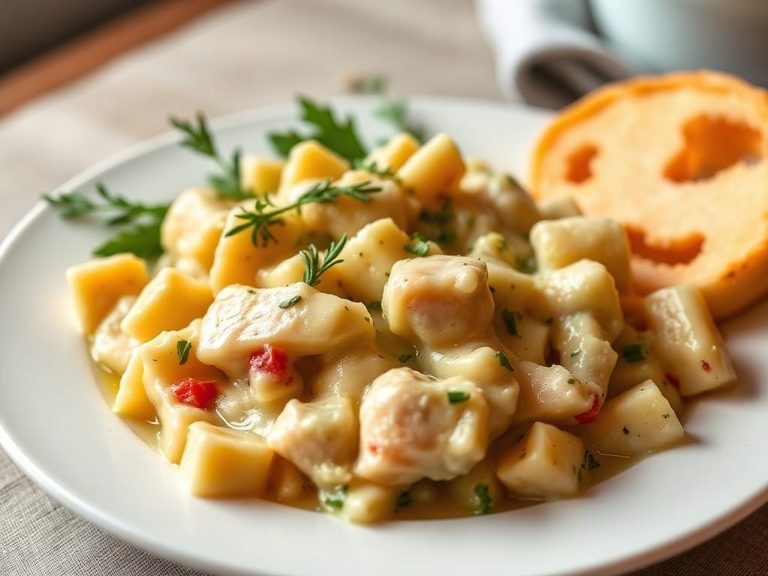
🍽️ Popular dishes
🌍 Where it's eaten
💡 Did you know?
The modern canned soup industry was revolutionized in 1897 by Dr. John T. Dorrance, a chemist at the Campbell Soup Company, who invented condensed soup by removing half the water, making it cheaper to ship and store.
Full nutrition (USDA data · scales with serving)
| Water | 91.7 g |
| Energy | 33.0 kcal |
| Energy | 137 kj |
| Protein | 2.0 g |
| Total lipid (fat) | 0.73 g |
| Ash | 0.93 g |
| Carbohydrate, by difference | 4.7 g |
| Fiber, total dietary | 0.90 g |
| Total Sugars | 1.0 g |
| Sucrose | 0.59 g |
| Glucose | 0.15 g |
| Fructose | 0.27 g |
| Lactose | 0.00 g |
| Maltose | 0.00 g |
| Galactose | 0.00 g |
| Starch | 2.7 g |
| Calcium, Ca | 14.0 mg |
| Iron, Fe | 0.25 mg |
| Magnesium, Mg | 8.0 mg |
| Phosphorus, P | 35.0 mg |
| Potassium, K | 133 mg |
| Sodium, Na | 229 mg |
| Zinc, Zn | 0.22 mg |
| Copper, Cu | 0.02 mg |
| Manganese, Mn | 0.06 mg |
| Selenium, Se | 3.0 ug |
| Vitamin C, total ascorbic acid | 0.00 mg |
| Thiamin | 0.02 mg |
| Riboflavin | 0.10 mg |
| Niacin | 0.91 mg |
| Pantothenic acid | 0.21 mg |
| Vitamin B-6 | 0.07 mg |
| Folate, total | 13.0 ug |
| Folic acid | 0.00 ug |
| Folate, food | 13.0 ug |
| Folate, DFE | 13.0 ug |
| Choline, total | 7.7 mg |
| Vitamin B-12 | 0.11 ug |
| Vitamin B-12, added | 0.00 ug |
| Vitamin A, RAE | 52.0 ug |
| Retinol | 0.00 ug |
| Carotene, beta | 512 ug |
| Carotene, alpha | 224 ug |
| Cryptoxanthin, beta | 3.0 ug |
| Vitamin A, IU | 1044 iu |
| Lycopene | 70.0 ug |
| Lutein + zeaxanthin | 134 ug |
| Vitamin E (alpha-tocopherol) | 0.24 mg |
| Vitamin E, added | 0.00 mg |
| Tocopherol, beta | 0.00 mg |
| Tocopherol, gamma | 0.07 mg |
| Tocopherol, delta | 0.00 mg |
| Tocotrienol, alpha | 0.00 mg |
| Tocotrienol, beta | 0.02 mg |
| Tocotrienol, gamma | 0.00 mg |
| Tocotrienol, delta | 0.00 mg |
| Vitamin D (D2 + D3), International Units | 0.00 iu |
| Vitamin D (D2 + D3) | 0.00 ug |
| Vitamin K (phylloquinone) | 2.2 ug |
| Alcohol, ethyl | 0.00 g |
| Caffeine | 0.00 mg |
| Theobromine | 0.00 mg |
Fat & fatty acid profile (per 100g)
| Fatty acids, total saturated | 0.12 g |
| SFA 4:0 | 0.00 g |
| SFA 6:0 | 0.00 g |
| SFA 8:0 | 0.00 g |
| SFA 10:0 | 0.00 g |
| SFA 12:0 | 0.00 g |
| SFA 14:0 | 0.00 g |
| SFA 15:0 | 0.00 g |
| SFA 16:0 | 0.09 g |
| SFA 17:0 | 0.00 g |
| SFA 18:0 | 0.02 g |
| SFA 20:0 | 0.00 g |
| SFA 22:0 | 0.00 g |
| SFA 24:0 | 0.00 g |
| Fatty acids, total monounsaturated | 0.16 g |
| MUFA 14:1 | 0.00 g |
| MUFA 15:1 | 0.00 g |
| MUFA 16:1 | 0.01 g |
| MUFA 16:1 c | 0.01 g |
| MUFA 17:1 | 0.00 g |
| MUFA 18:1 | 0.14 g |
| MUFA 18:1 c | 0.14 g |
| MUFA 20:1 | 0.00 g |
| MUFA 22:1 | 0.00 g |
| MUFA 22:1 c | 0.00 g |
| MUFA 24:1 c | 0.00 g |
| Fatty acids, total polyunsaturated | 0.13 g |
| PUFA 18:2 | 0.12 g |
| PUFA 18:2 n-6 c,c | 0.12 g |
| PUFA 18:2 CLAs | 0.00 g |
| PUFA 18:3 | 0.01 g |
| PUFA 18:3 n-3 c,c,c (ALA) | 0.01 g |
| PUFA 18:3 n-6 c,c,c | 0.00 g |
| PUFA 18:3i | 0.00 g |
| PUFA 18:4 | 0.00 g |
| PUFA 20:2 n-6 c,c | 0.00 g |
| PUFA 20:3 | 0.00 g |
| PUFA 20:3 n-3 | 0.00 g |
| PUFA 20:3 n-6 | 0.00 g |
| PUFA 20:4 | 0.00 g |
| PUFA 20:5 n-3 (EPA) | 0.00 g |
| PUFA 22:4 | 0.00 g |
| PUFA 22:5 n-3 (DPA) | 0.00 g |
| PUFA 22:6 n-3 (DHA) | 0.00 g |
| Fatty acids, total trans | 0.00 g |
| Fatty acids, total trans-monoenoic | 0.00 g |
| TFA 16:1 t | 0.00 g |
| TFA 18:1 t | 0.00 g |
| TFA 22:1 t | 0.00 g |
| TFA 18:2 t not further defined | 0.00 g |
| Fatty acids, total trans-polyenoic | 0.00 g |
| Cholesterol | 3.0 mg |
Amino acid profile (per 100g)
| Tryptophan | 0.02 g |
| Threonine | 0.06 g |
| Isoleucine | 0.07 g |
| Leucine | 0.13 g |
| Lysine | 0.10 g |
| Methionine | 0.04 g |
| Cystine | 0.02 g |
| Phenylalanine | 0.06 g |
| Tyrosine | 0.05 g |
| Valine | 0.08 g |
| Arginine | 0.11 g |
| Histidine | 0.05 g |
| Alanine | 0.09 g |
| Aspartic acid | 0.18 g |
| Glutamic acid | 0.31 g |
| Glycine | 0.08 g |
| Proline | 0.08 g |
| Serine | 0.07 g |
| Hydroxyproline | 0.00 g |
FAQ
Is canned chicken and vegetable soup healthy?
It can be a healthy part of a diet, especially for its low calorie and high hydration benefits. However, check the sodium content, as many brands are high in salt. Look for 'low sodium' or 'no salt added' versions for a healthier choice.
How long does canned soup last after opening?
Once opened, transfer any unused soup to a covered container in the refrigerator. It should be consumed within 3 to 4 days for best quality and safety.
Can I eat this soup straight from the can without heating?
Yes, it is fully cooked and safe to eat cold. However, it is traditionally enjoyed hot for better flavor and the comforting experience of a warm meal.
Nutrient density (calculated · NRF9.3)
Nutrient Rich Foods index: beneficial nutrients (protein, fiber, vitamins, minerals) minus saturated fat, added sugar & sodium, per 100 kcal.
NRF9.3 index — Fulgoni, Keast & Drewnowski, 2009. Computed from USDA nutrients.
Weight-loss friendliness (composite index)
Energy density 0.33 kcal/g · 24% calories from protein · 0.9 g fiber · 1.0 g sugar per 100 g.
Composite of energy density (Rolls et al., 1999), protein & fiber satiety, minus sugar. A calculated heuristic — ranks satiety-per-calorie, not a clinical measure.
Dietary load (calculated from USDA values)
Potential renal acid load. Positive = acid-forming, negative = alkaline-forming.
Sodium-to-potassium ratio: 1.72 (lower is better — aim for ≤ 1)
Sodium:potassium per WHO potassium guidance. Computed from USDA nutrients.