

Potatoes, hash brown, frozen, plain, prepared, pan fried in canola oil
Whole food · Vegetables and Vegetable Products

Photo: Wikipedia
Frozen hash browns are shredded or diced potatoes, typically blanched and frozen, that transform into a crispy, golden-brown side dish when pan-fried in oil like canola. They offer a satisfying crunch with a fluffy, starchy interior and a mild, earthy potato flavor that absorbs seasonings well. At around 219 kcal per 100g, they provide a moderate energy boost with a notable carbohydrate content and a small amount of fiber.
Calorie split: 5% protein · 50% carbs · 46% fat
↓ Full nutrition💚 Why it's loved
People love hash browns for their irresistible crispy texture and comforting, savory flavor that pairs perfectly with eggs, cheese, or gravy. They are a beloved breakfast staple and a nostalgic comfort food across many cultures, often evoking memories of diner meals and home cooking.
⚠️ Watch-outs & how to enjoy it better
The high carbohydrate content can cause blood-sugar spikes, especially when consumed in large portions, and the frying process adds significant fat and calories. To counteract this, pair them with protein (like eggs or sausage) or healthy fats (like avocado) to slow digestion, and opt for smaller portions or air-frying to reduce oil absorption.
Key benefits
- Provides quick energy from complex carbohydrates
- Contains dietary fiber for digestive health
- Offers potassium and vitamin C from potatoes
- Convenient and long-lasting frozen staple
- Versatile base for various meals and cuisines
🍽️ Popular dishes

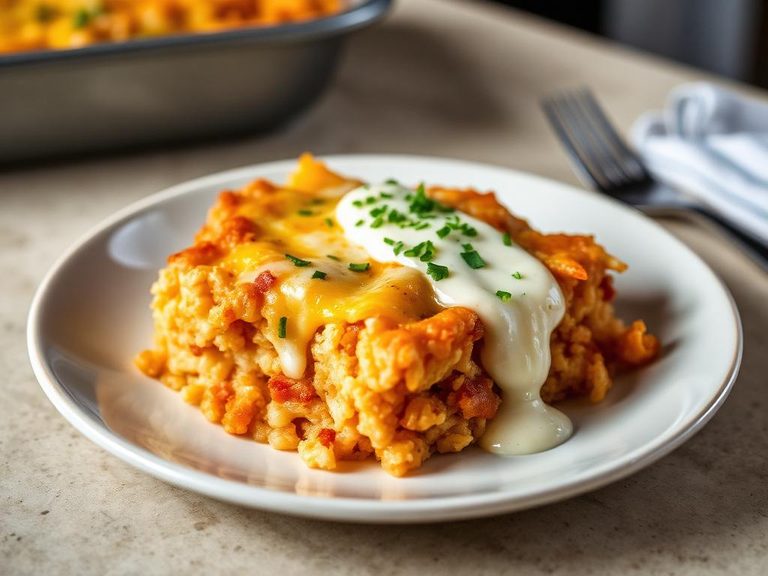

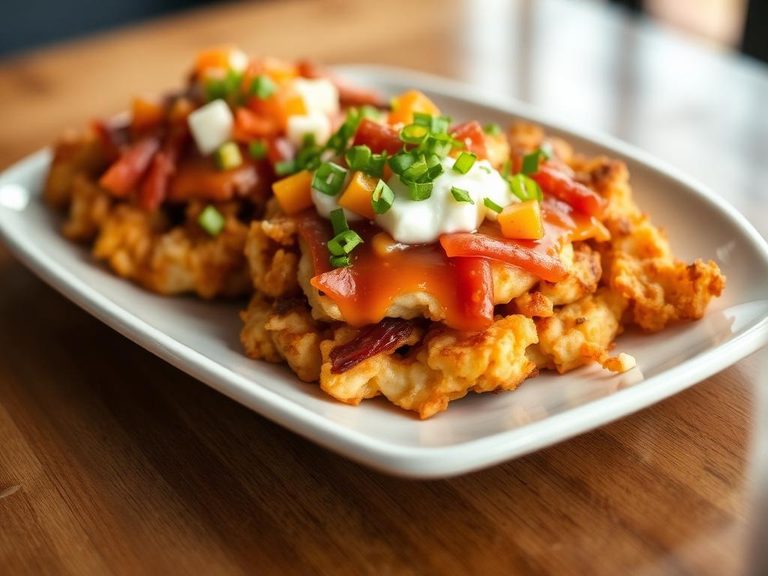
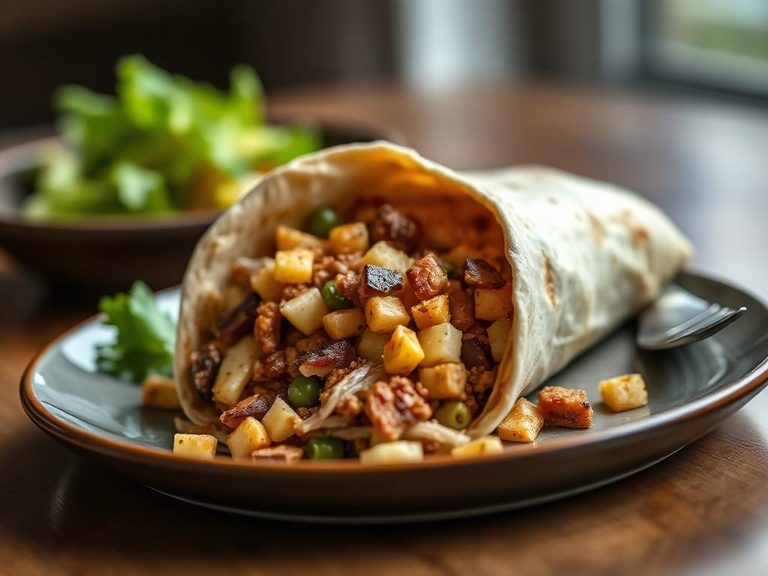
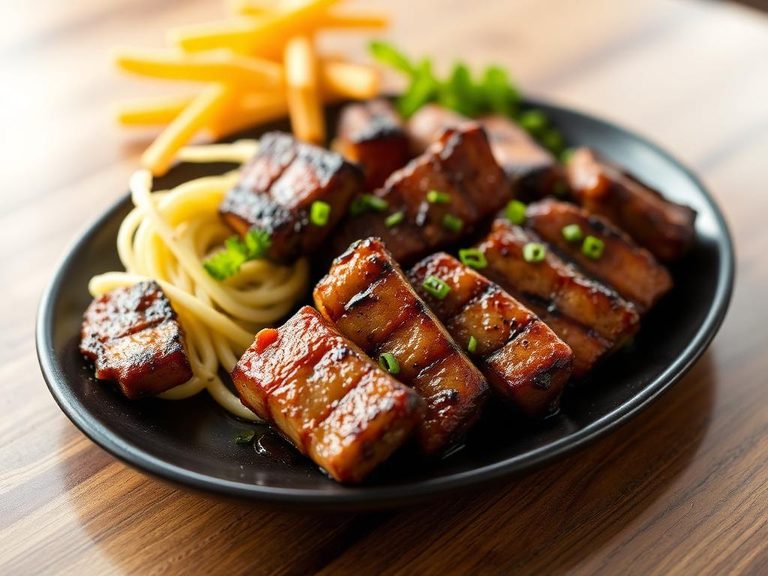
🌍 Where it's eaten
💡 Did you know?
The term 'hash browns' likely originated from 'hashed browned potatoes,' referring to the process of chopping and browning, and they became popular in the United States in the late 19th century as a way to use leftover potatoes.
Full nutrition (USDA data · scales with serving)
| Water | 56.0 g |
| Energy | 219 kcal |
| Energy | 917 kj |
| Protein | 2.6 g |
| Total lipid (fat) | 11.6 g |
| Ash | 1.3 g |
| Carbohydrate, by difference | 28.5 g |
| Fiber, total dietary | 3.2 g |
| Total Sugars | 0.27 g |
| Sucrose | 0.00 g |
| Glucose | 0.26 g |
| Fructose | 0.00 g |
| Lactose | 0.00 g |
| Maltose | 0.00 g |
| Galactose | 0.00 g |
| Starch | 24.6 g |
| Calcium, Ca | 17.0 mg |
| Iron, Fe | 0.54 mg |
| Magnesium, Mg | 28.0 mg |
| Phosphorus, P | 79.0 mg |
| Potassium, K | 496 mg |
| Sodium, Na | 15.0 mg |
| Zinc, Zn | 0.38 mg |
| Copper, Cu | 0.12 mg |
| Manganese, Mn | 0.18 mg |
| Selenium, Se | 0.50 ug |
| Vitamin C, total ascorbic acid | 6.7 mg |
| Thiamin | 0.13 mg |
| Riboflavin | 0.03 mg |
| Niacin | 2.3 mg |
| Pantothenic acid | 0.57 mg |
| Vitamin B-6 | 0.24 mg |
| Folate, total | 16.0 ug |
| Folic acid | 0.00 ug |
| Folate, food | 16.0 ug |
| Folate, DFE | 16.0 ug |
| Choline, total | 23.2 mg |
| Vitamin B-12 | 0.00 ug |
| Vitamin B-12, added | 0.00 ug |
| Vitamin A, RAE | 0.00 ug |
| Retinol | 0.00 ug |
| Carotene, beta | 0.00 ug |
| Carotene, alpha | 0.00 ug |
| Cryptoxanthin, beta | 0.00 ug |
| Vitamin A, IU | 0.00 iu |
| Lycopene | 0.00 ug |
| Lutein + zeaxanthin | 0.00 ug |
| Vitamin E (alpha-tocopherol) | 2.2 mg |
| Vitamin E, added | 0.00 mg |
| Tocopherol, beta | 0.04 mg |
| Tocopherol, gamma | 3.9 mg |
| Tocopherol, delta | 0.16 mg |
| Tocotrienol, alpha | 0.01 mg |
| Tocotrienol, beta | 0.00 mg |
| Tocotrienol, gamma | 0.00 mg |
| Tocotrienol, delta | 0.00 mg |
| Vitamin D (D2 + D3), International Units | 0.00 iu |
| Vitamin D (D2 + D3) | 0.00 ug |
| Vitamin D2 (ergocalciferol) | 0.00 ug |
| Vitamin D3 (cholecalciferol) | 0.00 ug |
| Vitamin K (phylloquinone) | 18.1 ug |
| Vitamin K (Dihydrophylloquinone) | 0.00 ug |
| Vitamin K (Menaquinone-4) | 0.00 ug |
| Alcohol, ethyl | 0.00 g |
| Caffeine | 0.00 mg |
| Theobromine | 0.00 mg |
Fat & fatty acid profile (per 100g)
| Fatty acids, total saturated | 0.93 g |
| SFA 4:0 | 0.01 g |
| SFA 6:0 | 0.00 g |
| SFA 8:0 | 0.00 g |
| SFA 10:0 | 0.01 g |
| SFA 12:0 | 0.00 g |
| SFA 14:0 | 0.01 g |
| SFA 15:0 | 0.00 g |
| SFA 16:0 | 0.52 g |
| SFA 17:0 | 0.01 g |
| SFA 18:0 | 0.24 g |
| SFA 20:0 | 0.07 g |
| SFA 22:0 | 0.04 g |
| SFA 24:0 | 0.02 g |
| Fatty acids, total monounsaturated | 7.3 g |
| MUFA 15:1 | 0.00 g |
| MUFA 16:1 | 0.02 g |
| MUFA 16:1 c | 0.02 g |
| MUFA 17:1 | 0.01 g |
| MUFA 18:1 | 7.1 g |
| MUFA 18:1 c | 7.0 g |
| MUFA 20:1 | 0.20 g |
| MUFA 22:1 | 0.01 g |
| MUFA 22:1 c | 0.00 g |
| MUFA 24:1 c | 0.00 g |
| Fatty acids, total polyunsaturated | 2.8 g |
| PUFA 18:2 | 2.3 g |
| PUFA 18:2 n-6 c,c | 2.3 g |
| PUFA 18:2 CLAs | 0.01 g |
| PUFA 18:3 | 0.45 g |
| PUFA 18:3 n-3 c,c,c (ALA) | 0.37 g |
| PUFA 18:3 n-6 c,c,c | 0.08 g |
| PUFA 18:3i | 0.00 g |
| PUFA 18:4 | 0.00 g |
| PUFA 20:2 n-6 c,c | 0.01 g |
| PUFA 20:3 | 0.01 g |
| PUFA 20:3 n-3 | 0.01 g |
| PUFA 20:3 n-6 | 0.00 g |
| PUFA 20:4 | 0.00 g |
| PUFA 20:5 n-3 (EPA) | 0.00 g |
| PUFA 22:4 | 0.00 g |
| PUFA 22:5 n-3 (DPA) | 0.00 g |
| PUFA 22:6 n-3 (DHA) | 0.00 g |
| Fatty acids, total trans | 0.04 g |
| Fatty acids, total trans-monoenoic | 0.02 g |
| TFA 16:1 t | 0.00 g |
| TFA 18:1 t | 0.01 g |
| TFA 22:1 t | 0.01 g |
| TFA 18:2 t not further defined | 0.02 g |
| Fatty acids, total trans-polyenoic | 0.02 g |
| Cholesterol | 0.00 mg |
Amino acid profile (per 100g)
| Tryptophan | 0.03 g |
| Threonine | 0.11 g |
| Isoleucine | 0.11 g |
| Leucine | 0.20 g |
| Lysine | 0.17 g |
| Methionine | 0.04 g |
| Cystine | 0.05 g |
| Phenylalanine | 0.13 g |
| Tyrosine | 0.10 g |
| Valine | 0.16 g |
| Arginine | 0.17 g |
| Histidine | 0.06 g |
| Alanine | 0.12 g |
| Aspartic acid | 0.48 g |
| Glutamic acid | 0.42 g |
| Glycine | 0.11 g |
| Proline | 0.12 g |
| Serine | 0.13 g |
FAQ
Are frozen hash browns healthier than fresh ones?
Frozen hash browns can be just as nutritious as fresh, as they are often flash-frozen shortly after harvesting to preserve nutrients. However, they may contain added preservatives or sodium, so checking labels is recommended.
How do I make frozen hash browns crispy?
To achieve crispiness, thaw them slightly, pat dry to remove excess moisture, and cook in a hot pan with oil, avoiding overcrowding. Using a cast-iron skillet or air fryer can also enhance crunch.
Can hash browns be part of a healthy diet?
Yes, in moderation and when prepared with minimal oil, they can be a healthy source of carbohydrates and fiber. Pairing them with protein and vegetables creates a balanced meal.
Nutrient density (calculated · NRF9.3)
Nutrient Rich Foods index: beneficial nutrients (protein, fiber, vitamins, minerals) minus saturated fat, added sugar & sodium, per 100 kcal.
NRF9.3 index — Fulgoni, Keast & Drewnowski, 2009. Computed from USDA nutrients.
Weight-loss friendliness (composite index)
Energy density 2.19 kcal/g · 5% calories from protein · 3.2 g fiber · 0.3 g sugar per 100 g.
Composite of energy density (Rolls et al., 1999), protein & fiber satiety, minus sugar. A calculated heuristic — ranks satiety-per-calorie, not a clinical measure.
Dietary load (calculated from USDA values)
Potential renal acid load. Positive = acid-forming, negative = alkaline-forming.
Sodium-to-potassium ratio: 0.03 (lower is better — aim for ≤ 1)
Sodium:potassium per WHO potassium guidance. Computed from USDA nutrients.