

Pork, fresh, loin, center loin (chops), boneless, separable lean and fat, cooked, pan-broiled
Whole food · Pork Products

Photo: Wikipedia
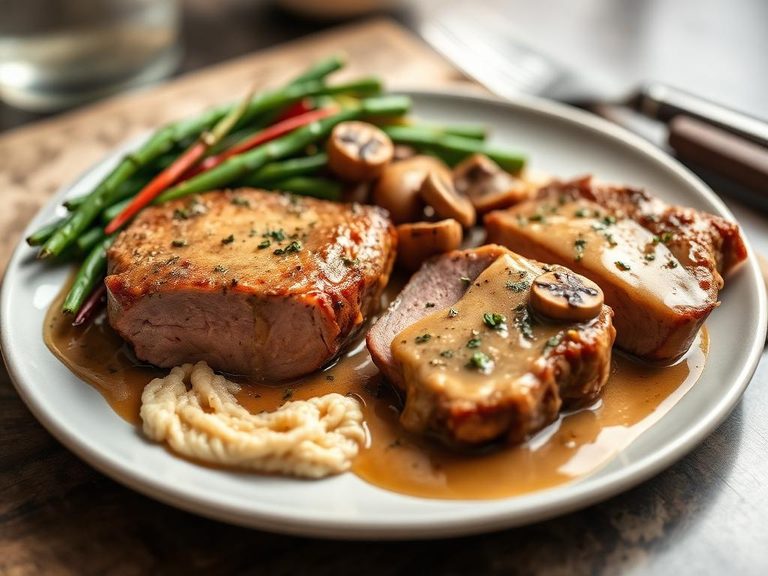
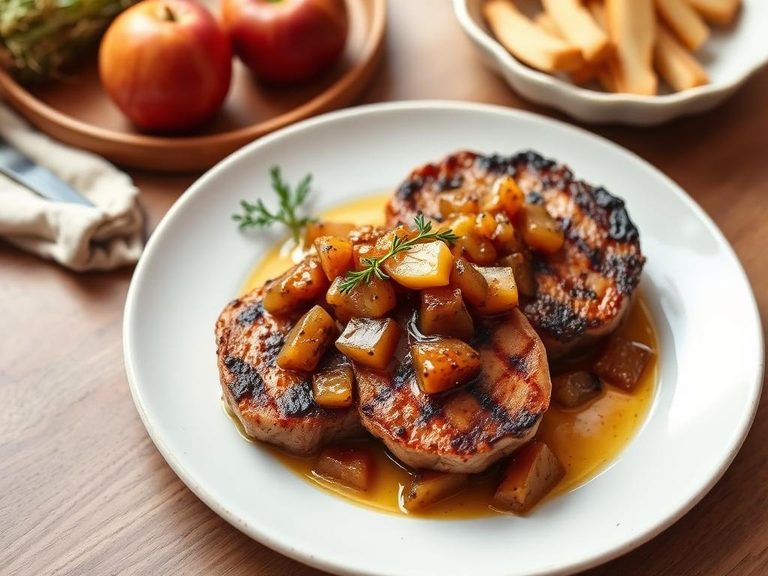
A pan-broiled boneless pork loin chop is a lean, tender cut from the center of the pig's back. When cooked, it develops a satisfying, savory crust while the interior remains juicy and mild in flavor, with a firm yet not tough texture. It's a protein powerhouse, delivering a substantial 26.68 grams of high-quality protein per 100 grams with zero carbohydrates.
Calorie split: 47% protein · 0% carbs · 53% fat
↓ Full nutrition💚 Why it's loved
People love it for its mild, adaptable flavor that readily absorbs marinades and spices, and for its quick, convenient cooking time. It's a staple in home kitchens worldwide, offering a satisfying, protein-rich centerpiece for a meal.
⚠️ Watch-outs & how to enjoy it better
As a very lean cut, it can easily become dry and tough if overcooked. To counteract this, use a meat thermometer to pull it at 145°F (63°C) and let it rest before slicing. Pairing it with a flavorful sauce, like a pan gravy or chimichurri, can also add moisture and richness.
Key benefits
- Excellent source of complete protein for muscle maintenance and growth.
- Provides B vitamins like thiamine (B1) and niacin (B3) crucial for energy metabolism.
- Rich in minerals such as selenium and phosphorus.
- Naturally zero-carb, making it suitable for low-carb and ketogenic dietary patterns.
- A versatile, lean canvas for a wide range of flavors and cuisines.
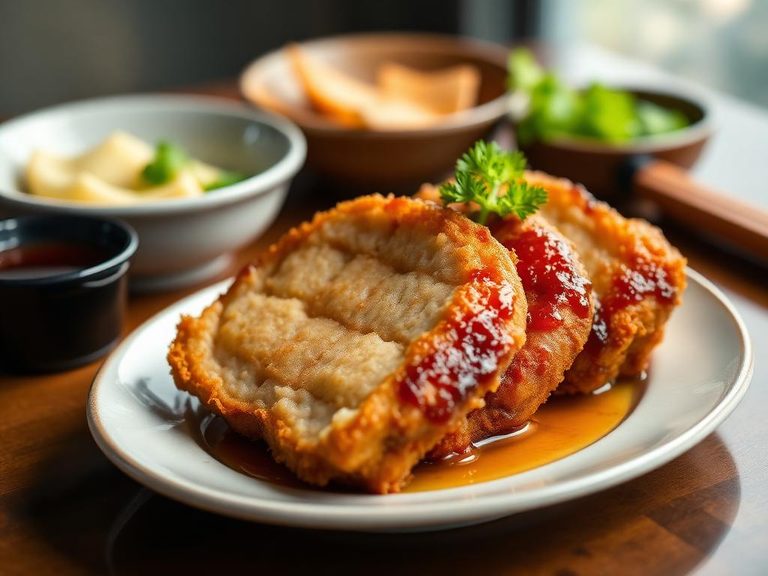
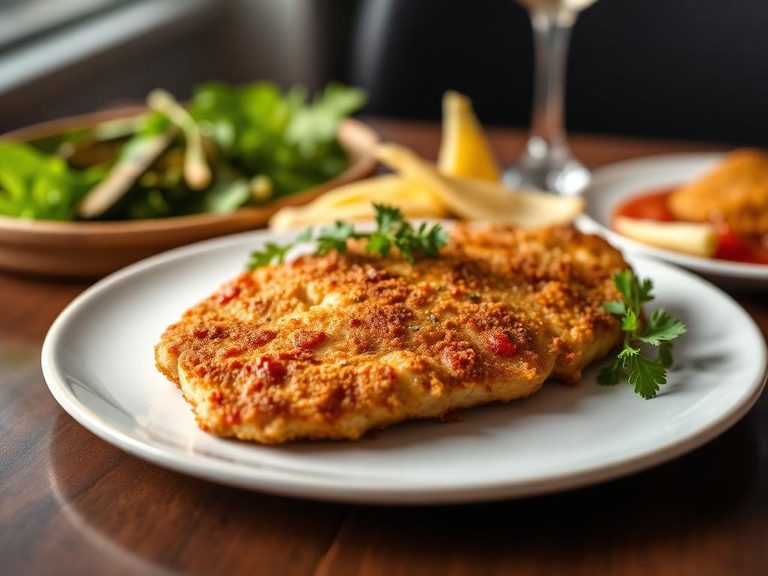
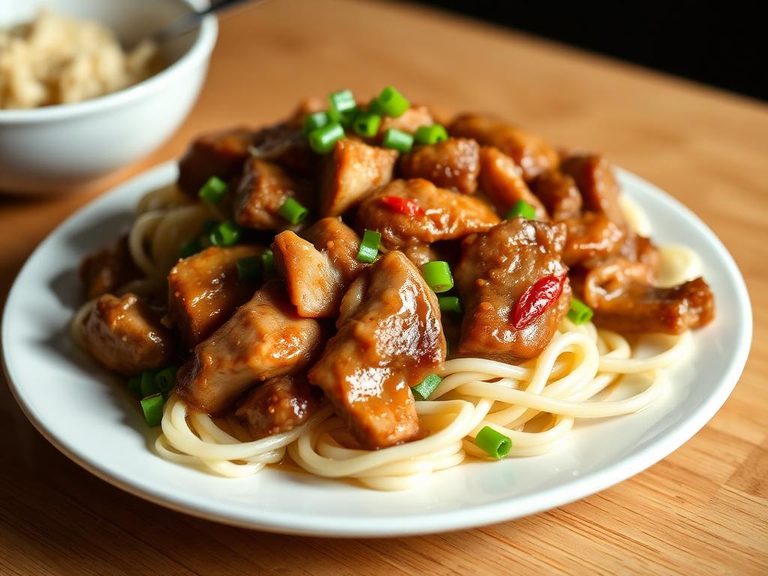
🍽️ Popular dishes
🌍 Where it's eaten
💡 Did you know?
The center loin chop is sometimes called the 'pork tenderloin's cousin' because they come from adjacent muscles on the pig, but the loin chop is larger and has a bit more fat marbling.
Full nutrition (USDA data · scales with serving)
| Water | 59.4 g |
| Energy | 229 kcal |
| Energy | 958 kj |
| Protein | 26.7 g |
| Total lipid (fat) | 13.6 g |
| Ash | 1.0 g |
| Carbohydrate, by difference | 0.00 g |
| Fiber, total dietary | 0.00 g |
| Total Sugars | 0.00 g |
| Calcium, Ca | 9.0 mg |
| Iron, Fe | 0.62 mg |
| Magnesium, Mg | 25.0 mg |
| Phosphorus, P | 222 mg |
| Potassium, K | 366 mg |
| Sodium, Na | 86.0 mg |
| Zinc, Zn | 1.6 mg |
| Copper, Cu | 0.06 mg |
| Manganese, Mn | 0.00 mg |
| Selenium, Se | 47.8 ug |
| Vitamin C, total ascorbic acid | 0.00 mg |
| Thiamin | 0.55 mg |
| Riboflavin | 0.23 mg |
| Niacin | 8.4 mg |
| Pantothenic acid | 0.79 mg |
| Vitamin B-6 | 0.35 mg |
| Folate, total | 0.00 ug |
| Folic acid | 0.00 ug |
| Folate, food | 0.00 ug |
| Folate, DFE | 0.00 ug |
| Choline, total | 73.0 mg |
| Betaine | 3.9 mg |
| Vitamin B-12 | 0.61 ug |
| Vitamin B-12, added | 0.00 ug |
| Vitamin A, RAE | 5.0 ug |
| Retinol | 5.0 ug |
| Carotene, beta | 0.00 ug |
| Carotene, alpha | 0.00 ug |
| Cryptoxanthin, beta | 0.00 ug |
| Vitamin A, IU | 16.0 iu |
| Lycopene | 0.00 ug |
| Lutein + zeaxanthin | 0.00 ug |
| Vitamin E (alpha-tocopherol) | 0.17 mg |
| Vitamin E, added | 0.00 mg |
| Tocopherol, beta | 0.00 mg |
| Tocopherol, gamma | 0.00 mg |
| Tocopherol, delta | 0.00 mg |
| Tocotrienol, alpha | 0.00 mg |
| Tocotrienol, beta | 0.00 mg |
| Tocotrienol, gamma | 0.00 mg |
| Tocotrienol, delta | 0.00 mg |
| Vitamin D (D2 + D3), International Units | 10.0 iu |
| Vitamin D (D2 + D3) | 0.30 ug |
| Vitamin D3 (cholecalciferol) | 0.30 ug |
| Vitamin K (phylloquinone) | 0.00 ug |
| Vitamin K (Dihydrophylloquinone) | 0.00 ug |
| Alcohol, ethyl | 0.00 g |
| Caffeine | 0.00 mg |
| Theobromine | 0.00 mg |
Fat & fatty acid profile (per 100g)
| Fatty acids, total saturated | 4.9 g |
| SFA 4:0 | 0.00 g |
| SFA 6:0 | 0.00 g |
| SFA 8:0 | 0.00 g |
| SFA 10:0 | 0.03 g |
| SFA 12:0 | 0.01 g |
| SFA 14:0 | 0.18 g |
| SFA 15:0 | 0.01 g |
| SFA 16:0 | 3.0 g |
| SFA 17:0 | 0.04 g |
| SFA 18:0 | 1.5 g |
| SFA 20:0 | 0.02 g |
| SFA 22:0 | 0.00 g |
| SFA 24:0 | 0.00 g |
| Fatty acids, total monounsaturated | 5.9 g |
| MUFA 14:1 | 0.00 g |
| MUFA 15:1 | 0.00 g |
| MUFA 16:1 | 0.31 g |
| MUFA 16:1 c | 0.11 g |
| MUFA 17:1 | 0.01 g |
| MUFA 18:1 | 5.5 g |
| MUFA 18:1 c | 5.4 g |
| MUFA 20:1 | 0.10 g |
| MUFA 22:1 | 0.00 g |
| MUFA 22:1 c | 0.00 g |
| MUFA 24:1 c | 0.00 g |
| Fatty acids, total polyunsaturated | 2.2 g |
| PUFA 18:2 | 1.9 g |
| PUFA 18:2 n-6 c,c | 1.9 g |
| PUFA 18:2 CLAs | 0.00 g |
| PUFA 18:3 | 0.08 g |
| PUFA 18:3 n-3 c,c,c (ALA) | 0.07 g |
| PUFA 18:3 n-6 c,c,c | 0.00 g |
| PUFA 18:3i | 0.00 g |
| PUFA 18:4 | 0.00 g |
| PUFA 20:2 n-6 c,c | 0.08 g |
| PUFA 20:3 | 0.02 g |
| PUFA 20:3 n-3 | 0.00 g |
| PUFA 20:3 n-6 | 0.01 g |
| PUFA 20:4 | 0.07 g |
| PUFA 20:5 n-3 (EPA) | 0.00 g |
| PUFA 22:4 | 0.01 g |
| PUFA 22:5 n-3 (DPA) | 0.01 g |
| PUFA 22:6 n-3 (DHA) | 0.00 g |
| Fatty acids, total trans | 0.08 g |
| Fatty acids, total trans-monoenoic | 0.07 g |
| TFA 16:1 t | 0.00 g |
| TFA 18:1 t | 0.07 g |
| TFA 22:1 t | 0.00 g |
| TFA 18:2 t not further defined | 0.01 g |
| Fatty acids, total trans-polyenoic | 0.01 g |
| Cholesterol | 75.0 mg |
Amino acid profile (per 100g)
| Tryptophan | 0.28 g |
| Threonine | 1.2 g |
| Isoleucine | 1.3 g |
| Leucine | 2.3 g |
| Lysine | 2.5 g |
| Methionine | 0.73 g |
| Cystine | 0.31 g |
| Phenylalanine | 1.1 g |
| Tyrosine | 1.0 g |
| Valine | 1.4 g |
| Arginine | 1.8 g |
| Histidine | 1.1 g |
| Alanine | 1.6 g |
| Aspartic acid | 2.6 g |
| Glutamic acid | 4.3 g |
| Glycine | 1.2 g |
| Proline | 1.1 g |
| Serine | 1.2 g |
| Hydroxyproline | 0.00 g |
FAQ
How is a center loin chop different from a sirloin chop?
The center loin chop comes from the middle of the loin, making it more uniform, leaner, and tender. A sirloin chop is cut from the end of the loin near the hip, contains more fat and connective tissue, and has a richer flavor but can be tougher.
What's the best way to prevent it from drying out?
Brining for 30-60 minutes in a saltwater solution helps the meat retain moisture. More importantly, avoid overcooking—use an instant-read thermometer and remove the chops from the pan when they reach 140-145°F (60-63°C), as they will continue to cook while resting.
Is the fat content a concern?
At 13.6g of fat per 100g, it's a moderately fatty cut. The fat is primarily saturated, so enjoying it as part of a balanced diet with plenty of vegetables and lean proteins is key. Trimming any visible exterior fat before cooking can reduce the total fat content.
Nutrient density (calculated · NRF9.3)
Nutrient Rich Foods index: beneficial nutrients (protein, fiber, vitamins, minerals) minus saturated fat, added sugar & sodium, per 100 kcal.
NRF9.3 index — Fulgoni, Keast & Drewnowski, 2009. Computed from USDA nutrients.
Weight-loss friendliness (composite index)
Energy density 2.29 kcal/g · 47% calories from protein · 0.0 g fiber · 0.0 g sugar per 100 g.
Composite of energy density (Rolls et al., 1999), protein & fiber satiety, minus sugar. A calculated heuristic — ranks satiety-per-calorie, not a clinical measure.
Dietary load (calculated from USDA values)
Potential renal acid load. Positive = acid-forming, negative = alkaline-forming.
Sodium-to-potassium ratio: 0.23 (lower is better — aim for ≤ 1)
Sodium:potassium per WHO potassium guidance. Computed from USDA nutrients.