

Pork, cured, ham with natural juices, whole, boneless, separable lean only, heated, roasted
Whole food · Pork Products
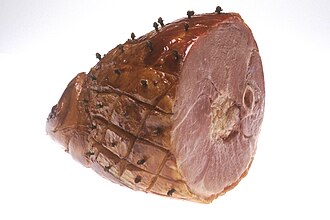
Photo: Wikipedia
This is a lean, roasted, boneless ham cut, cooked in its own natural juices for a moist, tender texture. Its flavor is savory and subtly sweet, with a clean, meaty taste that isn't overly salty or smoky. Nutritionally, it's a powerhouse of high-quality protein with minimal fat and carbohydrates.
Calorie split: 73% protein · 3% carbs · 24% fat
↓ Full nutrition💚 Why it's loved
People love it for its delicate, hammy flavor that's versatile enough for both simple slices and elaborate recipes. It's a cultural staple for holiday meals and quick weeknight dinners alike, offering a taste of comfort and tradition.
⚠️ Watch-outs & how to enjoy it better
The primary concern is its sodium content, which can be high in cured meats. Those monitoring blood pressure or sodium intake should be mindful of portions. To counteract this, pair it with potassium-rich foods like roasted potatoes or a fresh salad, and drink plenty of water.
Key benefits
- Excellent source of complete protein for muscle maintenance.
- Very low in carbohydrates and sugars.
- Low in total fat, especially saturated fat.
- Provides essential minerals like phosphorus and zinc.
- A convenient, ready-to-eat protein source.
🍽️ Popular dishes
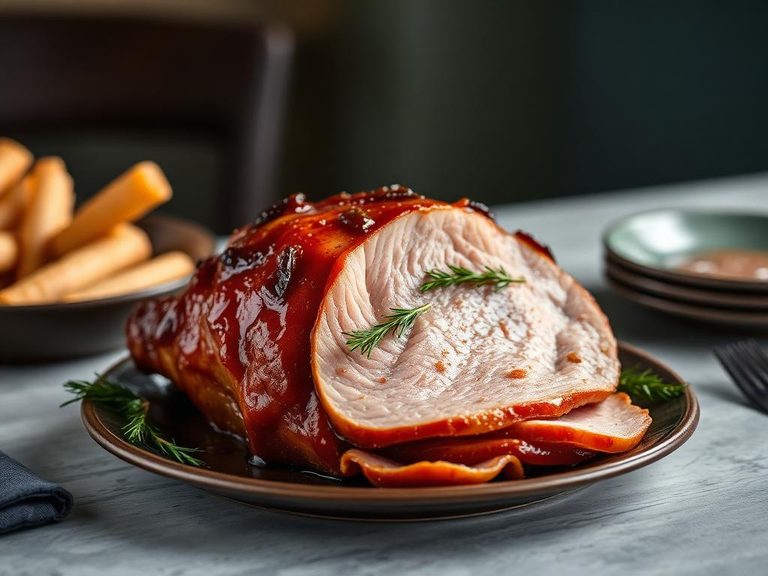

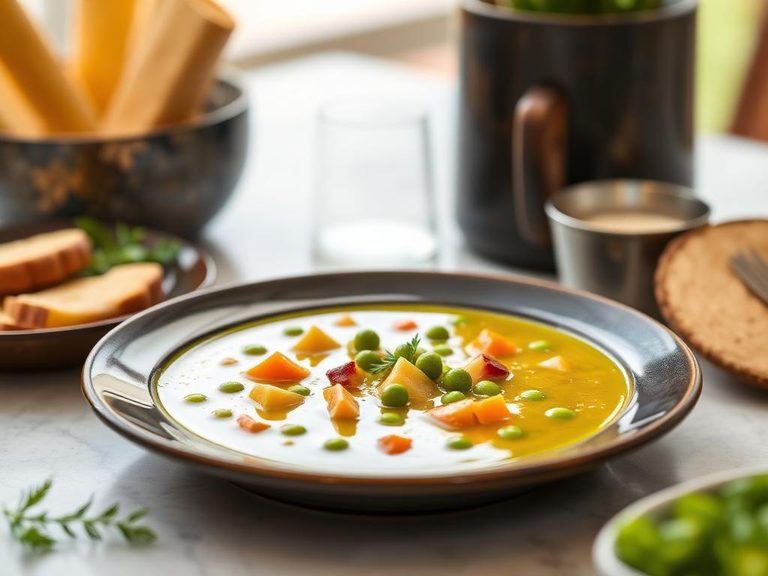


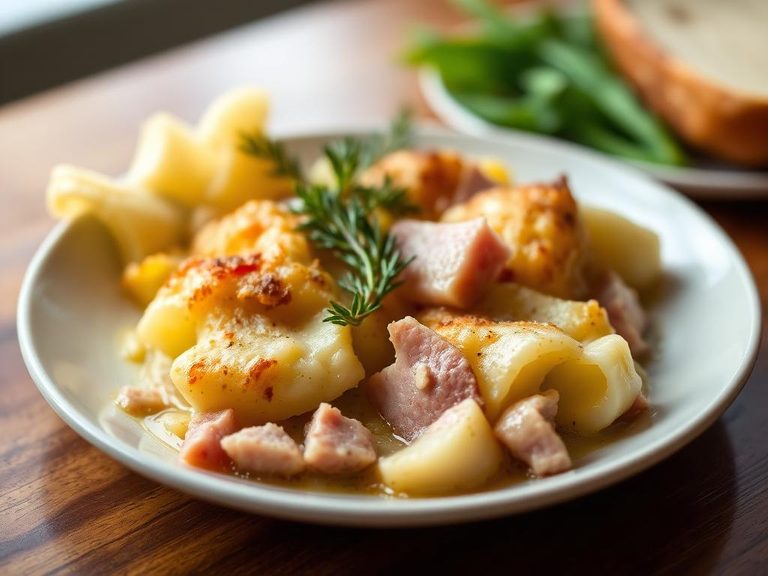
🌍 Where it's eaten
💡 Did you know?
The process of curing ham with salt and sometimes sugar or smoke is an ancient preservation method dating back to ancient Rome, long before refrigeration existed.
Full nutrition (USDA data · scales with serving)
| Water | 71.7 g |
| Energy | 113 kcal |
| Energy | 472 kj |
| Protein | 20.6 g |
| Total lipid (fat) | 3.0 g |
| Ash | 3.9 g |
| Carbohydrate, by difference | 0.84 g |
| Fiber, total dietary | 0.00 g |
| Total Sugars | 0.81 g |
| Sucrose | 0.37 g |
| Glucose | 0.44 g |
| Fructose | 0.00 g |
| Lactose | 0.00 g |
| Maltose | 0.00 g |
| Galactose | 0.00 g |
| Calcium, Ca | 6.0 mg |
| Iron, Fe | 0.85 mg |
| Magnesium, Mg | 22.0 mg |
| Phosphorus, P | 318 mg |
| Potassium, K | 367 mg |
| Sodium, Na | 1180 mg |
| Zinc, Zn | 2.0 mg |
| Copper, Cu | 0.27 mg |
| Manganese, Mn | 0.03 mg |
| Selenium, Se | 32.7 ug |
| Vitamin C, total ascorbic acid | 0.00 mg |
| Thiamin | 0.62 mg |
| Riboflavin | 0.22 mg |
| Niacin | 6.8 mg |
| Pantothenic acid | 0.89 mg |
| Vitamin B-6 | 0.46 mg |
| Folate, total | 2.0 ug |
| Folic acid | 0.00 ug |
| Folate, food | 2.0 ug |
| Folate, DFE | 2.0 ug |
| Choline, total | 79.8 mg |
| Betaine | 7.8 mg |
| Vitamin B-12 | 0.42 ug |
| Vitamin B-12, added | 0.00 ug |
| Vitamin A, RAE | 13.0 ug |
| Retinol | 13.0 ug |
| Carotene, beta | 0.00 ug |
| Carotene, alpha | 0.00 ug |
| Cryptoxanthin, beta | 0.00 ug |
| Vitamin A, IU | 44.0 iu |
| Lycopene | 0.00 ug |
| Lutein + zeaxanthin | 0.00 ug |
| Vitamin E (alpha-tocopherol) | 0.27 mg |
| Vitamin E, added | 0.00 mg |
| Tocopherol, beta | 0.01 mg |
| Tocopherol, gamma | 0.03 mg |
| Tocopherol, delta | 0.00 mg |
| Tocotrienol, alpha | 0.03 mg |
| Tocotrienol, beta | 0.00 mg |
| Tocotrienol, gamma | 0.00 mg |
| Tocotrienol, delta | 0.00 mg |
| Vitamin D (D2 + D3), International Units | 30.0 iu |
| Vitamin D (D2 + D3) | 0.80 ug |
| Vitamin D3 (cholecalciferol) | 0.80 ug |
| Vitamin K (phylloquinone) | 0.00 ug |
| Vitamin K (Dihydrophylloquinone) | 0.00 ug |
| Vitamin K (Menaquinone-4) | 2.4 ug |
| Alcohol, ethyl | 0.00 g |
| Caffeine | 0.00 mg |
| Theobromine | 0.00 mg |
Fat & fatty acid profile (per 100g)
| Fatty acids, total saturated | 1.0 g |
| SFA 4:0 | 0.00 g |
| SFA 6:0 | 0.00 g |
| SFA 8:0 | 0.00 g |
| SFA 10:0 | 0.00 g |
| SFA 12:0 | 0.00 g |
| SFA 14:0 | 0.04 g |
| SFA 15:0 | 0.00 g |
| SFA 16:0 | 0.66 g |
| SFA 17:0 | 0.01 g |
| SFA 18:0 | 0.32 g |
| SFA 20:0 | 0.01 g |
| SFA 22:0 | 0.01 g |
| Fatty acids, total monounsaturated | 1.4 g |
| MUFA 14:1 | 0.00 g |
| MUFA 15:1 | 0.00 g |
| MUFA 16:1 | 0.09 g |
| MUFA 17:1 | 0.00 g |
| MUFA 18:1 | 1.3 g |
| MUFA 18:1 c | 1.3 g |
| MUFA 20:1 | 0.02 g |
| MUFA 22:1 | 0.00 g |
| Fatty acids, total polyunsaturated | 0.44 g |
| PUFA 18:2 | 0.36 g |
| PUFA 18:2 n-6 c,c | 0.35 g |
| PUFA 18:3 | 0.02 g |
| PUFA 18:3 n-3 c,c,c (ALA) | 0.02 g |
| PUFA 18:3 n-6 c,c,c | 0.00 g |
| PUFA 18:4 | 0.00 g |
| PUFA 20:2 n-6 c,c | 0.01 g |
| PUFA 20:3 | 0.00 g |
| PUFA 20:4 | 0.05 g |
| PUFA 20:5 n-3 (EPA) | 0.00 g |
| PUFA 22:5 n-3 (DPA) | 0.00 g |
| PUFA 22:6 n-3 (DHA) | 0.00 g |
| Fatty acids, total trans | 0.02 g |
| Fatty acids, total trans-monoenoic | 0.01 g |
| TFA 18:1 t | 0.01 g |
| TFA 18:2 t,t | 0.01 g |
| Fatty acids, total trans-polyenoic | 0.01 g |
| Cholesterol | 56.0 mg |
Amino acid profile (per 100g)
| Tryptophan | 0.19 g |
| Threonine | 0.92 g |
| Isoleucine | 0.93 g |
| Leucine | 1.6 g |
| Lysine | 1.7 g |
| Methionine | 0.49 g |
| Cystine | 0.23 g |
| Phenylalanine | 0.82 g |
| Tyrosine | 0.67 g |
| Valine | 1.0 g |
| Arginine | 1.3 g |
| Histidine | 0.90 g |
| Alanine | 1.2 g |
| Aspartic acid | 1.8 g |
| Glutamic acid | 2.9 g |
| Glycine | 1.1 g |
| Proline | 0.88 g |
| Serine | 0.81 g |
| Hydroxyproline | 0.13 g |
FAQ
Is this the same as 'city ham'?
Yes, this description typically refers to a 'city ham,' which is wet-cured (often injected with brine) and fully cooked, as opposed to a dry-cured, aged 'country ham.'
How is 'heated, roasted' different from just 'cooked'?
It means the ham was fully cooked during processing, and then further roasted by the consumer or preparer to develop flavor, warm it through, and often to add a glaze or caramelized exterior.
Can I eat this cold?
Absolutely. Since it's fully cooked, it's perfectly safe and delicious sliced cold for sandwiches, salads, and charcuterie boards.
What does 'separable lean only' mean?
It means the nutritional data reflects only the lean meat portion, with any visible fat trimmed away before analysis.
Nutrient density (calculated · NRF9.3)
Nutrient Rich Foods index: beneficial nutrients (protein, fiber, vitamins, minerals) minus saturated fat, added sugar & sodium, per 100 kcal.
NRF9.3 index — Fulgoni, Keast & Drewnowski, 2009. Computed from USDA nutrients.
Weight-loss friendliness (composite index)
Energy density 1.13 kcal/g · 73% calories from protein · 0.0 g fiber · 0.8 g sugar per 100 g.
Composite of energy density (Rolls et al., 1999), protein & fiber satiety, minus sugar. A calculated heuristic — ranks satiety-per-calorie, not a clinical measure.
Dietary load (calculated from USDA values)
Potential renal acid load. Positive = acid-forming, negative = alkaline-forming.
Sodium-to-potassium ratio: 3.22 (lower is better — aim for ≤ 1)
Sodium:potassium per WHO potassium guidance. Computed from USDA nutrients.