

Frankfurter, beef, unheated
Whole food · Sausages and Luncheon Meats
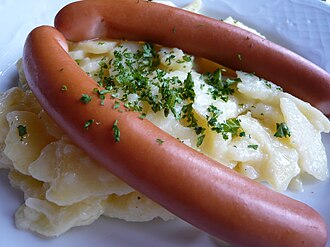
Photo: Wikipedia
A classic German-style sausage made from seasoned, cured beef, encased in a thin, natural casing that gives it a satisfying snap when bitten. It offers a rich, savory, and slightly smoky flavor with a firm, juicy texture. Nutritionally, it's a dense source of protein and fat, with virtually no carbohydrates.
Calorie split: 15% protein · 4% carbs · 81% fat
↓ Full nutrition💚 Why it's loved
People love its iconic, savory 'snap' and deep, smoky flavor that's a staple at cookouts and quick meals. Its versatility makes it perfect for everything from a simple bun to a complex stew.
⚠️ Watch-outs & how to enjoy it better
It is high in sodium and saturated fat, which should be considered by those monitoring heart health or blood pressure. To counteract this, pair it with fiber-rich sides like sauerkraut or a fresh salad, and practice portion control by using it as a flavor accent rather than the main protein.
Key benefits
- High in protein for muscle maintenance
- Provides essential fats and calories for energy
- Contains B vitamins, especially B12
- Long shelf life due to curing process
- Quick and convenient protein source
🍽️ Popular dishes


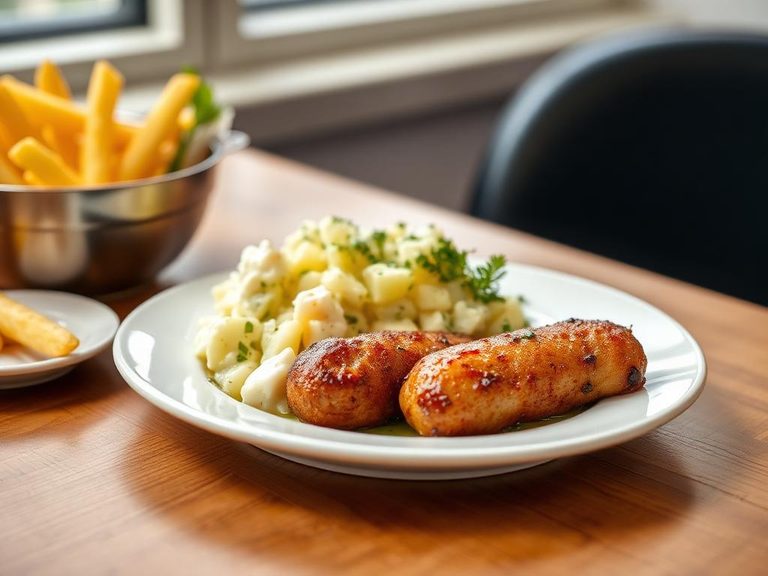
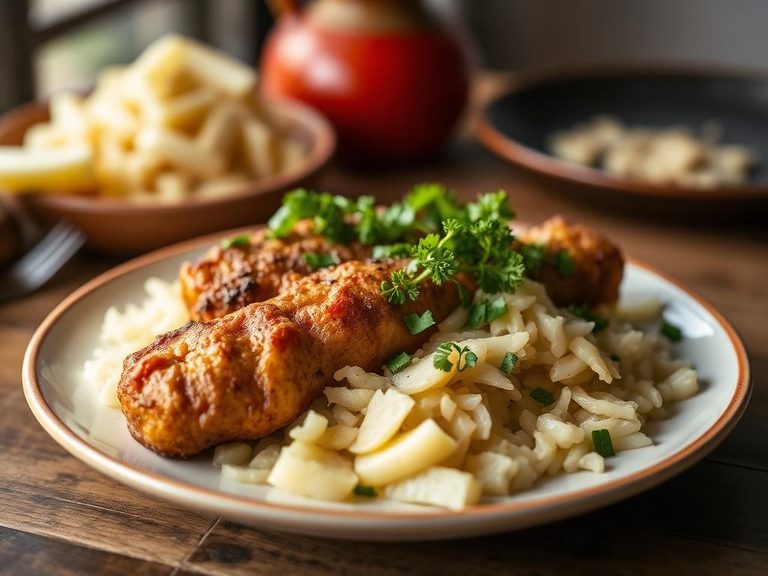

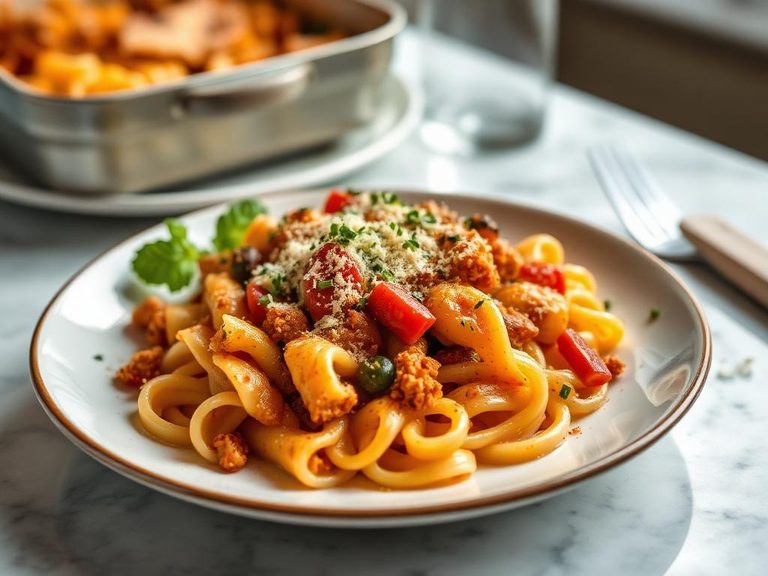
🌍 Where it's eaten
💡 Did you know?
The name 'frankfurter' comes from Frankfurt, Germany, where the sausage was allegedly first created for a coronation ceremony in 1487.
Full nutrition (USDA data · scales with serving)
| Water | 54.5 g |
| Energy | 315 kcal |
| Energy | 1318 kj |
| Protein | 11.7 g |
| Total lipid (fat) | 28.1 g |
| Ash | 2.8 g |
| Carbohydrate, by difference | 3.0 g |
| Fiber, total dietary | 0.00 g |
| Total Sugars | 1.2 g |
| Sucrose | 0.00 g |
| Glucose | 1.1 g |
| Fructose | 0.00 g |
| Lactose | 0.00 g |
| Maltose | 0.10 g |
| Galactose | 0.00 g |
| Calcium, Ca | 14.0 mg |
| Iron, Fe | 1.1 mg |
| Magnesium, Mg | 11.0 mg |
| Phosphorus, P | 134 mg |
| Potassium, K | 364 mg |
| Sodium, Na | 865 mg |
| Zinc, Zn | 2.0 mg |
| Copper, Cu | 0.04 mg |
| Manganese, Mn | 0.03 mg |
| Selenium, Se | 10.3 ug |
| Vitamin C, total ascorbic acid | 0.00 mg |
| Thiamin | 0.03 mg |
| Riboflavin | 0.15 mg |
| Niacin | 2.2 mg |
| Pantothenic acid | 0.26 mg |
| Vitamin B-6 | 0.13 mg |
| Folate, total | 0.00 ug |
| Folic acid | 0.00 ug |
| Folate, food | 0.00 ug |
| Folate, DFE | 0.00 ug |
| Choline, total | 31.9 mg |
| Vitamin B-12 | 0.96 ug |
| Vitamin B-12, added | 0.00 ug |
| Vitamin A, RAE | 3.0 ug |
| Retinol | 3.0 ug |
| Carotene, beta | 0.00 ug |
| Carotene, alpha | 0.00 ug |
| Cryptoxanthin, beta | 0.00 ug |
| Vitamin A, IU | 11.0 iu |
| Lycopene | 0.00 ug |
| Lutein + zeaxanthin | 0.00 ug |
| Vitamin E (alpha-tocopherol) | 0.50 mg |
| Vitamin E, added | 0.00 mg |
| Tocopherol, beta | 0.00 mg |
| Tocopherol, gamma | 0.17 mg |
| Tocopherol, delta | 0.00 mg |
| Tocotrienol, alpha | 0.00 mg |
| Tocotrienol, beta | 0.00 mg |
| Tocotrienol, gamma | 0.00 mg |
| Tocotrienol, delta | 0.00 mg |
| Vitamin D (D2 + D3), International Units | 36.0 iu |
| Vitamin D (D2 + D3) | 0.90 ug |
| Vitamin K (phylloquinone) | 1.8 ug |
| Alcohol, ethyl | 0.00 g |
| Caffeine | 0.00 mg |
| Theobromine | 0.00 mg |
Fat & fatty acid profile (per 100g)
| Fatty acids, total saturated | 11.5 g |
| SFA 4:0 | 0.00 g |
| SFA 6:0 | 0.00 g |
| SFA 8:0 | 0.01 g |
| SFA 10:0 | 0.01 g |
| SFA 12:0 | 0.02 g |
| SFA 14:0 | 0.85 g |
| SFA 15:0 | 0.14 g |
| SFA 16:0 | 6.3 g |
| SFA 17:0 | 0.36 g |
| SFA 18:0 | 3.7 g |
| SFA 20:0 | 0.03 g |
| SFA 22:0 | 0.01 g |
| SFA 24:0 | 0.00 g |
| Fatty acids, total monounsaturated | 13.6 g |
| MUFA 14:1 | 0.26 g |
| MUFA 15:1 | 0.00 g |
| MUFA 16:1 | 1.1 g |
| MUFA 16:1 c | 0.97 g |
| MUFA 17:1 | 0.26 g |
| MUFA 18:1 | 11.8 g |
| MUFA 18:1 c | 10.4 g |
| MUFA 20:1 | 0.11 g |
| MUFA 22:1 | 0.06 g |
| MUFA 22:1 c | 0.06 g |
| MUFA 24:1 c | 0.00 g |
| Fatty acids, total polyunsaturated | 1.1 g |
| PUFA 18:2 | 0.93 g |
| PUFA 18:2 n-6 c,c | 0.62 g |
| PUFA 18:2 CLAs | 0.17 g |
| PUFA 18:3 | 0.08 g |
| PUFA 18:3 n-3 c,c,c (ALA) | 0.07 g |
| PUFA 18:3 n-6 c,c,c | 0.01 g |
| PUFA 18:3i | 0.00 g |
| PUFA 18:4 | 0.00 g |
| PUFA 20:2 n-6 c,c | 0.01 g |
| PUFA 20:3 | 0.02 g |
| PUFA 20:3 n-3 | 0.00 g |
| PUFA 20:3 n-6 | 0.02 g |
| PUFA 20:4 | 0.03 g |
| PUFA 20:5 n-3 (EPA) | 0.00 g |
| PUFA 22:4 | 0.01 g |
| PUFA 22:5 n-3 (DPA) | 0.01 g |
| PUFA 22:6 n-3 (DHA) | 0.00 g |
| Fatty acids, total trans | 1.7 g |
| Fatty acids, total trans-monoenoic | 1.5 g |
| TFA 16:1 t | 0.09 g |
| TFA 18:1 t | 1.4 g |
| TFA 22:1 t | 0.00 g |
| TFA 18:2 t not further defined | 0.13 g |
| Fatty acids, total trans-polyenoic | 0.13 g |
| Cholesterol | 58.0 mg |
Amino acid profile (per 100g)
Estimated from Frankfurter, meat, heated — USDA does not publish this profile for Frankfurter.
| Tryptophan | 0.10 g |
| Threonine | 0.45 g |
| Isoleucine | 0.51 g |
| Leucine | 0.86 g |
| Lysine | 0.92 g |
| Methionine | 0.28 g |
| Cystine | 0.10 g |
| Phenylalanine | 0.42 g |
| Tyrosine | 0.36 g |
| Valine | 0.53 g |
| Arginine | 0.66 g |
| Histidine | 0.32 g |
| Alanine | 0.59 g |
| Aspartic acid | 0.97 g |
| Glutamic acid | 1.6 g |
| Glycine | 0.47 g |
| Proline | 0.41 g |
| Serine | 0.39 g |
FAQ
What's the difference between a frankfurter and a wiener?
Traditionally, a frankfurter is made from beef, while a wiener (from Vienna, Wien) is made from pork and beef. In modern usage, especially in the US, the terms are often used interchangeably for similar sausages.
Is it safe to eat unheated?
Yes, as a cured sausage, it is pre-cooked and safe to eat cold. However, heating enhances its flavor and texture, giving it that characteristic 'snap'.
How should I store it?
Keep unopened packages in the refrigerator. Once opened, store in an airtight container and consume within 3-4 days. It can also be frozen for up to 2 months.
Nutrient density (calculated · NRF9.3)
Nutrient Rich Foods index: beneficial nutrients (protein, fiber, vitamins, minerals) minus saturated fat, added sugar & sodium, per 100 kcal.
NRF9.3 index — Fulgoni, Keast & Drewnowski, 2009. Computed from USDA nutrients.
Weight-loss friendliness (composite index)
Energy density 3.15 kcal/g · 15% calories from protein · 0.0 g fiber · 1.2 g sugar per 100 g.
Composite of energy density (Rolls et al., 1999), protein & fiber satiety, minus sugar. A calculated heuristic — ranks satiety-per-calorie, not a clinical measure.
Dietary load (calculated from USDA values)
Potential renal acid load. Positive = acid-forming, negative = alkaline-forming.
Sodium-to-potassium ratio: 2.38 (lower is better — aim for ≤ 1)
Sodium:potassium per WHO potassium guidance. Computed from USDA nutrients.