

Fish, tuna, fresh, yellowfin, raw
Whole food · Finfish and Shellfish Products
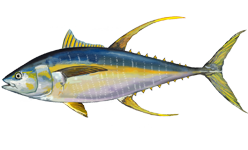
Photo: Wikipedia
Yellowfin tuna is a lean, deep-sea fish prized for its firm, meaty texture and clean, mildly sweet flavor that avoids the 'fishy' taste many dislike. With an exceptionally high protein-to-calorie ratio (24.4g protein per 109 kcal), it's a powerhouse of nutrition with virtually no fat or carbohydrates. Its deep red, almost jewel-like flesh when raw is a hallmark of premium sashimi and poke bowls worldwide.
Calorie split: 96% protein · 0% carbs · 4% fat
↓ Full nutrition💚 Why it's loved
People adore yellowfin tuna for its buttery, steak-like texture that holds up beautifully whether seared rare, diced for poke, or eaten raw as sashimi. Its mild, clean flavor makes it incredibly versatile, appealing to both seafood enthusiasts and those who typically avoid fish, while its cultural significance in Japanese and Hawaiian cuisine adds a layer of culinary prestige.
⚠️ Watch-outs & how to enjoy it better
Yellowfin tuna is high in mercury, so pregnant women, nursing mothers, and young children should limit consumption to 2-3 servings per week and choose lower-mercury fish like salmon or sardines. Its lean nature means it can dry out if overcooked, so quick searing or serving raw is best; if pan-frying, use a small amount of healthy fat like olive oil and cook to medium-rare.
Key benefits
- Excellent source of high-quality, complete protein for muscle maintenance and satiety
- Naturally low in fat and calories, making it ideal for weight management
- Rich in selenium, an antioxidant that supports thyroid function
- Provides B vitamins (especially B12) for energy metabolism
- Contains omega-3 fatty acids, albeit less than fattier fish like salmon
🍽️ Popular dishes
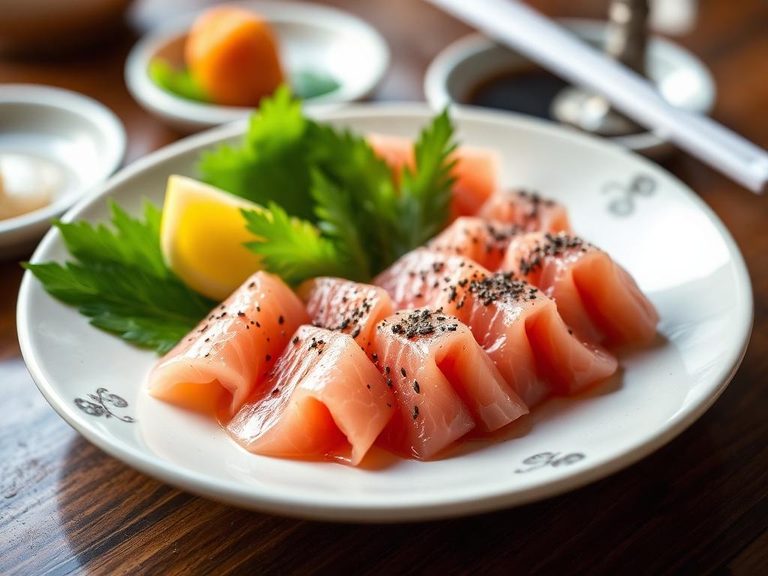
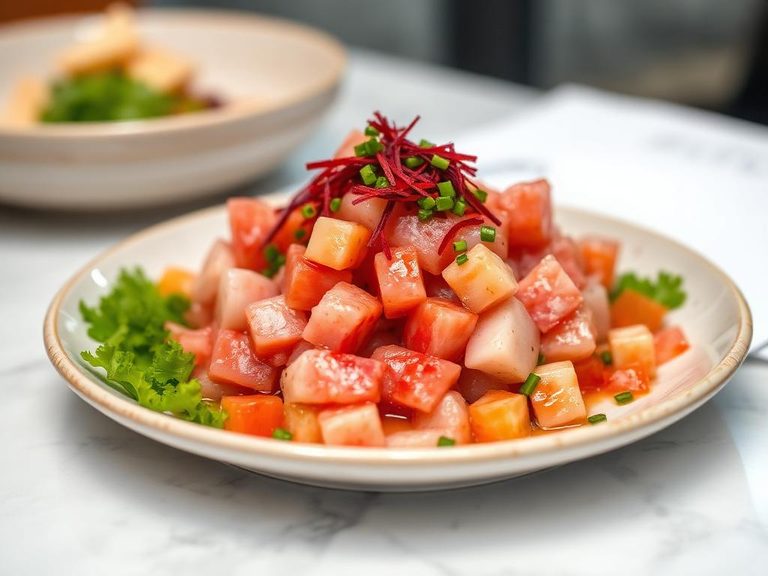
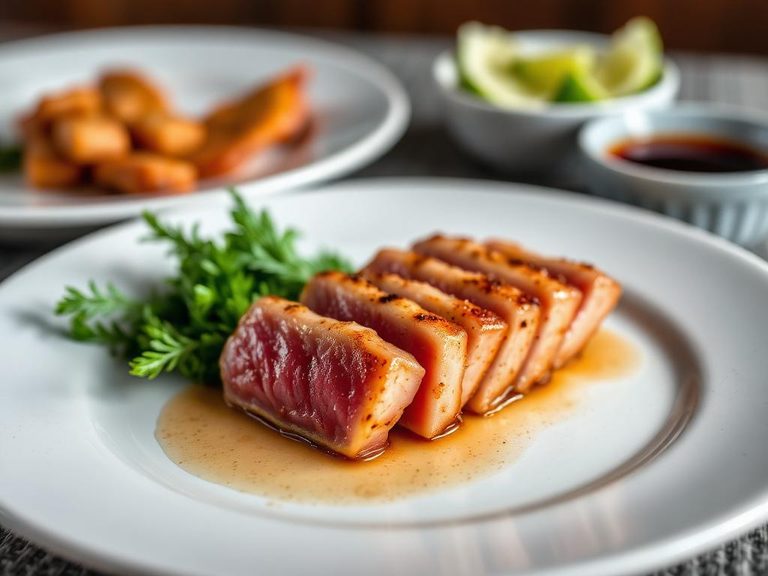
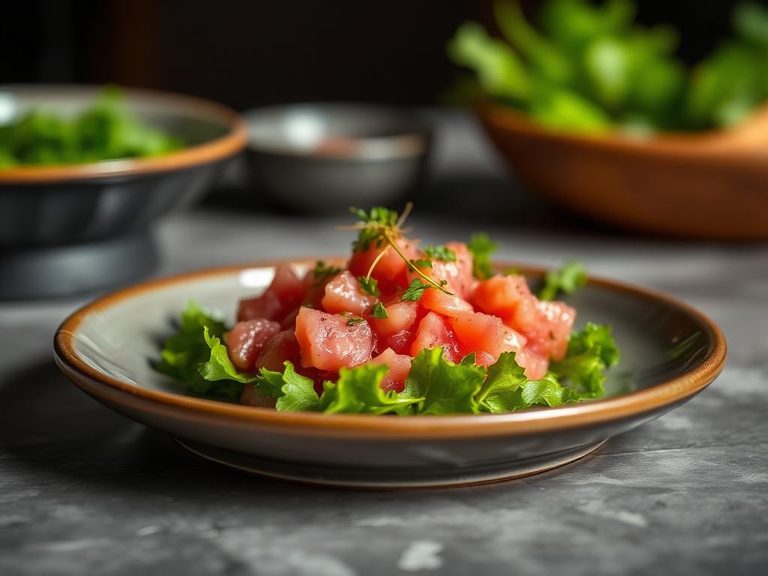
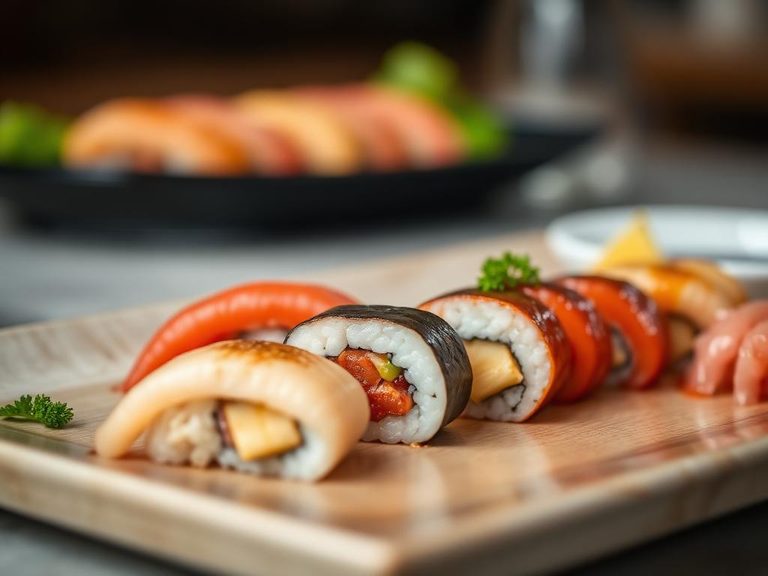
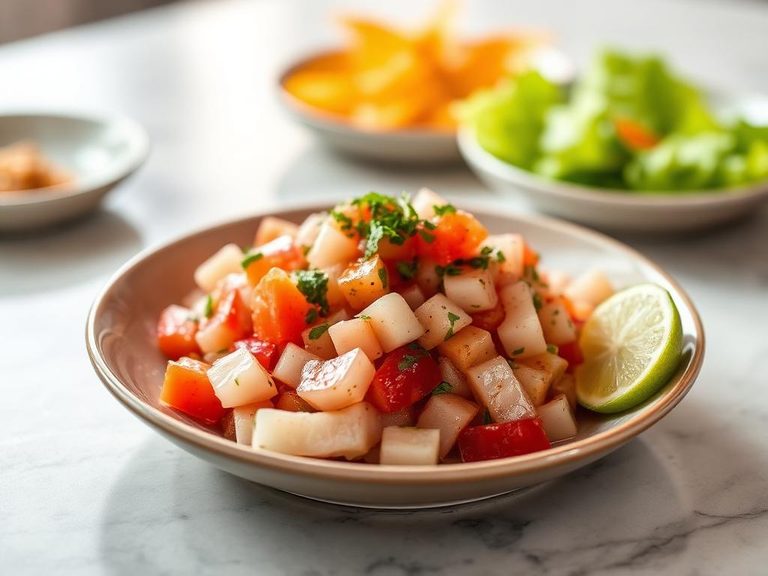
🌍 Where it's eaten
💡 Did you know?
Yellowfin tuna can swim at speeds up to 50 mph (80 km/h), making it one of the fastest fish in the ocean, and it can grow to over 6 feet long and weigh over 400 pounds.
Full nutrition (USDA data · scales with serving)
| Water | 74.0 g |
| Energy | 109 kcal |
| Energy | 454 kj |
| Protein | 24.4 g |
| Total lipid (fat) | 0.49 g |
| Ash | 1.6 g |
| Carbohydrate, by difference | 0.00 g |
| Fiber, total dietary | 0.00 g |
| Total Sugars | 0.00 g |
| Calcium, Ca | 4.0 mg |
| Iron, Fe | 0.77 mg |
| Magnesium, Mg | 35.0 mg |
| Phosphorus, P | 278 mg |
| Potassium, K | 441 mg |
| Sodium, Na | 45.0 mg |
| Zinc, Zn | 0.37 mg |
| Copper, Cu | 0.04 mg |
| Manganese, Mn | 0.01 mg |
| Selenium, Se | 90.6 ug |
| Vitamin C, total ascorbic acid | 0.00 mg |
| Thiamin | 0.12 mg |
| Riboflavin | 0.12 mg |
| Niacin | 18.5 mg |
| Pantothenic acid | 0.28 mg |
| Vitamin B-6 | 0.93 mg |
| Folate, total | 2.0 ug |
| Folic acid | 0.00 ug |
| Folate, food | 2.0 ug |
| Folate, DFE | 2.0 ug |
| Choline, total | 65.0 mg |
| Vitamin B-12 | 2.1 ug |
| Vitamin B-12, added | 0.00 ug |
| Vitamin A, RAE | 18.0 ug |
| Retinol | 18.0 ug |
| Carotene, beta | 0.00 ug |
| Carotene, alpha | 0.00 ug |
| Cryptoxanthin, beta | 0.00 ug |
| Vitamin A, IU | 60.0 iu |
| Lycopene | 0.00 ug |
| Lutein + zeaxanthin | 0.00 ug |
| Vitamin E (alpha-tocopherol) | 0.24 mg |
| Vitamin E, added | 0.00 mg |
| Tocopherol, beta | 0.00 mg |
| Tocopherol, gamma | 0.00 mg |
| Tocopherol, delta | 0.00 mg |
| Tocotrienol, alpha | 0.00 mg |
| Tocotrienol, beta | 0.00 mg |
| Tocotrienol, gamma | 0.00 mg |
| Tocotrienol, delta | 0.00 mg |
| Vitamin D (D2 + D3), International Units | 69.0 iu |
| Vitamin D (D2 + D3) | 1.7 ug |
| Vitamin D3 (cholecalciferol) | 1.7 ug |
| Vitamin K (phylloquinone) | 0.10 ug |
| Alcohol, ethyl | 0.00 g |
| Caffeine | 0.00 mg |
| Theobromine | 0.00 mg |
Fat & fatty acid profile (per 100g)
| Fatty acids, total saturated | 0.17 g |
| SFA 4:0 | 0.00 g |
| SFA 6:0 | 0.00 g |
| SFA 8:0 | 0.00 g |
| SFA 10:0 | 0.00 g |
| SFA 12:0 | 0.00 g |
| SFA 14:0 | 0.01 g |
| SFA 15:0 | 0.00 g |
| SFA 16:0 | 0.11 g |
| SFA 17:0 | 0.00 g |
| SFA 18:0 | 0.04 g |
| SFA 20:0 | 0.00 g |
| SFA 22:0 | 0.00 g |
| SFA 24:0 | 0.00 g |
| Fatty acids, total monounsaturated | 0.12 g |
| MUFA 14:1 | 0.00 g |
| MUFA 15:1 | 0.00 g |
| MUFA 16:1 | 0.01 g |
| MUFA 16:1 c | 0.01 g |
| MUFA 17:1 | 0.00 g |
| MUFA 18:1 | 0.08 g |
| MUFA 18:1 c | 0.08 g |
| MUFA 20:1 | 0.01 g |
| MUFA 22:1 | 0.00 g |
| MUFA 22:1 c | 0.00 g |
| MUFA 24:1 c | 0.01 g |
| Fatty acids, total polyunsaturated | 0.15 g |
| PUFA 18:2 | 0.02 g |
| PUFA 18:2 n-6 c,c | 0.01 g |
| PUFA 18:2 CLAs | 0.00 g |
| PUFA 18:3 | 0.00 g |
| PUFA 18:3 n-3 c,c,c (ALA) | 0.00 g |
| PUFA 18:3 n-6 c,c,c | 0.00 g |
| PUFA 18:4 | 0.00 g |
| PUFA 20:2 n-6 c,c | 0.00 g |
| PUFA 20:3 | 0.00 g |
| PUFA 20:3 n-3 | 0.00 g |
| PUFA 20:3 n-6 | 0.00 g |
| PUFA 20:4 | 0.01 g |
| PUFA 20:5 n-3 (EPA) | 0.01 g |
| PUFA 22:4 | 0.00 g |
| PUFA 22:5 n-3 (DPA) | 0.00 g |
| PUFA 22:6 n-3 (DHA) | 0.09 g |
| Fatty acids, total trans | 0.02 g |
| Fatty acids, total trans-monoenoic | 0.00 g |
| TFA 16:1 t | 0.00 g |
| TFA 18:1 t | 0.00 g |
| TFA 22:1 t | 0.00 g |
| TFA 18:2 t not further defined | 0.01 g |
| Fatty acids, total trans-polyenoic | 0.01 g |
| Cholesterol | 39.0 mg |
Amino acid profile (per 100g)
| Tryptophan | 0.26 g |
| Threonine | 1.0 g |
| Isoleucine | 1.1 g |
| Leucine | 1.9 g |
| Lysine | 2.1 g |
| Methionine | 0.69 g |
| Cystine | 0.25 g |
| Phenylalanine | 0.91 g |
| Tyrosine | 0.79 g |
| Valine | 1.2 g |
| Arginine | 1.4 g |
| Histidine | 0.69 g |
| Alanine | 1.4 g |
| Aspartic acid | 2.4 g |
| Glutamic acid | 3.5 g |
| Glycine | 1.1 g |
| Proline | 0.83 g |
| Serine | 0.95 g |
FAQ
Is yellowfin tuna safe to eat raw?
Yes, when it's sushi-grade and handled properly, it's safe to eat raw. Always buy from reputable sources and ensure it's been flash-frozen to kill parasites.
How does yellowfin compare to albacore or bluefin tuna?
Yellowfin is leaner than albacore and much less fatty than bluefin, with a firmer texture and milder flavor. It's more sustainable and affordable than bluefin.
What's the best way to cook yellowfin tuna to keep it moist?
Sear it quickly over high heat to medium-rare (about 1-2 minutes per side) and let it rest. Avoid overcooking, as it will become dry and tough.
Nutrient density (calculated · NRF9.3)
Nutrient Rich Foods index: beneficial nutrients (protein, fiber, vitamins, minerals) minus saturated fat, added sugar & sodium, per 100 kcal.
NRF9.3 index — Fulgoni, Keast & Drewnowski, 2009. Computed from USDA nutrients.
Weight-loss friendliness (composite index)
Energy density 1.09 kcal/g · 90% calories from protein · 0.0 g fiber · 0.0 g sugar per 100 g.
Composite of energy density (Rolls et al., 1999), protein & fiber satiety, minus sugar. A calculated heuristic — ranks satiety-per-calorie, not a clinical measure.
Dietary load (calculated from USDA values)
Potential renal acid load. Positive = acid-forming, negative = alkaline-forming.
Sodium-to-potassium ratio: 0.10 (lower is better — aim for ≤ 1)
Sodium:potassium per WHO potassium guidance. Computed from USDA nutrients.