Poke
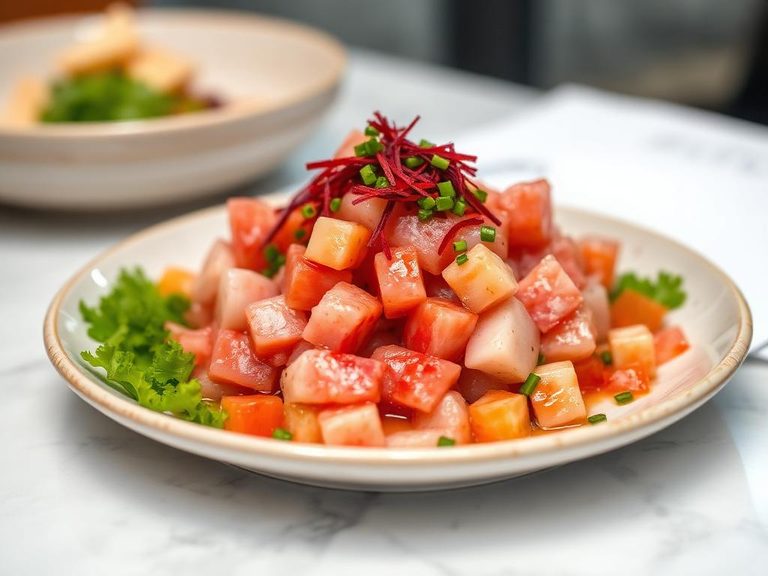
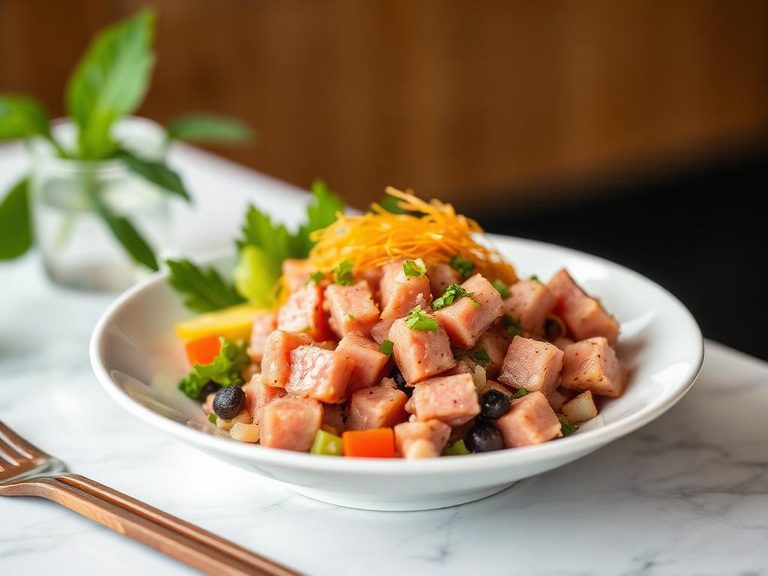
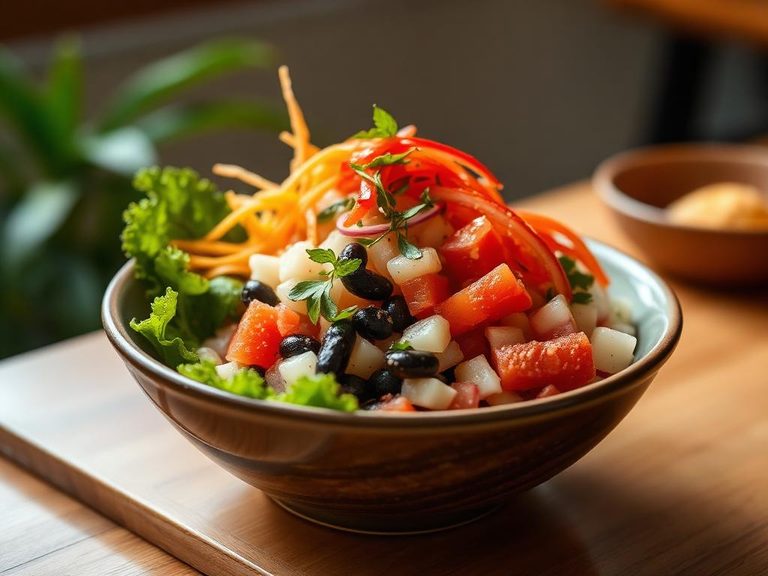
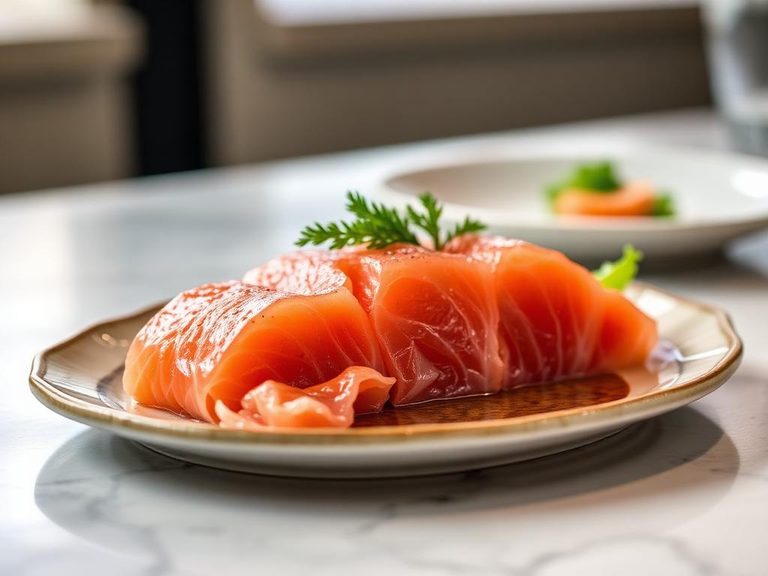
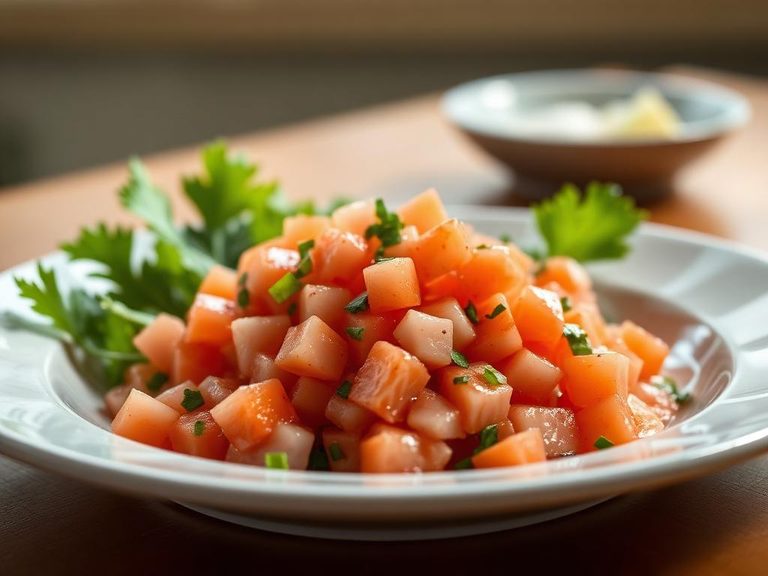
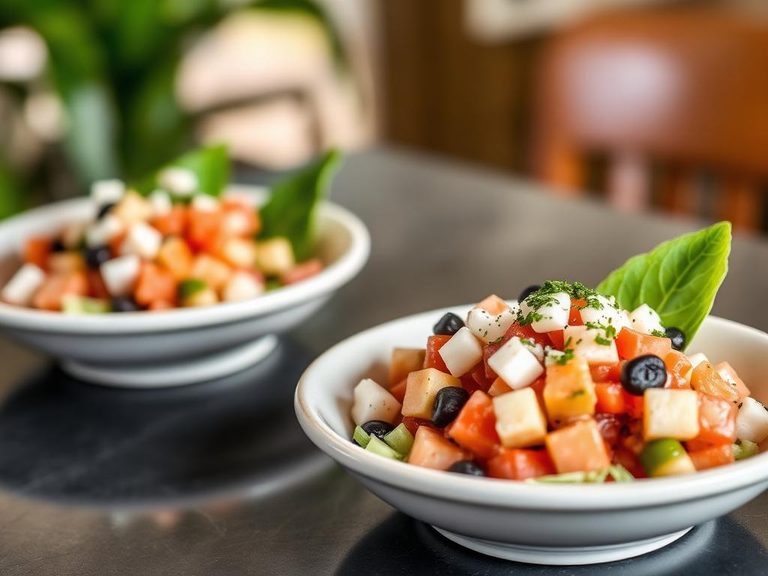
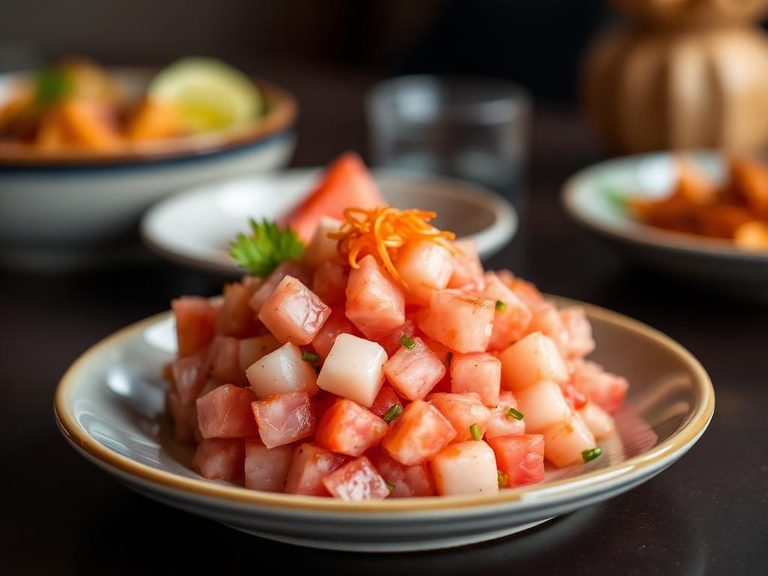
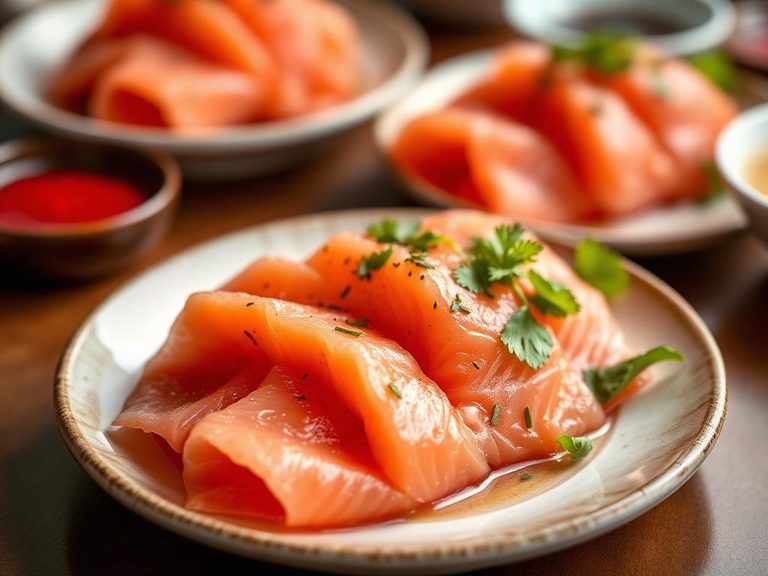
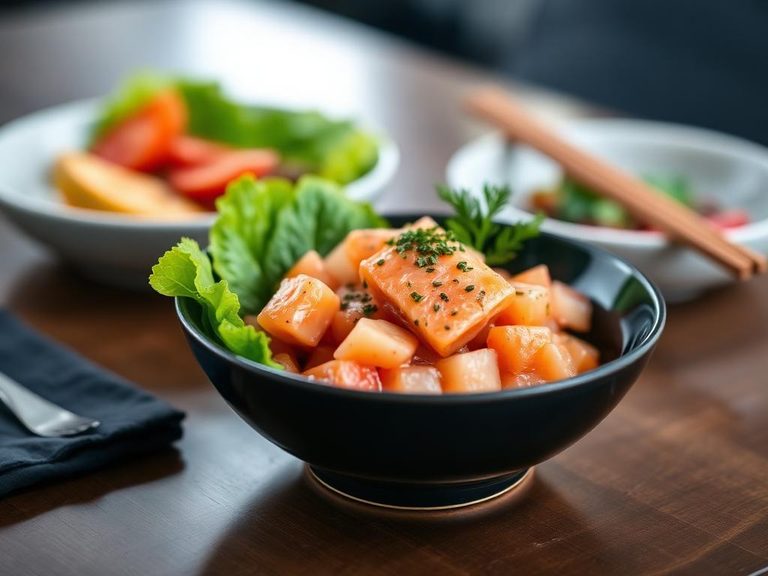
Poke (pronounced poh-kay) is a traditional Hawaiian dish of diced raw fish, typically ahi tuna, marinated in a blend of soy sauce, sesame oil, and various seasonings. It is commonly served over rice and topped with ingredients like avocado, seaweed salad, edamame, and crispy onions, making it a vibrant and customizable meal. Originating in Hawaii, it reflects the islands' rich fishing culture and multicultural culinary influences.
🍽️ Nutrition at a glance
Poke is generally high in protein and healthy fats from the fish and added ingredients like avocado and sesame oil, while being relatively low in carbohydrates unless served over a large portion of rice. It provides essential nutrients such as omega-3 fatty acids, vitamin D, and selenium, with a typical serving ranging from 300 to 500 calories depending on the specific ingredients and portion size.
Nutrition breakdown
| Calories | 370 kcal |
| Protein | 25 g |
| Carbs | 30 g |
| Fat | 18 g |
| Fiber | 4 g |
| Sugar | 8 g |
| Sodium | 850 mg |
| Vitamin D | 10 mcg |
| Vitamin B12 | 5 mcg |
| Omega-3 (EPA+DHA) | 1200 mg |
| Selenium | 40 mcg |
| Phosphorus | 250 mg |
| Niacin (B3) | 8 mg |
| Vitamin B6 | 0.5 mg |
| Magnesium | 45 mg |
Per 1 cup (240 g) · estimated, varies by recipe
💡 What's interesting
Culturally, poke is a staple in Hawaiian cuisine that showcases the 'plate lunch' tradition, blending native Hawaiian, Japanese, and other Asian culinary elements into a single dish. Nutritionally, it stands out for its high-quality protein and heart-healthy fats, making it a popular choice for health-conscious diners seeking a fresh and flavorful meal.