

Sashimi
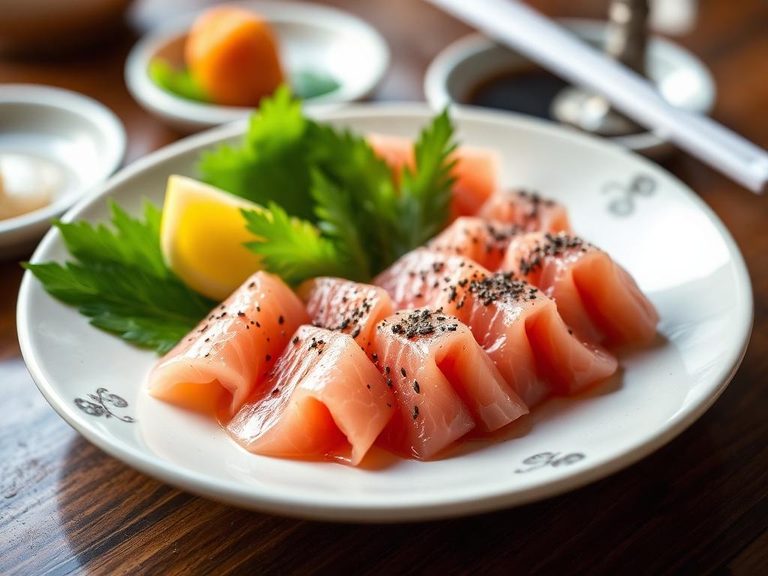
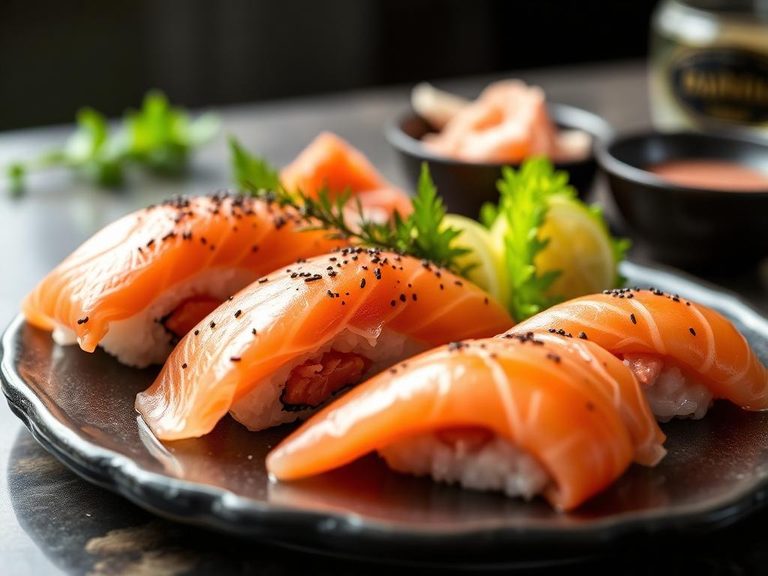
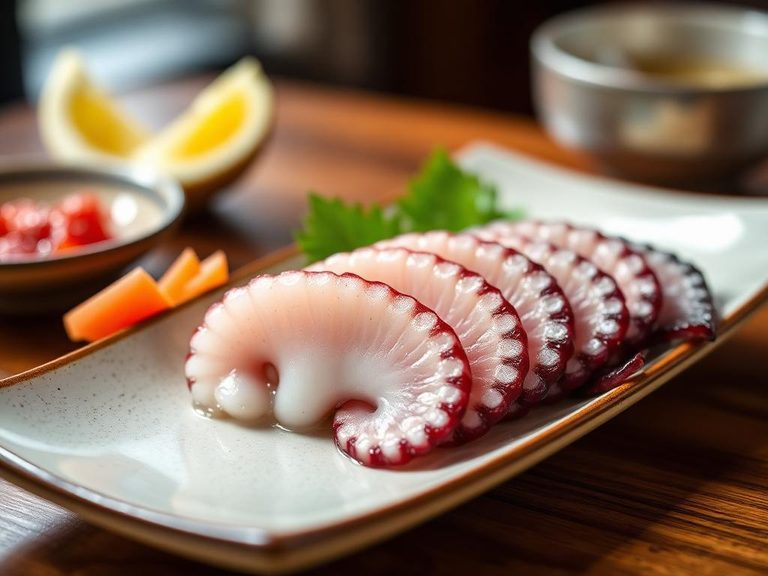
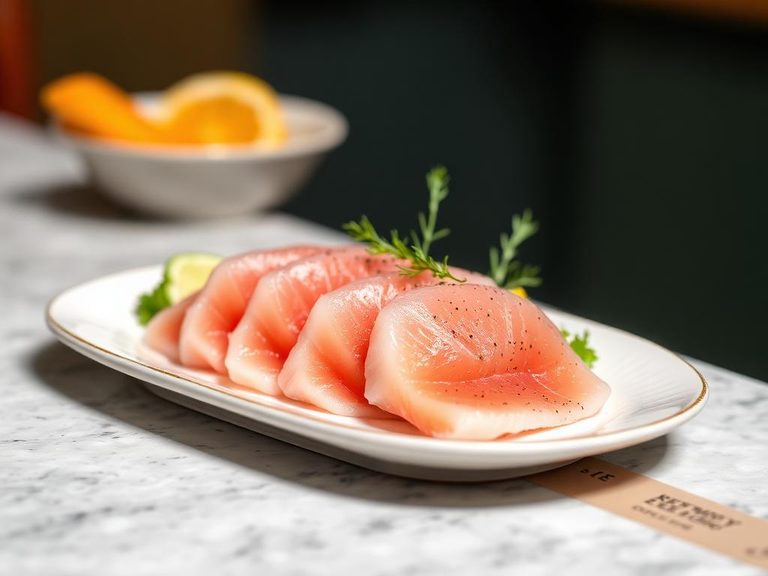
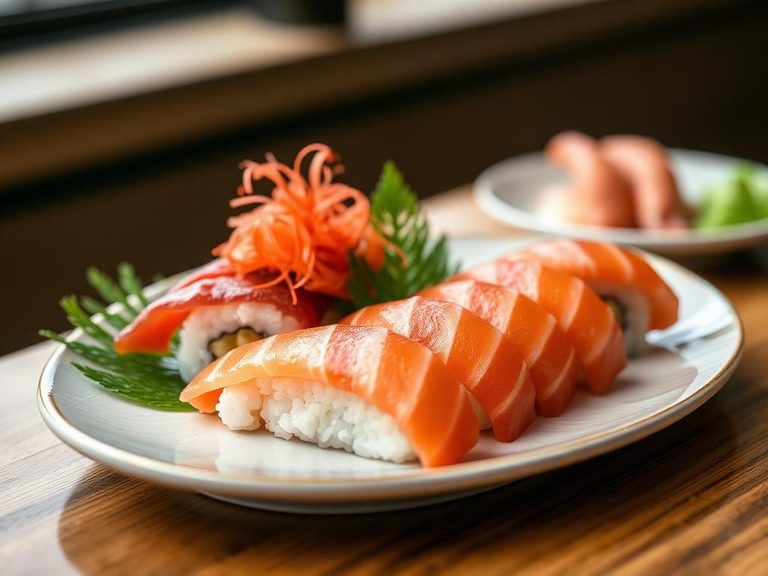
Sashimi is a Japanese dish consisting of thinly sliced raw, high-quality fish or seafood, typically served with soy sauce, wasabi, and pickled ginger. Common ingredients include tuna, salmon, yellowtail, and octopus, all prepared with precise knife skills to highlight texture and freshness.
🍳 View the full Sashimi recipe →
🍽️ Nutrition at a glance
Sashimi is very low in carbohydrates and fat, making it an excellent source of lean, high-quality protein and essential nutrients like omega-3 fatty acids, vitamin D, and selenium. A typical serving of about 4 ounces (113 grams) contains roughly 120–150 calories.
Nutrition breakdown
| Calories | 120 kcal |
| Protein | 25 g |
| Carbs | 0 g |
| Fat | 2 g |
| Fiber | 0 g |
| Sugar | 0 g |
| Sodium | 50 mg |
| Omega-3 (EPA + DHA) | 500 mg |
| Vitamin D | 2 mcg |
| Vitamin B12 | 4 mcg |
| Selenium | 30 mcg |
| Phosphorus | 250 mg |
| Niacin (B3) | 8 mg |
| Potassium | 300 mg |
| Magnesium | 30 mg |
Per 4 oz (113 g) · estimated, varies by recipe
💡 What's interesting
Culturally, sashimi is considered an art form in Japan, where the presentation and seasonal selection of fish are highly valued. Nutritionally, it provides a pure, unprocessed source of protein without added sugars or unhealthy fats, aligning with many modern dietary preferences.
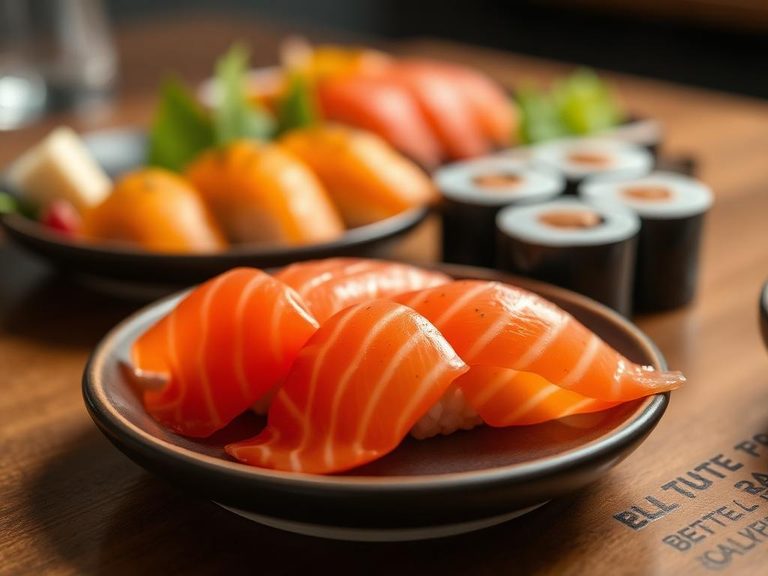
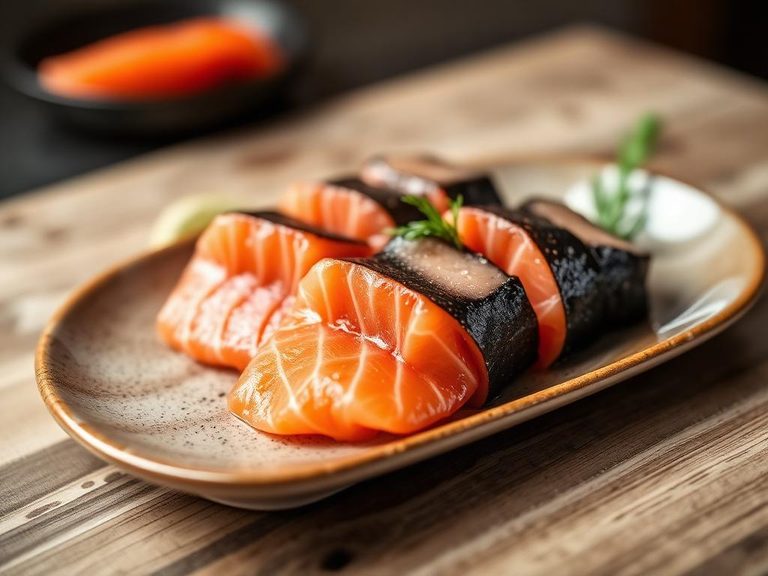
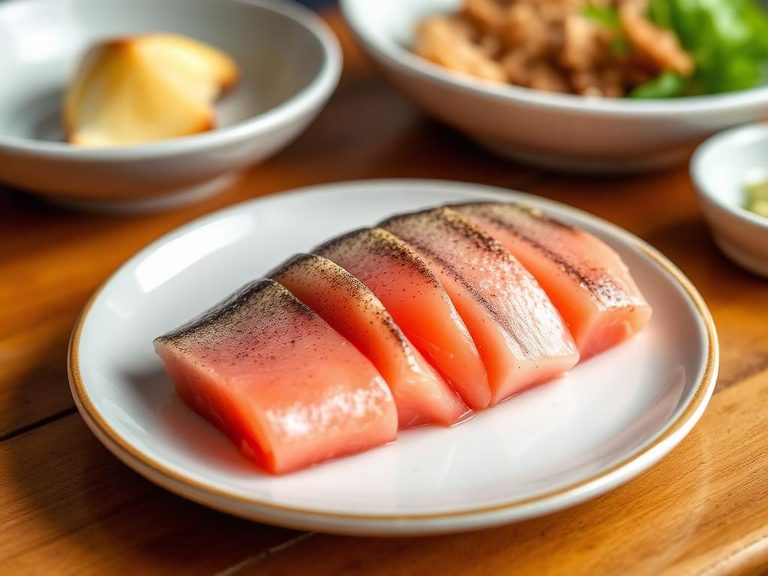
🍽️ Related dishes
AI estimate may be inaccurate · Terms