

Fast foods, cheeseburger; single, large patty; with condiments, vegetables and mayonnaise
Whole food · Fast Foods
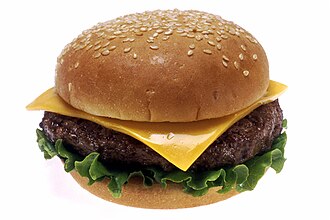
Photo: Wikipedia
A classic single-patty cheeseburger is a study in savory contrasts: a juicy, seasoned beef patty melts under a blanket of warm, gooey cheese, all nestled in a soft, slightly sweet bun. It's a handheld feast of umami, salt, and richness, punctuated by the crisp bite of fresh vegetables and the tangy kick of condiments. Nutritionally, it's a dense package of protein and fats, delivering substantial energy in a compact form.
Calorie split: 20% protein · 26% carbs · 53% fat
↓ Full nutrition💚 Why it's loved
People adore it for the satisfying, all-in-one flavor bomb—the perfect harmony of savory meat, salty cheese, and fresh toppings in every bite. It's a cultural icon of convenience and comfort, representing a quick, indulgent meal that feels familiar and rewarding.
⚠️ Watch-outs & how to enjoy it better
The high saturated fat and sodium content can be problematic for cardiovascular health, and the refined white bun can cause rapid blood-sugar spikes. To counteract, opt for a single patty, load up on extra lettuce, tomato, and onion for fiber, and consider a side salad instead of fries.
Key benefits
- High-quality complete protein for muscle maintenance and satiety.
- Provides essential nutrients like iron, zinc, and B12 from beef.
- Quick, calorie-dense energy source for active individuals.
- The fat content aids in the absorption of fat-soluble vitamins.
🍽️ Popular dishes
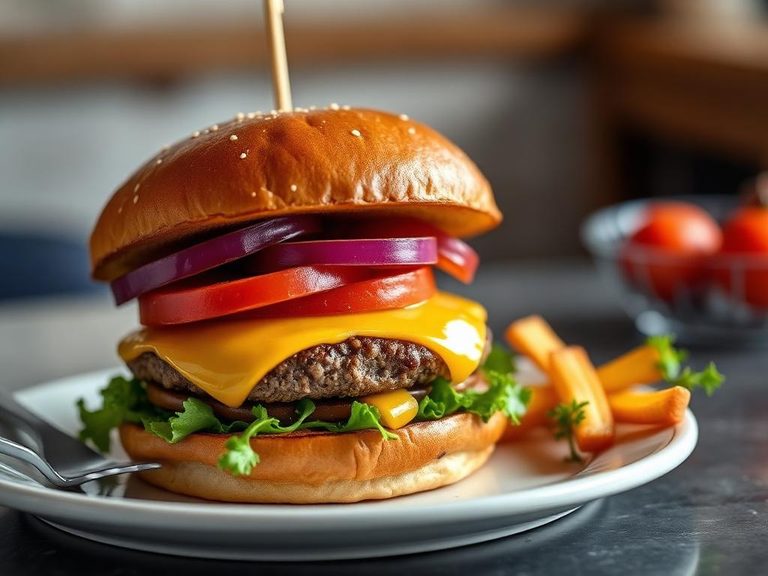
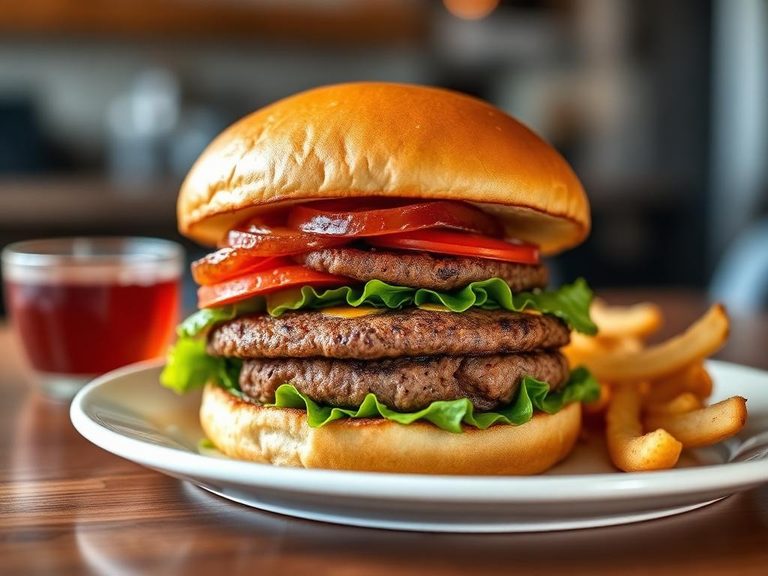
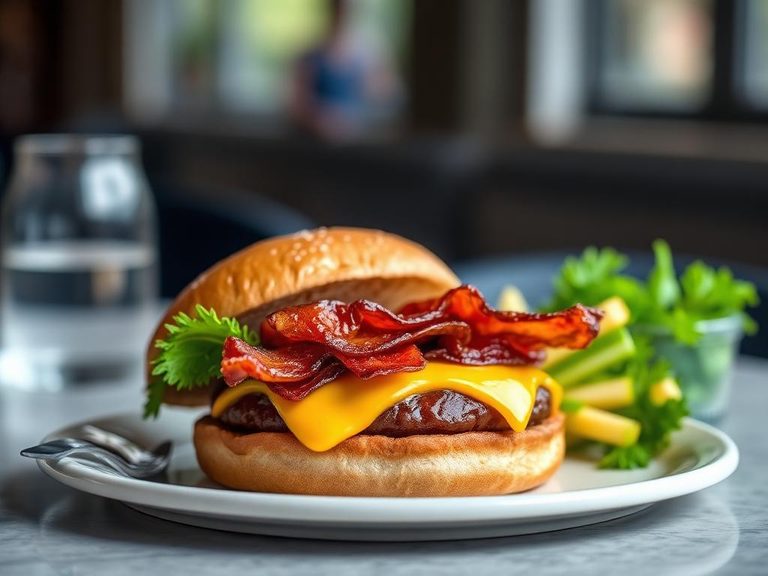
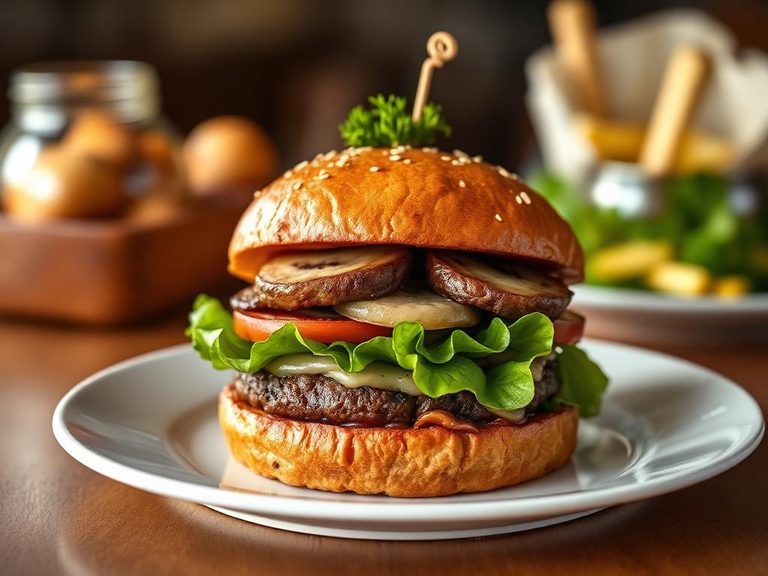
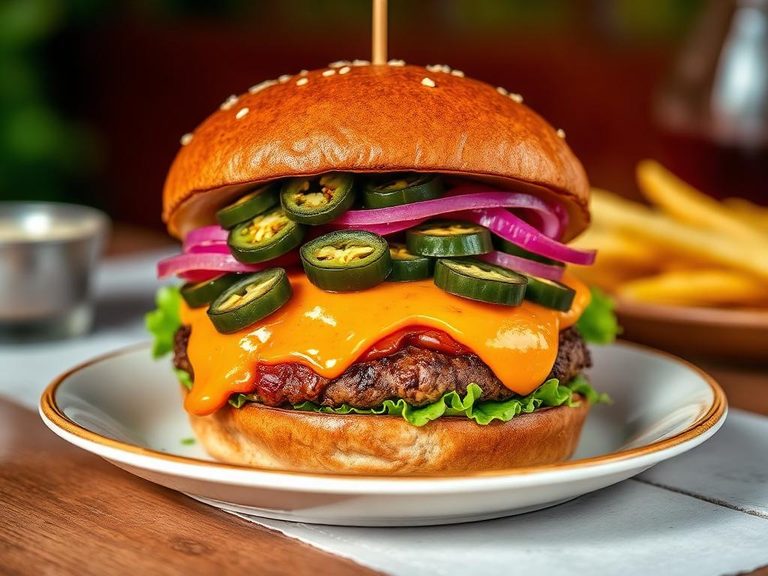
🌍 Where it's eaten
💡 Did you know?
The term 'cheeseburger' was trademarked in 1935 by Louis Ballast of the Humpty Dumpty Drive-In in Denver, Colorado, though Kaelin's Restaurant in Louisville, Kentucky, also claims to have invented it around the same time.
Full nutrition (USDA data · scales with serving)
| Water | 50.9 g |
| Energy | 268 kcal |
| Energy | 1121 kj |
| Protein | 13.7 g |
| Total lipid (fat) | 15.8 g |
| Ash | 1.9 g |
| Carbohydrate, by difference | 17.7 g |
| Fiber, total dietary | 1.1 g |
| Total Sugars | 4.5 g |
| Sucrose | 0.00 g |
| Glucose | 1.6 g |
| Fructose | 2.1 g |
| Lactose | 0.37 g |
| Maltose | 0.40 g |
| Galactose | 0.00 g |
| Starch | 12.6 g |
| Calcium, Ca | 73.0 mg |
| Iron, Fe | 2.3 mg |
| Magnesium, Mg | 18.0 mg |
| Phosphorus, P | 125 mg |
| Potassium, K | 208 mg |
| Sodium, Na | 473 mg |
| Zinc, Zn | 2.3 mg |
| Copper, Cu | 0.08 mg |
| Manganese, Mn | 0.19 mg |
| Selenium, Se | 16.5 ug |
| Vitamin C, total ascorbic acid | 1.1 mg |
| Thiamin | 0.18 mg |
| Riboflavin | 0.26 mg |
| Niacin | 3.1 mg |
| Pantothenic acid | 0.76 mg |
| Vitamin B-6 | 0.19 mg |
| Folate, total | 51.0 ug |
| Folic acid | 30.0 ug |
| Folate, food | 21.0 ug |
| Folate, DFE | 72.0 ug |
| Choline, total | 36.8 mg |
| Betaine | 17.2 mg |
| Vitamin B-12 | 0.93 ug |
| Vitamin B-12, added | 0.00 ug |
| Vitamin A, RAE | 50.0 ug |
| Retinol | 44.0 ug |
| Carotene, beta | 64.0 ug |
| Carotene, alpha | 0.00 ug |
| Cryptoxanthin, beta | 2.0 ug |
| Vitamin A, IU | 256 iu |
| Lycopene | 208 ug |
| Lutein + zeaxanthin | 41.0 ug |
| Vitamin E (alpha-tocopherol) | 0.57 mg |
| Vitamin E, added | 0.00 mg |
| Tocopherol, beta | 0.07 mg |
| Tocopherol, gamma | 1.8 mg |
| Tocopherol, delta | 0.76 mg |
| Tocotrienol, alpha | 0.02 mg |
| Tocotrienol, beta | 0.00 mg |
| Tocotrienol, gamma | 0.01 mg |
| Tocotrienol, delta | 0.00 mg |
| Vitamin D (D2 + D3), International Units | 3.0 iu |
| Vitamin D (D2 + D3) | 0.10 ug |
| Vitamin K (phylloquinone) | 14.2 ug |
| Vitamin K (Dihydrophylloquinone) | 0.00 ug |
| Alcohol, ethyl | 0.00 g |
| Caffeine | 0.00 mg |
| Theobromine | 0.00 mg |
Fat & fatty acid profile (per 100g)
| Fatty acids, total saturated | 5.7 g |
| SFA 4:0 | 0.08 g |
| SFA 6:0 | 0.06 g |
| SFA 8:0 | 0.04 g |
| SFA 10:0 | 0.10 g |
| SFA 12:0 | 0.11 g |
| SFA 14:0 | 0.56 g |
| SFA 15:0 | 0.07 g |
| SFA 16:0 | 3.0 g |
| SFA 17:0 | 0.12 g |
| SFA 18:0 | 1.5 g |
| SFA 20:0 | 0.02 g |
| SFA 22:0 | 0.01 g |
| SFA 24:0 | 0.01 g |
| Fatty acids, total monounsaturated | 5.4 g |
| MUFA 14:1 | 0.10 g |
| MUFA 15:1 | 0.00 g |
| MUFA 16:1 | 0.34 g |
| MUFA 16:1 c | 0.29 g |
| MUFA 17:1 | 0.08 g |
| MUFA 18:1 | 4.8 g |
| MUFA 18:1 c | 4.3 g |
| MUFA 20:1 | 0.05 g |
| MUFA 22:1 | 0.01 g |
| MUFA 22:1 c | 0.01 g |
| MUFA 24:1 c | 0.00 g |
| Fatty acids, total polyunsaturated | 2.4 g |
| PUFA 18:2 | 2.0 g |
| PUFA 18:2 n-6 c,c | 1.9 g |
| PUFA 18:2 CLAs | 0.07 g |
| PUFA 18:3 | 0.25 g |
| PUFA 18:3 n-3 c,c,c (ALA) | 0.24 g |
| PUFA 18:3 n-6 c,c,c | 0.01 g |
| PUFA 18:4 | 0.00 g |
| PUFA 20:2 n-6 c,c | 0.01 g |
| PUFA 20:3 | 0.02 g |
| PUFA 20:3 n-3 | 0.00 g |
| PUFA 20:3 n-6 | 0.01 g |
| PUFA 20:4 | 0.03 g |
| PUFA 20:5 n-3 (EPA) | 0.00 g |
| PUFA 22:4 | 0.01 g |
| PUFA 22:5 n-3 (DPA) | 0.01 g |
| PUFA 22:6 n-3 (DHA) | 0.00 g |
| Fatty acids, total trans | 0.63 g |
| Fatty acids, total trans-monoenoic | 0.55 g |
| TFA 16:1 t | 0.04 g |
| TFA 18:1 t | 0.51 g |
| TFA 22:1 t | 0.00 g |
| TFA 18:2 t not further defined | 0.08 g |
| Fatty acids, total trans-polyenoic | 0.08 g |
| Cholesterol | 51.0 mg |
Amino acid profile (per 100g)
Estimated from Fast foods, miniature cinnamon rolls — USDA does not publish this profile for Fast foods.
| Tryptophan | 0.05 g |
| Threonine | 0.22 g |
| Isoleucine | 0.28 g |
| Leucine | 0.51 g |
| Lysine | 0.18 g |
| Methionine | 0.11 g |
| Cystine | 0.16 g |
| Phenylalanine | 0.33 g |
| Tyrosine | 0.21 g |
| Valine | 0.33 g |
| Arginine | 0.26 g |
| Histidine | 0.16 g |
| Alanine | 0.25 g |
| Aspartic acid | 0.36 g |
| Glutamic acid | 2.2 g |
| Glycine | 0.25 g |
| Proline | 0.71 g |
| Serine | 0.37 g |
FAQ
Is a cheeseburger a good source of protein?
Yes, a single large-patty cheeseburger is an excellent source of high-quality, complete protein, providing over 13 grams per 100 grams, which supports muscle repair and promotes a feeling of fullness.
How can I make a cheeseburger healthier at home?
Use lean ground beef (90/10 or leaner), choose a whole-grain bun, load up on vegetable toppings like lettuce, tomato, onion, and pickles, and use condiments like mustard or avocado instead of mayonnaise.
What's the main nutritional concern with fast-food cheeseburgers?
The primary concerns are typically high levels of sodium, which can affect blood pressure, and significant saturated fat content, which is linked to heart health when consumed in excess.
Nutrient density (calculated · NRF9.3)
Nutrient Rich Foods index: beneficial nutrients (protein, fiber, vitamins, minerals) minus saturated fat, added sugar & sodium, per 100 kcal.
NRF9.3 index — Fulgoni, Keast & Drewnowski, 2009. Computed from USDA nutrients.
Weight-loss friendliness (composite index)
Energy density 2.68 kcal/g · 20% calories from protein · 1.1 g fiber · 4.5 g sugar per 100 g.
Composite of energy density (Rolls et al., 1999), protein & fiber satiety, minus sugar. A calculated heuristic — ranks satiety-per-calorie, not a clinical measure.
Dietary load (calculated from USDA values)
Potential renal acid load. Positive = acid-forming, negative = alkaline-forming.
Sodium-to-potassium ratio: 2.27 (lower is better — aim for ≤ 1)
Sodium:potassium per WHO potassium guidance. Computed from USDA nutrients.