

Crackers, standard snack-type, with whole wheat
Whole food · Baked Products

Photo: Wikipedia
A crisp, savory snack cracker made primarily from whole wheat flour, offering a nutty, slightly earthy flavor and a satisfyingly crunchy texture. It's a pantry staple known for its straightforward, toasty taste that serves as a perfect canvas for toppings. Nutritionally, it provides a notable amount of dietary fiber from the whole grain, alongside a moderate calorie density.
Calorie split: 6% protein · 59% carbs · 35% fat
↓ Full nutrition💚 Why it's loved
People love these crackers for their reliable crunch and neutral, toasty flavor that pairs perfectly with everything from sharp cheddar and hummus to sweet jam. They are a cultural staple for quick snacks, lunchboxes, and elegant appetizer platters.
⚠️ Watch-outs & how to enjoy it better
The primary downside is the potential for blood sugar spikes due to the refined carb content, despite the whole wheat. They can also be high in sodium. To counteract this, pair them with a protein or healthy fat like cheese, nut butter, or avocado, and practice portion control by pre-portioning a serving.
Key benefits
- Good source of dietary fiber from whole wheat
- Provides complex carbohydrates for sustained energy
- Convenient, shelf-stable snack option
- Versatile base for both sweet and savory toppings
- Offers plant-based protein from whole grains
🍽️ Popular dishes


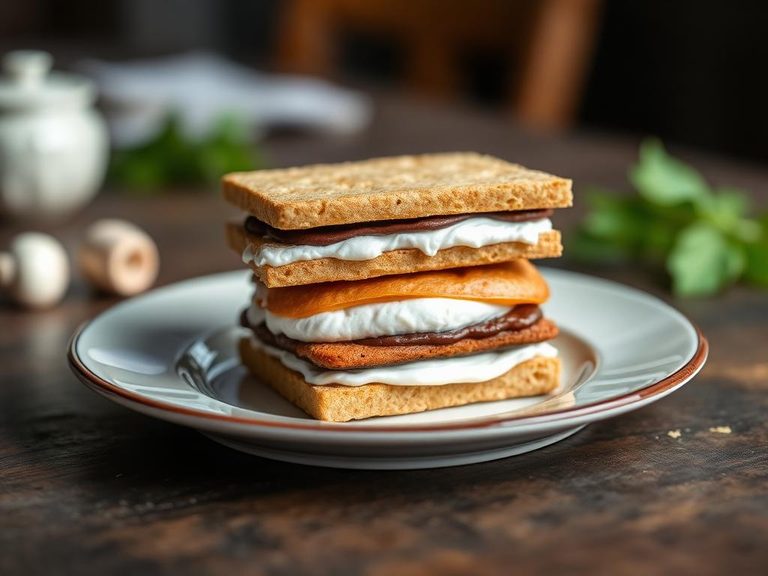
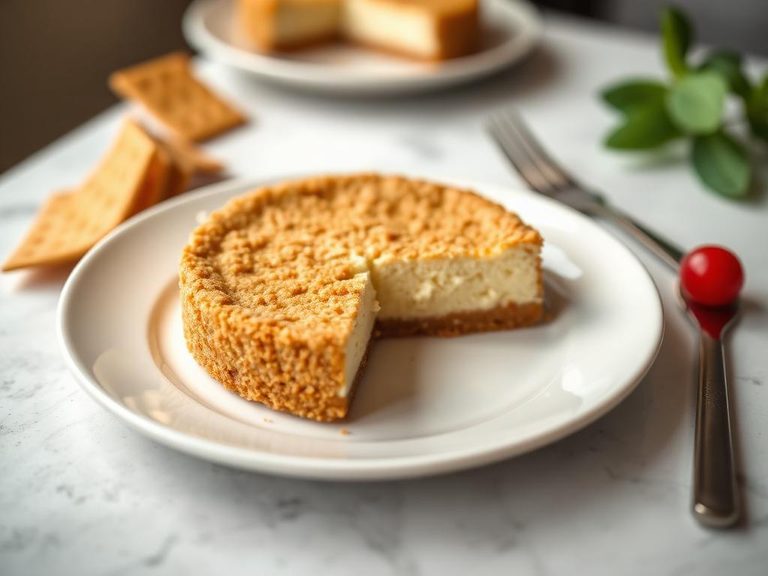
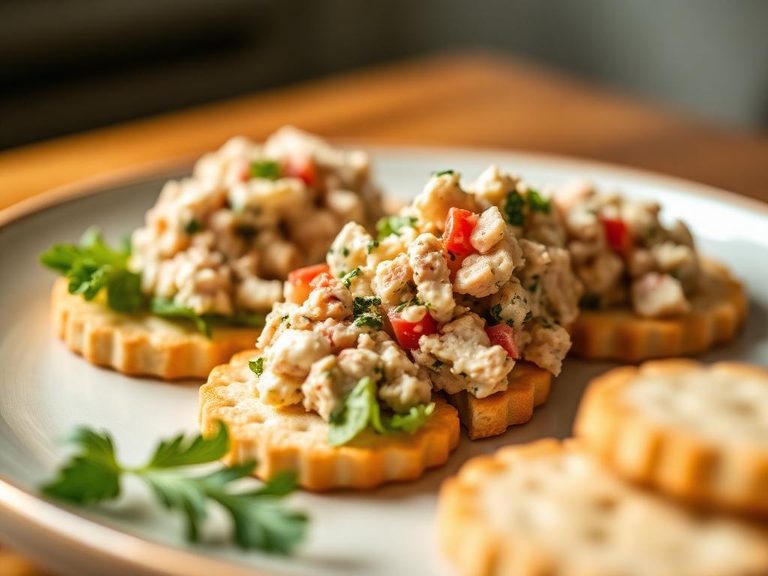
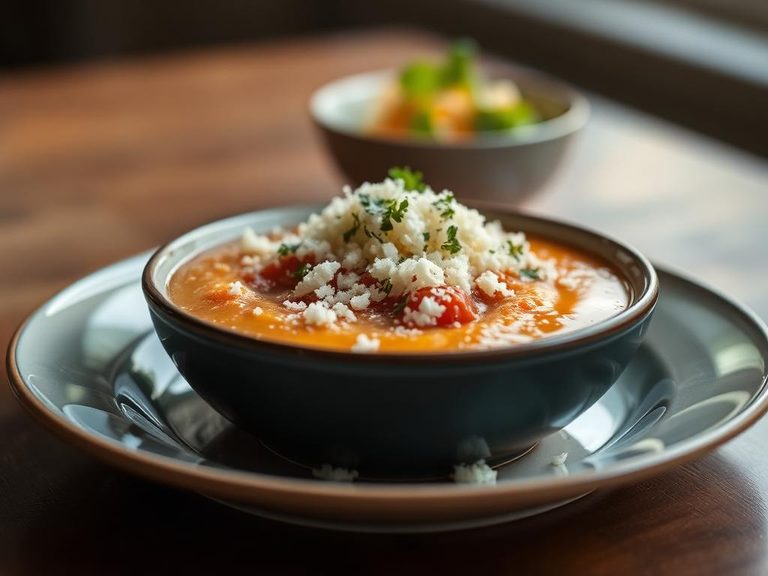
🌍 Where it's eaten
💡 Did you know?
The word 'cracker' may have originated in the early 19th century, possibly from the 'cracking' sound they make when bitten or from the 'cracked' wheat used in their production.
Full nutrition (USDA data · scales with serving)
| Water | 2.7 g |
| Energy | 463 kcal |
| Energy | 1938 kj |
| Protein | 7.3 g |
| Total lipid (fat) | 17.8 g |
| Ash | 3.8 g |
| Carbohydrate, by difference | 68.4 g |
| Fiber, total dietary | 4.9 g |
| Total Sugars | 10.4 g |
| Sucrose | 9.7 g |
| Glucose | 0.24 g |
| Fructose | 0.18 g |
| Lactose | 0.00 g |
| Maltose | 0.30 g |
| Galactose | 0.00 g |
| Starch | 52.6 g |
| Calcium, Ca | 167 mg |
| Iron, Fe | 3.6 mg |
| Magnesium, Mg | 47.0 mg |
| Phosphorus, P | 356 mg |
| Potassium, K | 209 mg |
| Sodium, Na | 748 mg |
| Zinc, Zn | 1.1 mg |
| Copper, Cu | 0.20 mg |
| Manganese, Mn | 0.92 mg |
| Selenium, Se | 8.7 ug |
| Vitamin C, total ascorbic acid | 0.00 mg |
| Thiamin | 0.32 mg |
| Riboflavin | 0.24 mg |
| Niacin | 4.5 mg |
| Pantothenic acid | 0.47 mg |
| Vitamin B-6 | 0.18 mg |
| Folate, total | 58.0 ug |
| Folic acid | 22.0 ug |
| Folate, food | 36.0 ug |
| Folate, DFE | 73.0 ug |
| Choline, total | 27.2 mg |
| Vitamin B-12 | 0.00 ug |
| Vitamin B-12, added | 0.00 ug |
| Vitamin A, RAE | 0.00 ug |
| Retinol | 0.00 ug |
| Carotene, beta | 4.0 ug |
| Carotene, alpha | 0.00 ug |
| Cryptoxanthin, beta | 0.00 ug |
| Vitamin A, IU | 7.0 iu |
| Lycopene | 0.00 ug |
| Lutein + zeaxanthin | 180 ug |
| Vitamin E (alpha-tocopherol) | 2.9 mg |
| Vitamin E, added | 0.00 mg |
| Tocopherol, beta | 0.42 mg |
| Tocopherol, gamma | 10.0 mg |
| Tocopherol, delta | 2.7 mg |
| Tocotrienol, alpha | 0.23 mg |
| Tocotrienol, beta | 1.5 mg |
| Tocotrienol, gamma | 0.00 mg |
| Tocotrienol, delta | 0.00 mg |
| Vitamin D (D2 + D3), International Units | 0.00 iu |
| Vitamin D (D2 + D3) | 0.00 ug |
| Vitamin K (phylloquinone) | 14.2 ug |
| Alcohol, ethyl | 0.00 g |
| Caffeine | 0.00 mg |
| Theobromine | 0.00 mg |
Fat & fatty acid profile (per 100g)
| Fatty acids, total saturated | 4.3 g |
| SFA 4:0 | 0.00 g |
| SFA 6:0 | 0.00 g |
| SFA 8:0 | 0.00 g |
| SFA 10:0 | 0.00 g |
| SFA 12:0 | 0.00 g |
| SFA 14:0 | 0.04 g |
| SFA 15:0 | 0.01 g |
| SFA 16:0 | 2.2 g |
| SFA 17:0 | 0.02 g |
| SFA 18:0 | 2.0 g |
| SFA 20:0 | 0.06 g |
| SFA 22:0 | 0.05 g |
| SFA 24:0 | 0.02 g |
| Fatty acids, total monounsaturated | 4.5 g |
| MUFA 14:1 | 0.00 g |
| MUFA 15:1 | 0.00 g |
| MUFA 16:1 | 0.02 g |
| MUFA 16:1 c | 0.01 g |
| MUFA 17:1 | 0.01 g |
| MUFA 18:1 | 4.5 g |
| MUFA 18:1 c | 3.9 g |
| MUFA 20:1 | 0.04 g |
| MUFA 22:1 | 0.00 g |
| MUFA 22:1 c | 0.00 g |
| MUFA 24:1 c | 0.00 g |
| Fatty acids, total polyunsaturated | 7.9 g |
| PUFA 18:2 | 7.0 g |
| PUFA 18:2 n-6 c,c | 7.0 g |
| PUFA 18:2 CLAs | 0.01 g |
| PUFA 18:3 | 0.89 g |
| PUFA 18:3 n-3 c,c,c (ALA) | 0.86 g |
| PUFA 18:3 n-6 c,c,c | 0.03 g |
| PUFA 18:3i | 0.00 g |
| PUFA 18:4 | 0.00 g |
| PUFA 20:2 n-6 c,c | 0.01 g |
| PUFA 20:3 | 0.00 g |
| PUFA 20:3 n-3 | 0.00 g |
| PUFA 20:3 n-6 | 0.00 g |
| PUFA 20:4 | 0.01 g |
| PUFA 20:5 n-3 (EPA) | 0.00 g |
| PUFA 22:4 | 0.00 g |
| PUFA 22:5 n-3 (DPA) | 0.00 g |
| PUFA 22:6 n-3 (DHA) | 0.00 g |
| Fatty acids, total trans | 0.61 g |
| Fatty acids, total trans-monoenoic | 0.57 g |
| TFA 16:1 t | 0.00 g |
| TFA 18:1 t | 0.57 g |
| TFA 22:1 t | 0.00 g |
| TFA 18:2 t not further defined | 0.04 g |
| Fatty acids, total trans-polyenoic | 0.04 g |
| Cholesterol | 0.00 mg |
Amino acid profile (per 100g)
Estimated from Crackers, cheese, sandwich-type with cheese filling — USDA does not publish this profile for Crackers.
| Tryptophan | 0.11 g |
| Threonine | 0.33 g |
| Isoleucine | 0.36 g |
| Leucine | 0.64 g |
| Lysine | 0.39 g |
| Methionine | 0.15 g |
| Cystine | 0.15 g |
| Phenylalanine | 0.35 g |
| Tyrosine | 0.25 g |
| Valine | 0.38 g |
| Arginine | 0.29 g |
| Histidine | 0.17 g |
| Alanine | 0.30 g |
| Aspartic acid | 0.52 g |
| Glutamic acid | 2.2 g |
| Glycine | 0.24 g |
| Proline | 0.77 g |
| Serine | 0.40 g |
FAQ
Are whole wheat crackers healthier than regular white crackers?
Generally, yes. Whole wheat versions retain the bran and germ, providing more fiber, vitamins, and minerals compared to crackers made from refined white flour, which can lead to better satiety and digestive health.
Why do my whole wheat crackers sometimes taste bitter?
A slight bitterness can come from the natural phenolic compounds in the wheat bran. It's a characteristic of whole grains and is often balanced by toasting, salt, or pairing with other foods.
Can I use these crackers in a pie crust?
Absolutely. Crushed whole wheat crackers mixed with melted butter make a flavorful, textured crust for sweet pies like key lime or cheesecake, adding a nutty depth.
Nutrient density (calculated · NRF9.3)
Nutrient Rich Foods index: beneficial nutrients (protein, fiber, vitamins, minerals) minus saturated fat, added sugar & sodium, per 100 kcal.
NRF9.3 index — Fulgoni, Keast & Drewnowski, 2009. Computed from USDA nutrients.
Weight-loss friendliness (composite index)
Energy density 4.63 kcal/g · 6% calories from protein · 4.9 g fiber · 10.4 g sugar per 100 g.
Composite of energy density (Rolls et al., 1999), protein & fiber satiety, minus sugar. A calculated heuristic — ranks satiety-per-calorie, not a clinical measure.
Dietary load (calculated from USDA values)
Potential renal acid load. Positive = acid-forming, negative = alkaline-forming.
Sodium-to-potassium ratio: 3.58 (lower is better — aim for ≤ 1)
Sodium:potassium per WHO potassium guidance. Computed from USDA nutrients.