

Chicken, dark meat, thigh, meat only, with added solution, raw
Whole food · Poultry Products
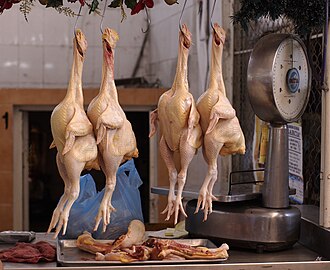
Photo: Wikipedia
Raw chicken thigh meat (dark meat) is a succulent, rich-tasting cut prized for its higher fat content and tender, juicy texture compared to breast meat. It's a powerhouse of protein, offering about 19 grams per 100g with a modest 3.7g of fat, making it a flavorful and satisfying choice for cooking. The 'added solution' typically refers to a brine or marinade that enhances moisture retention and tenderness during cooking.
Calorie split: 70% protein · 0% carbs · 30% fat
↓ Full nutrition💚 Why it's loved
People love chicken thighs for their robust, savory flavor and forgiving texture that stays moist even with high-heat cooking methods like grilling or roasting. They are incredibly versatile, serving as the star in everything from spicy curries to comforting braises, and are a staple in countless global cuisines.
⚠️ Watch-outs & how to enjoy it better
The added solution (brine) can significantly increase sodium content, which may be a concern for those monitoring salt intake. To counteract this, rinse the meat briefly under cold water before cooking and avoid adding extra salt to the dish. Additionally, while the fat is flavorful, it's higher than in breast meat, so portion control is key for those tracking fat calories.
Key benefits
- High-quality protein source (19.11g per 100g)
- Rich in B vitamins, especially niacin and B6
- Contains iron and zinc, important for immune function
- Naturally tender and juicy, requiring less added fat for cooking
- More flavorful than white meat due to higher fat content
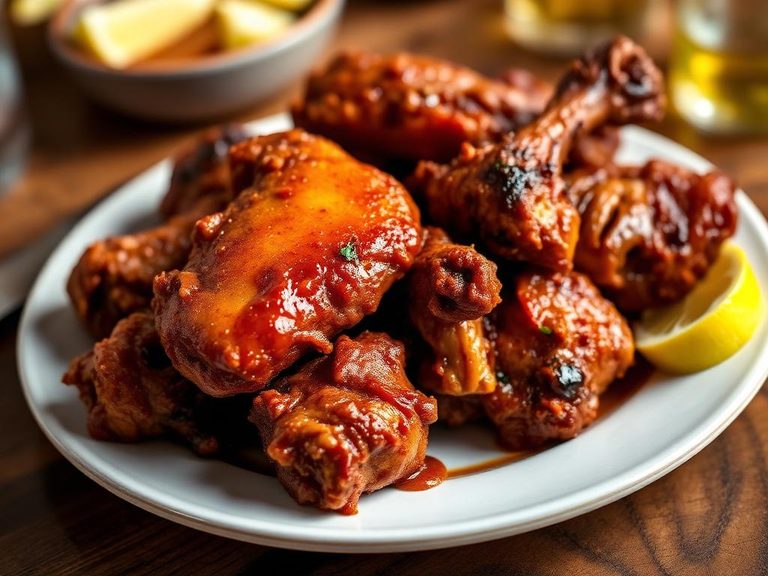
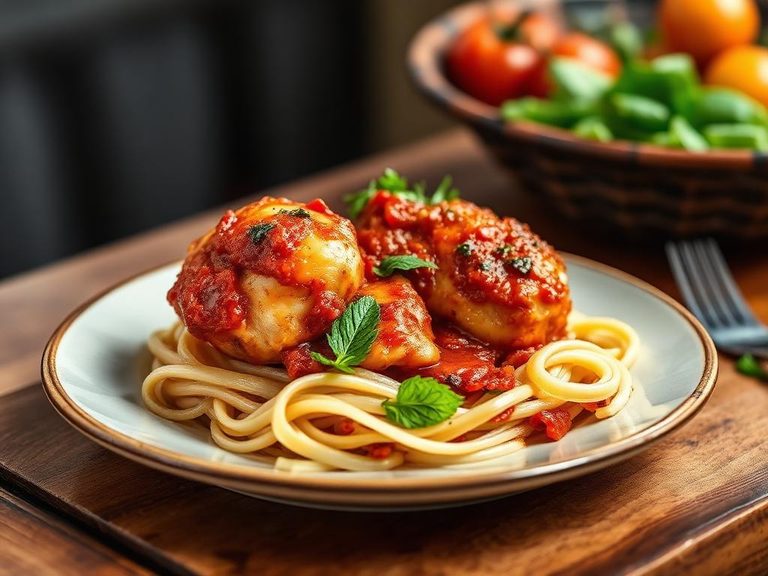
🍽️ Popular dishes
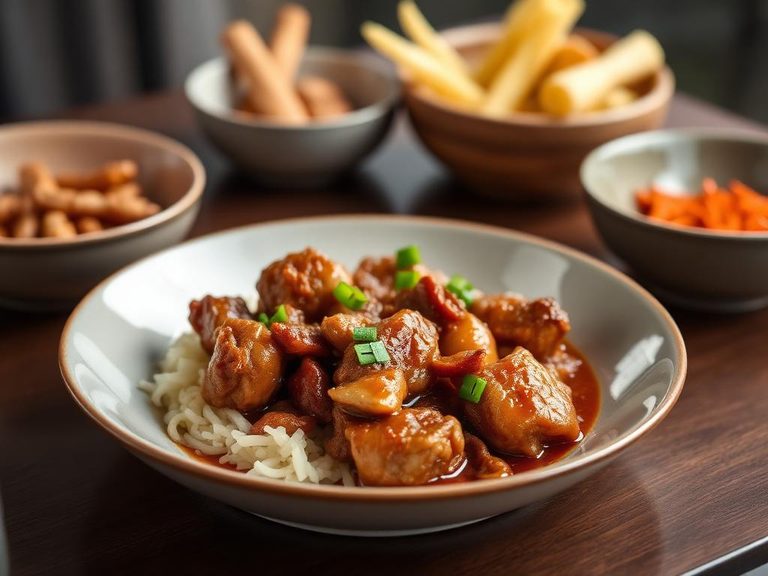

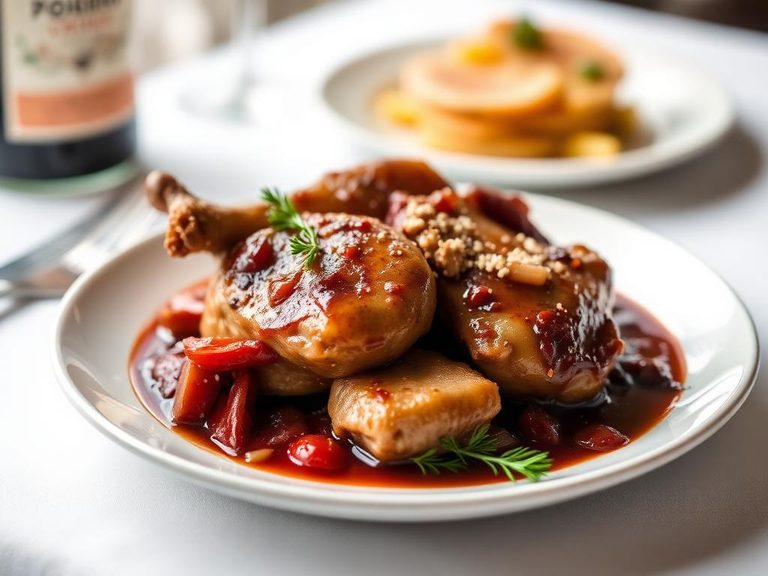
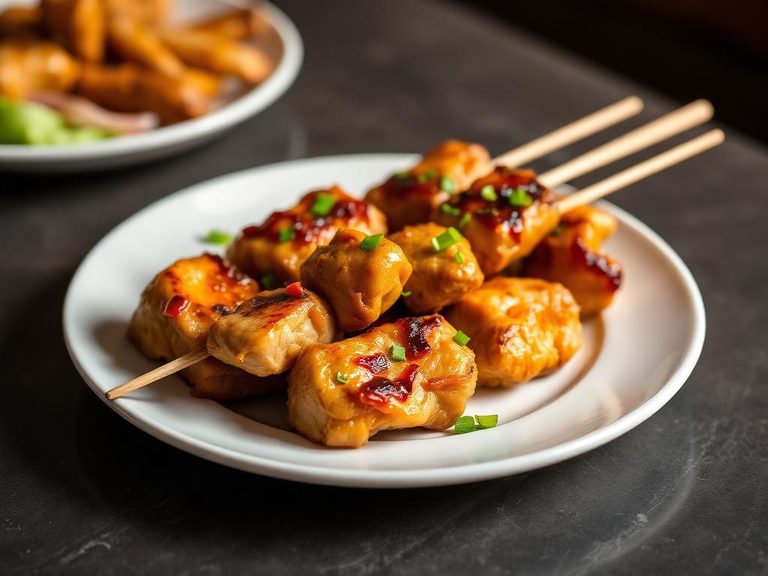
🌍 Where it's eaten
💡 Did you know?
The 'added solution' in commercially sold chicken often contains water, salt, and sometimes phosphates or other ingredients, which can increase the weight of the meat by up to 15% and help it retain moisture during cooking, resulting in juicier results.
Full nutrition (USDA data · scales with serving)
| Water | 77.2 g |
| Energy | 110 kcal |
| Energy | 459 kj |
| Protein | 19.1 g |
| Total lipid (fat) | 3.7 g |
| Ash | 1.0 g |
| Carbohydrate, by difference | 0.00 g |
| Fiber, total dietary | 0.00 g |
| Total Sugars | 0.00 g |
| Calcium, Ca | 8.0 mg |
| Iron, Fe | 0.60 mg |
| Magnesium, Mg | 21.0 mg |
| Phosphorus, P | 175 mg |
| Potassium, K | 234 mg |
| Sodium, Na | 156 mg |
| Zinc, Zn | 1.5 mg |
| Copper, Cu | 0.05 mg |
| Manganese, Mn | 0.01 mg |
| Selenium, Se | 20.9 ug |
| Vitamin C, total ascorbic acid | 0.00 mg |
| Thiamin | 0.09 mg |
| Riboflavin | 0.23 mg |
| Niacin | 5.3 mg |
| Pantothenic acid | 1.3 mg |
| Vitamin B-6 | 0.43 mg |
| Folate, total | 3.0 ug |
| Folic acid | 0.00 ug |
| Folate, food | 3.0 ug |
| Folate, DFE | 3.0 ug |
| Choline, total | 75.1 mg |
| Betaine | 12.0 mg |
| Vitamin B-12 | 0.56 ug |
| Vitamin B-12, added | 0.00 ug |
| Vitamin A, RAE | 6.0 ug |
| Retinol | 6.0 ug |
| Carotene, beta | 0.00 ug |
| Carotene, alpha | 0.00 ug |
| Cryptoxanthin, beta | 0.00 ug |
| Vitamin A, IU | 19.0 iu |
| Lycopene | 0.00 ug |
| Lutein + zeaxanthin | 87.0 ug |
| Vitamin E (alpha-tocopherol) | 0.26 mg |
| Vitamin E, added | 0.00 mg |
| Tocopherol, beta | 0.00 mg |
| Tocopherol, gamma | 0.09 mg |
| Tocopherol, delta | 0.00 mg |
| Tocotrienol, alpha | 0.00 mg |
| Tocotrienol, beta | 0.00 mg |
| Tocotrienol, gamma | 0.00 mg |
| Tocotrienol, delta | 0.00 mg |
| Vitamin D (D2 + D3), International Units | 3.0 iu |
| Vitamin D (D2 + D3) | 0.10 ug |
| Vitamin D3 (cholecalciferol) | 0.10 ug |
| Vitamin K (phylloquinone) | 0.00 ug |
| Vitamin K (Dihydrophylloquinone) | 0.00 ug |
| Vitamin K (Menaquinone-4) | 8.5 ug |
| Alcohol, ethyl | 0.00 g |
| Caffeine | 0.00 mg |
| Theobromine | 0.00 mg |
Fat & fatty acid profile (per 100g)
| Fatty acids, total saturated | 0.90 g |
| SFA 4:0 | 0.00 g |
| SFA 6:0 | 0.00 g |
| SFA 8:0 | 0.00 g |
| SFA 10:0 | 0.00 g |
| SFA 12:0 | 0.00 g |
| SFA 14:0 | 0.02 g |
| SFA 15:0 | 0.00 g |
| SFA 16:0 | 0.65 g |
| SFA 17:0 | 0.00 g |
| SFA 18:0 | 0.21 g |
| SFA 20:0 | 0.00 g |
| SFA 22:0 | 0.01 g |
| SFA 24:0 | 0.00 g |
| Fatty acids, total monounsaturated | 1.2 g |
| MUFA 14:1 | 0.01 g |
| MUFA 15:1 | 0.00 g |
| MUFA 16:1 | 0.17 g |
| MUFA 16:1 c | 0.17 g |
| MUFA 17:1 | 0.00 g |
| MUFA 18:1 | 1.0 g |
| MUFA 18:1 c | 1.0 g |
| MUFA 20:1 | 0.02 g |
| MUFA 22:1 | 0.00 g |
| MUFA 22:1 c | 0.00 g |
| MUFA 24:1 c | 0.00 g |
| Fatty acids, total polyunsaturated | 0.77 g |
| PUFA 18:2 | 0.61 g |
| PUFA 18:2 n-6 c,c | 0.60 g |
| PUFA 18:2 CLAs | 0.01 g |
| PUFA 18:3 | 0.03 g |
| PUFA 18:3 n-3 c,c,c (ALA) | 0.03 g |
| PUFA 18:3 n-6 c,c,c | 0.00 g |
| PUFA 18:4 | 0.00 g |
| PUFA 20:2 n-6 c,c | 0.01 g |
| PUFA 20:3 | 0.01 g |
| PUFA 20:3 n-3 | 0.00 g |
| PUFA 20:3 n-6 | 0.01 g |
| PUFA 20:4 | 0.07 g |
| PUFA 20:5 n-3 (EPA) | 0.00 g |
| PUFA 22:4 | 0.02 g |
| PUFA 22:5 n-3 (DPA) | 0.01 g |
| PUFA 22:6 n-3 (DHA) | 0.01 g |
| Fatty acids, total trans | 0.02 g |
| Fatty acids, total trans-monoenoic | 0.01 g |
| TFA 16:1 t | 0.00 g |
| TFA 18:1 t | 0.01 g |
| TFA 22:1 t | 0.00 g |
| TFA 18:2 t not further defined | 0.01 g |
| Fatty acids, total trans-polyenoic | 0.01 g |
| Cholesterol | 87.0 mg |
Amino acid profile (per 100g)
| Tryptophan | 0.21 g |
| Threonine | 0.87 g |
| Isoleucine | 0.88 g |
| Leucine | 1.6 g |
| Lysine | 1.7 g |
| Methionine | 0.53 g |
| Cystine | 0.21 g |
| Phenylalanine | 0.73 g |
| Tyrosine | 0.69 g |
| Valine | 0.89 g |
| Arginine | 1.3 g |
| Histidine | 0.55 g |
| Alanine | 1.1 g |
| Aspartic acid | 1.8 g |
| Glutamic acid | 3.0 g |
| Glycine | 0.84 g |
| Proline | 0.74 g |
| Serine | 0.77 g |
FAQ
What does 'with added solution' mean on chicken packaging?
It means the chicken has been injected or soaked in a brine solution, typically containing water, salt, and sometimes other ingredients like phosphates or sugars, to increase moisture, weight, and tenderness.
Is dark meat chicken less healthy than white meat?
Not necessarily. While dark meat has slightly more fat and calories, it's richer in certain nutrients like iron, zinc, and B vitamins. The fat is also more monounsaturated, which can be part of a healthy diet in moderation.
How can I reduce the sodium from the added solution?
Rinse the chicken under cold water for 30-60 seconds and pat dry before cooking. Avoid adding extra salt to your recipe, and use herbs, spices, or acid (like lemon juice) to enhance flavor without sodium.
Nutrient density (calculated · NRF9.3)
Nutrient Rich Foods index: beneficial nutrients (protein, fiber, vitamins, minerals) minus saturated fat, added sugar & sodium, per 100 kcal.
NRF9.3 index — Fulgoni, Keast & Drewnowski, 2009. Computed from USDA nutrients.
Weight-loss friendliness (composite index)
Energy density 1.10 kcal/g · 69% calories from protein · 0.0 g fiber · 0.0 g sugar per 100 g.
Composite of energy density (Rolls et al., 1999), protein & fiber satiety, minus sugar. A calculated heuristic — ranks satiety-per-calorie, not a clinical measure.
Dietary load (calculated from USDA values)
Potential renal acid load. Positive = acid-forming, negative = alkaline-forming.
Sodium-to-potassium ratio: 0.67 (lower is better — aim for ≤ 1)
Sodium:potassium per WHO potassium guidance. Computed from USDA nutrients.