

Cake, pound, commercially prepared, butter (includes fresh and frozen)
Whole food · Baked Products

Photo: Wikipedia
This is a dense, buttery, and moist cake with a fine, tender crumb and a rich, sweet flavor. Its nutrition is dominated by carbohydrates and fats, providing a quick energy boost but little protein or fiber.
Calorie split: 6% protein · 60% carbs · 35% fat
↓ Full nutrition💚 Why it's loved
People love it for its classic, comforting buttery sweetness and satisfyingly dense yet soft texture. It's a nostalgic staple for celebrations and a simple, reliable tea-time treat.
⚠️ Watch-outs & how to enjoy it better
Its high sugar and refined carb content can lead to blood-sugar spikes and subsequent crashes. To counteract this, pair a small slice with protein (like Greek yogurt) or healthy fats (like nuts) to slow absorption, and practice strict portion control.
Key benefits
- Quick source of energy
- High in palatable calories
- Simple, familiar flavor profile
- Long shelf life when commercially prepared
- Versatile base for frostings and fillings
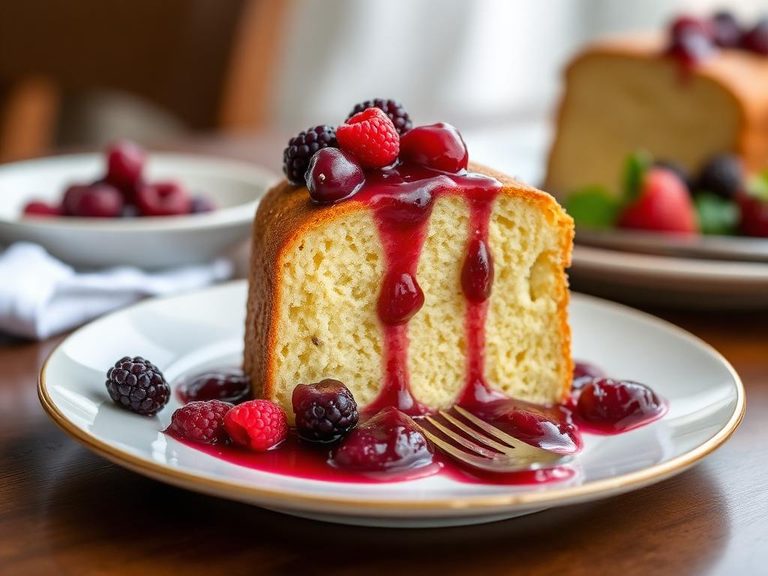
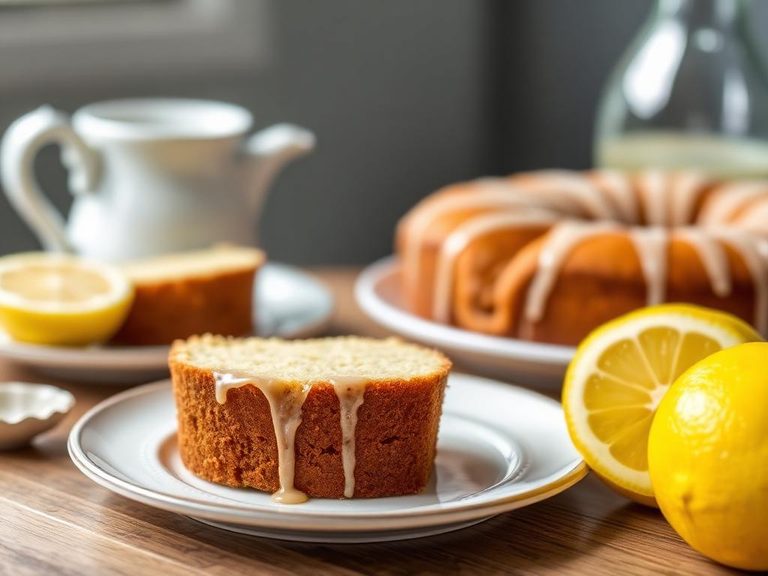
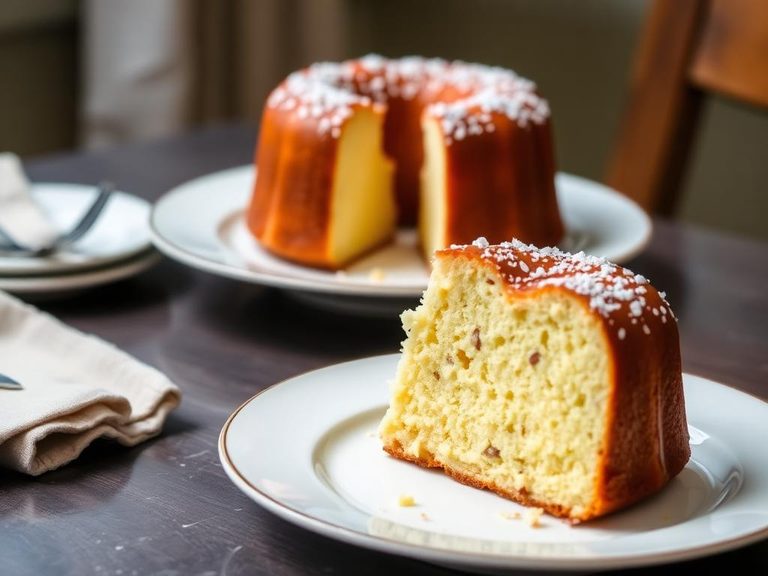
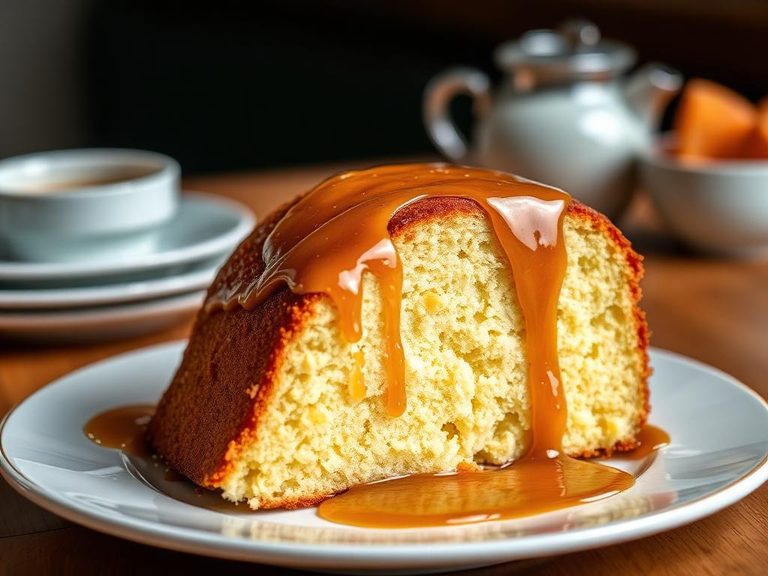
🍽️ Popular dishes

🌍 Where it's eaten
💡 Did you know?
The original 18th-century recipe was named for its ingredients: a pound each of flour, butter, eggs, and sugar.
Full nutrition (USDA data · scales with serving)
| Water | 25.9 g |
| Energy | 353 kcal |
| Energy | 1477 kj |
| Protein | 5.0 g |
| Total lipid (fat) | 14.0 g |
| Ash | 1.5 g |
| Carbohydrate, by difference | 53.6 g |
| Fiber, total dietary | 0.60 g |
| Total Sugars | 33.4 g |
| Sucrose | 30.7 g |
| Glucose | 0.75 g |
| Fructose | 0.33 g |
| Lactose | 1.3 g |
| Maltose | 0.33 g |
| Galactose | 0.00 g |
| Starch | 17.4 g |
| Calcium, Ca | 47.0 mg |
| Iron, Fe | 1.5 mg |
| Magnesium, Mg | 8.0 mg |
| Phosphorus, P | 140 mg |
| Potassium, K | 149 mg |
| Sodium, Na | 377 mg |
| Zinc, Zn | 0.43 mg |
| Copper, Cu | 0.04 mg |
| Manganese, Mn | 0.11 mg |
| Selenium, Se | 5.0 ug |
| Vitamin C, total ascorbic acid | 0.00 mg |
| Thiamin | 0.17 mg |
| Riboflavin | 0.25 mg |
| Niacin | 1.6 mg |
| Pantothenic acid | 0.48 mg |
| Vitamin B-6 | 0.04 mg |
| Folate, total | 42.0 ug |
| Folic acid | 14.0 ug |
| Folate, food | 28.0 ug |
| Folate, DFE | 52.0 ug |
| Choline, total | 65.6 mg |
| Betaine | 10.1 mg |
| Vitamin B-12 | 0.36 ug |
| Vitamin B-12, added | 0.00 ug |
| Vitamin A, RAE | 70.0 ug |
| Retinol | 69.0 ug |
| Carotene, beta | 5.0 ug |
| Carotene, alpha | 0.00 ug |
| Cryptoxanthin, beta | 4.0 ug |
| Vitamin A, IU | 241 iu |
| Lycopene | 0.00 ug |
| Lutein + zeaxanthin | 203 ug |
| Vitamin E (alpha-tocopherol) | 0.65 mg |
| Vitamin E, added | 0.00 mg |
| Tocopherol, beta | 0.04 mg |
| Tocopherol, gamma | 2.8 mg |
| Tocopherol, delta | 0.97 mg |
| Tocotrienol, alpha | 0.00 mg |
| Tocotrienol, beta | 0.00 mg |
| Tocotrienol, gamma | 0.00 mg |
| Tocotrienol, delta | 0.32 mg |
| Vitamin D (D2 + D3), International Units | 34.0 iu |
| Vitamin D (D2 + D3) | 0.80 ug |
| Vitamin K (phylloquinone) | 1.7 ug |
| Alcohol, ethyl | 0.00 g |
| Caffeine | 0.00 mg |
| Theobromine | 0.00 mg |
Fat & fatty acid profile (per 100g)
| Fatty acids, total saturated | 4.8 g |
| SFA 4:0 | 0.12 g |
| SFA 6:0 | 0.09 g |
| SFA 8:0 | 0.05 g |
| SFA 10:0 | 0.16 g |
| SFA 12:0 | 0.16 g |
| SFA 14:0 | 0.54 g |
| SFA 15:0 | 0.06 g |
| SFA 16:0 | 2.4 g |
| SFA 17:0 | 0.04 g |
| SFA 18:0 | 1.1 g |
| SFA 20:0 | 0.02 g |
| SFA 22:0 | 0.02 g |
| SFA 24:0 | 0.01 g |
| Fatty acids, total monounsaturated | 3.0 g |
| MUFA 14:1 | 0.06 g |
| MUFA 15:1 | 0.00 g |
| MUFA 16:1 | 0.12 g |
| MUFA 16:1 c | 0.10 g |
| MUFA 17:1 | 0.01 g |
| MUFA 18:1 | 2.8 g |
| MUFA 18:1 c | 2.7 g |
| MUFA 20:1 | 0.02 g |
| MUFA 22:1 | 0.00 g |
| MUFA 22:1 c | 0.00 g |
| MUFA 24:1 c | 0.00 g |
| Fatty acids, total polyunsaturated | 3.4 g |
| PUFA 18:2 | 3.0 g |
| PUFA 18:2 n-6 c,c | 2.9 g |
| PUFA 18:2 CLAs | 0.03 g |
| PUFA 18:3 | 0.39 g |
| PUFA 18:3 n-3 c,c,c (ALA) | 0.37 g |
| PUFA 18:3 n-6 c,c,c | 0.01 g |
| PUFA 18:3i | 0.00 g |
| PUFA 18:4 | 0.00 g |
| PUFA 20:2 n-6 c,c | 0.00 g |
| PUFA 20:3 | 0.01 g |
| PUFA 20:3 n-3 | 0.00 g |
| PUFA 20:3 n-6 | 0.01 g |
| PUFA 20:4 | 0.03 g |
| PUFA 20:5 n-3 (EPA) | 0.00 g |
| PUFA 22:4 | 0.00 g |
| PUFA 22:5 n-3 (DPA) | 0.01 g |
| PUFA 22:6 n-3 (DHA) | 0.01 g |
| Fatty acids, total trans | 0.19 g |
| Fatty acids, total trans-monoenoic | 0.15 g |
| TFA 16:1 t | 0.02 g |
| TFA 18:1 t | 0.13 g |
| TFA 22:1 t | 0.00 g |
| TFA 18:2 t not further defined | 0.04 g |
| Fatty acids, total trans-polyenoic | 0.04 g |
| Cholesterol | 66.0 mg |
Amino acid profile (per 100g)
| Tryptophan | 0.04 g |
| Threonine | 0.15 g |
| Isoleucine | 0.20 g |
| Leucine | 0.40 g |
| Lysine | 0.20 g |
| Methionine | 0.12 g |
| Cystine | 0.14 g |
| Phenylalanine | 0.24 g |
| Tyrosine | 0.11 g |
| Valine | 0.25 g |
| Arginine | 0.23 g |
| Histidine | 0.12 g |
| Alanine | 0.19 g |
| Aspartic acid | 0.35 g |
| Glutamic acid | 1.1 g |
| Glycine | 0.16 g |
| Proline | 0.50 g |
| Serine | 0.29 g |
| Hydroxyproline | 0.00 g |
FAQ
Why is it called 'pound cake'?
It originates from a traditional recipe that called for one pound each of four key ingredients: flour, butter, eggs, and sugar.
How is it different from sponge cake?
Pound cake is denser and richer due to its high fat content, while sponge cake is lighter and airier, relying on whipped eggs for structure.
Can I freeze leftover pound cake?
Yes, it freezes very well. Wrap slices tightly in plastic wrap and foil, and they can last for several months.
Nutrient density (calculated · NRF9.3)
Nutrient Rich Foods index: beneficial nutrients (protein, fiber, vitamins, minerals) minus saturated fat, added sugar & sodium, per 100 kcal.
NRF9.3 index — Fulgoni, Keast & Drewnowski, 2009. Computed from USDA nutrients.
Weight-loss friendliness (composite index)
Energy density 3.53 kcal/g · 6% calories from protein · 0.6 g fiber · 33.4 g sugar per 100 g.
Composite of energy density (Rolls et al., 1999), protein & fiber satiety, minus sugar. A calculated heuristic — ranks satiety-per-calorie, not a clinical measure.
Dietary load (calculated from USDA values)
Potential renal acid load. Positive = acid-forming, negative = alkaline-forming.
Sodium-to-potassium ratio: 2.53 (lower is better — aim for ≤ 1)
Sodium:potassium per WHO potassium guidance. Computed from USDA nutrients.