

Turkey, ground, 93% lean, 7% fat, raw
Whole food · Poultry Products
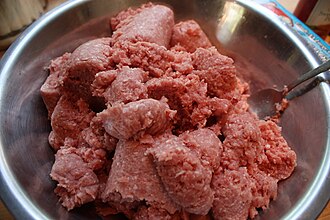
Photo: Wikipedia
Ground turkey, 93% lean, is a finely minced, raw poultry product with a mild, subtly sweet flavor and a soft, tender texture that cooks quickly. Its nutritional profile is defined by a high protein content (18.73g per 100g) and very low fat (8.34g), making it a lean, versatile protein source. It serves as a lighter, lower-fat alternative to ground beef in countless recipes.
Calorie split: 50% protein · 0% carbs · 50% fat
↓ Full nutrition💚 Why it's loved
People love ground turkey for its incredible versatility—it seamlessly takes on the flavors of any cuisine, from spicy tacos to savory meatballs. Its lean profile makes it a go-to for health-conscious cooks seeking a satisfying, protein-packed meal without excessive fat.
⚠️ Watch-outs & how to enjoy it better
Its low fat content can lead to a drier texture if overcooked, and it lacks the rich, beefy flavor some prefer. To counteract dryness, mix in a small amount of moisture (like broth or sautéed onions) and avoid over-stirring while cooking. Pair with flavorful sauces or fresh herbs to boost taste without adding fat.
Key benefits
- High in complete protein for muscle maintenance and satiety.
- Significantly lower in saturated fat than ground beef or pork.
- Excellent source of B vitamins, especially niacin and B6.
- A blank canvas that readily absorbs spices and sauces.
🍽️ Popular dishes

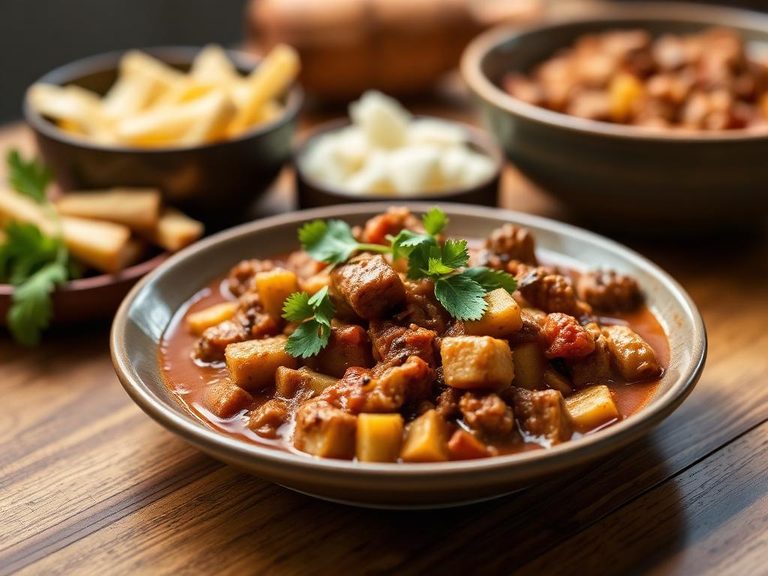
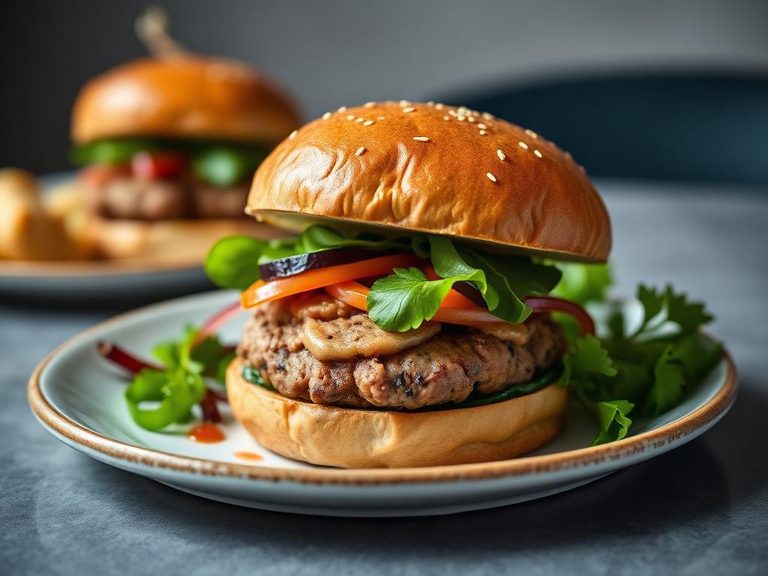
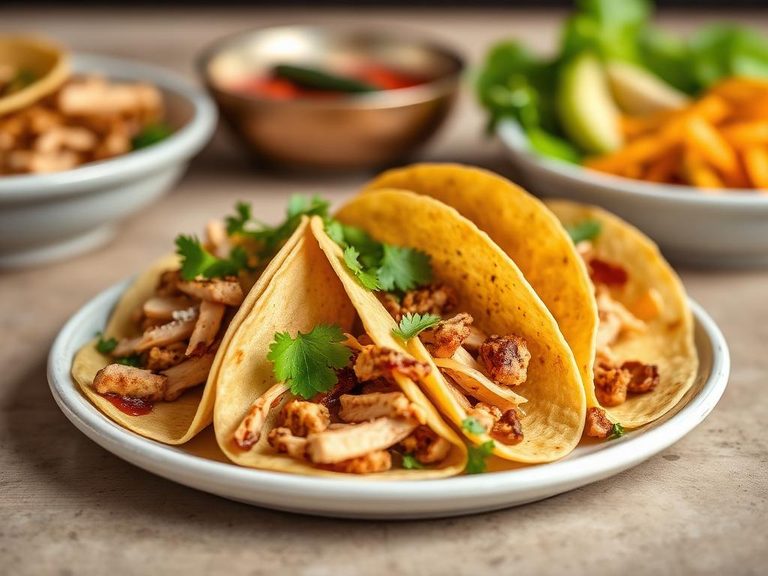
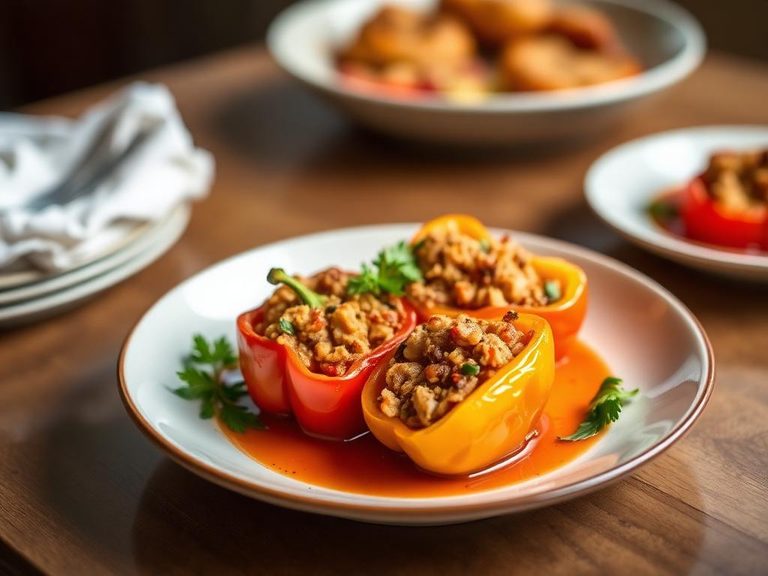
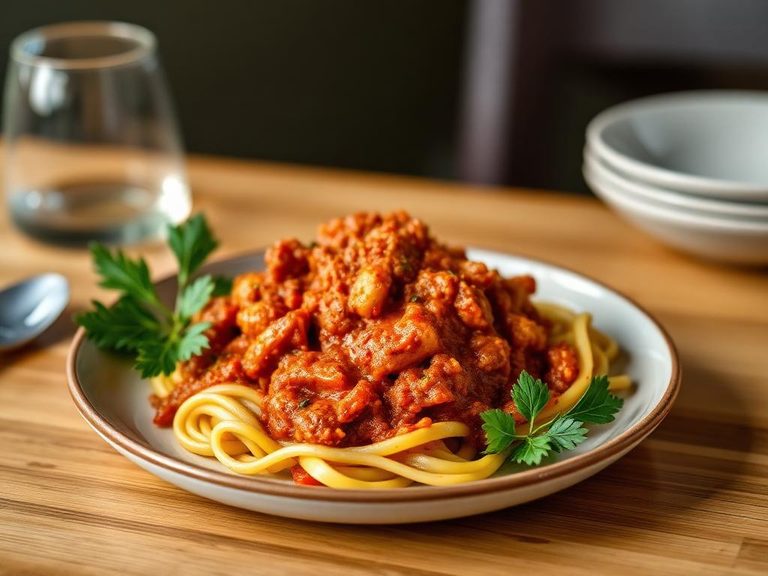
🌍 Where it's eaten
💡 Did you know?
Ground turkey is often made from a mix of dark and light meat, but the 93% lean version is predominantly from the breast, which is why it has such a low fat content compared to ground turkey that includes thigh meat.
Full nutrition (USDA data · scales with serving)
| Water | 72.6 g |
| Energy | 150 kcal |
| Energy | 628 kj |
| Protein | 18.7 g |
| Total lipid (fat) | 8.3 g |
| Ash | 0.92 g |
| Carbohydrate, by difference | 0.00 g |
| Fiber, total dietary | 0.00 g |
| Total Sugars | 0.00 g |
| Calcium, Ca | 21.0 mg |
| Iron, Fe | 1.2 mg |
| Magnesium, Mg | 21.0 mg |
| Phosphorus, P | 193 mg |
| Potassium, K | 213 mg |
| Sodium, Na | 69.0 mg |
| Zinc, Zn | 2.5 mg |
| Copper, Cu | 0.11 mg |
| Manganese, Mn | 0.01 mg |
| Selenium, Se | 19.0 ug |
| Vitamin C, total ascorbic acid | 0.00 mg |
| Thiamin | 0.07 mg |
| Riboflavin | 0.18 mg |
| Niacin | 5.4 mg |
| Pantothenic acid | 1.0 mg |
| Vitamin B-6 | 0.35 mg |
| Folate, total | 7.0 ug |
| Folic acid | 0.00 ug |
| Folate, food | 7.0 ug |
| Folate, DFE | 7.0 ug |
| Choline, total | 53.0 mg |
| Betaine | 7.1 mg |
| Vitamin B-12 | 1.2 ug |
| Vitamin B-12, added | 0.00 ug |
| Vitamin A, RAE | 22.0 ug |
| Retinol | 22.0 ug |
| Carotene, beta | 0.00 ug |
| Carotene, alpha | 0.00 ug |
| Cryptoxanthin, beta | 0.00 ug |
| Vitamin A, IU | 73.0 iu |
| Lycopene | 0.00 ug |
| Lutein + zeaxanthin | 0.00 ug |
| Vitamin E (alpha-tocopherol) | 0.11 mg |
| Vitamin E, added | 0.00 mg |
| Tocopherol, beta | 0.00 mg |
| Tocopherol, gamma | 0.13 mg |
| Tocopherol, delta | 0.02 mg |
| Tocotrienol, alpha | 0.02 mg |
| Tocotrienol, beta | 0.00 mg |
| Tocotrienol, gamma | 0.04 mg |
| Tocotrienol, delta | 0.00 mg |
| Vitamin D (D2 + D3), International Units | 14.0 iu |
| Vitamin D (D2 + D3) | 0.40 ug |
| Vitamin K (phylloquinone) | 0.00 ug |
| Alcohol, ethyl | 0.00 g |
| Caffeine | 0.00 mg |
| Theobromine | 0.00 mg |
Fat & fatty acid profile (per 100g)
| Fatty acids, total saturated | 2.2 g |
| SFA 4:0 | 0.00 g |
| SFA 6:0 | 0.00 g |
| SFA 8:0 | 0.00 g |
| SFA 10:0 | 0.00 g |
| SFA 12:0 | 0.01 g |
| SFA 14:0 | 0.07 g |
| SFA 15:0 | 0.01 g |
| SFA 16:0 | 1.5 g |
| SFA 17:0 | 0.02 g |
| SFA 18:0 | 0.57 g |
| SFA 20:0 | 0.01 g |
| SFA 22:0 | 0.00 g |
| SFA 24:0 | 0.00 g |
| Fatty acids, total monounsaturated | 2.8 g |
| MUFA 14:1 | 0.01 g |
| MUFA 15:1 | 0.00 g |
| MUFA 16:1 | 0.27 g |
| MUFA 16:1 c | 0.27 g |
| MUFA 17:1 | 0.01 g |
| MUFA 18:1 | 2.5 g |
| MUFA 18:1 c | 2.4 g |
| MUFA 20:1 | 0.03 g |
| MUFA 22:1 | 0.00 g |
| MUFA 22:1 c | 0.00 g |
| MUFA 24:1 c | 0.01 g |
| Fatty acids, total polyunsaturated | 2.5 g |
| PUFA 18:2 | 2.2 g |
| PUFA 18:2 n-6 c,c | 2.2 g |
| PUFA 18:2 CLAs | 0.01 g |
| PUFA 18:3 | 0.13 g |
| PUFA 18:3 n-3 c,c,c (ALA) | 0.12 g |
| PUFA 18:3 n-6 c,c,c | 0.01 g |
| PUFA 18:3i | 0.00 g |
| PUFA 18:4 | 0.00 g |
| PUFA 20:2 n-6 c,c | 0.01 g |
| PUFA 20:3 | 0.01 g |
| PUFA 20:3 n-3 | 0.00 g |
| PUFA 20:3 n-6 | 0.01 g |
| PUFA 20:4 | 0.11 g |
| PUFA 20:5 n-3 (EPA) | 0.01 g |
| PUFA 22:4 | 0.02 g |
| PUFA 22:5 n-3 (DPA) | 0.01 g |
| PUFA 22:6 n-3 (DHA) | 0.01 g |
| Fatty acids, total trans | 0.11 g |
| Fatty acids, total trans-monoenoic | 0.08 g |
| TFA 16:1 t | 0.01 g |
| TFA 18:1 t | 0.07 g |
| TFA 22:1 t | 0.00 g |
| TFA 18:2 t not further defined | 0.03 g |
| Fatty acids, total trans-polyenoic | 0.03 g |
| Cholesterol | 74.0 mg |
Amino acid profile (per 100g)
| Tryptophan | 0.21 g |
| Threonine | 0.86 g |
| Isoleucine | 0.84 g |
| Leucine | 1.5 g |
| Lysine | 1.7 g |
| Methionine | 0.55 g |
| Cystine | 0.20 g |
| Phenylalanine | 0.73 g |
| Tyrosine | 0.66 g |
| Valine | 0.87 g |
| Arginine | 1.4 g |
| Histidine | 0.55 g |
| Alanine | 1.2 g |
| Aspartic acid | 1.8 g |
| Glutamic acid | 3.0 g |
| Glycine | 1.0 g |
| Proline | 0.83 g |
| Serine | 0.80 g |
| Hydroxyproline | 0.20 g |
FAQ
Is ground turkey healthier than ground beef?
Generally, yes. 93% lean ground turkey has significantly less saturated fat and fewer calories than most ground beef, while providing comparable protein. However, the exact nutritional comparison depends on the fat percentage of the beef chosen.
How do I keep ground turkey from getting dry?
Avoid overcooking it, as it cooks faster than beef. Mix in a bit of moisture like broth, tomato sauce, or finely diced vegetables (onions, mushrooms) before cooking. Forming it into patties or meatballs with a small amount of binder (like breadcrumbs or egg) also helps retain juiciness.
Can I substitute ground turkey for ground beef in any recipe?
In most cases, yes. It works well in tacos, chili, burgers, and sauces. However, because it's leaner, you may need to add a small amount of oil or liquid to prevent dryness, and it won't have the same rich, beefy flavor, so you might need to adjust seasonings.
Nutrient density (calculated · NRF9.3)
Nutrient Rich Foods index: beneficial nutrients (protein, fiber, vitamins, minerals) minus saturated fat, added sugar & sodium, per 100 kcal.
NRF9.3 index — Fulgoni, Keast & Drewnowski, 2009. Computed from USDA nutrients.
Weight-loss friendliness (composite index)
Energy density 1.50 kcal/g · 50% calories from protein · 0.0 g fiber · 0.0 g sugar per 100 g.
Composite of energy density (Rolls et al., 1999), protein & fiber satiety, minus sugar. A calculated heuristic — ranks satiety-per-calorie, not a clinical measure.
Dietary load (calculated from USDA values)
Potential renal acid load. Positive = acid-forming, negative = alkaline-forming.
Sodium-to-potassium ratio: 0.32 (lower is better — aim for ≤ 1)
Sodium:potassium per WHO potassium guidance. Computed from USDA nutrients.