

Restaurant, Latino, tamale, pork
Whole food · Restaurant Foods

Photo: Wikipedia
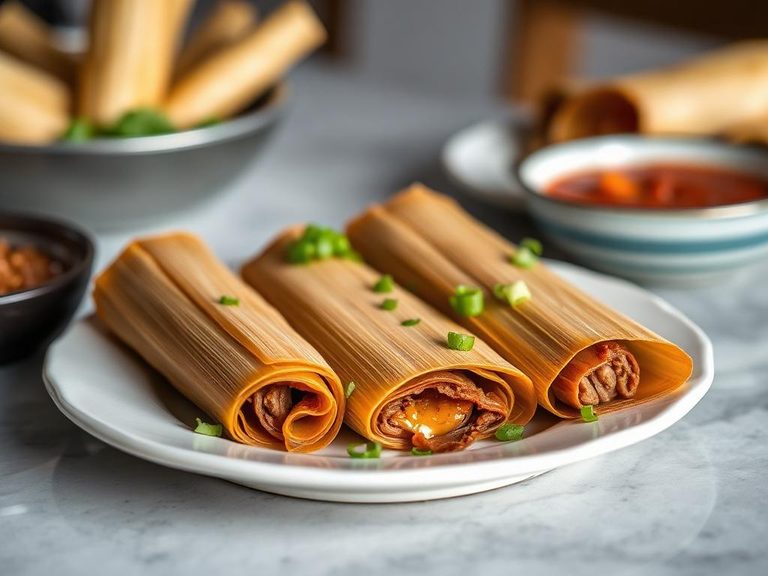
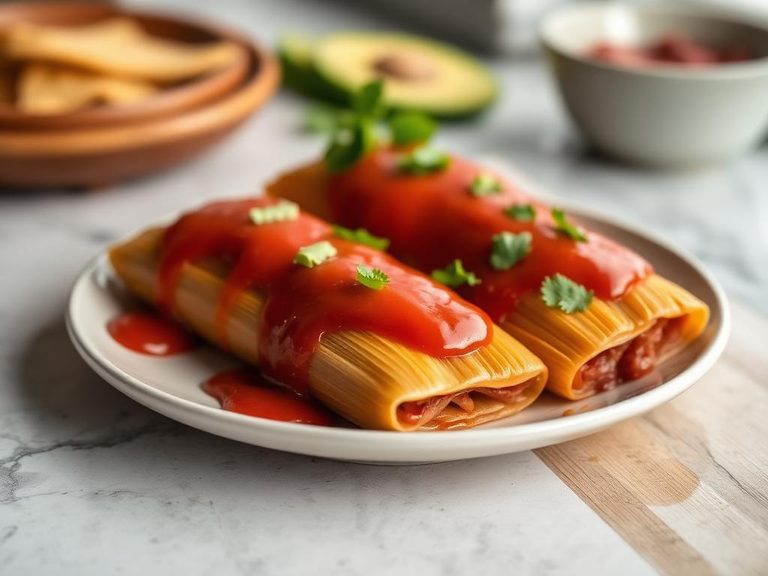
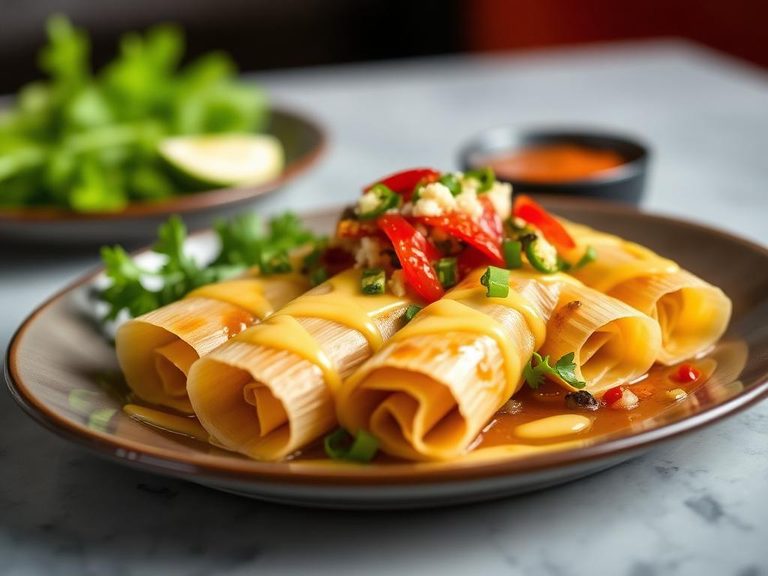
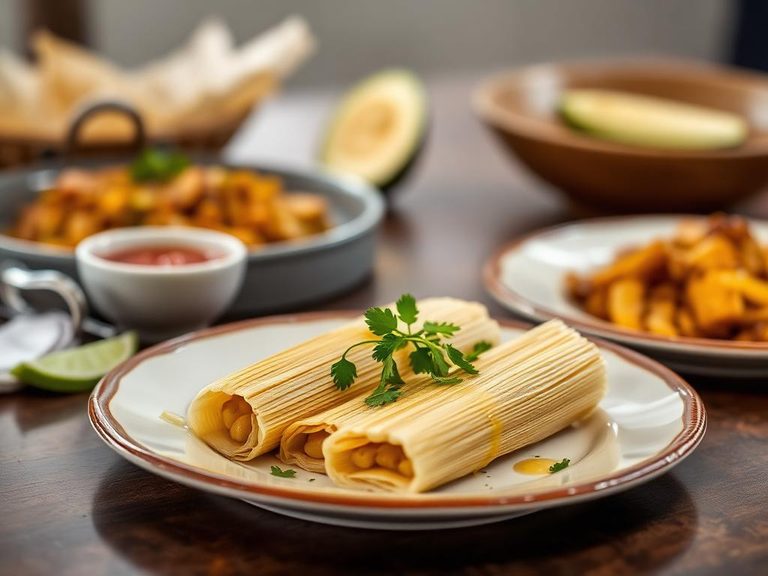
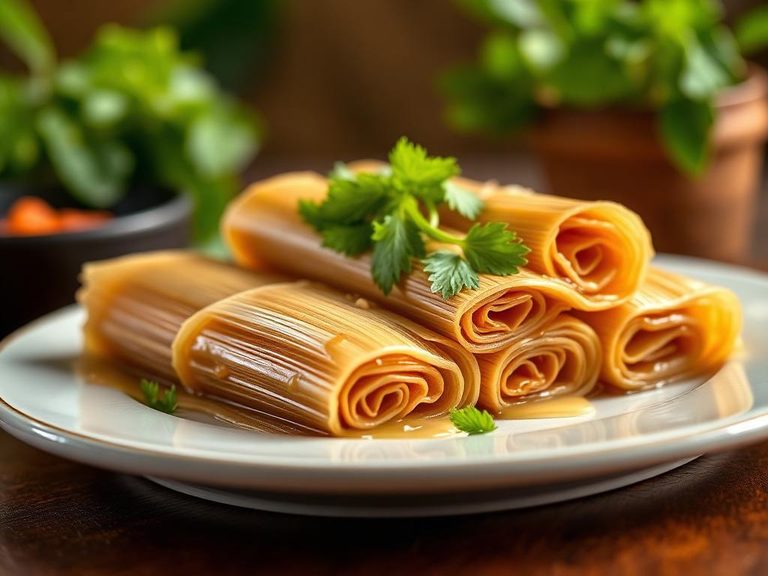
A savory pork tamale is a traditional Mesoamerican dish where seasoned, shredded pork is encased in a soft, fluffy masa (corn dough) and steamed inside a corn husk. The texture is tender and slightly grainy, with the rich, savory pork filling providing a deep, satisfying contrast to the mild, earthy corn wrapper. Nutritionally, it offers a balanced mix of protein and carbohydrates, with a notable fiber content from the corn husk and masa.
Calorie split: 17% protein · 36% carbs · 47% fat
↓ Full nutrition💚 Why it's loved
People adore tamales for their comforting, hearty flavor and the communal tradition of making them, often involving family gatherings. The versatility of fillings and the unique, soft-yet-substantial texture make them a beloved staple for celebrations and everyday meals alike.
⚠️ Watch-outs & how to enjoy it better
The high carbohydrate content from masa can cause blood-sugar spikes, and traditional preparations can be high in sodium and saturated fat. To counteract this, pair a tamale with a side of non-starchy vegetables or a simple salad, practice portion control, and choose versions with leaner pork or vegetable fillings.
Key benefits
- Good source of complete protein from pork
- Provides dietary fiber from corn masa
- Contains B vitamins for energy metabolism
- Offers a balanced meal with protein, carbs, and fat
- Traditional preparation method (steaming) retains nutrients
🍽️ Popular dishes
🌍 Where it's eaten
💡 Did you know?
The process of making tamales, called a 'tamalada,' is a major social event where multiple generations gather to spread masa, add fillings, and wrap dozens of tamales for future meals.
Full nutrition (USDA data · scales with serving)
| Water | 66.0 g |
| Energy | 174 kcal |
| Energy | 727 kj |
| Protein | 7.3 g |
| Total lipid (fat) | 9.0 g |
| Ash | 1.8 g |
| Carbohydrate, by difference | 15.8 g |
| Fiber, total dietary | 2.4 g |
| Total Sugars | 0.46 g |
| Sucrose | 0.24 g |
| Glucose | 0.00 g |
| Fructose | 0.21 g |
| Lactose | 0.00 g |
| Maltose | 0.00 g |
| Galactose | 0.00 g |
| Starch | 12.5 g |
| Calcium, Ca | 75.0 mg |
| Iron, Fe | 0.87 mg |
| Magnesium, Mg | 26.0 mg |
| Phosphorus, P | 120 mg |
| Potassium, K | 152 mg |
| Sodium, Na | 473 mg |
| Zinc, Zn | 1.2 mg |
| Copper, Cu | 0.05 mg |
| Manganese, Mn | 0.19 mg |
| Selenium, Se | 9.8 ug |
| Vitamin C, total ascorbic acid | 16.4 mg |
| Thiamin | 0.04 mg |
| Riboflavin | 0.05 mg |
| Niacin | 1.3 mg |
| Pantothenic acid | 0.36 mg |
| Vitamin B-6 | 0.13 mg |
| Folate, total | 39.0 ug |
| Folic acid | 30.0 ug |
| Folate, food | 9.0 ug |
| Folate, DFE | 60.0 ug |
| Choline, total | 8.8 mg |
| Vitamin B-12 | 0.11 ug |
| Vitamin B-12, added | 0.00 ug |
| Vitamin A, RAE | 12.0 ug |
| Retinol | 1.0 ug |
| Carotene, beta | 113 ug |
| Carotene, alpha | 0.00 ug |
| Cryptoxanthin, beta | 58.0 ug |
| Vitamin A, IU | 238 iu |
| Lycopene | 85.0 ug |
| Lutein + zeaxanthin | 110 ug |
| Vitamin E (alpha-tocopherol) | 0.53 mg |
| Vitamin E, added | 0.00 mg |
| Tocopherol, beta | 0.03 mg |
| Tocopherol, gamma | 4.1 mg |
| Tocopherol, delta | 0.37 mg |
| Tocotrienol, alpha | 0.06 mg |
| Tocotrienol, beta | 0.00 mg |
| Tocotrienol, gamma | 0.13 mg |
| Tocotrienol, delta | 0.07 mg |
| Vitamin D (D2 + D3), International Units | 13.0 iu |
| Vitamin D (D2 + D3) | 0.30 ug |
| Vitamin K (phylloquinone) | 5.1 ug |
| Vitamin K (Menaquinone-4) | 2.9 ug |
| Alcohol, ethyl | 0.00 g |
| Caffeine | 0.00 mg |
| Theobromine | 0.00 mg |
Fat & fatty acid profile (per 100g)
| Fatty acids, total saturated | 2.7 g |
| SFA 4:0 | 0.00 g |
| SFA 6:0 | 0.00 g |
| SFA 8:0 | 0.00 g |
| SFA 10:0 | 0.01 g |
| SFA 12:0 | 0.01 g |
| SFA 14:0 | 0.10 g |
| SFA 15:0 | 0.01 g |
| SFA 16:0 | 1.7 g |
| SFA 17:0 | 0.03 g |
| SFA 18:0 | 0.82 g |
| SFA 20:0 | 0.02 g |
| SFA 22:0 | 0.01 g |
| SFA 24:0 | 0.00 g |
| Fatty acids, total monounsaturated | 3.2 g |
| MUFA 14:1 | 0.00 g |
| MUFA 15:1 | 0.00 g |
| MUFA 16:1 | 0.15 g |
| MUFA 16:1 c | 0.15 g |
| MUFA 17:1 | 0.02 g |
| MUFA 18:1 | 3.0 g |
| MUFA 18:1 c | 3.0 g |
| MUFA 20:1 | 0.06 g |
| MUFA 22:1 | 0.00 g |
| MUFA 22:1 c | 0.00 g |
| MUFA 24:1 c | 0.00 g |
| Fatty acids, total polyunsaturated | 2.1 g |
| PUFA 18:2 | 1.8 g |
| PUFA 18:2 n-6 c,c | 1.8 g |
| PUFA 18:2 CLAs | 0.01 g |
| PUFA 18:3 | 0.10 g |
| PUFA 18:3 n-3 c,c,c (ALA) | 0.10 g |
| PUFA 18:3 n-6 c,c,c | 0.00 g |
| PUFA 18:4 | 0.00 g |
| PUFA 20:2 n-6 c,c | 0.04 g |
| PUFA 20:3 | 0.01 g |
| PUFA 20:3 n-3 | 0.01 g |
| PUFA 20:3 n-6 | 0.01 g |
| PUFA 20:4 | 0.03 g |
| PUFA 20:5 n-3 (EPA) | 0.00 g |
| PUFA 22:4 | 0.01 g |
| PUFA 22:5 n-3 (DPA) | 0.01 g |
| PUFA 22:6 n-3 (DHA) | 0.00 g |
| Fatty acids, total trans | 0.06 g |
| Fatty acids, total trans-monoenoic | 0.04 g |
| TFA 16:1 t | 0.00 g |
| TFA 18:1 t | 0.04 g |
| TFA 22:1 t | 0.00 g |
| TFA 18:2 t not further defined | 0.01 g |
| Fatty acids, total trans-polyenoic | 0.01 g |
| Cholesterol | 20.0 mg |
Amino acid profile (per 100g)
| Tryptophan | 0.07 g |
| Threonine | 0.28 g |
| Isoleucine | 0.28 g |
| Leucine | 0.56 g |
| Lysine | 0.50 g |
| Methionine | 0.19 g |
| Cystine | 0.09 g |
| Phenylalanine | 0.27 g |
| Tyrosine | 0.19 g |
| Valine | 0.32 g |
| Arginine | 0.40 g |
| Histidine | 0.20 g |
| Alanine | 0.40 g |
| Aspartic acid | 0.63 g |
| Glutamic acid | 1.2 g |
| Glycine | 0.31 g |
| Proline | 0.34 g |
| Serine | 0.28 g |
FAQ
What is masa?
Masa is a dough made from nixtamalized corn (corn treated with lime), which gives it its distinctive flavor and nutritional profile, including increased niacin availability.
Why are tamales wrapped in corn husks?
The corn husk acts as a natural, biodegradable wrapper that holds the masa and filling together during steaming, infusing a subtle corn flavor and preventing the tamale from falling apart.
Can tamales be made ahead of time?
Yes, tamales freeze exceptionally well. After steaming, let them cool completely, then freeze them in airtight bags. They can be reheated by steaming or microwaving for a quick meal.
Nutrient density (calculated · NRF9.3)
Nutrient Rich Foods index: beneficial nutrients (protein, fiber, vitamins, minerals) minus saturated fat, added sugar & sodium, per 100 kcal.
NRF9.3 index — Fulgoni, Keast & Drewnowski, 2009. Computed from USDA nutrients.
Weight-loss friendliness (composite index)
Energy density 1.74 kcal/g · 17% calories from protein · 2.4 g fiber · 0.5 g sugar per 100 g.
Composite of energy density (Rolls et al., 1999), protein & fiber satiety, minus sugar. A calculated heuristic — ranks satiety-per-calorie, not a clinical measure.
Dietary load (calculated from USDA values)
Potential renal acid load. Positive = acid-forming, negative = alkaline-forming.
Sodium-to-potassium ratio: 3.11 (lower is better — aim for ≤ 1)
Sodium:potassium per WHO potassium guidance. Computed from USDA nutrients.