

Restaurant, Latino, tamale, corn
Whole food · Restaurant Foods

Photo: Wikipedia
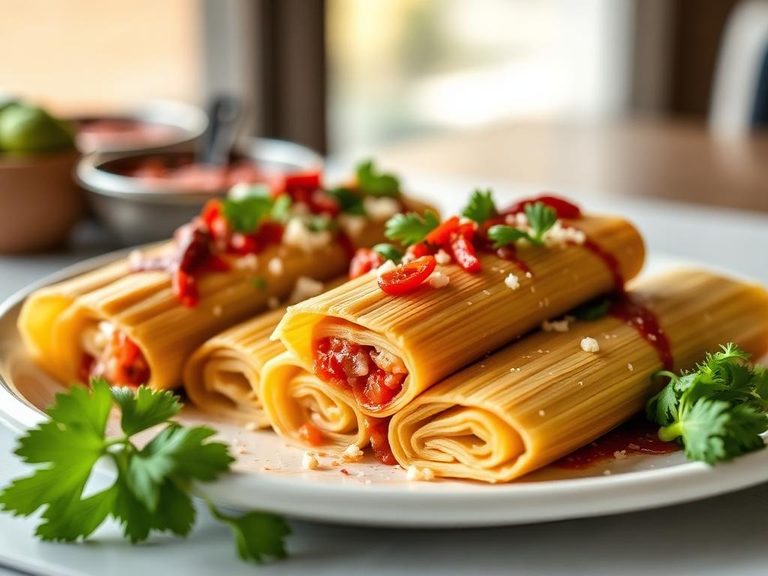
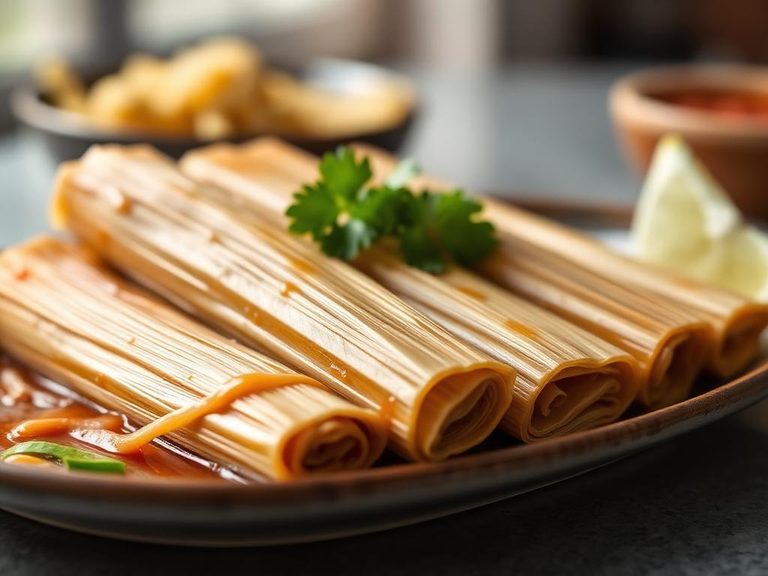
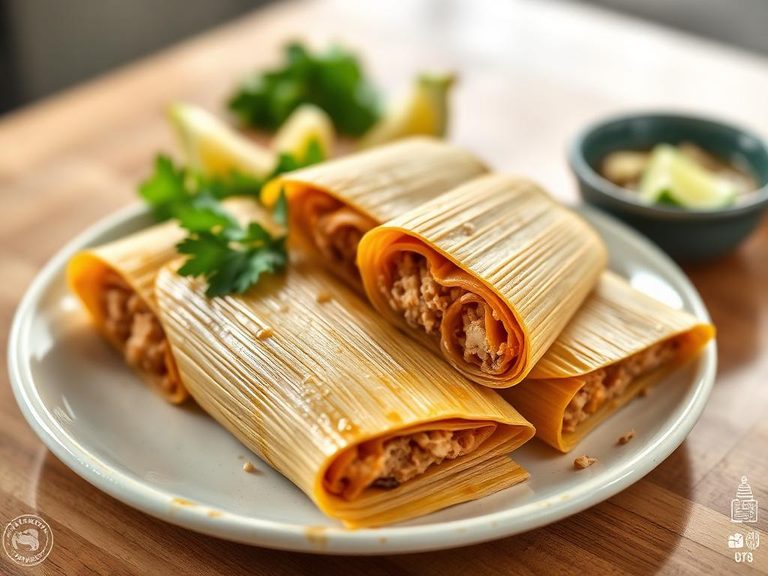
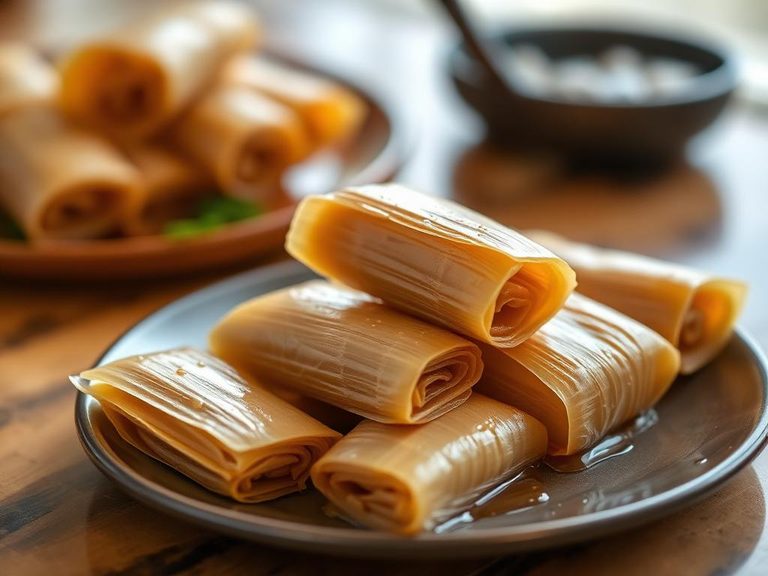
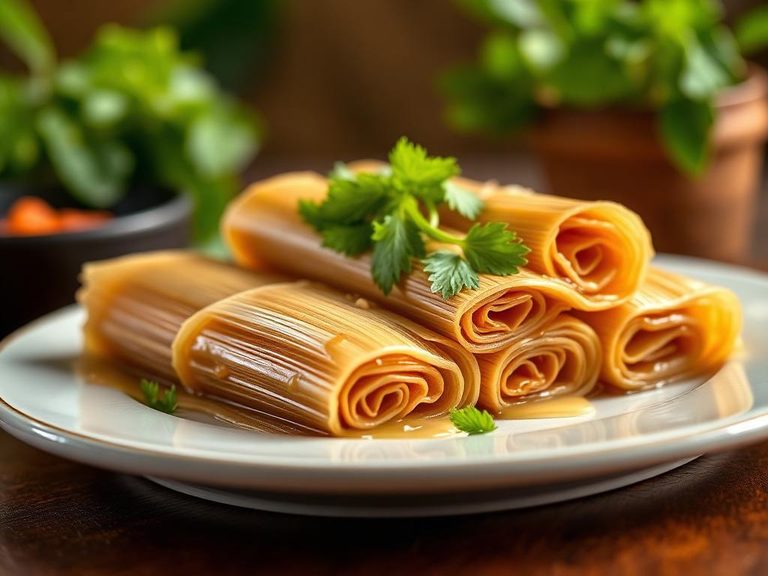
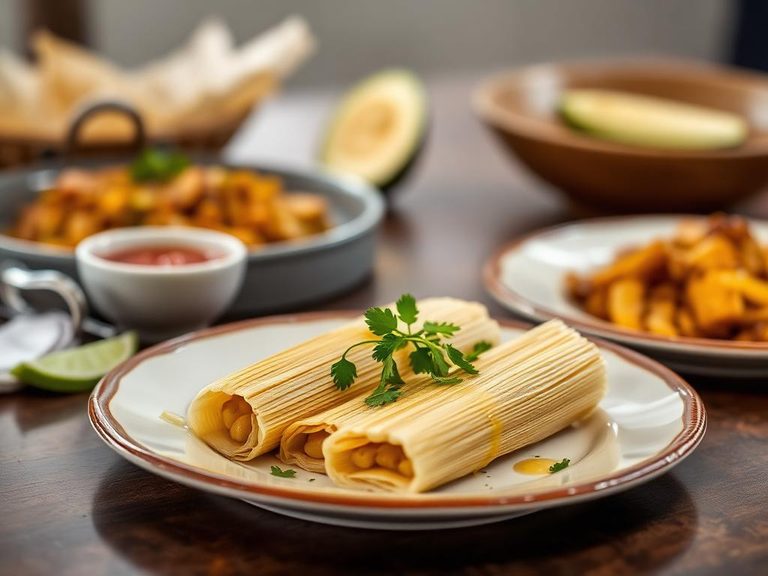
A tamale is a traditional Mesoamerican dish made of masa (corn dough) steamed in a corn husk or banana leaf, often filled with meats, cheeses, or chilies. The texture is soft, moist, and slightly dense, with a sweet, earthy corn flavor that pairs beautifully with savory fillings. Nutritionally, it provides a good source of fiber and complex carbohydrates, making it a satisfying and energy-dense meal.
Calorie split: 8% protein · 58% carbs · 35% fat
↓ Full nutrition💚 Why it's loved
People love tamales for their comforting, savory-sweet flavor and the communal tradition of making them, often with family during holidays. The variety of fillings—from spicy pork to sweet pineapple—makes them incredibly versatile and deeply tied to cultural celebrations.
⚠️ Watch-outs & how to enjoy it better
Tamales can be high in sodium and fat depending on the filling, and the dense carbohydrate content may cause blood-sugar spikes for some. To counteract this, pair with a side of beans or avocado for added protein and healthy fats, and practice portion control by enjoying one tamale as part of a balanced meal.
Key benefits
- Rich in dietary fiber for digestive health
- Provides complex carbohydrates for sustained energy
- Contains plant-based protein from corn and fillings
- Naturally gluten-free when made with traditional masa
- Culturally significant, preserving traditional foodways
🍽️ Popular dishes
🌍 Where it's eaten
💡 Did you know?
The corn husk wrapper is not just for steaming; it imparts a subtle, earthy flavor to the masa and is traditionally used as a natural, biodegradable 'plate' for serving.
Full nutrition (USDA data · scales with serving)
| Water | 61.3 g |
| Energy | 186 kcal |
| Energy | 776 kj |
| Protein | 3.5 g |
| Total lipid (fat) | 7.2 g |
| Ash | 1.3 g |
| Carbohydrate, by difference | 26.7 g |
| Fiber, total dietary | 3.2 g |
| Total Sugars | 7.4 g |
| Sucrose | 6.2 g |
| Glucose | 0.61 g |
| Fructose | 0.57 g |
| Lactose | 0.00 g |
| Maltose | 0.00 g |
| Galactose | 0.00 g |
| Starch | 13.8 g |
| Calcium, Ca | 24.0 mg |
| Iron, Fe | 0.53 mg |
| Magnesium, Mg | 29.0 mg |
| Phosphorus, P | 93.0 mg |
| Potassium, K | 186 mg |
| Sodium, Na | 277 mg |
| Zinc, Zn | 0.62 mg |
| Copper, Cu | 0.03 mg |
| Manganese, Mn | 0.21 mg |
| Selenium, Se | 2.5 ug |
| Vitamin C, total ascorbic acid | 0.20 mg |
| Thiamin | 0.04 mg |
| Riboflavin | 0.05 mg |
| Niacin | 1.3 mg |
| Pantothenic acid | 0.34 mg |
| Vitamin B-6 | 0.18 mg |
| Folate, total | 1.0 ug |
| Folic acid | 0.00 ug |
| Folate, food | 1.0 ug |
| Folate, DFE | 1.0 ug |
| Choline, total | 24.2 mg |
| Betaine | 1.7 mg |
| Vitamin B-12 | 0.00 ug |
| Vitamin B-12, added | 0.00 ug |
| Vitamin A, RAE | 2.0 ug |
| Retinol | 0.00 ug |
| Carotene, beta | 23.0 ug |
| Carotene, alpha | 1.0 ug |
| Cryptoxanthin, beta | 4.0 ug |
| Vitamin A, IU | 43.0 iu |
| Lycopene | 0.00 ug |
| Lutein + zeaxanthin | 145 ug |
| Vitamin E (alpha-tocopherol) | 0.45 mg |
| Vitamin E, added | 0.00 mg |
| Tocopherol, beta | 0.04 mg |
| Tocopherol, gamma | 2.6 mg |
| Tocopherol, delta | 0.55 mg |
| Tocotrienol, alpha | 0.31 mg |
| Tocotrienol, beta | 0.03 mg |
| Tocotrienol, gamma | 0.50 mg |
| Tocotrienol, delta | 0.02 mg |
| Vitamin D (D2 + D3), International Units | 18.0 iu |
| Vitamin D (D2 + D3) | 0.40 ug |
| Vitamin K (phylloquinone) | 5.4 ug |
| Vitamin K (Dihydrophylloquinone) | 2.8 ug |
| Vitamin K (Menaquinone-4) | 0.90 ug |
| Alcohol, ethyl | 0.00 g |
| Caffeine | 0.00 mg |
| Theobromine | 0.00 mg |
Fat & fatty acid profile (per 100g)
| Fatty acids, total saturated | 2.6 g |
| SFA 4:0 | 0.03 g |
| SFA 6:0 | 0.02 g |
| SFA 8:0 | 0.01 g |
| SFA 10:0 | 0.03 g |
| SFA 12:0 | 0.04 g |
| SFA 14:0 | 0.16 g |
| SFA 15:0 | 0.02 g |
| SFA 16:0 | 1.7 g |
| SFA 17:0 | 0.03 g |
| SFA 18:0 | 0.56 g |
| SFA 20:0 | 0.02 g |
| SFA 22:0 | 0.01 g |
| SFA 24:0 | 0.01 g |
| Fatty acids, total monounsaturated | 2.4 g |
| MUFA 14:1 | 0.01 g |
| MUFA 15:1 | 0.00 g |
| MUFA 16:1 | 0.06 g |
| MUFA 16:1 c | 0.05 g |
| MUFA 17:1 | 0.01 g |
| MUFA 18:1 | 2.3 g |
| MUFA 18:1 c | 2.0 g |
| MUFA 20:1 | 0.03 g |
| MUFA 22:1 | 0.00 g |
| MUFA 22:1 c | 0.00 g |
| MUFA 24:1 c | 0.00 g |
| Fatty acids, total polyunsaturated | 1.5 g |
| PUFA 18:2 | 1.4 g |
| PUFA 18:2 n-6 c,c | 1.4 g |
| PUFA 18:2 CLAs | 0.01 g |
| PUFA 18:3 | 0.10 g |
| PUFA 18:3 n-3 c,c,c (ALA) | 0.10 g |
| PUFA 18:3 n-6 c,c,c | 0.00 g |
| PUFA 18:4 | 0.00 g |
| PUFA 20:2 n-6 c,c | 0.00 g |
| PUFA 20:3 | 0.00 g |
| PUFA 20:3 n-3 | 0.00 g |
| PUFA 20:3 n-6 | 0.00 g |
| PUFA 20:4 | 0.00 g |
| PUFA 20:5 n-3 (EPA) | 0.00 g |
| PUFA 22:4 | 0.00 g |
| PUFA 22:5 n-3 (DPA) | 0.00 g |
| PUFA 22:6 n-3 (DHA) | 0.00 g |
| Fatty acids, total trans | 0.36 g |
| Fatty acids, total trans-monoenoic | 0.31 g |
| TFA 16:1 t | 0.01 g |
| TFA 18:1 t | 0.30 g |
| TFA 22:1 t | 0.00 g |
| TFA 18:2 t not further defined | 0.05 g |
| Fatty acids, total trans-polyenoic | 0.05 g |
| Cholesterol | 17.0 mg |
Amino acid profile (per 100g)
| Tryptophan | 0.03 g |
| Threonine | 0.13 g |
| Isoleucine | 0.13 g |
| Leucine | 0.39 g |
| Lysine | 0.15 g |
| Methionine | 0.07 g |
| Cystine | 0.05 g |
| Phenylalanine | 0.16 g |
| Tyrosine | 0.11 g |
| Valine | 0.17 g |
| Arginine | 0.13 g |
| Histidine | 0.09 g |
| Alanine | 0.23 g |
| Aspartic acid | 0.26 g |
| Glutamic acid | 0.68 g |
| Glycine | 0.11 g |
| Proline | 0.29 g |
| Serine | 0.18 g |
FAQ
What is the difference between a tamale and a pupusa?
A tamale is steamed in a corn husk or leaf, while a pupusa is a thick, stuffed corn tortilla that is griddled or fried. Tamales are typically filled and wrapped, whereas pupusas are flat and stuffed with cheese, beans, or meat.
Can tamales be made ahead of time?
Yes, tamales can be made ahead and frozen for up to 3 months. Reheat by steaming for 15-20 minutes until heated through, or microwave with a damp paper towel for a quicker option.
Are tamales gluten-free?
Traditional tamales made with corn masa are naturally gluten-free. However, some recipes may use wheat flour or contain fillings with gluten, so always check ingredients if you have a gluten sensitivity.
Nutrient density (calculated · NRF9.3)
Nutrient Rich Foods index: beneficial nutrients (protein, fiber, vitamins, minerals) minus saturated fat, added sugar & sodium, per 100 kcal.
NRF9.3 index — Fulgoni, Keast & Drewnowski, 2009. Computed from USDA nutrients.
Weight-loss friendliness (composite index)
Energy density 1.86 kcal/g · 7% calories from protein · 3.2 g fiber · 7.4 g sugar per 100 g.
Composite of energy density (Rolls et al., 1999), protein & fiber satiety, minus sugar. A calculated heuristic — ranks satiety-per-calorie, not a clinical measure.
Dietary load (calculated from USDA values)
Potential renal acid load. Positive = acid-forming, negative = alkaline-forming.
Sodium-to-potassium ratio: 1.49 (lower is better — aim for ≤ 1)
Sodium:potassium per WHO potassium guidance. Computed from USDA nutrients.