

Lasagna with meat & sauce, frozen entree
Whole food · Meals, Entrees, and Side Dishes
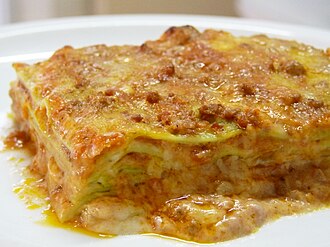
Photo: Wikipedia
A convenient, frozen version of the classic Italian-American comfort dish, featuring layers of pasta, meat sauce, and cheese. Its texture is typically soft and hearty, with a rich, savory flavor profile that balances tomato acidity with creamy cheese. Nutritionally, it offers a moderate protein content (6.63g per 100g) and is relatively low in calories for a complete meal, though portion size is key.
Calorie split: 21% protein · 46% carbs · 32% fat
↓ Full nutrition💚 Why it's loved
People love it for its nostalgic, hearty flavor that evokes family dinners and comfort. It's a versatile meal that can be easily customized with extra vegetables or a side salad.
⚠️ Watch-outs & how to enjoy it better
The frozen version can be high in sodium and may contain preservatives, which can contribute to water retention and blood pressure concerns. To counteract this, pair it with a potassium-rich side like steamed broccoli or a fresh green salad, and practice portion control by sticking to the recommended serving size. Be mindful of potential gluten in the pasta and dairy in the cheese if you have sensitivities.
Key benefits
- Convenient ready-to-heat meal
- Provides a balanced mix of protein, carbs, and fat
- Contains dietary fiber from tomato sauce and pasta
- Offers a satisfying, comforting flavor profile
- Can be a quick source of energy
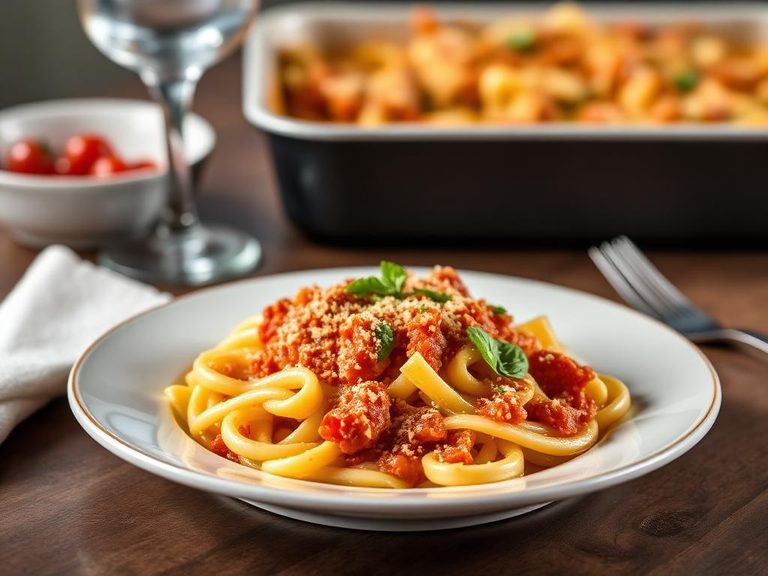
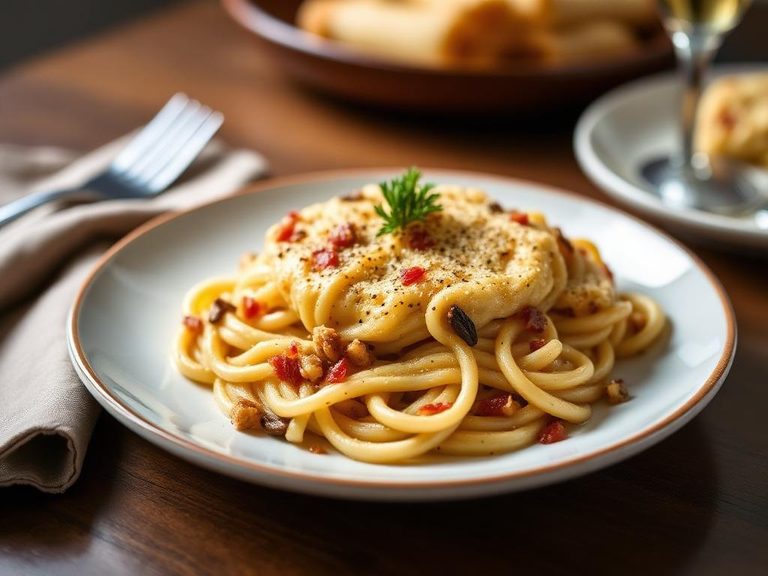
🍽️ Popular dishes
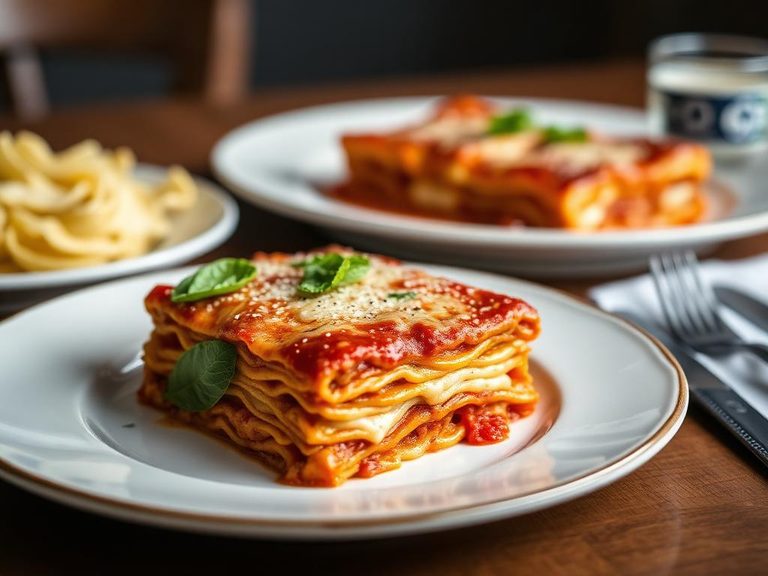
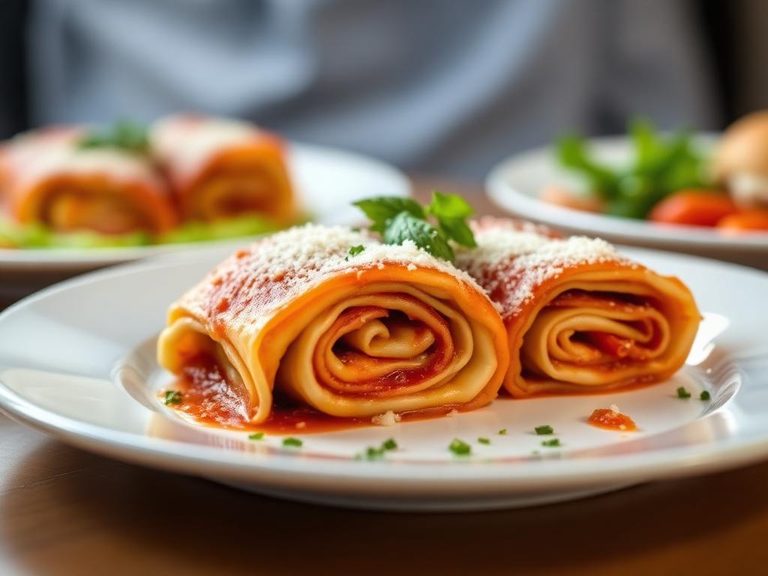
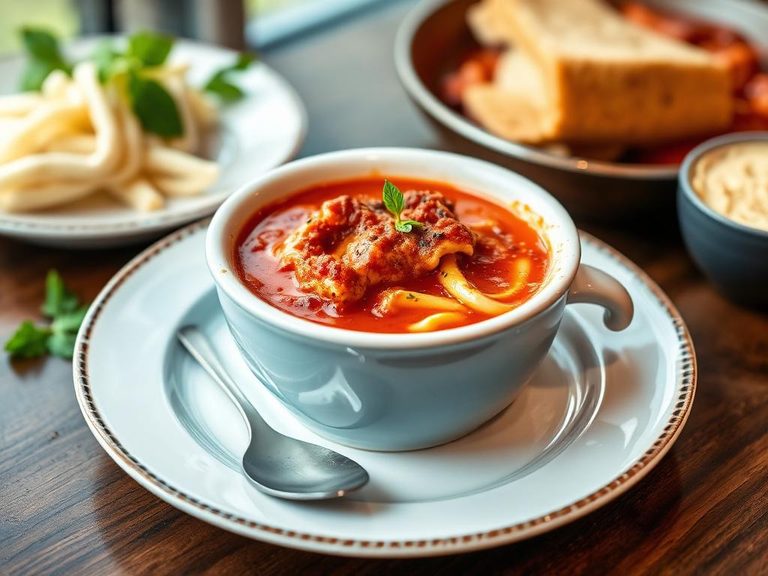
🌍 Where it's eaten
💡 Did you know?
The word 'lasagna' comes from the Greek 'lasanon,' meaning 'chamber pot,' which was later adopted by the Romans to refer to the cooking vessel used for the dish.
Full nutrition (USDA data · scales with serving)
| Water | 73.1 g |
| Energy | 124 kcal |
| Energy | 518 kj |
| Protein | 6.6 g |
| Total lipid (fat) | 4.4 g |
| Ash | 1.5 g |
| Carbohydrate, by difference | 14.4 g |
| Fiber, total dietary | 1.4 g |
| Total Sugars | 3.0 g |
| Sucrose | 0.48 g |
| Glucose | 0.95 g |
| Fructose | 1.1 g |
| Lactose | 0.46 g |
| Maltose | 0.00 g |
| Galactose | 0.00 g |
| Starch | 9.8 g |
| Calcium, Ca | 73.0 mg |
| Iron, Fe | 0.65 mg |
| Magnesium, Mg | 18.0 mg |
| Phosphorus, P | 102 mg |
| Potassium, K | 184 mg |
| Sodium, Na | 347 mg |
| Zinc, Zn | 0.79 mg |
| Copper, Cu | 0.09 mg |
| Manganese, Mn | 0.18 mg |
| Selenium, Se | 14.8 ug |
| Vitamin C, total ascorbic acid | 4.1 mg |
| Thiamin | 0.05 mg |
| Riboflavin | 0.05 mg |
| Niacin | 1.4 mg |
| Pantothenic acid | 0.30 mg |
| Vitamin B-6 | 0.12 mg |
| Folate, total | 14.0 ug |
| Folic acid | 11.0 ug |
| Folate, food | 3.0 ug |
| Folate, DFE | 22.0 ug |
| Choline, total | 15.3 mg |
| Betaine | 5.6 mg |
| Vitamin B-12 | 0.74 ug |
| Vitamin B-12, added | 0.00 ug |
| Vitamin A, RAE | 37.0 ug |
| Retinol | 18.0 ug |
| Carotene, beta | 222 ug |
| Carotene, alpha | 7.0 ug |
| Cryptoxanthin, beta | 2.0 ug |
| Vitamin A, IU | 437 iu |
| Lycopene | 3350 ug |
| Lutein + zeaxanthin | 175 ug |
| Vitamin E (alpha-tocopherol) | 0.87 mg |
| Vitamin E, added | 0.00 mg |
| Tocopherol, beta | 0.06 mg |
| Tocopherol, gamma | 0.11 mg |
| Tocopherol, delta | 0.01 mg |
| Tocotrienol, alpha | 0.02 mg |
| Tocotrienol, beta | 0.00 mg |
| Tocotrienol, gamma | 0.03 mg |
| Tocotrienol, delta | 0.00 mg |
| Vitamin D (D2 + D3), International Units | 1.0 iu |
| Vitamin D (D2 + D3) | 0.00 ug |
| Vitamin K (phylloquinone) | 5.9 ug |
| Vitamin K (Dihydrophylloquinone) | 0.40 ug |
| Vitamin K (Menaquinone-4) | 1.2 ug |
| Alcohol, ethyl | 0.00 g |
| Caffeine | 0.00 mg |
| Theobromine | 0.00 mg |
Fat & fatty acid profile (per 100g)
| Fatty acids, total saturated | 2.1 g |
| SFA 4:0 | 0.04 g |
| SFA 6:0 | 0.03 g |
| SFA 8:0 | 0.02 g |
| SFA 10:0 | 0.04 g |
| SFA 12:0 | 0.05 g |
| SFA 14:0 | 0.23 g |
| SFA 15:0 | 0.03 g |
| SFA 16:0 | 1.1 g |
| SFA 17:0 | 0.04 g |
| SFA 18:0 | 0.52 g |
| SFA 20:0 | 0.01 g |
| SFA 22:0 | 0.00 g |
| SFA 24:0 | 0.00 g |
| Fatty acids, total monounsaturated | 1.6 g |
| MUFA 14:1 | 0.03 g |
| MUFA 15:1 | 0.00 g |
| MUFA 16:1 | 0.12 g |
| MUFA 16:1 c | 0.11 g |
| MUFA 17:1 | 0.02 g |
| MUFA 18:1 | 1.4 g |
| MUFA 18:1 c | 1.3 g |
| MUFA 20:1 | 0.01 g |
| MUFA 22:1 | 0.00 g |
| MUFA 22:1 c | 0.00 g |
| MUFA 24:1 c | 0.00 g |
| Fatty acids, total polyunsaturated | 0.36 g |
| PUFA 18:2 | 0.32 g |
| PUFA 18:2 n-6 c,c | 0.27 g |
| PUFA 18:2 CLAs | 0.02 g |
| PUFA 18:3 | 0.02 g |
| PUFA 18:3 n-3 c,c,c (ALA) | 0.02 g |
| PUFA 18:3 n-6 c,c,c | 0.00 g |
| PUFA 18:4 | 0.00 g |
| PUFA 20:2 n-6 c,c | 0.00 g |
| PUFA 20:3 | 0.01 g |
| PUFA 20:3 n-3 | 0.00 g |
| PUFA 20:3 n-6 | 0.01 g |
| PUFA 20:4 | 0.01 g |
| PUFA 20:5 n-3 (EPA) | 0.00 g |
| PUFA 22:4 | 0.00 g |
| PUFA 22:5 n-3 (DPA) | 0.00 g |
| PUFA 22:6 n-3 (DHA) | 0.00 g |
| Fatty acids, total trans | 0.18 g |
| Fatty acids, total trans-monoenoic | 0.15 g |
| TFA 16:1 t | 0.01 g |
| TFA 18:1 t | 0.14 g |
| TFA 22:1 t | 0.00 g |
| TFA 18:2 t not further defined | 0.03 g |
| Fatty acids, total trans-polyenoic | 0.03 g |
| Cholesterol | 14.0 mg |
Amino acid profile (per 100g)
| Tryptophan | 0.08 g |
| Threonine | 0.20 g |
| Isoleucine | 0.20 g |
| Leucine | 0.53 g |
| Lysine | 0.44 g |
| Methionine | 0.15 g |
| Cystine | 0.10 g |
| Phenylalanine | 0.30 g |
| Tyrosine | 0.22 g |
| Valine | 0.26 g |
| Arginine | 0.30 g |
| Histidine | 0.17 g |
| Alanine | 0.27 g |
| Aspartic acid | 0.53 g |
| Glutamic acid | 1.7 g |
| Glycine | 0.26 g |
| Proline | 0.71 g |
| Serine | 0.34 g |
| Hydroxyproline | 0.05 g |
FAQ
Is frozen lasagna as nutritious as homemade?
Frozen lasagna can be comparable in basic macronutrients but often contains higher sodium and preservatives. Homemade versions allow for control over ingredients like salt, fat, and vegetable content.
How should I reheat frozen lasagna for best texture?
For best results, thaw it in the refrigerator overnight, then reheat in the oven at 350°F (175°C) for 20-30 minutes, covered with foil to prevent drying. Microwaving is faster but can make the pasta slightly rubbery.
Can I add vegetables to frozen lasagna to boost nutrition?
Yes, you can stir in spinach, mushrooms, or zucchini before baking to increase fiber and vitamins. This also helps balance the meal's glycemic impact.
Nutrient density (calculated · NRF9.3)
Nutrient Rich Foods index: beneficial nutrients (protein, fiber, vitamins, minerals) minus saturated fat, added sugar & sodium, per 100 kcal.
NRF9.3 index — Fulgoni, Keast & Drewnowski, 2009. Computed from USDA nutrients.
Weight-loss friendliness (composite index)
Energy density 1.24 kcal/g · 21% calories from protein · 1.4 g fiber · 3.0 g sugar per 100 g.
Composite of energy density (Rolls et al., 1999), protein & fiber satiety, minus sugar. A calculated heuristic — ranks satiety-per-calorie, not a clinical measure.
Dietary load (calculated from USDA values)
Potential renal acid load. Positive = acid-forming, negative = alkaline-forming.
Sodium-to-potassium ratio: 1.89 (lower is better — aim for ≤ 1)
Sodium:potassium per WHO potassium guidance. Computed from USDA nutrients.