

Fish, swordfish, raw
Whole food · Finfish and Shellfish Products

Photo: Wikipedia
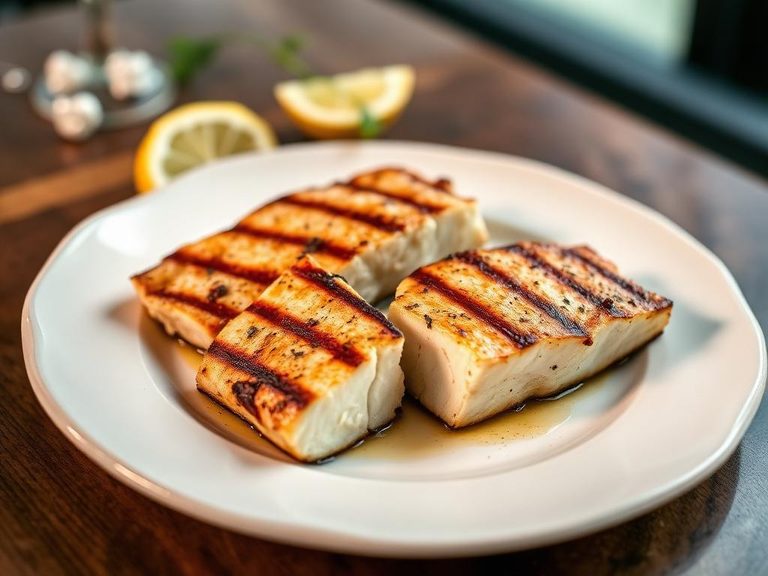
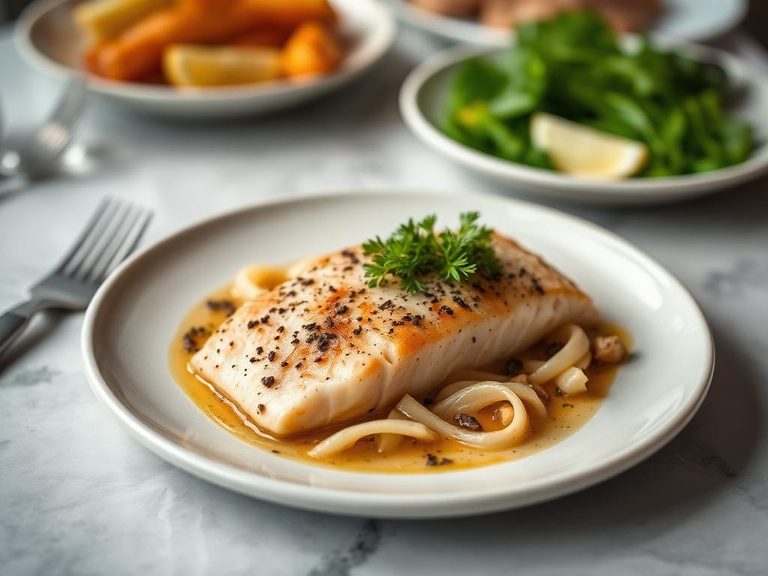
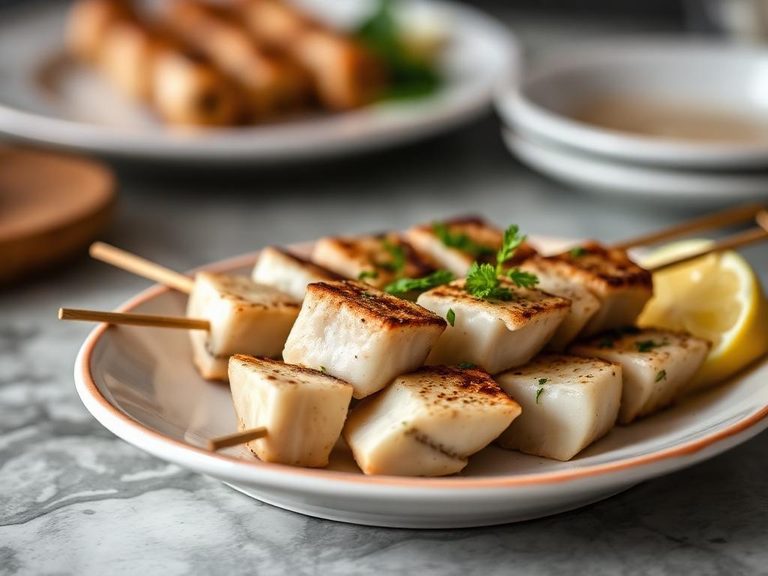
Swordfish is a firm, meaty fish with a steak-like texture and a mild, slightly sweet flavor that holds up beautifully to grilling or searing. Its dense, white flesh doesn't flake like most fish, making it a favorite for those who prefer a substantial bite. Nutritionally, it's a lean powerhouse, delivering a high dose of protein with virtually no carbohydrates.
Calorie split: 57% protein · 0% carbs · 43% fat
↓ Full nutrition💚 Why it's loved
People love swordfish for its satisfying, steak-like texture and ability to absorb bold flavors from marinades and grilling without falling apart. It's a versatile centerpiece that bridges the gap between seafood and meat dishes.
⚠️ Watch-outs & how to enjoy it better
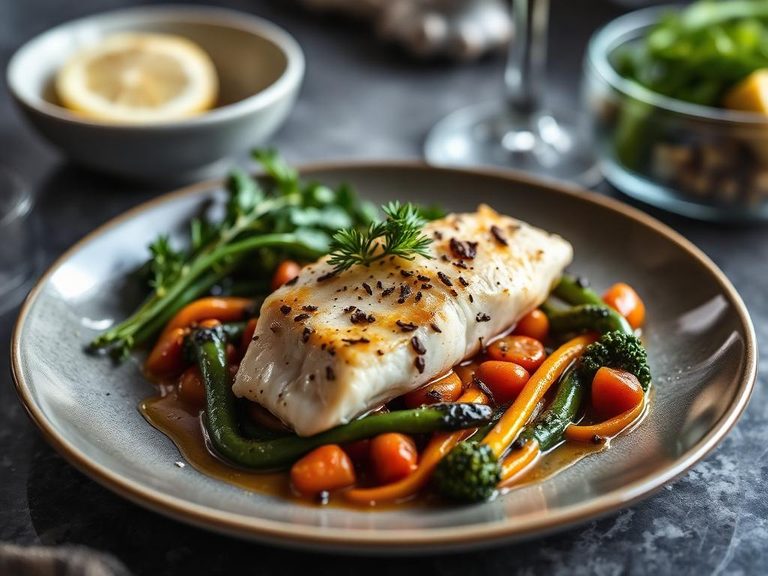
As a large predatory fish, swordfish can contain higher levels of mercury, so pregnant women and young children should limit intake. To mitigate this, choose smaller portions, source from trusted fisheries, and pair it with antioxidant-rich sides like leafy greens or citrus. Its dense texture can also become dry if overcooked, so use a meat thermometer and aim for an internal temp of 145°F (63°C).
Key benefits
- Excellent source of complete protein for muscle maintenance.
- Rich in selenium, a key antioxidant mineral.
- Provides niacin (vitamin B3) for energy metabolism.
- Contains omega-3 fatty acids, though less than oily fish.
🍽️ Popular dishes
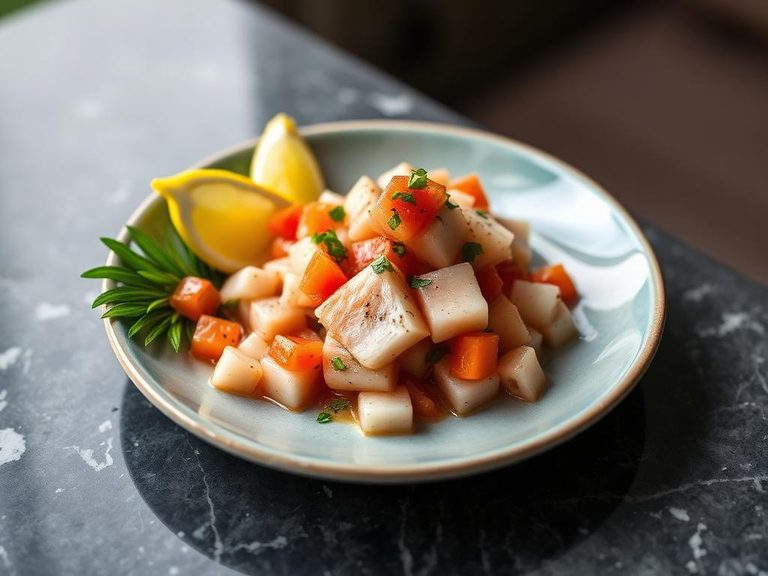
🌍 Where it's eaten
💡 Did you know?
The 'sword' in its name refers to its long, flat, pointed bill, which it uses to slash through schools of fish, stunning its prey before eating.
Full nutrition (USDA data · scales with serving)
| Water | 73.4 g |
| Energy | 144 kcal |
| Energy | 602 kj |
| Protein | 19.7 g |
| Total lipid (fat) | 6.7 g |
| Ash | 1.4 g |
| Carbohydrate, by difference | 0.00 g |
| Fiber, total dietary | 0.00 g |
| Total Sugars | 0.00 g |
| Calcium, Ca | 5.0 mg |
| Iron, Fe | 0.38 mg |
| Magnesium, Mg | 29.0 mg |
| Phosphorus, P | 255 mg |
| Potassium, K | 418 mg |
| Sodium, Na | 81.0 mg |
| Zinc, Zn | 0.66 mg |
| Copper, Cu | 0.04 mg |
| Manganese, Mn | 0.01 mg |
| Selenium, Se | 57.4 ug |
| Vitamin C, total ascorbic acid | 0.00 mg |
| Thiamin | 0.07 mg |
| Riboflavin | 0.05 mg |
| Niacin | 7.8 mg |
| Pantothenic acid | 0.35 mg |
| Vitamin B-6 | 0.54 mg |
| Folate, total | 2.0 ug |
| Folic acid | 0.00 ug |
| Folate, food | 2.0 ug |
| Folate, DFE | 2.0 ug |
| Choline, total | 65.0 mg |
| Vitamin B-12 | 1.7 ug |
| Vitamin B-12, added | 0.00 ug |
| Vitamin A, RAE | 36.0 ug |
| Retinol | 36.0 ug |
| Carotene, beta | 0.00 ug |
| Carotene, alpha | 0.00 ug |
| Cryptoxanthin, beta | 0.00 ug |
| Vitamin A, IU | 120 iu |
| Lycopene | 0.00 ug |
| Lutein + zeaxanthin | 0.00 ug |
| Vitamin E (alpha-tocopherol) | 2.0 mg |
| Vitamin E, added | 0.00 mg |
| Tocopherol, beta | 0.00 mg |
| Tocopherol, gamma | 0.01 mg |
| Tocopherol, delta | 0.00 mg |
| Tocotrienol, alpha | 0.00 mg |
| Tocotrienol, beta | 0.00 mg |
| Tocotrienol, gamma | 0.00 mg |
| Tocotrienol, delta | 0.00 mg |
| Vitamin D (D2 + D3), International Units | 558 iu |
| Vitamin D (D2 + D3) | 13.9 ug |
| Vitamin D3 (cholecalciferol) | 13.9 ug |
| Vitamin K (phylloquinone) | 0.10 ug |
| Alcohol, ethyl | 0.00 g |
| Caffeine | 0.00 mg |
| Theobromine | 0.00 mg |
Fat & fatty acid profile (per 100g)
| Fatty acids, total saturated | 1.6 g |
| SFA 4:0 | 0.00 g |
| SFA 6:0 | 0.00 g |
| SFA 8:0 | 0.00 g |
| SFA 10:0 | 0.00 g |
| SFA 12:0 | 0.01 g |
| SFA 14:0 | 0.15 g |
| SFA 15:0 | 0.03 g |
| SFA 16:0 | 1.0 g |
| SFA 17:0 | 0.03 g |
| SFA 18:0 | 0.34 g |
| SFA 20:0 | 0.02 g |
| SFA 22:0 | 0.01 g |
| SFA 24:0 | 0.01 g |
| Fatty acids, total monounsaturated | 3.0 g |
| MUFA 14:1 | 0.01 g |
| MUFA 15:1 | 0.00 g |
| MUFA 16:1 | 0.24 g |
| MUFA 16:1 c | 0.23 g |
| MUFA 17:1 | 0.01 g |
| MUFA 18:1 | 2.2 g |
| MUFA 18:1 c | 2.2 g |
| MUFA 20:1 | 0.38 g |
| MUFA 22:1 | 0.13 g |
| MUFA 22:1 c | 0.13 g |
| MUFA 24:1 c | 0.08 g |
| Fatty acids, total polyunsaturated | 1.1 g |
| PUFA 18:2 | 0.07 g |
| PUFA 18:2 n-6 c,c | 0.05 g |
| PUFA 18:2 CLAs | 0.01 g |
| PUFA 18:3 | 0.03 g |
| PUFA 18:3 n-3 c,c,c (ALA) | 0.03 g |
| PUFA 18:3 n-6 c,c,c | 0.00 g |
| PUFA 18:3i | 0.00 g |
| PUFA 18:4 | 0.01 g |
| PUFA 20:2 n-6 c,c | 0.02 g |
| PUFA 20:3 | 0.02 g |
| PUFA 20:3 n-3 | 0.02 g |
| PUFA 20:3 n-6 | 0.01 g |
| PUFA 20:4 | 0.07 g |
| PUFA 20:5 n-3 (EPA) | 0.11 g |
| PUFA 22:4 | 0.03 g |
| PUFA 22:5 n-3 (DPA) | 0.14 g |
| PUFA 22:6 n-3 (DHA) | 0.65 g |
| Fatty acids, total trans | 0.05 g |
| Fatty acids, total trans-monoenoic | 0.03 g |
| TFA 16:1 t | 0.01 g |
| TFA 18:1 t | 0.02 g |
| TFA 22:1 t | 0.00 g |
| TFA 18:2 t not further defined | 0.01 g |
| Fatty acids, total trans-polyenoic | 0.01 g |
| Cholesterol | 66.0 mg |
Amino acid profile (per 100g)
| Tryptophan | 0.22 g |
| Threonine | 0.87 g |
| Isoleucine | 0.91 g |
| Leucine | 1.6 g |
| Lysine | 1.8 g |
| Methionine | 0.59 g |
| Cystine | 0.21 g |
| Phenylalanine | 0.77 g |
| Tyrosine | 0.67 g |
| Valine | 1.0 g |
| Arginine | 1.2 g |
| Histidine | 0.58 g |
| Alanine | 1.2 g |
| Aspartic acid | 2.0 g |
| Glutamic acid | 3.0 g |
| Glycine | 0.95 g |
| Proline | 0.70 g |
| Serine | 0.81 g |
FAQ
Is swordfish healthy to eat regularly?
It's a nutritious source of protein and minerals, but due to potential mercury content, health agencies recommend limiting servings to about once a week for most adults.
How do I know when swordfish is done cooking?
The flesh should turn from translucent to opaque and feel firm but not hard to the touch. The internal temperature should reach 145°F (63°C).
What's the best way to prevent swordfish from drying out?
Marinate it for 30 minutes before cooking, avoid overcooking, and consider basting with olive oil or butter while grilling or pan-searing.
Nutrient density (calculated · NRF9.3)
Nutrient Rich Foods index: beneficial nutrients (protein, fiber, vitamins, minerals) minus saturated fat, added sugar & sodium, per 100 kcal.
NRF9.3 index — Fulgoni, Keast & Drewnowski, 2009. Computed from USDA nutrients.
Weight-loss friendliness (composite index)
Energy density 1.44 kcal/g · 55% calories from protein · 0.0 g fiber · 0.0 g sugar per 100 g.
Composite of energy density (Rolls et al., 1999), protein & fiber satiety, minus sugar. A calculated heuristic — ranks satiety-per-calorie, not a clinical measure.
Dietary load (calculated from USDA values)
Potential renal acid load. Positive = acid-forming, negative = alkaline-forming.
Sodium-to-potassium ratio: 0.19 (lower is better — aim for ≤ 1)
Sodium:potassium per WHO potassium guidance. Computed from USDA nutrients.