

Chicken, dark meat, drumstick, meat only, with added solution, cooked, roasted
Whole food · Poultry Products

Photo: Wikipedia
A single, meaty chicken drumstick, roasted to a deep, savory brown. The dark meat is juicy and tender with a rich, chicken-forward flavor, offering a substantial 25g of protein per 100g with minimal fat and zero carbs.
Calorie split: 69% protein · 0% carbs · 31% fat
↓ Full nutrition💚 Why it's loved
People adore the drumstick for its perfect balance of juicy, flavorful dark meat and the primal satisfaction of eating on-the-bone. It's a versatile, crowd-pleasing centerpiece for everything from casual weeknight dinners to festive barbecues.
⚠️ Watch-outs & how to enjoy it better
The skin, while delicious, is high in saturated fat and calories; removing it significantly reduces the fat content. Those monitoring sodium should be aware that 'added solution' can mean a brine injection, which increases salt. Counteract this by choosing 'no solution added' versions when possible and pairing the drumstick with fiber-rich vegetables like roasted broccoli or a leafy salad.
Key benefits
- Excellent source of complete protein for muscle maintenance.
- Rich in iron and zinc, minerals often higher in dark meat.
- Contains B vitamins like niacin and B6 for energy metabolism.
- Provides collagen from connective tissue, beneficial for joints.
- A satiating, low-carb protein source.
🍽️ Popular dishes
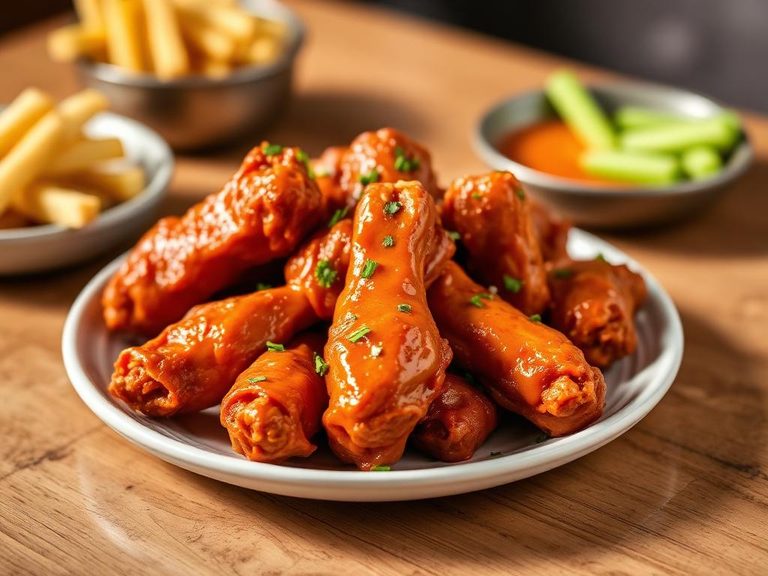
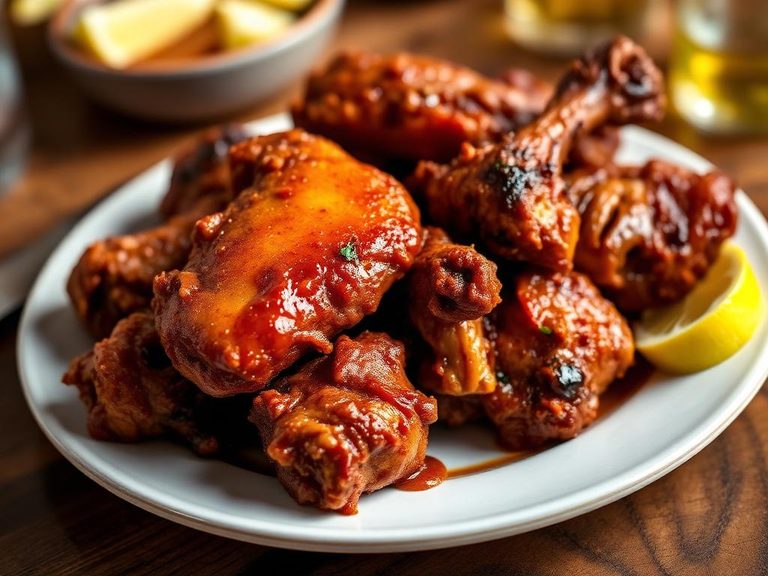
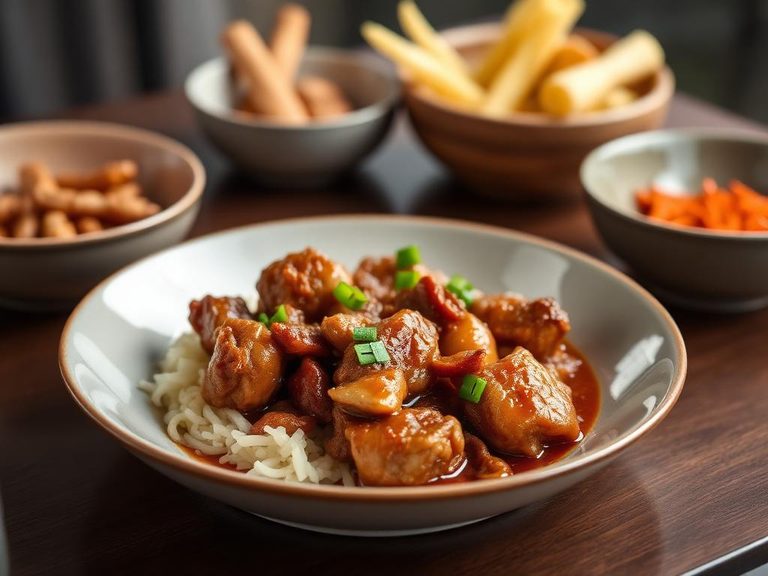


🌍 Where it's eaten
💡 Did you know?
The 'added solution' often includes water, salt, and phosphates to increase juiciness and weight, which is why the raw product can be up to 15% solution by weight.
Full nutrition (USDA data · scales with serving)
| Water | 69.5 g |
| Energy | 146 kcal |
| Energy | 613 kj |
| Protein | 25.3 g |
| Total lipid (fat) | 5.0 g |
| Ash | 1.2 g |
| Carbohydrate, by difference | 0.00 g |
| Fiber, total dietary | 0.00 g |
| Total Sugars | 0.00 g |
| Calcium, Ca | 12.0 mg |
| Iron, Fe | 1.1 mg |
| Magnesium, Mg | 20.0 mg |
| Phosphorus, P | 197 mg |
| Potassium, K | 250 mg |
| Sodium, Na | 190 mg |
| Zinc, Zn | 2.6 mg |
| Copper, Cu | 0.08 mg |
| Manganese, Mn | 0.01 mg |
| Selenium, Se | 30.8 ug |
| Vitamin C, total ascorbic acid | 0.00 mg |
| Thiamin | 0.10 mg |
| Riboflavin | 0.30 mg |
| Niacin | 5.9 mg |
| Pantothenic acid | 1.3 mg |
| Vitamin B-6 | 0.41 mg |
| Folate, total | 4.0 ug |
| Folic acid | 0.00 ug |
| Folate, food | 4.0 ug |
| Folate, DFE | 4.0 ug |
| Choline, total | 115 mg |
| Betaine | 15.6 mg |
| Vitamin B-12 | 0.41 ug |
| Vitamin B-12, added | 0.00 ug |
| Vitamin A, RAE | 6.0 ug |
| Retinol | 6.0 ug |
| Carotene, beta | 0.00 ug |
| Carotene, alpha | 0.00 ug |
| Cryptoxanthin, beta | 0.00 ug |
| Vitamin A, IU | 20.0 iu |
| Lycopene | 0.00 ug |
| Lutein + zeaxanthin | 100 ug |
| Vitamin E (alpha-tocopherol) | 0.23 mg |
| Vitamin E, added | 0.00 mg |
| Tocopherol, beta | 0.00 mg |
| Tocopherol, gamma | 0.10 mg |
| Tocopherol, delta | 0.00 mg |
| Tocotrienol, alpha | 0.00 mg |
| Tocotrienol, beta | 0.00 mg |
| Tocotrienol, gamma | 0.05 mg |
| Tocotrienol, delta | 0.00 mg |
| Vitamin D (D2 + D3), International Units | 6.0 iu |
| Vitamin D (D2 + D3) | 0.10 ug |
| Vitamin D3 (cholecalciferol) | 0.10 ug |
| Vitamin K (phylloquinone) | 0.00 ug |
| Vitamin K (Dihydrophylloquinone) | 0.00 ug |
| Vitamin K (Menaquinone-4) | 12.7 ug |
| Alcohol, ethyl | 0.00 g |
| Caffeine | 0.00 mg |
| Theobromine | 0.00 mg |
Fat & fatty acid profile (per 100g)
| Fatty acids, total saturated | 1.4 g |
| SFA 4:0 | 0.00 g |
| SFA 6:0 | 0.00 g |
| SFA 8:0 | 0.00 g |
| SFA 10:0 | 0.01 g |
| SFA 12:0 | 0.00 g |
| SFA 14:0 | 0.03 g |
| SFA 15:0 | 0.00 g |
| SFA 16:0 | 1.1 g |
| SFA 17:0 | 0.00 g |
| SFA 18:0 | 0.32 g |
| SFA 20:0 | 0.00 g |
| SFA 22:0 | 0.01 g |
| SFA 24:0 | 0.00 g |
| Fatty acids, total monounsaturated | 2.0 g |
| MUFA 14:1 | 0.01 g |
| MUFA 15:1 | 0.00 g |
| MUFA 16:1 | 0.31 g |
| MUFA 16:1 c | 0.30 g |
| MUFA 17:1 | 0.00 g |
| MUFA 18:1 | 1.7 g |
| MUFA 18:1 c | 1.7 g |
| MUFA 20:1 | 0.03 g |
| MUFA 22:1 | 0.00 g |
| MUFA 22:1 c | 0.00 g |
| MUFA 24:1 c | 0.00 g |
| Fatty acids, total polyunsaturated | 1.2 g |
| PUFA 18:2 | 0.96 g |
| PUFA 18:2 n-6 c,c | 0.95 g |
| PUFA 18:2 CLAs | 0.00 g |
| PUFA 18:3 | 0.04 g |
| PUFA 18:3 n-3 c,c,c (ALA) | 0.04 g |
| PUFA 18:3 n-6 c,c,c | 0.00 g |
| PUFA 18:4 | 0.00 g |
| PUFA 20:2 n-6 c,c | 0.01 g |
| PUFA 20:3 | 0.03 g |
| PUFA 20:3 n-3 | 0.00 g |
| PUFA 20:3 n-6 | 0.02 g |
| PUFA 20:4 | 0.11 g |
| PUFA 20:5 n-3 (EPA) | 0.00 g |
| PUFA 22:4 | 0.03 g |
| PUFA 22:5 n-3 (DPA) | 0.01 g |
| PUFA 22:6 n-3 (DHA) | 0.01 g |
| Fatty acids, total trans | 0.03 g |
| Fatty acids, total trans-monoenoic | 0.02 g |
| TFA 16:1 t | 0.00 g |
| TFA 18:1 t | 0.02 g |
| TFA 22:1 t | 0.00 g |
| TFA 18:2 t not further defined | 0.01 g |
| Fatty acids, total trans-polyenoic | 0.01 g |
| Cholesterol | 124 mg |
Amino acid profile (per 100g)
| Tryptophan | 0.29 g |
| Threonine | 1.2 g |
| Isoleucine | 1.2 g |
| Leucine | 2.2 g |
| Lysine | 2.4 g |
| Methionine | 0.72 g |
| Cystine | 0.30 g |
| Phenylalanine | 1.0 g |
| Tyrosine | 0.95 g |
| Valine | 1.2 g |
| Arginine | 1.8 g |
| Histidine | 0.76 g |
| Alanine | 1.5 g |
| Aspartic acid | 2.5 g |
| Glutamic acid | 4.2 g |
| Glycine | 1.2 g |
| Proline | 1.0 g |
| Serine | 1.1 g |
FAQ
Is the 'added solution' the same as a marinade?
No. A solution is typically a saline or phosphate brine injected before cooking to enhance moisture and yield, not a flavor-focused marinade. It's often not visible or listed as a distinct ingredient.
How does the nutrition change if I eat the skin?
Eating the skin roughly doubles the fat content and adds about 50-70 calories per 100g, while the protein remains similar. The skin is the primary source of saturated fat.
What's the best way to cook it for maximum flavor?
Pat the skin dry, season generously, and start it skin-side down in a cold oven or pan. Rendering the fat slowly and finishing with high heat yields the crispiest skin and juicy meat.
Nutrient density (calculated · NRF9.3)
Nutrient Rich Foods index: beneficial nutrients (protein, fiber, vitamins, minerals) minus saturated fat, added sugar & sodium, per 100 kcal.
NRF9.3 index — Fulgoni, Keast & Drewnowski, 2009. Computed from USDA nutrients.
Weight-loss friendliness (composite index)
Energy density 1.46 kcal/g · 69% calories from protein · 0.0 g fiber · 0.0 g sugar per 100 g.
Composite of energy density (Rolls et al., 1999), protein & fiber satiety, minus sugar. A calculated heuristic — ranks satiety-per-calorie, not a clinical measure.
Dietary load (calculated from USDA values)
Potential renal acid load. Positive = acid-forming, negative = alkaline-forming.
Sodium-to-potassium ratio: 0.76 (lower is better — aim for ≤ 1)
Sodium:potassium per WHO potassium guidance. Computed from USDA nutrients.