

Turkey, whole, meat only, cooked, roasted
Whole food · Poultry Products
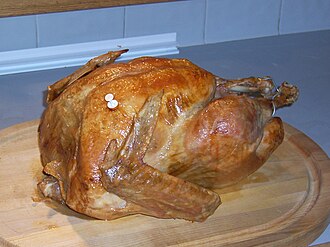
Photo: Wikipedia
Roasted whole turkey meat is the lean, savory centerpiece of holiday feasts, offering a mild, subtly sweet flavor with a tender, fine-grained texture. It's a nutritional powerhouse, delivering an exceptional 29 grams of protein per 100g serving with virtually no fat or carbohydrates.
Calorie split: 77% protein · 0% carbs · 23% fat
↓ Full nutrition💚 Why it's loved
People adore it for its clean, versatile flavor that absorbs herbs and seasonings beautifully, making it a blank canvas for countless recipes. It's deeply tied to cultural traditions like Thanksgiving and Christmas, symbolizing celebration and communal feasts.
⚠️ Watch-outs & how to enjoy it better
Its leanness can lead to dryness if overcooked, and it's often prepared with high-sodium seasonings or gravies. To counteract dryness, use a meat thermometer to pull it at 165°F (74°C) and let it rest before carving. For sodium, opt for herb-based rubs and make gravies from the drippings with low-sodium broth.
Key benefits
- Extremely high in lean protein for muscle repair and satiety
- Very low in fat and contains zero carbohydrates
- Rich in B vitamins like niacin (B3) and B6 for energy metabolism
- Good source of selenium, an important antioxidant mineral
🍽️ Popular dishes
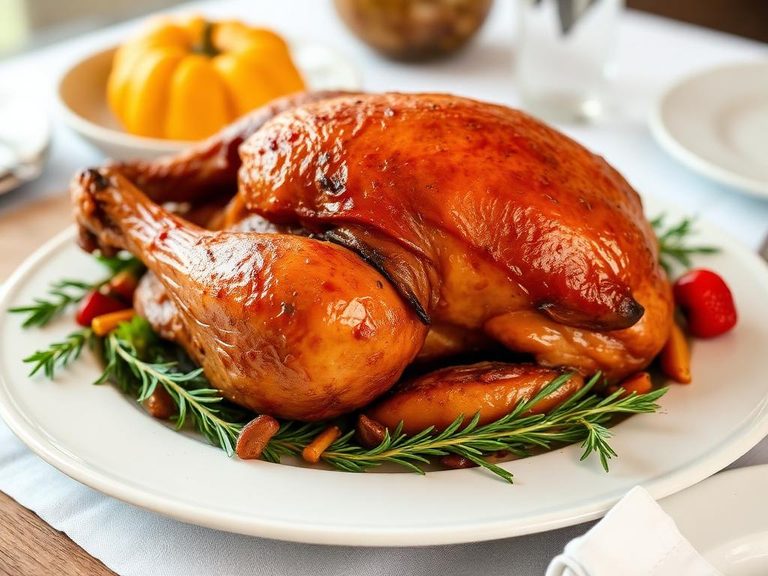
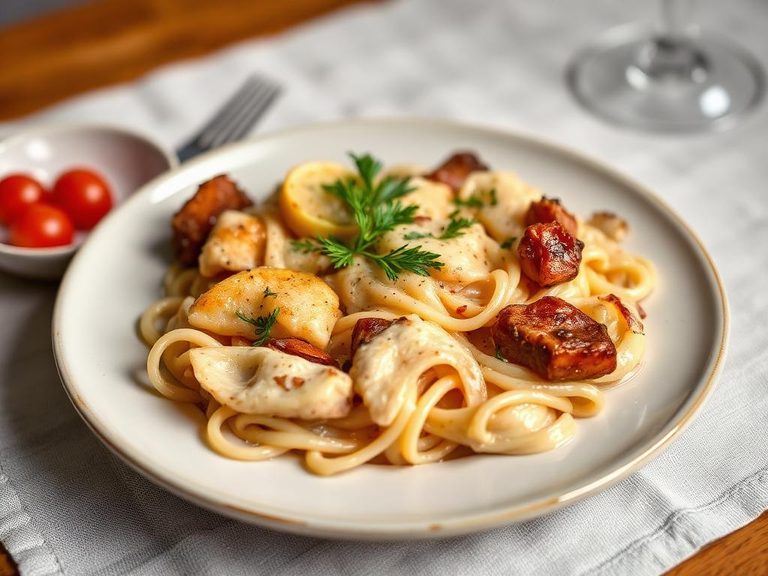
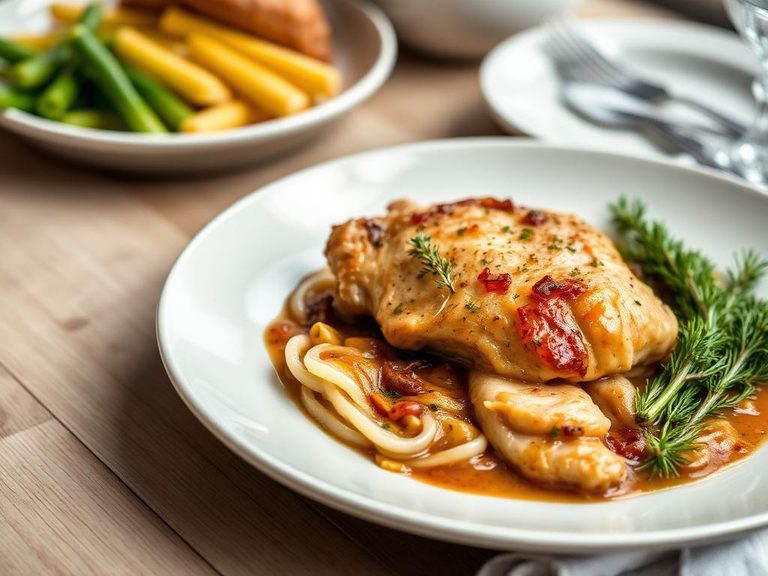
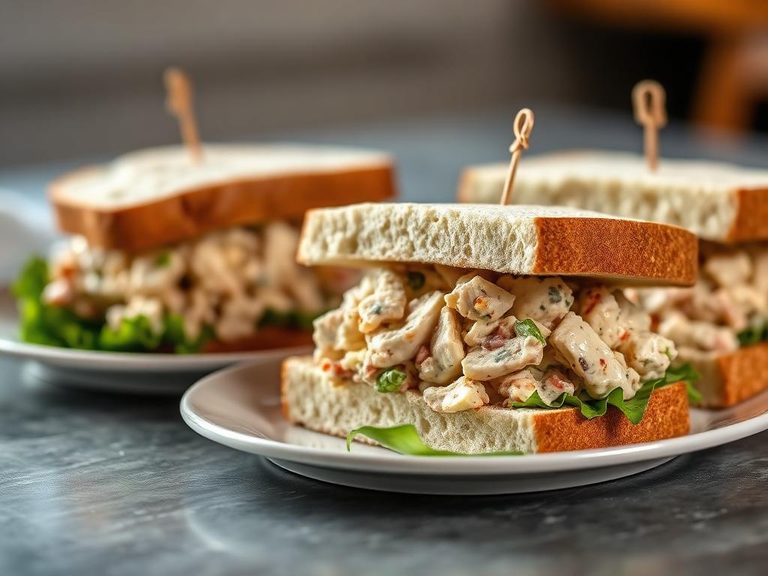
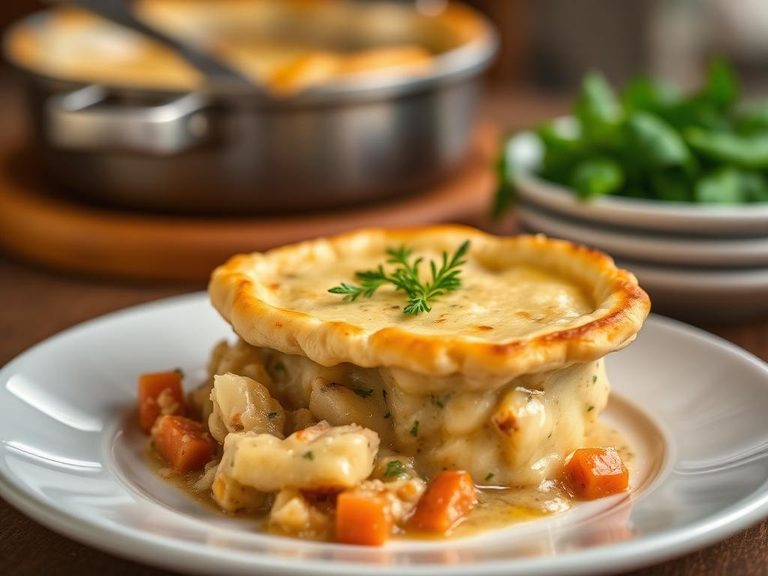
🌍 Where it's eaten
💡 Did you know?
The tradition of eating turkey for Thanksgiving in the U.S. was popularized not by the Pilgrims, but by magazine editor Sarah Josepha Hale's decades-long campaign in the 19th century.
Full nutrition (USDA data · scales with serving)
| Water | 66.7 g |
| Energy | 159 kcal |
| Energy | 664 kj |
| Protein | 29.1 g |
| Total lipid (fat) | 3.8 g |
| Ash | 1.2 g |
| Carbohydrate, by difference | 0.00 g |
| Fiber, total dietary | 0.00 g |
| Total Sugars | 0.00 g |
| Calcium, Ca | 13.0 mg |
| Iron, Fe | 1.0 mg |
| Magnesium, Mg | 29.0 mg |
| Phosphorus, P | 222 mg |
| Potassium, K | 239 mg |
| Sodium, Na | 101 mg |
| Zinc, Zn | 2.5 mg |
| Copper, Cu | 0.09 mg |
| Manganese, Mn | 0.01 mg |
| Selenium, Se | 30.7 ug |
| Vitamin C, total ascorbic acid | 0.00 mg |
| Thiamin | 0.05 mg |
| Riboflavin | 0.28 mg |
| Niacin | 9.5 mg |
| Pantothenic acid | 0.95 mg |
| Vitamin B-6 | 0.64 mg |
| Folate, total | 9.0 ug |
| Folic acid | 0.00 ug |
| Folate, food | 9.0 ug |
| Folate, DFE | 9.0 ug |
| Choline, total | 88.9 mg |
| Betaine | 3.4 mg |
| Vitamin B-12 | 0.94 ug |
| Vitamin B-12, added | 0.00 ug |
| Vitamin A, RAE | 4.0 ug |
| Retinol | 4.0 ug |
| Carotene, beta | 0.00 ug |
| Carotene, alpha | 0.00 ug |
| Cryptoxanthin, beta | 0.00 ug |
| Vitamin A, IU | 14.0 iu |
| Lycopene | 0.00 ug |
| Lutein + zeaxanthin | 0.00 ug |
| Vitamin E (alpha-tocopherol) | 0.06 mg |
| Vitamin E, added | 0.00 mg |
| Tocopherol, beta | 0.00 mg |
| Tocopherol, gamma | 0.03 mg |
| Tocopherol, delta | 0.02 mg |
| Tocotrienol, alpha | 0.00 mg |
| Tocotrienol, beta | 0.00 mg |
| Tocotrienol, gamma | 0.04 mg |
| Tocotrienol, delta | 0.00 mg |
| Vitamin D (D2 + D3), International Units | 10.0 iu |
| Vitamin D (D2 + D3) | 0.30 ug |
| Vitamin D3 (cholecalciferol) | 0.30 ug |
| Vitamin K (phylloquinone) | 0.00 ug |
| Vitamin K (Dihydrophylloquinone) | 0.00 ug |
| Alcohol, ethyl | 0.00 g |
| Caffeine | 0.00 mg |
| Theobromine | 0.00 mg |
Fat & fatty acid profile (per 100g)
| Fatty acids, total saturated | 1.1 g |
| SFA 4:0 | 0.00 g |
| SFA 6:0 | 0.00 g |
| SFA 8:0 | 0.00 g |
| SFA 10:0 | 0.01 g |
| SFA 12:0 | 0.01 g |
| SFA 14:0 | 0.04 g |
| SFA 15:0 | 0.01 g |
| SFA 16:0 | 0.73 g |
| SFA 17:0 | 0.01 g |
| SFA 18:0 | 0.33 g |
| SFA 20:0 | 0.00 g |
| SFA 22:0 | 0.00 g |
| SFA 24:0 | 0.00 g |
| Fatty acids, total monounsaturated | 1.3 g |
| MUFA 14:1 | 0.01 g |
| MUFA 15:1 | 0.00 g |
| MUFA 16:1 | 0.11 g |
| MUFA 16:1 c | 0.11 g |
| MUFA 17:1 | 0.01 g |
| MUFA 18:1 | 1.1 g |
| MUFA 18:1 c | 1.1 g |
| MUFA 20:1 | 0.02 g |
| MUFA 22:1 | 0.00 g |
| MUFA 22:1 c | 0.00 g |
| MUFA 24:1 c | 0.00 g |
| Fatty acids, total polyunsaturated | 1.0 g |
| PUFA 18:2 | 0.88 g |
| PUFA 18:2 n-6 c,c | 0.86 g |
| PUFA 18:2 CLAs | 0.01 g |
| PUFA 18:3 | 0.04 g |
| PUFA 18:3 n-3 c,c,c (ALA) | 0.04 g |
| PUFA 18:3 n-6 c,c,c | 0.00 g |
| PUFA 18:4 | 0.00 g |
| PUFA 20:2 n-6 c,c | 0.01 g |
| PUFA 20:3 | 0.01 g |
| PUFA 20:3 n-3 | 0.00 g |
| PUFA 20:3 n-6 | 0.01 g |
| PUFA 20:4 | 0.06 g |
| PUFA 20:5 n-3 (EPA) | 0.01 g |
| PUFA 22:4 | 0.01 g |
| PUFA 22:5 n-3 (DPA) | 0.01 g |
| PUFA 22:6 n-3 (DHA) | 0.00 g |
| Fatty acids, total trans | 0.05 g |
| Fatty acids, total trans-monoenoic | 0.04 g |
| TFA 16:1 t | 0.00 g |
| TFA 18:1 t | 0.04 g |
| TFA 22:1 t | 0.00 g |
| TFA 18:2 t not further defined | 0.01 g |
| Fatty acids, total trans-polyenoic | 0.01 g |
| Cholesterol | 101 mg |
Amino acid profile (per 100g)
| Tryptophan | 0.31 g |
| Threonine | 1.1 g |
| Isoleucine | 0.83 g |
| Leucine | 2.0 g |
| Lysine | 2.4 g |
| Methionine | 0.76 g |
| Cystine | 0.27 g |
| Phenylalanine | 0.94 g |
| Tyrosine | 0.86 g |
| Valine | 0.93 g |
| Arginine | 1.6 g |
| Histidine | 0.79 g |
| Alanine | 1.6 g |
| Aspartic acid | 2.3 g |
| Glutamic acid | 3.9 g |
| Glycine | 1.2 g |
| Proline | 1.6 g |
| Serine | 1.2 g |
FAQ
Why is my roasted turkey always dry?
Turkey breast meat is very lean and cooks quickly. Use a meat thermometer to remove it from the oven when the thickest part reaches 165°F (74°C). Crucially, let it rest, tented with foil, for 20-30 minutes before carving—this allows juices to redistribute throughout the meat.
Is turkey healthier than chicken?
Nutritionally, they are very similar. Turkey breast is slightly leaner and higher in protein per calorie than chicken breast, but the difference is marginal. The healthiest choice depends more on the cooking method and added seasonings than the bird itself.
Can I eat turkey on a low-carb or keto diet?
Absolutely. Plain roasted turkey is an ideal food for low-carb diets, as it contains zero carbs and is high in protein and healthy fats (especially in the dark meat and skin). Just be mindful of high-carb sides and sugary glazes.
Nutrient density (calculated · NRF9.3)
Nutrient Rich Foods index: beneficial nutrients (protein, fiber, vitamins, minerals) minus saturated fat, added sugar & sodium, per 100 kcal.
NRF9.3 index — Fulgoni, Keast & Drewnowski, 2009. Computed from USDA nutrients.
Weight-loss friendliness (composite index)
Energy density 1.59 kcal/g · 73% calories from protein · 0.0 g fiber · 0.0 g sugar per 100 g.
Composite of energy density (Rolls et al., 1999), protein & fiber satiety, minus sugar. A calculated heuristic — ranks satiety-per-calorie, not a clinical measure.
Dietary load (calculated from USDA values)
Potential renal acid load. Positive = acid-forming, negative = alkaline-forming.
Sodium-to-potassium ratio: 0.42 (lower is better — aim for ≤ 1)
Sodium:potassium per WHO potassium guidance. Computed from USDA nutrients.