

Turkey, gizzard, all classes, raw
Whole food · Poultry Products

Photo: Wikipedia
Turkey gizzards are the muscular, iron-rich digestive organs of the bird, prized for their uniquely dense, chewy texture and deep, savory flavor. When raw, they are a dark, ruby-red meat with a clean, mineral-forward taste. Nutritionally, they are a powerhouse of lean protein with virtually no fat or carbohydrates.
Calorie split: 71% protein · 0% carbs · 29% fat
↓ Full nutrition💚 Why it's loved
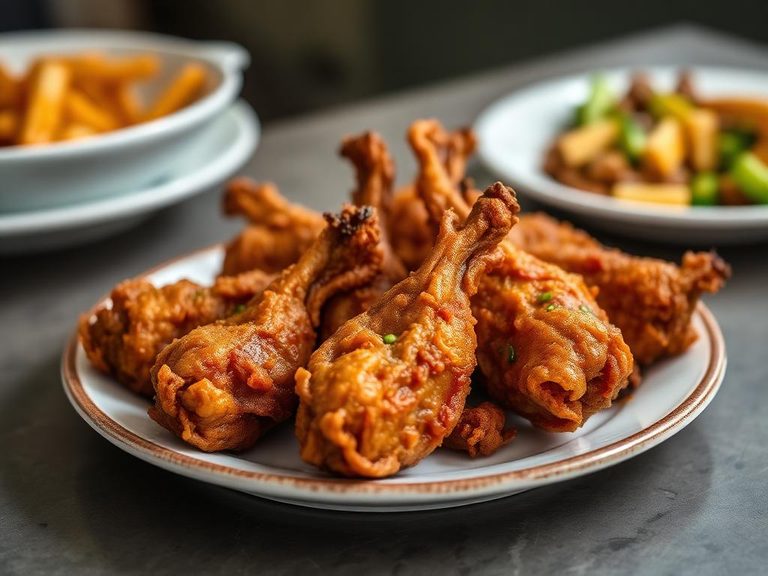
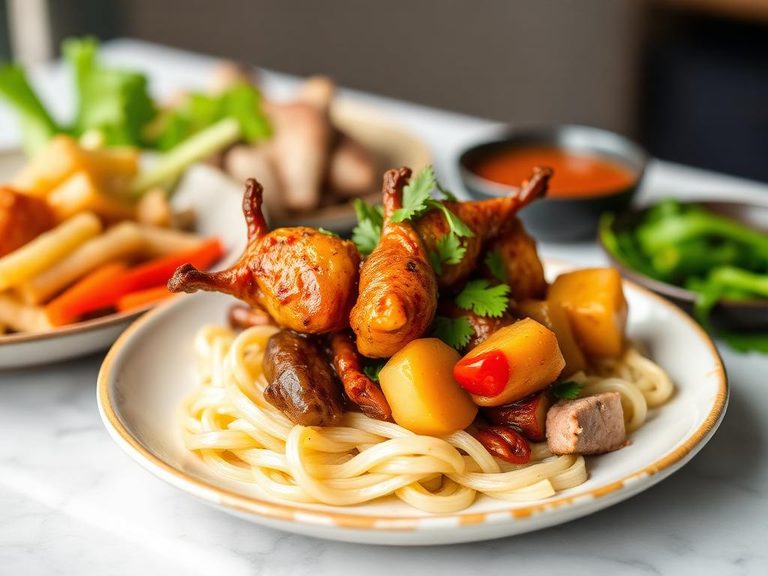
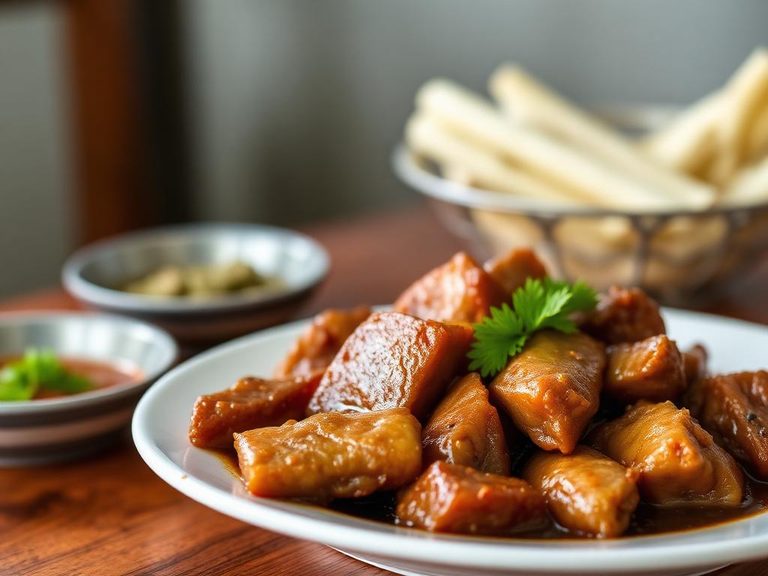
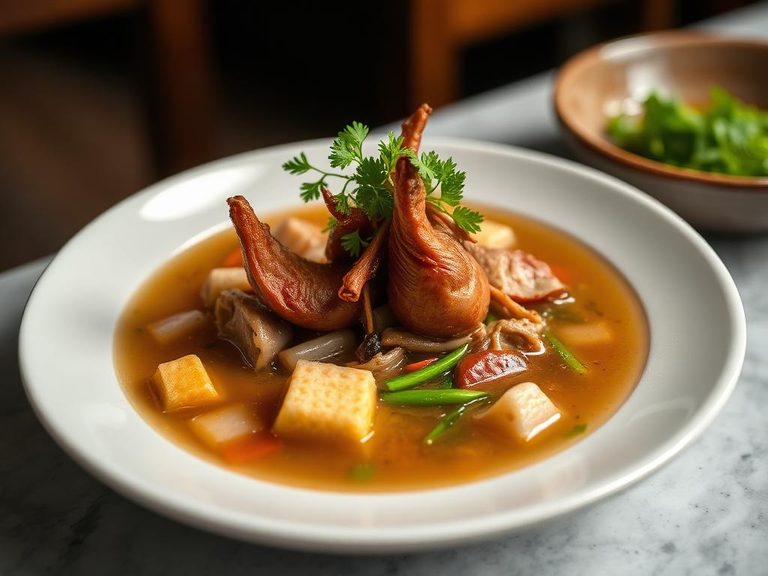
People love gizzards for their satisfying, meaty chew and ability to absorb bold seasonings and marinades. They are a beloved, affordable protein staple in many cuisines, often fried to crispy perfection or slow-cooked until tender.
⚠️ Watch-outs & how to enjoy it better
The primary drawback is their naturally tough, rubbery texture if not prepared correctly, which can be off-putting. They are also high in cholesterol and purines, so individuals with gout or specific heart conditions should consume them in moderation. To counteract toughness, always tenderize by pounding, marinating in acidic ingredients like vinegar or citrus, or slow-cooking/braising.
Key benefits
- Excellent source of high-quality, lean protein (18.8g per 100g).
- Very low in fat (3.37g per 100g) and contains zero carbohydrates or sugar.
- Rich in essential minerals like iron, zinc, and selenium.
- Provides B vitamins, particularly B12, crucial for nerve function and energy.
🍽️ Popular dishes
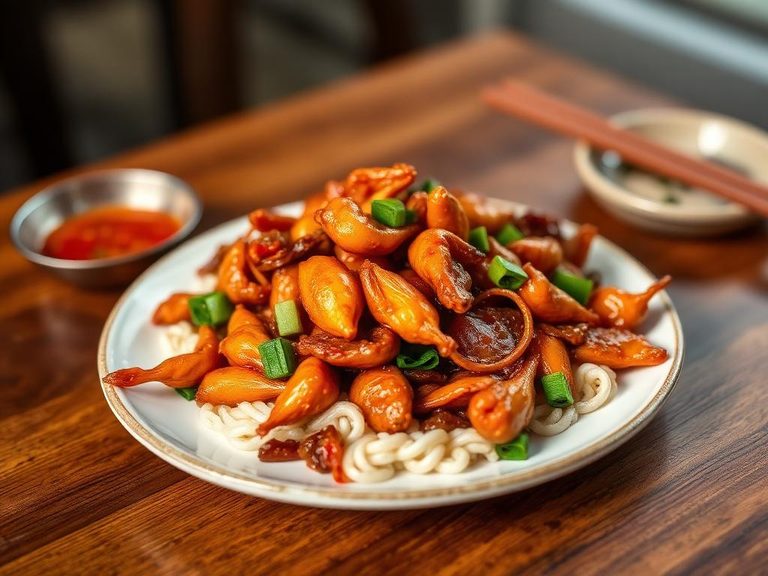
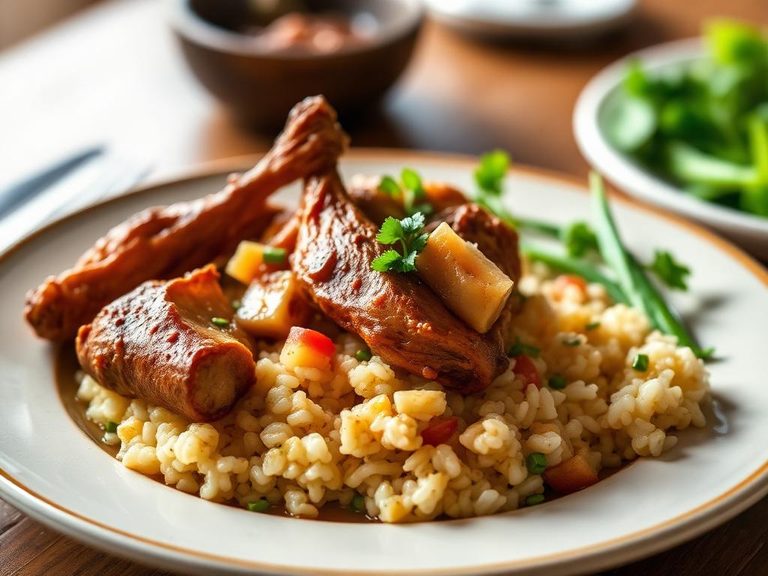
🌍 Where it's eaten
💡 Did you know?
A turkey gizzard is so powerful it can grind food without teeth; farmers sometimes add small, clean stones (called 'grit') to a bird's feed to help this muscular organ work more efficiently.
Full nutrition (USDA data · scales with serving)
| Water | 77.5 g |
| Energy | 111 kcal |
| Energy | 463 kj |
| Protein | 18.8 g |
| Total lipid (fat) | 3.4 g |
| Ash | 0.93 g |
| Carbohydrate, by difference | 0.00 g |
| Fiber, total dietary | 0.00 g |
| Total Sugars | 0.00 g |
| Calcium, Ca | 16.0 mg |
| Iron, Fe | 2.8 mg |
| Magnesium, Mg | 19.0 mg |
| Phosphorus, P | 164 mg |
| Potassium, K | 185 mg |
| Sodium, Na | 147 mg |
| Zinc, Zn | 3.0 mg |
| Copper, Cu | 0.22 mg |
| Manganese, Mn | 0.09 mg |
| Selenium, Se | 28.8 ug |
| Vitamin C, total ascorbic acid | 6.2 mg |
| Thiamin | 0.06 mg |
| Riboflavin | 0.33 mg |
| Niacin | 6.2 mg |
| Pantothenic acid | 0.91 mg |
| Vitamin B-6 | 0.20 mg |
| Folate, total | 6.0 ug |
| Folic acid | 0.00 ug |
| Folate, food | 6.0 ug |
| Folate, DFE | 6.0 ug |
| Choline, total | 89.7 mg |
| Betaine | 1.9 mg |
| Vitamin B-12 | 3.6 ug |
| Vitamin B-12, added | 0.00 ug |
| Vitamin A, RAE | 46.0 ug |
| Retinol | 46.0 ug |
| Carotene, beta | 0.00 ug |
| Carotene, alpha | 0.00 ug |
| Cryptoxanthin, beta | 0.00 ug |
| Vitamin A, IU | 154 iu |
| Lycopene | 0.00 ug |
| Lutein + zeaxanthin | 0.00 ug |
| Vitamin E (alpha-tocopherol) | 0.22 mg |
| Tocopherol, beta | 0.00 mg |
| Tocopherol, gamma | 0.15 mg |
| Tocopherol, delta | 0.00 mg |
| Tocotrienol, alpha | 0.02 mg |
| Tocotrienol, beta | 0.00 mg |
| Tocotrienol, gamma | 0.00 mg |
| Tocotrienol, delta | 0.00 mg |
| Vitamin D (D2 + D3), International Units | 19.0 iu |
| Vitamin D (D2 + D3) | 0.50 ug |
| Vitamin D3 (cholecalciferol) | 0.50 ug |
| Vitamin K (phylloquinone) | 0.00 ug |
| Alcohol, ethyl | 0.00 g |
| Caffeine | 0.00 mg |
| Theobromine | 0.00 mg |
Fat & fatty acid profile (per 100g)
| Fatty acids, total saturated | 0.93 g |
| SFA 4:0 | 0.00 g |
| SFA 6:0 | 0.00 g |
| SFA 8:0 | 0.00 g |
| SFA 10:0 | 0.00 g |
| SFA 12:0 | 0.01 g |
| SFA 14:0 | 0.02 g |
| SFA 15:0 | 0.00 g |
| SFA 16:0 | 0.58 g |
| SFA 17:0 | 0.01 g |
| SFA 18:0 | 0.28 g |
| SFA 20:0 | 0.01 g |
| SFA 22:0 | 0.01 g |
| SFA 24:0 | 0.01 g |
| Fatty acids, total monounsaturated | 0.80 g |
| MUFA 14:1 | 0.00 g |
| MUFA 15:1 | 0.00 g |
| MUFA 16:1 | 0.06 g |
| MUFA 16:1 c | 0.06 g |
| MUFA 17:1 | 0.00 g |
| MUFA 18:1 | 0.72 g |
| MUFA 18:1 c | 0.70 g |
| MUFA 20:1 | 0.01 g |
| MUFA 22:1 | 0.00 g |
| MUFA 22:1 c | 0.00 g |
| MUFA 24:1 c | 0.00 g |
| Fatty acids, total polyunsaturated | 0.71 g |
| PUFA 18:2 | 0.53 g |
| PUFA 18:2 n-6 c,c | 0.52 g |
| PUFA 18:2 CLAs | 0.00 g |
| PUFA 18:3 | 0.02 g |
| PUFA 18:3 n-3 c,c,c (ALA) | 0.02 g |
| PUFA 18:3 n-6 c,c,c | 0.00 g |
| PUFA 18:4 | 0.00 g |
| PUFA 20:2 n-6 c,c | 0.01 g |
| PUFA 20:3 | 0.01 g |
| PUFA 20:3 n-3 | 0.00 g |
| PUFA 20:3 n-6 | 0.01 g |
| PUFA 20:4 | 0.10 g |
| PUFA 20:5 n-3 (EPA) | 0.00 g |
| PUFA 22:4 | 0.03 g |
| PUFA 22:5 n-3 (DPA) | 0.01 g |
| PUFA 22:6 n-3 (DHA) | 0.01 g |
| Fatty acids, total trans | 0.03 g |
| Fatty acids, total trans-monoenoic | 0.02 g |
| TFA 16:1 t | 0.00 g |
| TFA 18:1 t | 0.02 g |
| TFA 22:1 t | 0.00 g |
| TFA 18:2 t not further defined | 0.01 g |
| Fatty acids, total trans-polyenoic | 0.01 g |
| Cholesterol | 271 mg |
Amino acid profile (per 100g)
| Tryptophan | 0.21 g |
| Threonine | 0.69 g |
| Isoleucine | 0.54 g |
| Leucine | 1.4 g |
| Lysine | 1.4 g |
| Methionine | 0.48 g |
| Cystine | 0.22 g |
| Phenylalanine | 0.70 g |
| Tyrosine | 0.60 g |
| Valine | 0.67 g |
| Arginine | 1.1 g |
| Histidine | 0.42 g |
| Alanine | 1.1 g |
| Aspartic acid | 1.5 g |
| Glutamic acid | 2.5 g |
| Glycine | 1.0 g |
| Proline | 1.2 g |
| Serine | 0.82 g |
| Hydroxyproline | 0.58 g |
FAQ
How do you clean and prepare raw turkey gizzards?
Rinse them well under cold water. Use a sharp paring knife to trim away any excess fat, the tough yellow inner lining (the koilin layer), and any connective tissue. This is essential for a pleasant texture.
What's the best way to make tough gizzards tender?
The key is low and slow cooking. Braise, simmer, or pressure cook them for 1-2 hours until fork-tender. Alternatively, pounding them thin before quick frying or marinating in an acidic mixture (like buttermilk or vinegar) can help break down fibers.
Are turkey gizzards healthy?
They are a nutrient-dense food, providing abundant protein, iron, and B12 with minimal fat. However, they are also high in cholesterol and sodium (especially when processed or fried), so they are best enjoyed as part of a balanced diet.
Nutrient density (calculated · NRF9.3)
Nutrient Rich Foods index: beneficial nutrients (protein, fiber, vitamins, minerals) minus saturated fat, added sugar & sodium, per 100 kcal.
NRF9.3 index — Fulgoni, Keast & Drewnowski, 2009. Computed from USDA nutrients.
Weight-loss friendliness (composite index)
Energy density 1.11 kcal/g · 68% calories from protein · 0.0 g fiber · 0.0 g sugar per 100 g.
Composite of energy density (Rolls et al., 1999), protein & fiber satiety, minus sugar. A calculated heuristic — ranks satiety-per-calorie, not a clinical measure.
Dietary load (calculated from USDA values)
Potential renal acid load. Positive = acid-forming, negative = alkaline-forming.
Sodium-to-potassium ratio: 0.79 (lower is better — aim for ≤ 1)
Sodium:potassium per WHO potassium guidance. Computed from USDA nutrients.