

Sausage, Italian, pork, mild, cooked, pan-fried
Whole food · Sausages and Luncheon Meats
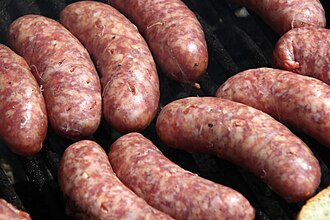
Photo: Wikipedia
Pan-fried mild Italian pork sausage is a juicy, savory link with a tender, slightly coarse texture and a balanced, herby flavor profile that's rich in protein and fat. Its golden-brown crust from pan-frying adds a delightful crispness that contrasts with the soft, meaty interior. At 322 kcal per 100g, it's a calorie-dense, high-fat protein source that delivers robust flavor in small portions.
Calorie split: 23% protein · 3% carbs · 74% fat
↓ Full nutrition💚 Why it's loved
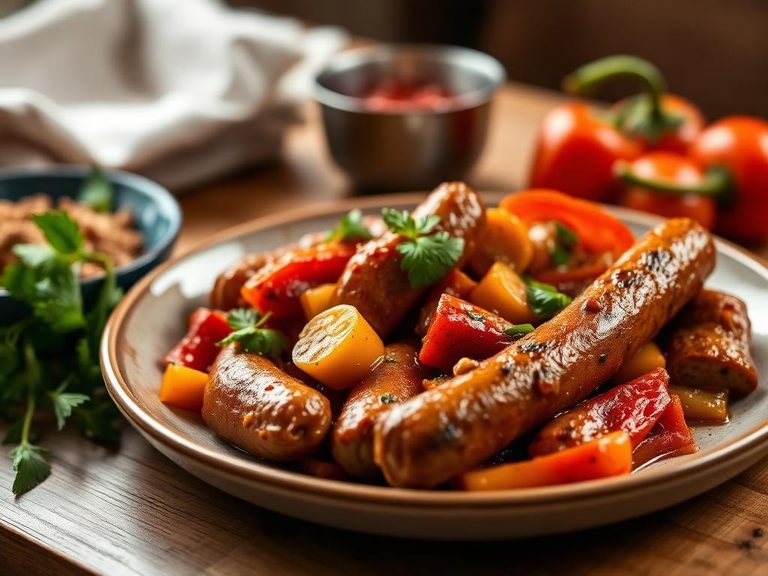
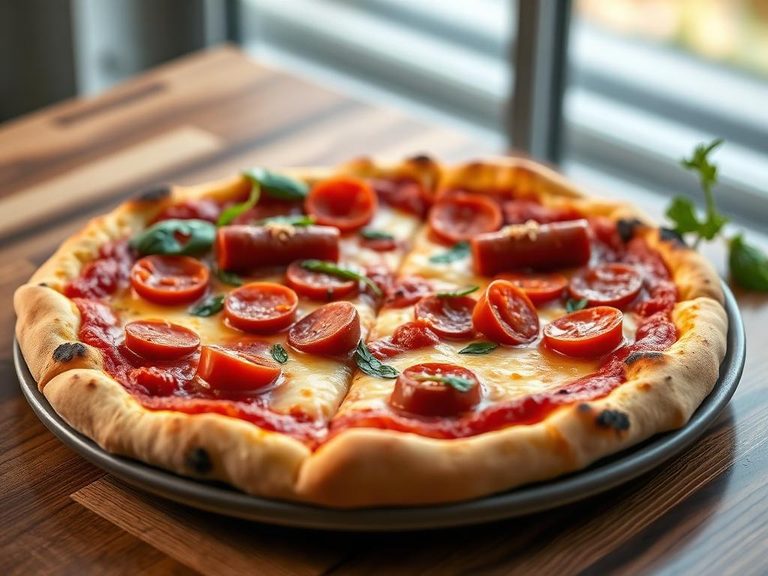
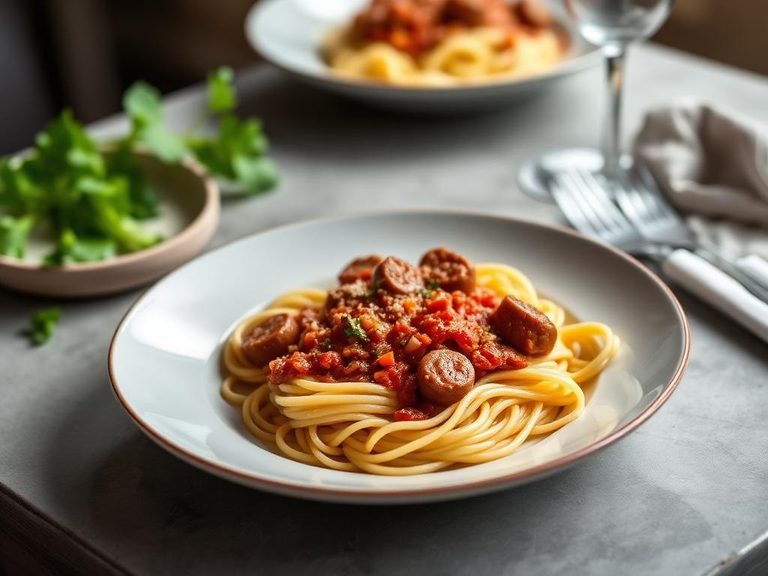
People adore its savory, garlicky, and herbaceous flavor that's comforting and satisfying, often evoking memories of Italian-American family meals. Its versatility makes it a go-to ingredient for everything from pasta to pizza, and its rich taste elevates simple dishes.
⚠️ Watch-outs & how to enjoy it better
The high fat content (26.2g per 100g) and sodium levels can be concerning for those watching heart health or blood pressure, and it may cause digestive discomfort for some. To counteract, pair it with fiber-rich vegetables or whole grains, use portion control (e.g., one link per serving), and consider choosing lower-sodium varieties or draining excess fat after cooking.
Key benefits
- High in protein (18.2g per 100g) for muscle maintenance and satiety
- Rich in B vitamins, especially B12 and niacin, from pork
- Provides essential minerals like zinc and selenium
- Low in carbohydrates (2.15g) and sugar (0g), suitable for low-carb diets
- Versatile in cooking, adding depth to many dishes
🍽️ Popular dishes
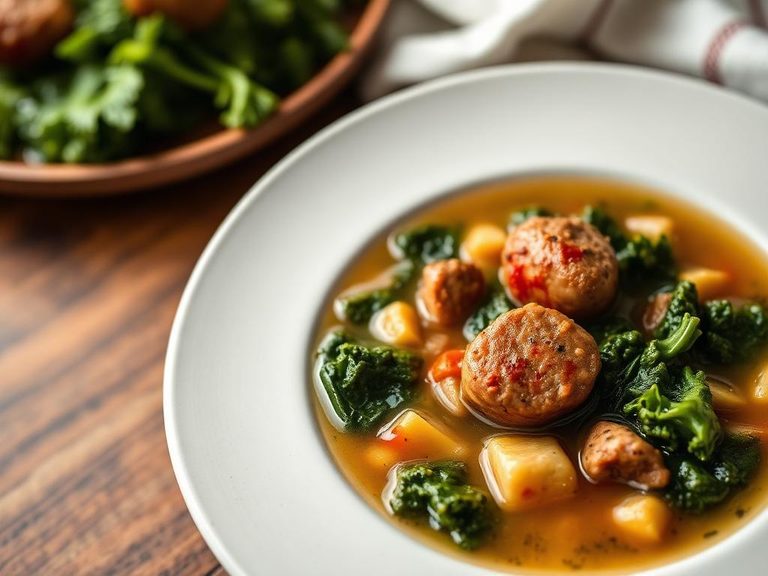
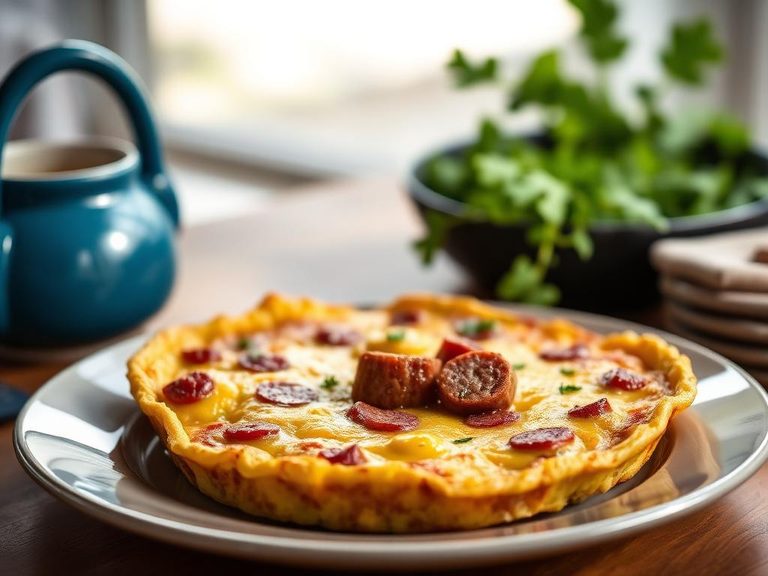
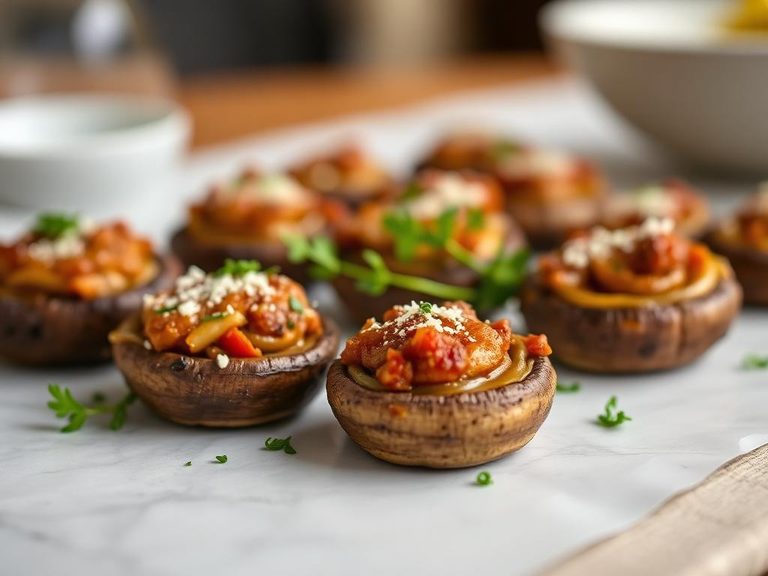
🌍 Where it's eaten
💡 Did you know?
The mild Italian sausage typically uses fennel seeds as a key seasoning, which gives it a distinctive anise-like flavor that's a hallmark of the style.
Full nutrition (USDA data · scales with serving)
| Water | 50.9 g |
| Energy (Atwater General Factors) | 317 kcal |
| Energy (Atwater Specific Factors) | 322 kcal |
| Energy | 322 kcal |
| Energy | 1350 kj |
| Nitrogen | 2.9 g |
| Protein | 18.2 g |
| Total lipid (fat) | 26.2 g |
| Total fat (NLEA) | 25.8 g |
| Ash | 2.6 g |
| Carbohydrate, by difference | 2.1 g |
| Sugars, Total | 1.5 g |
| Sucrose | 0.00 g |
| Glucose | 1.5 g |
| Fructose | 0.00 g |
| Lactose | 0.00 g |
| Maltose | 0.00 g |
| Galactose | 0.00 g |
| Calcium, Ca | 12.0 mg |
| Iron, Fe | 1.3 mg |
| Magnesium, Mg | 18.6 mg |
| Phosphorus, P | 145 mg |
| Potassium, K | 310 mg |
| Sodium, Na | 766 mg |
| Zinc, Zn | 2.4 mg |
| Copper, Cu | 0.07 mg |
| Manganese, Mn | 0.03 mg |
| Selenium, Se | 20.2 ug |
| Thiamin | 0.31 mg |
| Riboflavin | 0.24 mg |
| Niacin | 5.7 mg |
| Pantothenic acid | 0.78 mg |
| Vitamin B-6 | 0.34 mg |
| Folate, total | 0.00 ug |
| Choline, total | 70.4 mg |
| Choline, free | 5.9 mg |
| Choline, from phosphocholine | 46.1 mg |
| Choline, from phosphotidyl choline | 0.30 mg |
| Choline, from glycerophosphocholine | 10.5 mg |
| Choline, from sphingomyelin | 7.6 mg |
| Betaine | 3.9 mg |
| Vitamin B-12 | 1.1 ug |
| Vitamin A, RAE | 22.0 ug |
| Retinol | 22.0 ug |
| Vitamin E (alpha-tocopherol) | 0.80 mg |
| Tocopherol, beta | 0.00 mg |
| Tocopherol, gamma | 0.15 mg |
| Tocopherol, delta | 0.00 mg |
| Tocotrienol, alpha | 0.00 mg |
| Tocotrienol, beta | 0.00 mg |
| Tocotrienol, gamma | 0.00 mg |
| Tocotrienol, delta | 0.00 mg |
| Vitamin K (phylloquinone) | 0.00 ug |
| Vitamin K (Dihydrophylloquinone) | 0.00 ug |
| Vitamin K (Menaquinone-4) | 18.8 ug |
Fat & fatty acid profile (per 100g)
| Fatty acids, total saturated | 9.2 g |
| SFA 4:0 | 0.01 g |
| SFA 6:0 | 0.00 g |
| SFA 8:0 | 0.00 g |
| SFA 10:0 | 0.02 g |
| SFA 11:0 | 0.00 g |
| SFA 12:0 | 0.02 g |
| SFA 14:0 | 0.34 g |
| SFA 15:0 | 0.01 g |
| SFA 16:0 | 5.7 g |
| SFA 17:0 | 0.07 g |
| SFA 18:0 | 2.9 g |
| SFA 20:0 | 0.07 g |
| SFA 22:0 | 0.01 g |
| SFA 24:0 | 0.00 g |
| Fatty acids, total monounsaturated | 11.6 g |
| MUFA 14:1 c | 0.01 g |
| MUFA 15:1 | 0.00 g |
| MUFA 16:1 c | 0.58 g |
| MUFA 17:1 | 0.06 g |
| MUFA 17:1 c | 0.06 g |
| MUFA 18:1 c | 10.7 g |
| MUFA 20:1 c | 0.30 g |
| MUFA 22:1 c | 0.01 g |
| MUFA 22:1 n-9 | 0.01 g |
| MUFA 24:1 c | 0.00 g |
| Fatty acids, total polyunsaturated | 5.0 g |
| PUFA 18:2 c | 4.3 g |
| PUFA 18:2 n-6 c,c | 4.3 g |
| PUFA 18:2 CLAs | 0.03 g |
| PUFA 18:3 c | 0.18 g |
| PUFA 18:3 n-3 c,c,c (ALA) | 0.17 g |
| PUFA 18:3 n-6 c,c,c | 0.01 g |
| PUFA 18:4 | 0.00 g |
| PUFA 20:2 c | 0.22 g |
| PUFA 20:2 n-6 c,c | 0.22 g |
| PUFA 20:3 c | 0.06 g |
| PUFA 20:3 n-3 | 0.03 g |
| PUFA 20:3 n-6 | 0.04 g |
| PUFA 20:3 n-9 | 0.00 g |
| PUFA 20:4 | 0.13 g |
| PUFA 20:4c | 0.13 g |
| PUFA 20:5c | 0.01 g |
| PUFA 20:5 n-3 (EPA) | 0.01 g |
| PUFA 22:2 | 0.00 g |
| PUFA 22:5 c | 0.02 g |
| PUFA 22:4 | 0.05 g |
| PUFA 22:5 n-3 (DPA) | 0.02 g |
| PUFA 22:6 c | 0.00 g |
| PUFA 22:6 n-3 (DHA) | 0.00 g |
| Fatty acids, total trans | 0.10 g |
| Fatty acids, total trans-monoenoic | 0.08 g |
| TFA 16:1 t | 0.01 g |
| TFA 18:1 t | 0.07 g |
| TFA 22:1 t | 0.00 g |
| Fatty acids, total trans-dienoic | 0.02 g |
| TFA 18:2 t not further defined | 0.02 g |
| Fatty acids, total trans-polyenoic | 0.00 g |
| TFA 18:3 t | 0.00 g |
| Cholesterol | 80.0 mg |
Amino acid profile (per 100g)
Estimated from Sausage, smoked link sausage, pork and beef (nonfat dry milk added) — USDA does not publish this profile for Sausage.
| Tryptophan | 0.14 g |
| Threonine | 0.55 g |
| Isoleucine | 0.60 g |
| Leucine | 1.0 g |
| Lysine | 1.0 g |
| Methionine | 0.34 g |
| Cystine | 0.15 g |
| Phenylalanine | 0.52 g |
| Tyrosine | 0.45 g |
| Valine | 0.66 g |
| Arginine | 0.81 g |
| Histidine | 0.41 g |
| Alanine | 0.83 g |
| Aspartic acid | 1.2 g |
| Glutamic acid | 2.1 g |
| Glycine | 0.89 g |
| Proline | 0.81 g |
| Serine | 0.57 g |
FAQ
Is mild Italian sausage the same as sweet Italian sausage?
Yes, they are often used interchangeably. 'Mild' refers to the lack of spicy heat, while 'sweet' indicates the absence of hot peppers, but both are seasoned with fennel and herbs.
How do I reduce the fat content when cooking?
After pan-frying, drain the sausage on paper towels to remove excess fat, or bake it on a rack to allow fat to drip away. You can also mix it with leaner meats like turkey or chicken.
Can I freeze cooked Italian sausage?
Yes, cooked sausage can be frozen for up to 3 months. Store it in airtight containers or freezer bags, and thaw in the refrigerator before reheating.
Nutrient density (calculated · NRF9.3)
Nutrient Rich Foods index: beneficial nutrients (protein, fiber, vitamins, minerals) minus saturated fat, added sugar & sodium, per 100 kcal.
NRF9.3 index — Fulgoni, Keast & Drewnowski, 2009. Computed from USDA nutrients.
Weight-loss friendliness (composite index)
Energy density 3.22 kcal/g · 23% calories from protein · 0.0 g fiber · 0.0 g sugar per 100 g.
Composite of energy density (Rolls et al., 1999), protein & fiber satiety, minus sugar. A calculated heuristic — ranks satiety-per-calorie, not a clinical measure.
Dietary load (calculated from USDA values)
Potential renal acid load. Positive = acid-forming, negative = alkaline-forming.
Sodium-to-potassium ratio: 2.47 (lower is better — aim for ≤ 1)
Sodium:potassium per WHO potassium guidance. Computed from USDA nutrients.