

Restaurant, Chinese, orange chicken
Whole food · Restaurant Foods
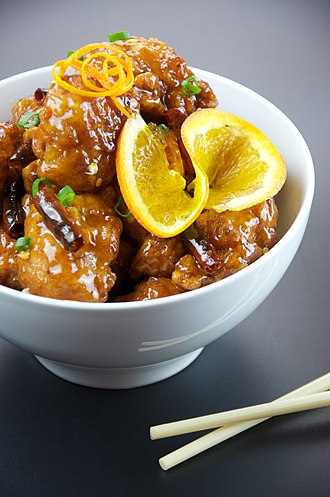
Photo: Wikipedia
Orange chicken is a popular Chinese-American dish of battered, deep-fried chicken pieces coated in a sweet and tangy orange-flavored sauce. It boasts a crispy exterior with a tender, juicy interior, offering a vibrant balance of citrusy sweetness and savory depth. Nutritionally, it's a calorie-dense protein source, but its sugar and refined carbohydrate content are notable.
Calorie split: 22% protein · 34% carbs · 44% fat
↓ Full nutrition💚 Why it's loved
People adore orange chicken for its irresistible sweet-sour flavor profile and the satisfying crunch of the batter. It's a staple of takeout culture, symbolizing a comforting, crowd-pleasing meal that pairs perfectly with steamed rice.
⚠️ Watch-outs & how to enjoy it better
The dish is high in added sugars and refined carbs from the batter and sauce, which can cause blood sugar spikes. The deep-frying process adds significant unhealthy fats. To counteract this, pair it with a large serving of steamed vegetables for fiber, practice strict portion control (e.g., 3-4 oz of chicken), and consider draining the chicken on paper towels to remove excess oil.
Key benefits
- Provides a substantial amount of complete protein per serving.
- Quick and satisfying source of energy from carbohydrates.
- Widely available and consistently satisfying comfort food.
- The sauce can offer a small amount of vitamin C from orange zest or juice.
🍽️ Popular dishes
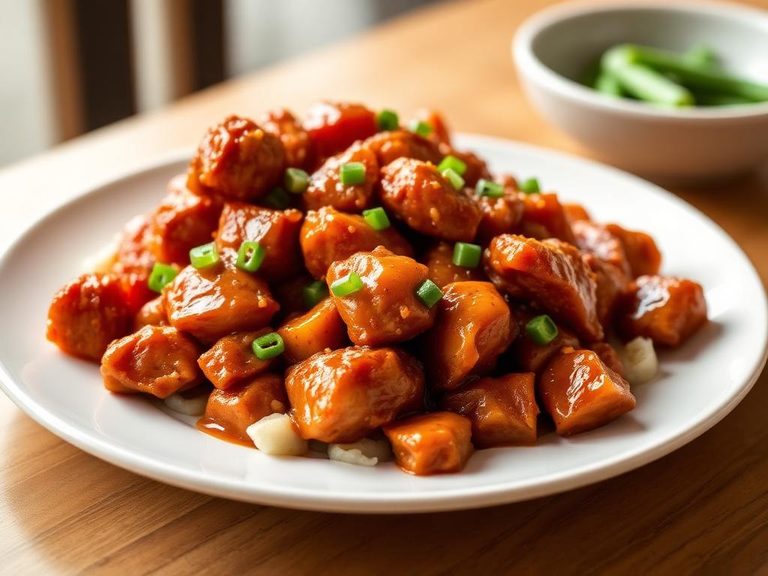
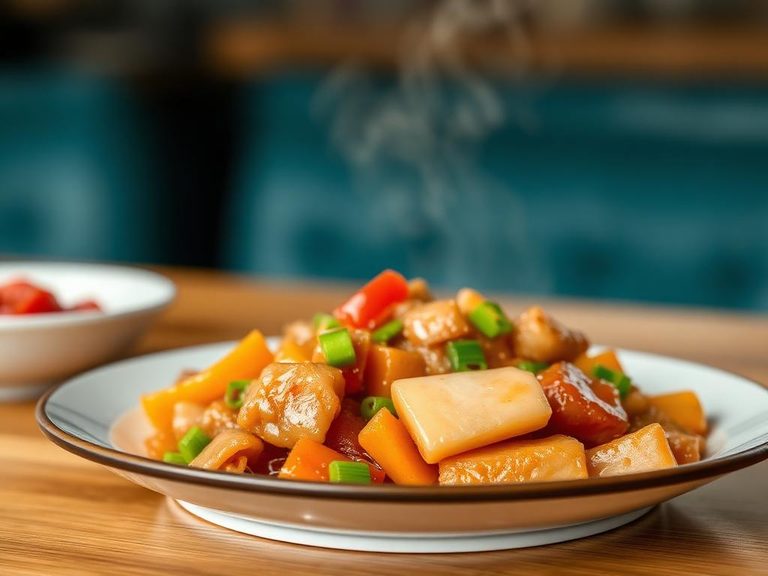
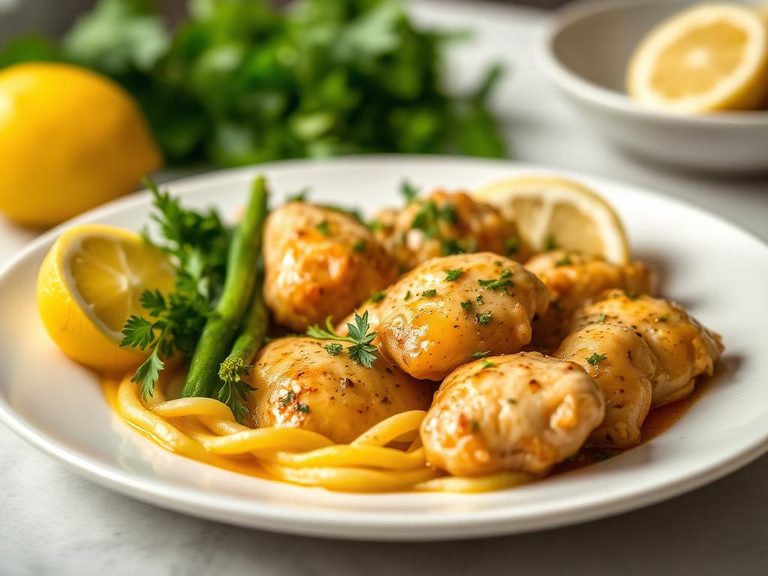
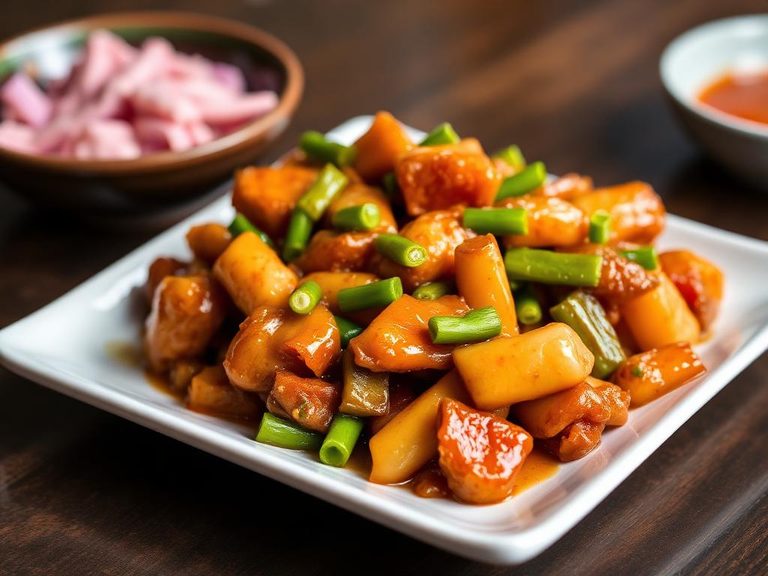
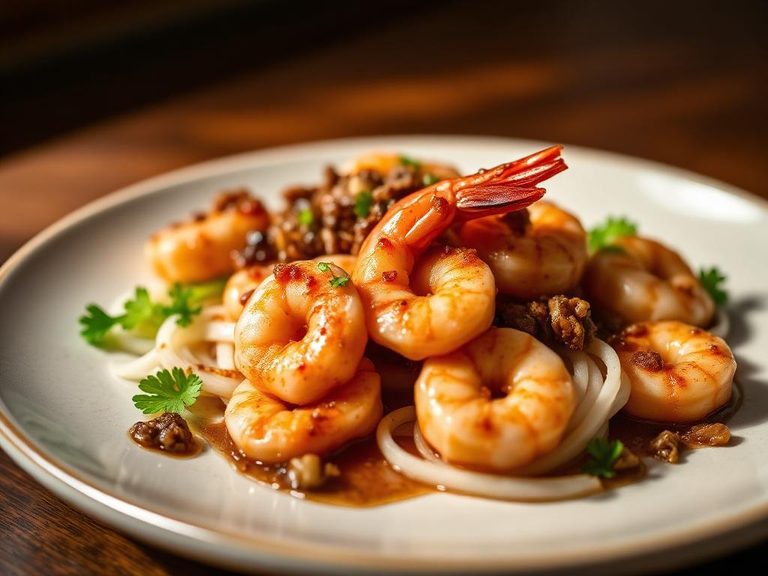
🌍 Where it's eaten
💡 Did you know?
The dish as known in the U.S. was likely invented in Hawaii in the 1960s, adapting the flavors of Hunanese cuisine to local tastes.
Full nutrition (USDA data · scales with serving)
| Water | 48.4 g |
| Energy | 262 kcal |
| Energy | 1096 kj |
| Protein | 14.5 g |
| Total lipid (fat) | 12.7 g |
| Ash | 2.0 g |
| Carbohydrate, by difference | 22.5 g |
| Fiber, total dietary | 0.80 g |
| Total Sugars | 13.6 g |
| Sucrose | 12.3 g |
| Glucose | 0.63 g |
| Fructose | 0.67 g |
| Lactose | 0.00 g |
| Maltose | 0.00 g |
| Galactose | 0.00 g |
| Starch | 10.5 g |
| Calcium, Ca | 14.0 mg |
| Iron, Fe | 0.94 mg |
| Magnesium, Mg | 20.0 mg |
| Phosphorus, P | 130 mg |
| Potassium, K | 209 mg |
| Sodium, Na | 553 mg |
| Zinc, Zn | 1.1 mg |
| Copper, Cu | 0.04 mg |
| Manganese, Mn | 0.09 mg |
| Selenium, Se | 17.1 ug |
| Vitamin C, total ascorbic acid | 0.90 mg |
| Thiamin | 0.04 mg |
| Riboflavin | 0.22 mg |
| Niacin | 3.6 mg |
| Pantothenic acid | 1.0 mg |
| Vitamin B-6 | 0.23 mg |
| Folate, total | 10.0 ug |
| Folic acid | 0.00 ug |
| Folate, food | 10.0 ug |
| Folate, DFE | 10.0 ug |
| Choline, total | 66.1 mg |
| Betaine | 7.9 mg |
| Vitamin B-12 | 0.20 ug |
| Vitamin B-12, added | 0.00 ug |
| Vitamin A, RAE | 75.0 ug |
| Retinol | 74.0 ug |
| Carotene, beta | 9.0 ug |
| Carotene, alpha | 0.00 ug |
| Cryptoxanthin, beta | 3.0 ug |
| Vitamin A, IU | 264 iu |
| Lycopene | 25.0 ug |
| Lutein + zeaxanthin | 81.0 ug |
| Vitamin E (alpha-tocopherol) | 1.1 mg |
| Vitamin E, added | 0.00 mg |
| Tocopherol, beta | 0.09 mg |
| Tocopherol, gamma | 4.0 mg |
| Tocopherol, delta | 1.7 mg |
| Tocotrienol, alpha | 0.00 mg |
| Tocotrienol, beta | 0.00 mg |
| Tocotrienol, gamma | 0.00 mg |
| Tocotrienol, delta | 0.00 mg |
| Vitamin D (D2 + D3), International Units | 5.0 iu |
| Vitamin D (D2 + D3) | 0.10 ug |
| Vitamin K (phylloquinone) | 24.4 ug |
| Alcohol, ethyl | 0.00 g |
| Caffeine | 0.00 mg |
| Theobromine | 0.00 mg |
Fat & fatty acid profile (per 100g)
| Fatty acids, total saturated | 2.4 g |
| SFA 4:0 | 0.00 g |
| SFA 6:0 | 0.00 g |
| SFA 8:0 | 0.01 g |
| SFA 10:0 | 0.01 g |
| SFA 12:0 | 0.00 g |
| SFA 14:0 | 0.02 g |
| SFA 15:0 | 0.00 g |
| SFA 16:0 | 1.6 g |
| SFA 17:0 | 0.01 g |
| SFA 18:0 | 0.68 g |
| SFA 20:0 | 0.04 g |
| SFA 22:0 | 0.04 g |
| SFA 24:0 | 0.01 g |
| Fatty acids, total monounsaturated | 3.5 g |
| MUFA 14:1 | 0.00 g |
| MUFA 15:1 | 0.00 g |
| MUFA 16:1 | 0.14 g |
| MUFA 16:1 c | 0.14 g |
| MUFA 17:1 | 0.01 g |
| MUFA 18:1 | 3.3 g |
| MUFA 18:1 c | 3.3 g |
| MUFA 20:1 | 0.04 g |
| MUFA 22:1 | 0.00 g |
| MUFA 22:1 c | 0.00 g |
| MUFA 24:1 c | 0.00 g |
| Fatty acids, total polyunsaturated | 6.1 g |
| PUFA 18:2 | 5.3 g |
| PUFA 18:2 n-6 c,c | 5.3 g |
| PUFA 18:2 CLAs | 0.01 g |
| PUFA 18:3 | 0.65 g |
| PUFA 18:3 n-3 c,c,c (ALA) | 0.62 g |
| PUFA 18:3 n-6 c,c,c | 0.03 g |
| PUFA 18:3i | 0.00 g |
| PUFA 18:4 | 0.00 g |
| PUFA 20:2 n-6 c,c | 0.01 g |
| PUFA 20:3 | 0.01 g |
| PUFA 20:3 n-3 | 0.00 g |
| PUFA 20:3 n-6 | 0.01 g |
| PUFA 20:4 | 0.07 g |
| PUFA 20:5 n-3 (EPA) | 0.00 g |
| PUFA 22:4 | 0.02 g |
| PUFA 22:5 n-3 (DPA) | 0.00 g |
| PUFA 22:6 n-3 (DHA) | 0.01 g |
| Fatty acids, total trans | 0.05 g |
| Fatty acids, total trans-monoenoic | 0.02 g |
| TFA 16:1 t | 0.00 g |
| TFA 18:1 t | 0.02 g |
| TFA 22:1 t | 0.00 g |
| TFA 18:2 t not further defined | 0.03 g |
| Fatty acids, total trans-polyenoic | 0.03 g |
| Cholesterol | 61.0 mg |
Amino acid profile (per 100g)
| Tryptophan | 0.11 g |
| Threonine | 0.58 g |
| Isoleucine | 0.58 g |
| Leucine | 1.0 g |
| Lysine | 1.1 g |
| Methionine | 0.34 g |
| Cystine | 0.16 g |
| Phenylalanine | 0.51 g |
| Tyrosine | 0.32 g |
| Valine | 0.61 g |
| Arginine | 0.80 g |
| Histidine | 0.36 g |
| Alanine | 0.78 g |
| Aspartic acid | 1.2 g |
| Glutamic acid | 2.5 g |
| Glycine | 0.61 g |
| Proline | 0.60 g |
| Serine | 0.55 g |
| Hydroxyproline | 0.10 g |
FAQ
Is orange chicken the same as General Tso's chicken?
No, they are distinct. Orange chicken has a citrus-forward, sweeter sauce, while General Tso's chicken typically features a spicier, more savory sauce with dried chili peppers.
Can I make a healthier version at home?
Yes. Use an air fryer or bake the chicken instead of deep-frying, reduce sugar in the sauce, and use fresh orange juice and zest for flavor.
Why is restaurant orange chicken so sticky?
The sticky glaze comes from a sauce thickened with cornstarch and often containing a high amount of sugar or honey, which caramelizes during cooking.
Nutrient density (calculated · NRF9.3)
Nutrient Rich Foods index: beneficial nutrients (protein, fiber, vitamins, minerals) minus saturated fat, added sugar & sodium, per 100 kcal.
NRF9.3 index — Fulgoni, Keast & Drewnowski, 2009. Computed from USDA nutrients.
Weight-loss friendliness (composite index)
Energy density 2.62 kcal/g · 22% calories from protein · 0.8 g fiber · 13.6 g sugar per 100 g.
Composite of energy density (Rolls et al., 1999), protein & fiber satiety, minus sugar. A calculated heuristic — ranks satiety-per-calorie, not a clinical measure.
Dietary load (calculated from USDA values)
Potential renal acid load. Positive = acid-forming, negative = alkaline-forming.
Sodium-to-potassium ratio: 2.65 (lower is better — aim for ≤ 1)
Sodium:potassium per WHO potassium guidance. Computed from USDA nutrients.