

Pork, cured, ham, slice, bone-in, separable lean only, heated, pan-broil
Whole food · Pork Products

Photo: Wikipedia
This is a lean, bone-in slice of cured ham that has been heated by pan-broiling, resulting in a savory, smoky flavor with a tender yet slightly chewy texture. Its most striking nutritional feature is its exceptionally high protein content relative to its very low fat and carbohydrate levels, making it a powerhouse of lean protein.
Calorie split: 73% protein · 2% carbs · 25% fat
↓ Full nutrition💚 Why it's loved
People adore its deep, salty, and smoky savoriness that instantly elevates a dish, and its versatility allows it to be a standalone protein, a sandwich star, or a flavorful addition to salads and pastas.
⚠️ Watch-outs & how to enjoy it better
The primary concern is its very high sodium content from the curing process, which can be problematic for those monitoring blood pressure. To counteract this, pair it with potassium-rich foods like steamed greens or a side of avocado, and always practice portion control by using it as a flavor accent rather than the main bulk of the meal.
Key benefits
- Excellent source of complete protein for muscle maintenance
- Very low in carbohydrates and sugar
- Low in total fat and saturated fat
- Provides essential minerals like selenium and phosphorus
- Quick-cooking and convenient for meal prep
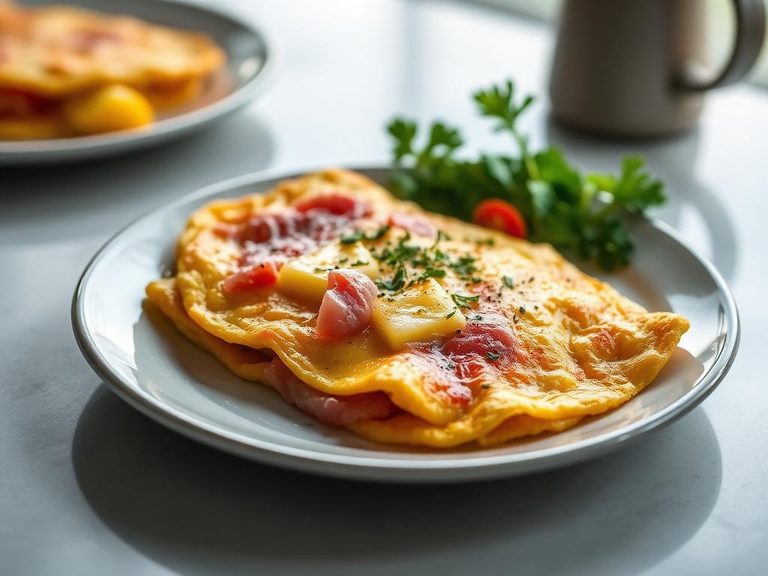
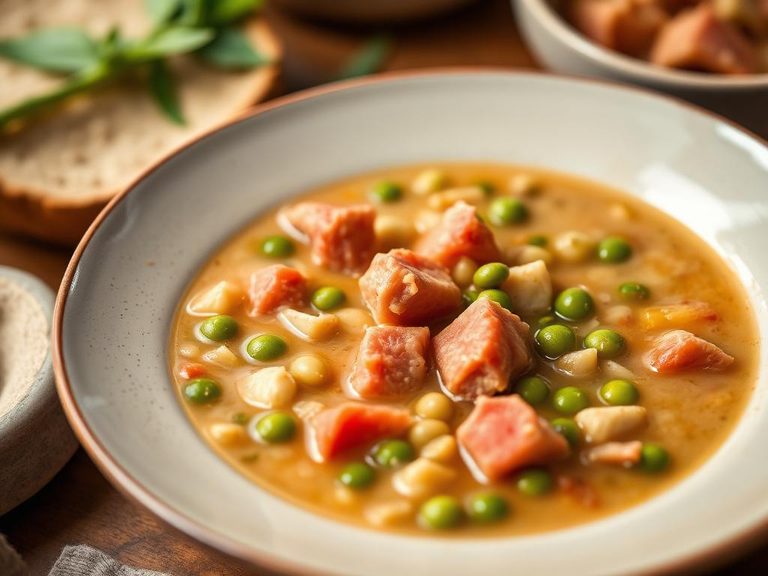
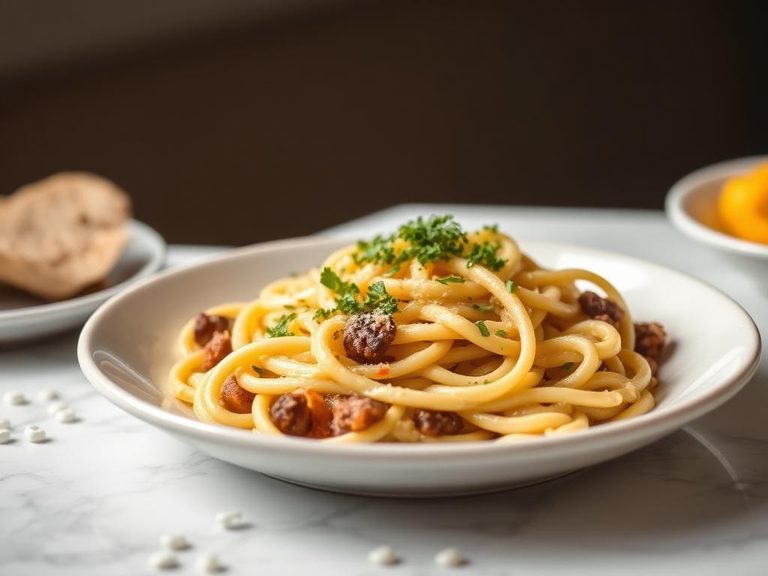
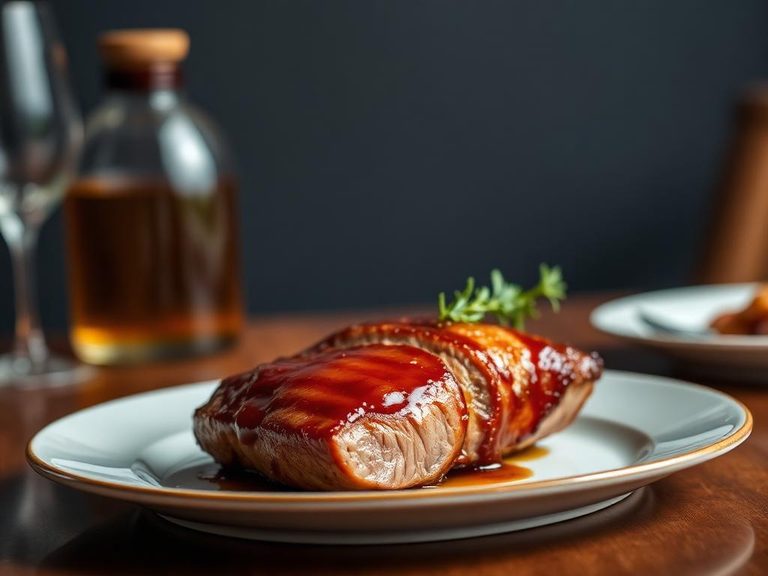
🍽️ Popular dishes


🌍 Where it's eaten
💡 Did you know?
The 'bone-in' designation isn't just for tradition; cooking ham with the bone helps conduct heat more evenly and can contribute a subtle, savory depth to the meat's flavor.
Full nutrition (USDA data · scales with serving)
| Water | 65.3 g |
| Energy | 148 kcal |
| Energy | 621 kj |
| Protein | 27.2 g |
| Total lipid (fat) | 4.1 g |
| Ash | 3.2 g |
| Carbohydrate, by difference | 0.74 g |
| Fiber, total dietary | 0.00 g |
| Total Sugars | 0.74 g |
| Sucrose | 0.63 g |
| Glucose | 0.11 g |
| Fructose | 0.00 g |
| Lactose | 0.00 g |
| Maltose | 0.00 g |
| Galactose | 0.00 g |
| Calcium, Ca | 15.0 mg |
| Iron, Fe | 1.4 mg |
| Magnesium, Mg | 25.0 mg |
| Phosphorus, P | 296 mg |
| Potassium, K | 427 mg |
| Sodium, Na | 870 mg |
| Zinc, Zn | 3.0 mg |
| Copper, Cu | 0.43 mg |
| Manganese, Mn | 0.02 mg |
| Selenium, Se | 25.3 ug |
| Vitamin C, total ascorbic acid | 0.00 mg |
| Thiamin | 0.57 mg |
| Riboflavin | 0.32 mg |
| Niacin | 7.8 mg |
| Pantothenic acid | 0.76 mg |
| Vitamin B-6 | 0.54 mg |
| Folate, total | 2.0 ug |
| Folic acid | 0.00 ug |
| Folate, food | 2.0 ug |
| Folate, DFE | 2.0 ug |
| Choline, total | 113 mg |
| Betaine | 7.3 mg |
| Vitamin B-12 | 0.66 ug |
| Vitamin B-12, added | 0.00 ug |
| Vitamin A, RAE | 0.00 ug |
| Retinol | 0.00 ug |
| Carotene, beta | 0.00 ug |
| Carotene, alpha | 0.00 ug |
| Cryptoxanthin, beta | 0.00 ug |
| Vitamin A, IU | 0.00 iu |
| Lycopene | 0.00 ug |
| Lutein + zeaxanthin | 0.00 ug |
| Vitamin E (alpha-tocopherol) | 0.30 mg |
| Vitamin E, added | 0.00 mg |
| Tocopherol, beta | 0.00 mg |
| Tocopherol, gamma | 0.03 mg |
| Tocopherol, delta | 0.00 mg |
| Tocotrienol, alpha | 0.00 mg |
| Tocotrienol, beta | 0.00 mg |
| Tocotrienol, gamma | 0.02 mg |
| Tocotrienol, delta | 0.00 mg |
| Vitamin D (D2 + D3), International Units | 44.0 iu |
| Vitamin D (D2 + D3) | 1.1 ug |
| Vitamin D3 (cholecalciferol) | 1.1 ug |
| Vitamin K (phylloquinone) | 0.00 ug |
| Vitamin K (Dihydrophylloquinone) | 0.00 ug |
| Vitamin K (Menaquinone-4) | 2.0 ug |
| Alcohol, ethyl | 0.00 g |
| Caffeine | 0.00 mg |
| Theobromine | 0.00 mg |
Fat & fatty acid profile (per 100g)
| Fatty acids, total saturated | 1.3 g |
| SFA 4:0 | 0.00 g |
| SFA 6:0 | 0.00 g |
| SFA 8:0 | 0.00 g |
| SFA 10:0 | 0.00 g |
| SFA 12:0 | 0.00 g |
| SFA 14:0 | 0.04 g |
| SFA 15:0 | 0.00 g |
| SFA 16:0 | 0.78 g |
| SFA 17:0 | 0.01 g |
| SFA 18:0 | 0.41 g |
| SFA 20:0 | 0.01 g |
| SFA 22:0 | 0.00 g |
| Fatty acids, total monounsaturated | 1.6 g |
| MUFA 14:1 | 0.00 g |
| MUFA 15:1 | 0.00 g |
| MUFA 16:1 | 0.10 g |
| MUFA 17:1 | 0.00 g |
| MUFA 18:1 | 1.5 g |
| MUFA 18:1 c | 1.5 g |
| MUFA 20:1 | 0.02 g |
| MUFA 22:1 | 0.00 g |
| Fatty acids, total polyunsaturated | 0.64 g |
| PUFA 18:2 | 0.51 g |
| PUFA 18:2 n-6 c,c | 0.50 g |
| PUFA 18:3 | 0.03 g |
| PUFA 18:3 n-3 c,c,c (ALA) | 0.03 g |
| PUFA 18:3 n-6 c,c,c | 0.00 g |
| PUFA 18:4 | 0.00 g |
| PUFA 20:2 n-6 c,c | 0.02 g |
| PUFA 20:3 | 0.00 g |
| PUFA 20:4 | 0.08 g |
| PUFA 20:5 n-3 (EPA) | 0.00 g |
| PUFA 22:5 n-3 (DPA) | 0.00 g |
| PUFA 22:6 n-3 (DHA) | 0.00 g |
| Fatty acids, total trans | 0.03 g |
| Fatty acids, total trans-monoenoic | 0.02 g |
| TFA 18:1 t | 0.02 g |
| TFA 18:2 t,t | 0.01 g |
| Fatty acids, total trans-polyenoic | 0.01 g |
| Cholesterol | 73.0 mg |
Amino acid profile (per 100g)
| Tryptophan | 0.26 g |
| Threonine | 1.2 g |
| Isoleucine | 1.2 g |
| Leucine | 2.2 g |
| Lysine | 2.3 g |
| Methionine | 0.65 g |
| Cystine | 0.30 g |
| Phenylalanine | 1.1 g |
| Tyrosine | 0.88 g |
| Valine | 1.4 g |
| Arginine | 1.7 g |
| Histidine | 1.2 g |
| Alanine | 1.6 g |
| Aspartic acid | 2.4 g |
| Glutamic acid | 3.9 g |
| Glycine | 1.4 g |
| Proline | 1.2 g |
| Serine | 1.1 g |
| Hydroxyproline | 0.18 g |
FAQ
What's the difference between this and regular cooked ham?
This specific cut is 'cured' (preserved with salt and often smoke) and then 'heated' by pan-broiling, which gives it a distinct, concentrated savory flavor and firmer texture compared to uncured, fresh-cooked ham.
Is this a good option for a low-carb or keto diet?
Yes, it's an excellent choice. With less than 1g of carbs and sugar per 100g, it fits perfectly into low-carb and ketogenic eating plans, providing high-quality protein without the carbs.
How should I store and reheat leftovers?
Store slices in an airtight container in the refrigerator for up to 4 days. Reheat gently in a skillet over medium heat or in the microwave with a splash of water to prevent it from drying out.
Nutrient density (calculated · NRF9.3)
Nutrient Rich Foods index: beneficial nutrients (protein, fiber, vitamins, minerals) minus saturated fat, added sugar & sodium, per 100 kcal.
NRF9.3 index — Fulgoni, Keast & Drewnowski, 2009. Computed from USDA nutrients.
Weight-loss friendliness (composite index)
Energy density 1.48 kcal/g · 73% calories from protein · 0.0 g fiber · 0.7 g sugar per 100 g.
Composite of energy density (Rolls et al., 1999), protein & fiber satiety, minus sugar. A calculated heuristic — ranks satiety-per-calorie, not a clinical measure.
Dietary load (calculated from USDA values)
Potential renal acid load. Positive = acid-forming, negative = alkaline-forming.
Sodium-to-potassium ratio: 2.04 (lower is better — aim for ≤ 1)
Sodium:potassium per WHO potassium guidance. Computed from USDA nutrients.