

Nuts, mixed nuts, oil roasted, with peanuts, with salt added
Whole food · Nut and Seed Products
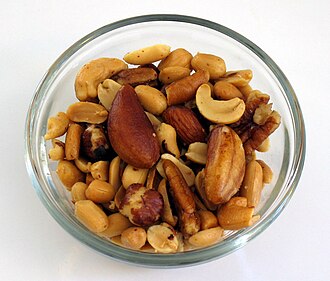
Photo: Wikipedia
A savory, crunchy blend of oil-roasted peanuts and other nuts, lightly salted to enhance their rich, buttery flavors. Each bite delivers a satisfying, crisp texture with a deep, toasty aroma and a balanced salty finish. Nutritionally, it's a dense source of energy, offering a significant amount of healthy fats and plant-based protein in a small serving.
Calorie split: 12% protein · 13% carbs · 75% fat
↓ Full nutrition💚 Why it's loved
People adore the addictive, savory crunch and the satisfying blend of roasted nut flavors, making it a go-to snack for everything from hiking to movie nights. Its versatility allows it to be enjoyed straight from the bag, sprinkled on salads, or mixed into trail mixes.
⚠️ Watch-outs & how to enjoy it better
The added salt can contribute to excessive sodium intake, and the high caloric density requires mindful portion control. Peanuts are a common allergen, and the high fat content, while mostly healthy, can cause digestive discomfort in some individuals. To counteract, choose low-sodium versions when possible, measure out a single serving (about a handful), and consume slowly to aid digestion.
Key benefits
- Excellent source of plant-based protein for muscle maintenance.
- High in monounsaturated and polyunsaturated fats, which support heart health.
- Good source of dietary fiber, aiding digestion and promoting satiety.
- Provides essential minerals like magnesium, phosphorus, and potassium.
- Convenient, shelf-stable snack for sustained energy.
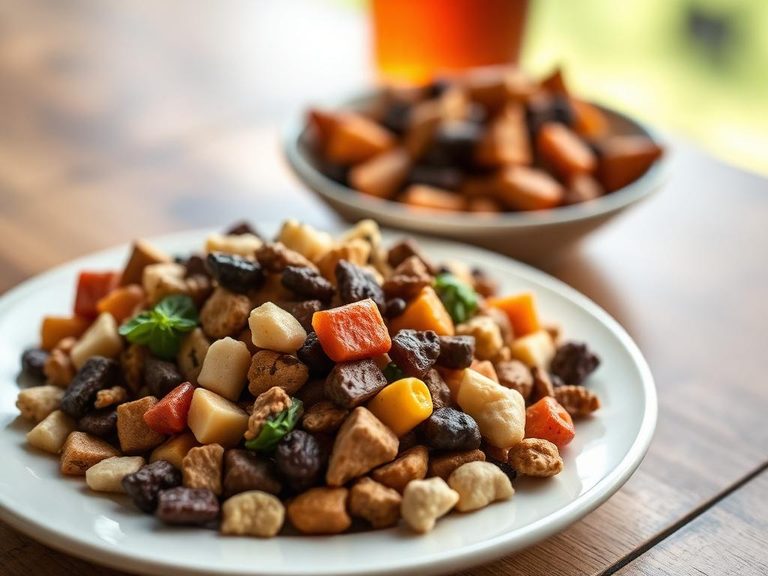
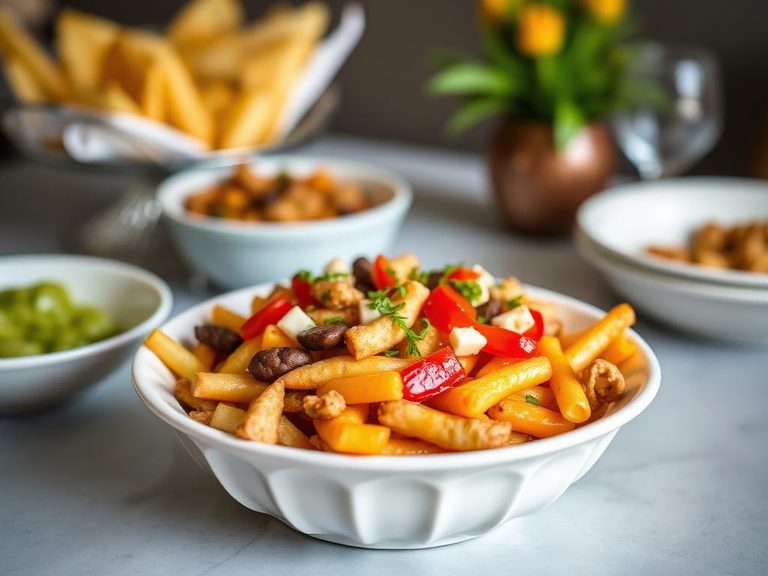
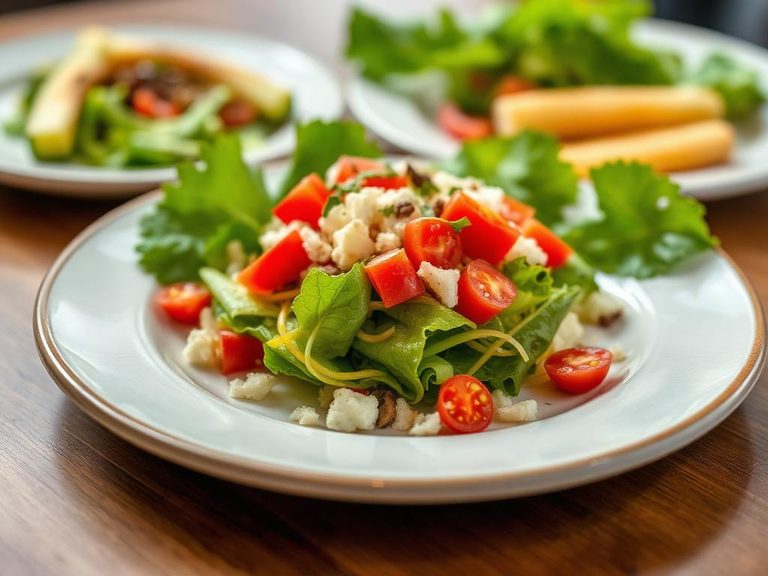
🍽️ Popular dishes
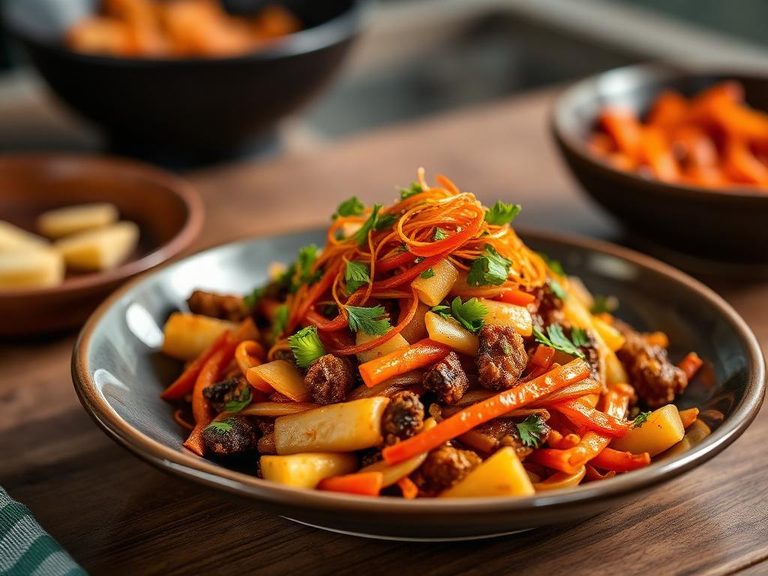
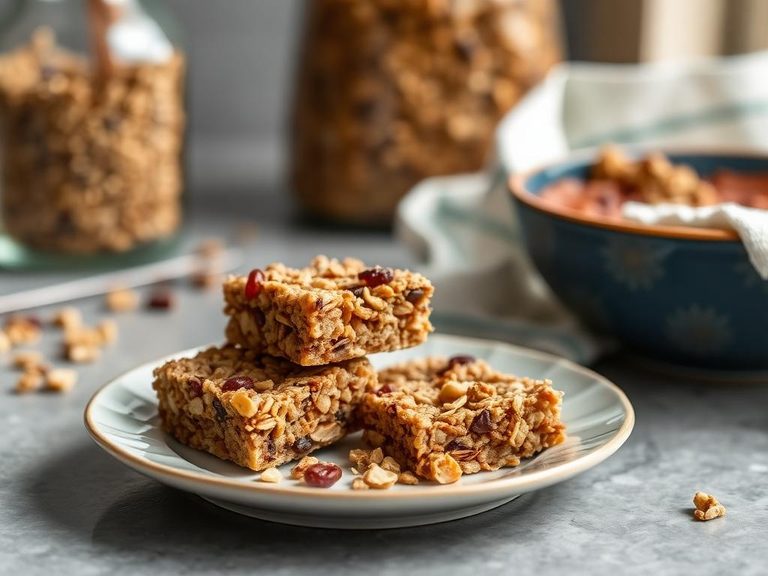

🌍 Where it's eaten
💡 Did you know?
The process of oil-roasting nuts can actually increase their antioxidant capacity compared to raw nuts, as heat can break down cell walls and release more beneficial compounds.
Full nutrition (USDA data · scales with serving)
| Water | 2.1 g |
| Energy | 607 kcal |
| Energy | 2539 kj |
| Protein | 20.0 g |
| Total lipid (fat) | 54.0 g |
| Ash | 2.9 g |
| Carbohydrate, by difference | 21.1 g |
| Fiber, total dietary | 7.0 g |
| Total Sugars | 4.2 g |
| Sucrose | 4.2 g |
| Glucose | 0.00 g |
| Fructose | 0.00 g |
| Lactose | 0.00 g |
| Maltose | 0.00 g |
| Galactose | 0.00 g |
| Starch | 4.2 g |
| Calcium, Ca | 117 mg |
| Iron, Fe | 2.6 mg |
| Magnesium, Mg | 229 mg |
| Phosphorus, P | 456 mg |
| Potassium, K | 632 mg |
| Sodium, Na | 273 mg |
| Zinc, Zn | 3.4 mg |
| Copper, Cu | 0.91 mg |
| Manganese, Mn | 2.0 mg |
| Selenium, Se | 33.9 ug |
| Vitamin C, total ascorbic acid | 0.50 mg |
| Thiamin | 0.19 mg |
| Riboflavin | 0.20 mg |
| Niacin | 7.7 mg |
| Pantothenic acid | 1.1 mg |
| Vitamin B-6 | 0.35 mg |
| Folate, total | 83.0 ug |
| Folic acid | 0.00 ug |
| Folate, food | 83.0 ug |
| Folate, DFE | 83.0 ug |
| Choline, total | 52.0 mg |
| Vitamin B-12 | 0.00 ug |
| Vitamin B-12, added | 0.00 ug |
| Vitamin A, RAE | 0.00 ug |
| Retinol | 0.00 ug |
| Carotene, beta | 2.0 ug |
| Carotene, alpha | 0.00 ug |
| Cryptoxanthin, beta | 0.00 ug |
| Vitamin A, IU | 3.0 iu |
| Lycopene | 0.00 ug |
| Lutein + zeaxanthin | 8.0 ug |
| Vitamin E (alpha-tocopherol) | 7.8 mg |
| Vitamin E, added | 0.00 mg |
| Tocopherol, beta | 0.22 mg |
| Tocopherol, gamma | 6.4 mg |
| Tocopherol, delta | 0.32 mg |
| Tocotrienol, alpha | 0.04 mg |
| Tocotrienol, beta | 0.00 mg |
| Tocotrienol, gamma | 0.03 mg |
| Tocotrienol, delta | 0.00 mg |
| Vitamin D (D2 + D3), International Units | 0.00 iu |
| Vitamin D (D2 + D3) | 0.00 ug |
| Vitamin K (phylloquinone) | 5.7 ug |
| Alcohol, ethyl | 0.00 g |
| Caffeine | 0.00 mg |
| Theobromine | 0.00 mg |
Fat & fatty acid profile (per 100g)
| Fatty acids, total saturated | 8.7 g |
| SFA 4:0 | 0.00 g |
| SFA 6:0 | 0.00 g |
| SFA 8:0 | 0.00 g |
| SFA 10:0 | 0.00 g |
| SFA 12:0 | 0.00 g |
| SFA 14:0 | 0.04 g |
| SFA 15:0 | 0.01 g |
| SFA 16:0 | 5.2 g |
| SFA 17:0 | 0.05 g |
| SFA 18:0 | 2.0 g |
| SFA 20:0 | 0.36 g |
| SFA 22:0 | 0.64 g |
| SFA 24:0 | 0.38 g |
| Fatty acids, total monounsaturated | 28.5 g |
| MUFA 14:1 | 0.00 g |
| MUFA 15:1 | 0.00 g |
| MUFA 16:1 | 0.13 g |
| MUFA 16:1 c | 0.13 g |
| MUFA 17:1 | 0.04 g |
| MUFA 18:1 | 27.9 g |
| MUFA 18:1 c | 27.9 g |
| MUFA 20:1 | 0.38 g |
| MUFA 22:1 | 0.03 g |
| MUFA 22:1 c | 0.03 g |
| MUFA 24:1 c | 0.01 g |
| Fatty acids, total polyunsaturated | 14.6 g |
| PUFA 18:2 | 14.5 g |
| PUFA 18:2 n-6 c,c | 14.5 g |
| PUFA 18:2 CLAs | 0.01 g |
| PUFA 18:3 | 0.08 g |
| PUFA 18:3 n-3 c,c,c (ALA) | 0.08 g |
| PUFA 18:3 n-6 c,c,c | 0.00 g |
| PUFA 18:4 | 0.00 g |
| PUFA 20:2 n-6 c,c | 0.01 g |
| PUFA 20:3 | 0.00 g |
| PUFA 20:3 n-3 | 0.00 g |
| PUFA 20:3 n-6 | 0.00 g |
| PUFA 20:4 | 0.01 g |
| PUFA 20:5 n-3 (EPA) | 0.01 g |
| PUFA 22:4 | 0.01 g |
| PUFA 22:5 n-3 (DPA) | 0.00 g |
| PUFA 22:6 n-3 (DHA) | 0.00 g |
| Fatty acids, total trans | 0.06 g |
| Fatty acids, total trans-monoenoic | 0.02 g |
| TFA 16:1 t | 0.00 g |
| TFA 18:1 t | 0.02 g |
| TFA 22:1 t | 0.00 g |
| TFA 18:2 t not further defined | 0.03 g |
| Fatty acids, total trans-polyenoic | 0.03 g |
| Cholesterol | 0.00 mg |
Amino acid profile (per 100g)
| Tryptophan | 0.22 g |
| Threonine | 0.70 g |
| Isoleucine | 0.83 g |
| Leucine | 1.7 g |
| Lysine | 0.78 g |
| Methionine | 0.28 g |
| Cystine | 0.29 g |
| Phenylalanine | 1.2 g |
| Tyrosine | 0.79 g |
| Valine | 1.0 g |
| Arginine | 3.0 g |
| Histidine | 0.57 g |
| Alanine | 0.98 g |
| Aspartic acid | 2.9 g |
| Glutamic acid | 5.6 g |
| Glycine | 1.4 g |
| Proline | 0.96 g |
| Serine | 1.2 g |
FAQ
Is mixed nuts a healthy snack?
Yes, in moderation. They are nutrient-dense, providing healthy fats, protein, and fiber. The key is portion control due to their high calorie count, and being mindful of added salt and oils.
Why are mixed nuts often oil-roasted?
Oil-roasting enhances flavor and creates a more uniform, crisp texture. It also helps salt and seasonings adhere better to the nuts, though it adds some fat and calories compared to dry-roasted varieties.
How should I store opened mixed nuts?
For optimal freshness and to prevent the oils from going rancid, store them in an airtight container in a cool, dark place for a few weeks, or in the refrigerator or freezer for several months.
Nutrient density (calculated · NRF9.3)
Nutrient Rich Foods index: beneficial nutrients (protein, fiber, vitamins, minerals) minus saturated fat, added sugar & sodium, per 100 kcal.
NRF9.3 index — Fulgoni, Keast & Drewnowski, 2009. Computed from USDA nutrients.
Weight-loss friendliness (composite index)
Energy density 6.07 kcal/g · 13% calories from protein · 7.0 g fiber · 4.2 g sugar per 100 g.
Composite of energy density (Rolls et al., 1999), protein & fiber satiety, minus sugar. A calculated heuristic — ranks satiety-per-calorie, not a clinical measure.
Dietary load (calculated from USDA values)
Potential renal acid load. Positive = acid-forming, negative = alkaline-forming.
Sodium-to-potassium ratio: 0.43 (lower is better — aim for ≤ 1)
Sodium:potassium per WHO potassium guidance. Computed from USDA nutrients.