

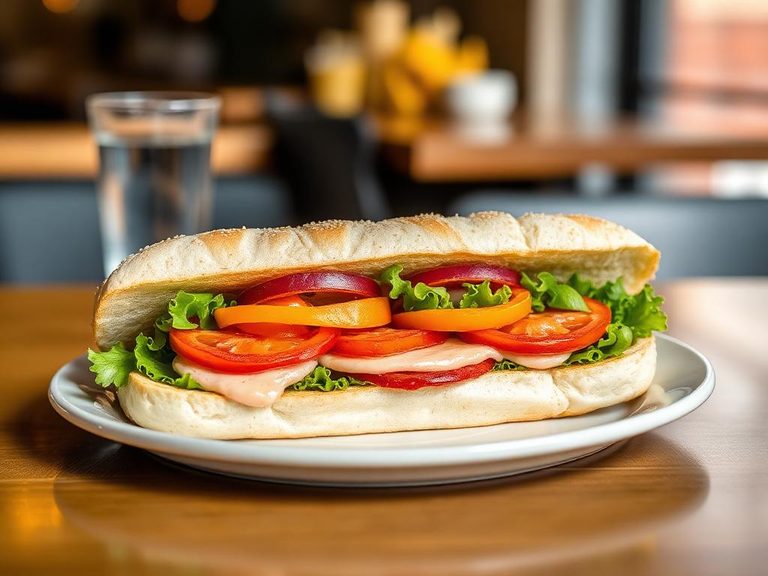
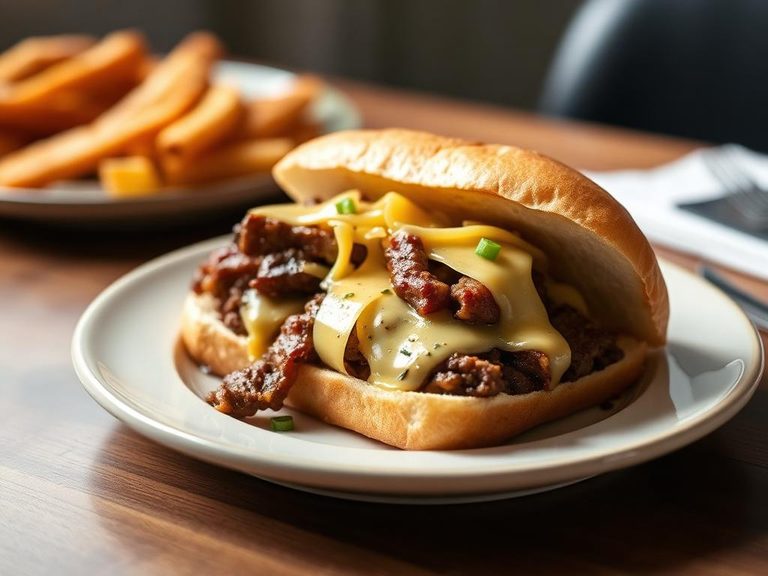
Fast foods, submarine sandwich, cold cut on white bread with lettuce and tomato
Whole food · Fast Foods

Photo: Wikipedia
A classic American submarine sandwich, this cold cut sub features layers of savory deli meats like ham, turkey, or salami on soft white bread, crisp lettuce, and juicy tomato. The texture is a satisfying mix of tender bread, crunchy vegetables, and chewy meat, with a mild, salty, and savory flavor profile. Per 100g, it provides a balanced mix of protein and carbs with moderate fat, making it a more substantial snack than a simple salad.
Calorie split: 20% protein · 38% carbs · 42% fat
↓ Full nutrition💚 Why it's loved
People love it for its satisfying, handheld convenience and the familiar, comforting combination of salty deli meats with fresh vegetables. It's a versatile staple that can be customized with different meats, cheeses, and condiments to suit personal taste.
⚠️ Watch-outs & how to enjoy it better
This sandwich can be high in sodium from the processed deli meats and bread, which may concern those monitoring blood pressure. The white bread has a high glycemic index, potentially causing blood-sugar spikes. To counteract, choose lower-sodium meats, opt for whole-grain bread when possible, and pair the sandwich with a side salad or vegetable soup to increase fiber and slow digestion.
Key benefits
- Good source of protein for muscle maintenance.
- Provides quick energy from carbohydrates.
- Contains some dietary fiber from lettuce and tomato.
- Convenient and portable meal option.
- Offers a mix of textures for sensory satisfaction.
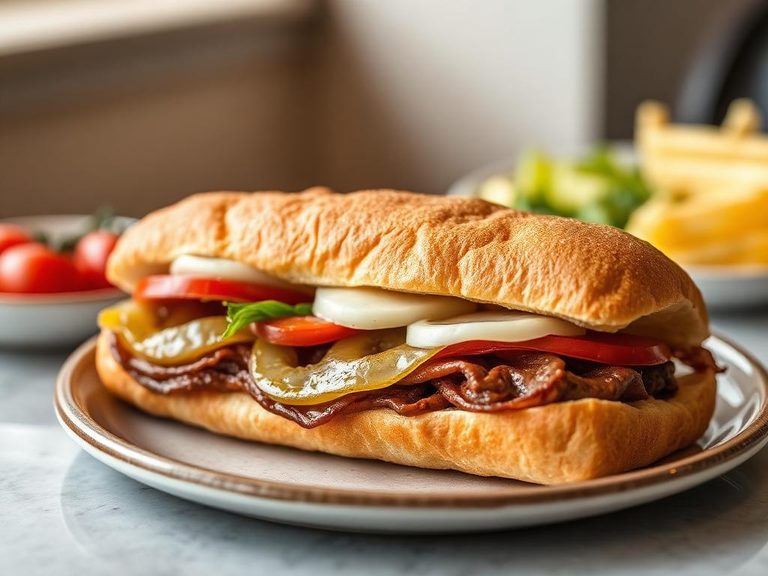
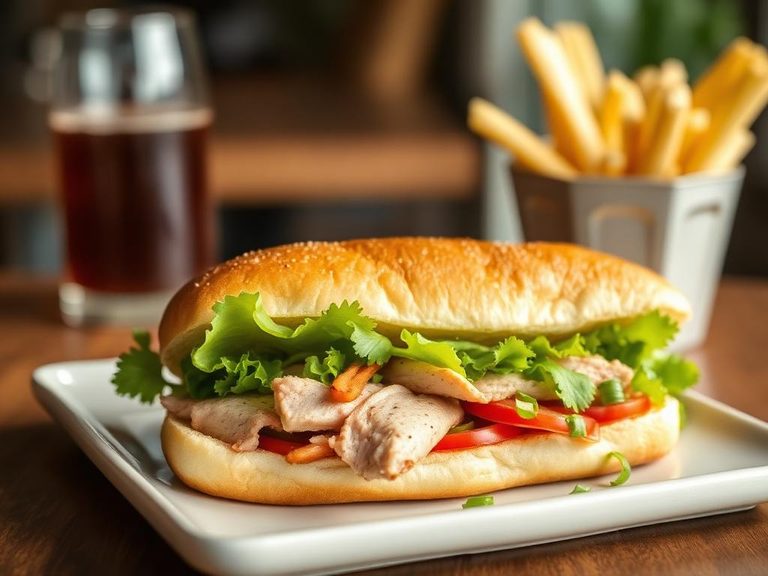
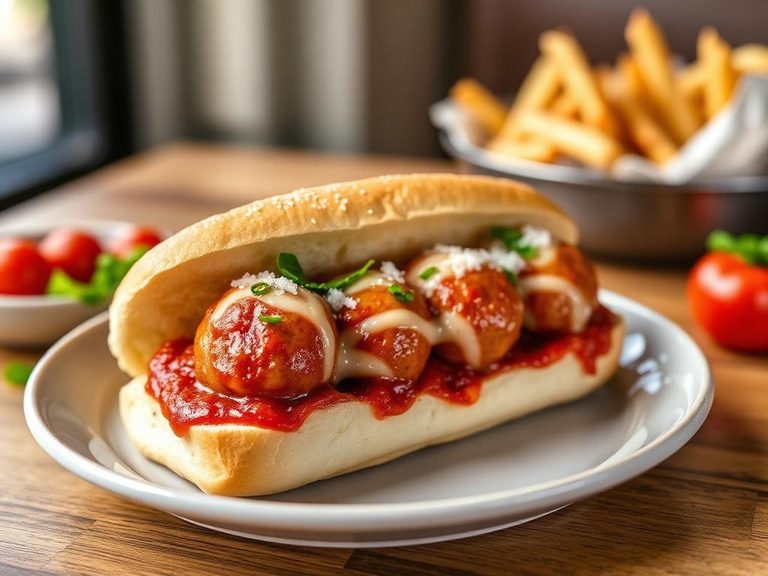
🍽️ Popular dishes

🌍 Where it's eaten
💡 Did you know?
The term 'submarine sandwich' is believed to have originated in the U.S. during World War II, as the long, cylindrical shape of the sandwich resembled the submarines used by the Navy.
Full nutrition (USDA data · scales with serving)
| Water | 56.5 g |
| Energy | 213 kcal |
| Energy | 890 kj |
| Protein | 10.5 g |
| Total lipid (fat) | 10.0 g |
| Ash | 2.5 g |
| Carbohydrate, by difference | 20.4 g |
| Fiber, total dietary | 1.2 g |
| Total Sugars | 3.2 g |
| Sucrose | 0.00 g |
| Glucose | 1.2 g |
| Fructose | 1.4 g |
| Lactose | 0.08 g |
| Maltose | 0.47 g |
| Galactose | 0.00 g |
| Starch | 15.7 g |
| Calcium, Ca | 171 mg |
| Iron, Fe | 1.8 mg |
| Magnesium, Mg | 20.0 mg |
| Phosphorus, P | 112 mg |
| Potassium, K | 282 mg |
| Sodium, Na | 575 mg |
| Zinc, Zn | 1.1 mg |
| Copper, Cu | 0.08 mg |
| Manganese, Mn | 0.35 mg |
| Selenium, Se | 19.9 ug |
| Vitamin C, total ascorbic acid | 7.5 mg |
| Thiamin | 0.34 mg |
| Riboflavin | 0.27 mg |
| Niacin | 4.3 mg |
| Pantothenic acid | 0.56 mg |
| Vitamin B-6 | 0.20 mg |
| Folate, total | 66.0 ug |
| Folic acid | 57.0 ug |
| Folate, food | 9.0 ug |
| Folate, DFE | 106 ug |
| Choline, total | 29.1 mg |
| Vitamin B-12 | 0.22 ug |
| Vitamin B-12, added | 0.00 ug |
| Vitamin A, RAE | 22.0 ug |
| Retinol | 16.0 ug |
| Carotene, beta | 61.0 ug |
| Carotene, alpha | 2.0 ug |
| Cryptoxanthin, beta | 18.0 ug |
| Vitamin A, IU | 170 iu |
| Lycopene | 275 ug |
| Lutein + zeaxanthin | 115 ug |
| Vitamin E (alpha-tocopherol) | 0.41 mg |
| Vitamin E, added | 0.00 mg |
| Tocopherol, beta | 0.06 mg |
| Tocopherol, gamma | 0.37 mg |
| Tocopherol, delta | 0.10 mg |
| Tocotrienol, alpha | 0.04 mg |
| Tocotrienol, beta | 0.24 mg |
| Tocotrienol, gamma | 0.00 mg |
| Tocotrienol, delta | 0.00 mg |
| Vitamin D (D2 + D3), International Units | 7.0 iu |
| Vitamin D (D2 + D3) | 0.20 ug |
| Vitamin K (phylloquinone) | 4.5 ug |
| Alcohol, ethyl | 0.00 g |
| Caffeine | 0.00 mg |
| Theobromine | 0.00 mg |
Fat & fatty acid profile (per 100g)
| Fatty acids, total saturated | 3.6 g |
| SFA 4:0 | 0.01 g |
| SFA 6:0 | 0.01 g |
| SFA 8:0 | 0.01 g |
| SFA 10:0 | 0.02 g |
| SFA 12:0 | 0.02 g |
| SFA 14:0 | 0.18 g |
| SFA 15:0 | 0.02 g |
| SFA 16:0 | 2.1 g |
| SFA 17:0 | 0.04 g |
| SFA 18:0 | 1.1 g |
| SFA 20:0 | 0.02 g |
| SFA 22:0 | 0.01 g |
| SFA 24:0 | 0.00 g |
| Fatty acids, total monounsaturated | 3.7 g |
| MUFA 14:1 | 0.02 g |
| MUFA 15:1 | 0.00 g |
| MUFA 16:1 | 0.19 g |
| MUFA 16:1 c | 0.18 g |
| MUFA 17:1 | 0.03 g |
| MUFA 18:1 | 3.4 g |
| MUFA 18:1 c | 3.3 g |
| MUFA 20:1 | 0.07 g |
| MUFA 22:1 | 0.01 g |
| MUFA 22:1 c | 0.01 g |
| MUFA 24:1 c | 0.00 g |
| Fatty acids, total polyunsaturated | 1.9 g |
| PUFA 18:2 | 1.7 g |
| PUFA 18:2 n-6 c,c | 1.7 g |
| PUFA 18:2 CLAs | 0.01 g |
| PUFA 18:3 | 0.11 g |
| PUFA 18:3 n-3 c,c,c (ALA) | 0.10 g |
| PUFA 18:3 n-6 c,c,c | 0.00 g |
| PUFA 18:3i | 0.00 g |
| PUFA 18:4 | 0.00 g |
| PUFA 20:2 n-6 c,c | 0.05 g |
| PUFA 20:3 | 0.02 g |
| PUFA 20:3 n-3 | 0.00 g |
| PUFA 20:3 n-6 | 0.01 g |
| PUFA 20:4 | 0.04 g |
| PUFA 20:5 n-3 (EPA) | 0.00 g |
| PUFA 22:4 | 0.01 g |
| PUFA 22:5 n-3 (DPA) | 0.01 g |
| PUFA 22:6 n-3 (DHA) | 0.00 g |
| Fatty acids, total trans | 0.12 g |
| Fatty acids, total trans-monoenoic | 0.10 g |
| TFA 16:1 t | 0.01 g |
| TFA 18:1 t | 0.09 g |
| TFA 22:1 t | 0.00 g |
| TFA 18:2 t not further defined | 0.02 g |
| Fatty acids, total trans-polyenoic | 0.02 g |
| Cholesterol | 27.0 mg |
Amino acid profile (per 100g)
| Tryptophan | 0.10 g |
| Threonine | 0.33 g |
| Isoleucine | 0.43 g |
| Leucine | 0.75 g |
| Lysine | 0.49 g |
| Methionine | 0.21 g |
| Phenylalanine | 0.43 g |
| Tyrosine | 0.26 g |
| Valine | 0.50 g |
| Arginine | 0.50 g |
| Histidine | 0.30 g |
| Alanine | 0.48 g |
| Aspartic acid | 0.74 g |
| Glutamic acid | 2.5 g |
| Glycine | 0.45 g |
| Proline | 1.0 g |
| Serine | 0.41 g |
| Hydroxyproline | 0.07 g |
FAQ
Is a cold cut sub a healthy choice?
It can be part of a balanced diet, offering protein and energy. However, its healthiness depends on the specific ingredients—choosing whole-grain bread, lean low-sodium meats, and loading up on veggies improves its nutritional profile.
How does it differ from a hoagie or grinder?
The names are largely regional in the U.S. 'Sub' is common nationwide, 'hoagie' is Philadelphia-centric, and 'grinder' often refers to a toasted or hot version in New England.
What are common allergens in this sandwich?
The most common allergens are wheat (from the bread), dairy (if cheese is added), and sometimes soy or mustard in the deli meats or condiments. Always check ingredient labels if you have allergies.
Nutrient density (calculated · NRF9.3)
Nutrient Rich Foods index: beneficial nutrients (protein, fiber, vitamins, minerals) minus saturated fat, added sugar & sodium, per 100 kcal.
NRF9.3 index — Fulgoni, Keast & Drewnowski, 2009. Computed from USDA nutrients.
Weight-loss friendliness (composite index)
Energy density 2.13 kcal/g · 20% calories from protein · 1.2 g fiber · 3.2 g sugar per 100 g.
Composite of energy density (Rolls et al., 1999), protein & fiber satiety, minus sugar. A calculated heuristic — ranks satiety-per-calorie, not a clinical measure.
Dietary load (calculated from USDA values)
Potential renal acid load. Positive = acid-forming, negative = alkaline-forming.
Sodium-to-potassium ratio: 2.04 (lower is better — aim for ≤ 1)
Sodium:potassium per WHO potassium guidance. Computed from USDA nutrients.