

Fast foods, potatoes, hash browns, round pieces or patty
Whole food · Fast Foods
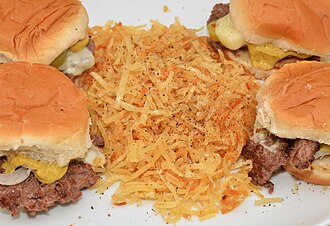
Photo: Wikipedia
A golden, crispy potato patty or round piece, typically deep-fried or pan-fried to achieve a crunchy exterior that gives way to a soft, fluffy interior. Its signature texture is a satisfying contrast of shatteringly crisp edges and a tender, starchy center. Nutritionally, it's a calorie-dense energy source, primarily from carbohydrates and fats.
Calorie split: 4% protein · 41% carbs · 55% fat
↓ Full nutrition💚 Why it's loved
People adore the universal comfort of its crispy, salty, and savory flavor profile, which acts as a perfect vehicle for condiments like ketchup or gravy. It's a nostalgic, satisfying staple that bridges fast-food convenience and home-style cooking.
⚠️ Watch-outs & how to enjoy it better
The high fat and calorie content from frying can lead to blood sugar spikes due to the refined carbohydrates, and commercial versions are often high in sodium. To counteract, pair with a protein source like eggs or lean meat, opt for a smaller portion, or try baking or air-frying a homemade version to reduce added fat.
Key benefits
- Quick source of energy from carbohydrates
- Contains some dietary fiber from the potato
- Provides a small amount of essential minerals like potassium
- A familiar, comforting staple in many diets
- Versatile base for absorbing savory flavors and seasonings
🍽️ Popular dishes

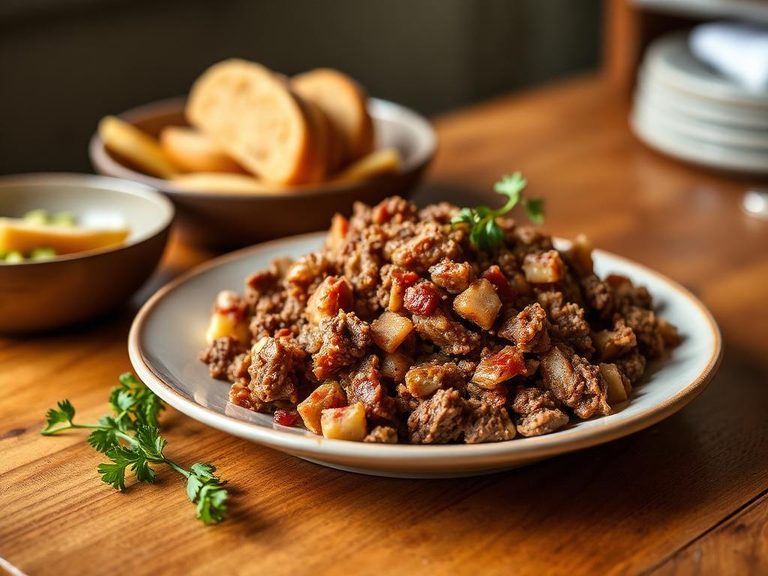
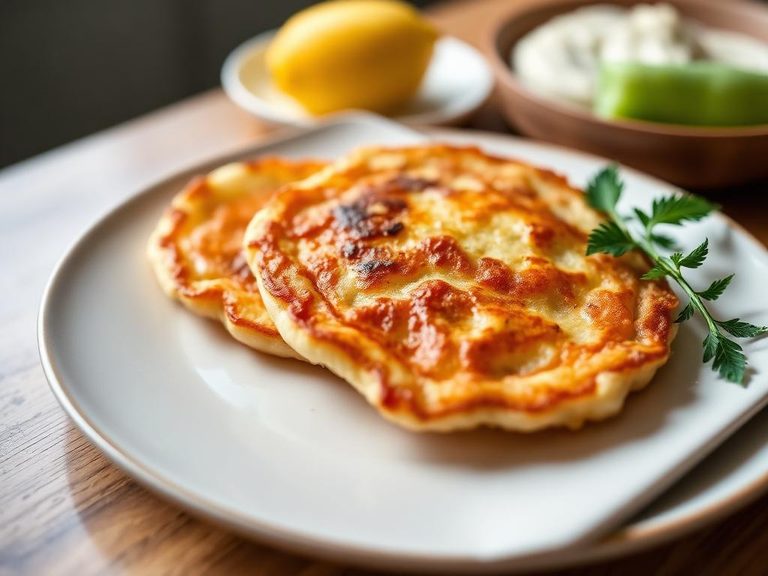
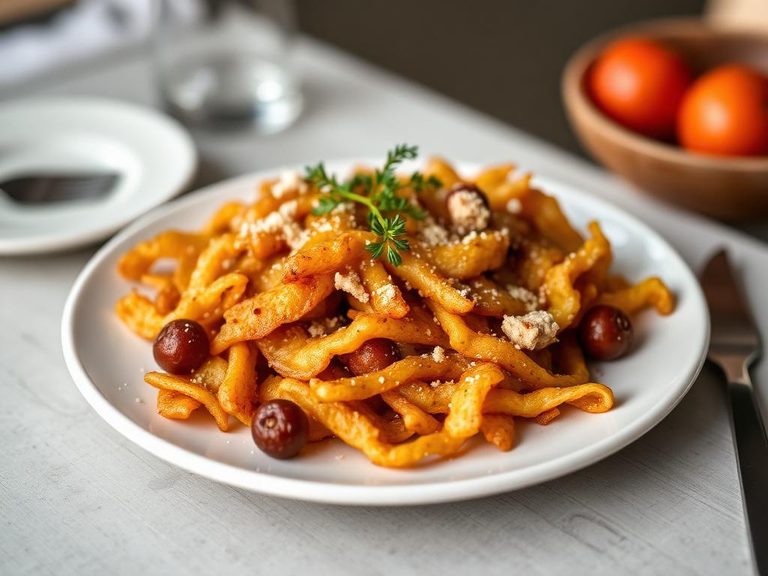
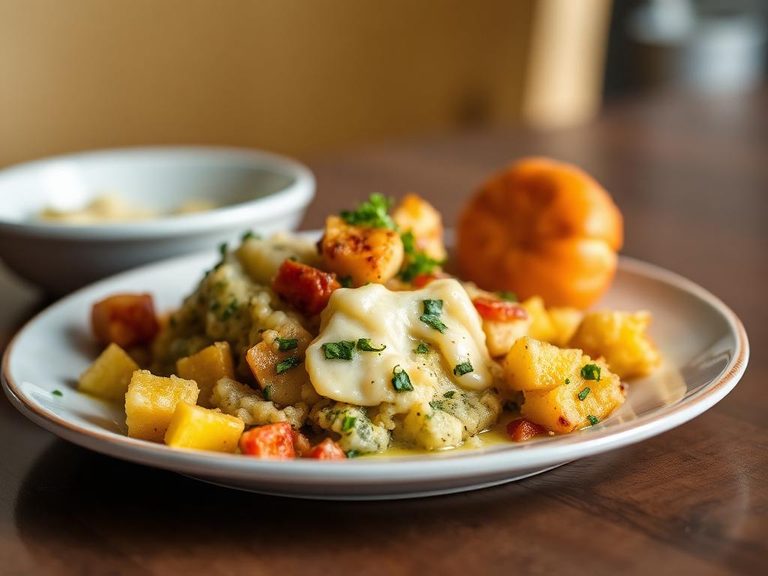
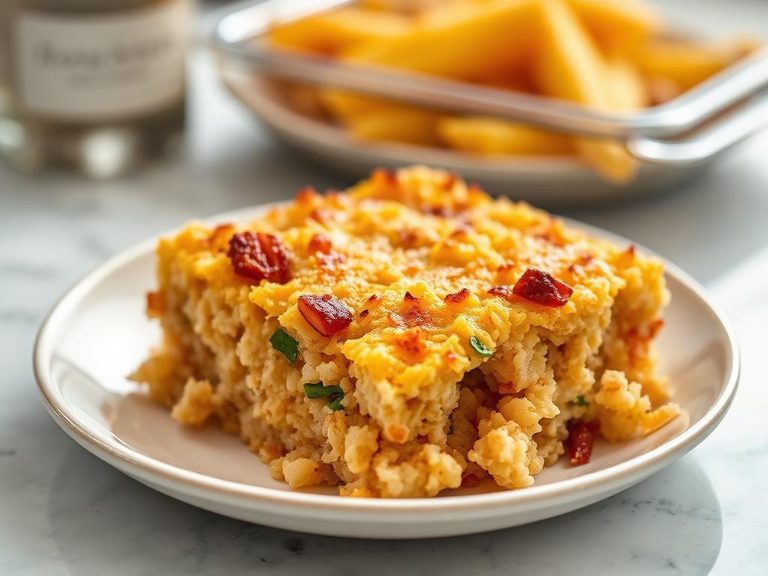
🌍 Where it's eaten
💡 Did you know?
The term 'hash' comes from the French word 'hacher,' meaning to chop, referring to the dish's origins as a way to use up leftover chopped meat and potatoes.
Full nutrition (USDA data · scales with serving)
| Water | 49.3 g |
| Energy | 272 kcal |
| Energy | 1140 kj |
| Protein | 2.6 g |
| Total lipid (fat) | 17.0 g |
| Ash | 2.2 g |
| Carbohydrate, by difference | 28.9 g |
| Fiber, total dietary | 2.7 g |
| Total Sugars | 0.56 g |
| Sucrose | 0.00 g |
| Glucose | 0.31 g |
| Fructose | 0.24 g |
| Lactose | 0.00 g |
| Maltose | 0.00 g |
| Galactose | 0.00 g |
| Starch | 25.7 g |
| Calcium, Ca | 19.0 mg |
| Iron, Fe | 0.60 mg |
| Magnesium, Mg | 21.0 mg |
| Phosphorus, P | 98.0 mg |
| Potassium, K | 355 mg |
| Sodium, Na | 566 mg |
| Zinc, Zn | 0.36 mg |
| Copper, Cu | 0.10 mg |
| Manganese, Mn | 0.16 mg |
| Selenium, Se | 0.40 ug |
| Vitamin C, total ascorbic acid | 5.4 mg |
| Thiamin | 0.14 mg |
| Riboflavin | 0.04 mg |
| Niacin | 1.8 mg |
| Pantothenic acid | 0.38 mg |
| Vitamin B-6 | 0.19 mg |
| Folate, total | 12.0 ug |
| Folic acid | 0.00 ug |
| Folate, food | 12.0 ug |
| Folate, DFE | 12.0 ug |
| Choline, total | 17.8 mg |
| Vitamin B-12 | 0.00 ug |
| Vitamin B-12, added | 0.00 ug |
| Vitamin A, RAE | 0.00 ug |
| Retinol | 0.00 ug |
| Carotene, beta | 1.0 ug |
| Carotene, alpha | 0.00 ug |
| Cryptoxanthin, beta | 0.00 ug |
| Vitamin A, IU | 2.0 iu |
| Lycopene | 0.00 ug |
| Lutein + zeaxanthin | 18.0 ug |
| Vitamin E (alpha-tocopherol) | 2.6 mg |
| Vitamin E, added | 0.00 mg |
| Tocopherol, beta | 0.13 mg |
| Tocopherol, gamma | 4.9 mg |
| Tocopherol, delta | 0.65 mg |
| Tocotrienol, alpha | 0.12 mg |
| Tocotrienol, beta | 0.03 mg |
| Tocotrienol, gamma | 0.07 mg |
| Tocotrienol, delta | 0.06 mg |
| Vitamin D (D2 + D3), International Units | 0.00 iu |
| Vitamin D (D2 + D3) | 0.00 ug |
| Vitamin K (phylloquinone) | 9.9 ug |
| Alcohol, ethyl | 0.00 g |
| Caffeine | 0.00 mg |
| Theobromine | 0.00 mg |
Fat & fatty acid profile (per 100g)
| Fatty acids, total saturated | 2.5 g |
| SFA 4:0 | 0.00 g |
| SFA 6:0 | 0.00 g |
| SFA 8:0 | 0.01 g |
| SFA 10:0 | 0.00 g |
| SFA 12:0 | 0.01 g |
| SFA 14:0 | 0.02 g |
| SFA 15:0 | 0.01 g |
| SFA 16:0 | 1.4 g |
| SFA 17:0 | 0.01 g |
| SFA 18:0 | 0.90 g |
| SFA 20:0 | 0.09 g |
| SFA 22:0 | 0.05 g |
| SFA 24:0 | 0.03 g |
| Fatty acids, total monounsaturated | 7.8 g |
| MUFA 14:1 | 0.00 g |
| MUFA 15:1 | 0.00 g |
| MUFA 16:1 | 0.03 g |
| MUFA 16:1 c | 0.03 g |
| MUFA 17:1 | 0.01 g |
| MUFA 18:1 | 7.6 g |
| MUFA 18:1 c | 7.6 g |
| MUFA 20:1 | 0.14 g |
| MUFA 22:1 | 0.00 g |
| MUFA 22:1 c | 0.00 g |
| MUFA 24:1 c | 0.01 g |
| Fatty acids, total polyunsaturated | 5.7 g |
| PUFA 18:2 | 5.2 g |
| PUFA 18:2 n-6 c,c | 5.1 g |
| PUFA 18:2 CLAs | 0.02 g |
| PUFA 18:3 | 0.47 g |
| PUFA 18:3 n-3 c,c,c (ALA) | 0.44 g |
| PUFA 18:3 n-6 c,c,c | 0.03 g |
| PUFA 18:3i | 0.00 g |
| PUFA 18:4 | 0.00 g |
| PUFA 20:2 n-6 c,c | 0.01 g |
| PUFA 20:3 | 0.00 g |
| PUFA 20:3 n-3 | 0.00 g |
| PUFA 20:3 n-6 | 0.00 g |
| PUFA 20:4 | 0.01 g |
| PUFA 20:5 n-3 (EPA) | 0.00 g |
| PUFA 22:4 | 0.00 g |
| PUFA 22:5 n-3 (DPA) | 0.00 g |
| PUFA 22:6 n-3 (DHA) | 0.00 g |
| Fatty acids, total trans | 0.06 g |
| Fatty acids, total trans-monoenoic | 0.02 g |
| TFA 16:1 t | 0.00 g |
| TFA 18:1 t | 0.02 g |
| TFA 22:1 t | 0.00 g |
| TFA 18:2 t not further defined | 0.03 g |
| Fatty acids, total trans-polyenoic | 0.03 g |
| Cholesterol | 0.00 mg |
Amino acid profile (per 100g)
Estimated from Fast foods, miniature cinnamon rolls — USDA does not publish this profile for Fast foods.
| Tryptophan | 0.05 g |
| Threonine | 0.22 g |
| Isoleucine | 0.28 g |
| Leucine | 0.51 g |
| Lysine | 0.18 g |
| Methionine | 0.11 g |
| Cystine | 0.16 g |
| Phenylalanine | 0.33 g |
| Tyrosine | 0.21 g |
| Valine | 0.33 g |
| Arginine | 0.26 g |
| Histidine | 0.16 g |
| Alanine | 0.25 g |
| Aspartic acid | 0.36 g |
| Glutamic acid | 2.2 g |
| Glycine | 0.25 g |
| Proline | 0.71 g |
| Serine | 0.37 g |
FAQ
What's the difference between hash browns and home fries?
Hash browns are typically shredded or riced potatoes that are formed into a patty or cooked as a loose pile, while home fries are diced or cubed potatoes that are pan-fried, often with onions and peppers.
Why do my homemade hash browns turn out soggy?
The key is to remove as much moisture as possible after grating. Squeeze the shredded potatoes in a clean towel or cheesecloth until no more liquid comes out before cooking.
Are hash browns gluten-free?
Pure potatoes are gluten-free, but commercial frozen or restaurant versions may contain additives, seasonings, or be processed in facilities that handle wheat. Always check labels for potential cross-contamination.
Nutrient density (calculated · NRF9.3)
Nutrient Rich Foods index: beneficial nutrients (protein, fiber, vitamins, minerals) minus saturated fat, added sugar & sodium, per 100 kcal.
NRF9.3 index — Fulgoni, Keast & Drewnowski, 2009. Computed from USDA nutrients.
Weight-loss friendliness (composite index)
Energy density 2.72 kcal/g · 4% calories from protein · 2.7 g fiber · 0.6 g sugar per 100 g.
Composite of energy density (Rolls et al., 1999), protein & fiber satiety, minus sugar. A calculated heuristic — ranks satiety-per-calorie, not a clinical measure.
Dietary load (calculated from USDA values)
Potential renal acid load. Positive = acid-forming, negative = alkaline-forming.
Sodium-to-potassium ratio: 1.59 (lower is better — aim for ≤ 1)
Sodium:potassium per WHO potassium guidance. Computed from USDA nutrients.