

Fast foods, chicken, breaded and fried, boneless pieces, plain
Whole food · Fast Foods
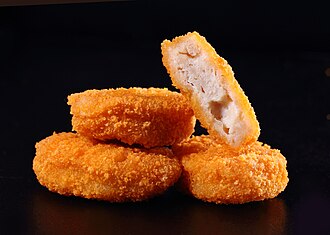
Photo: Wikipedia
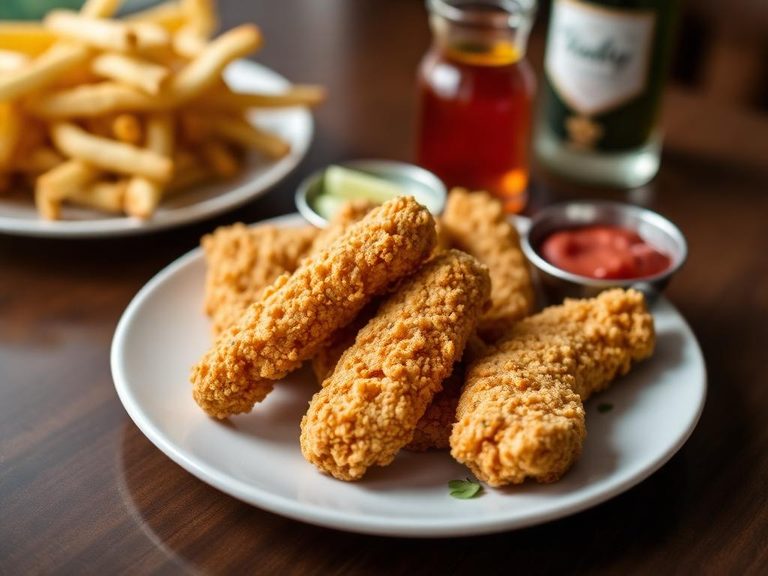
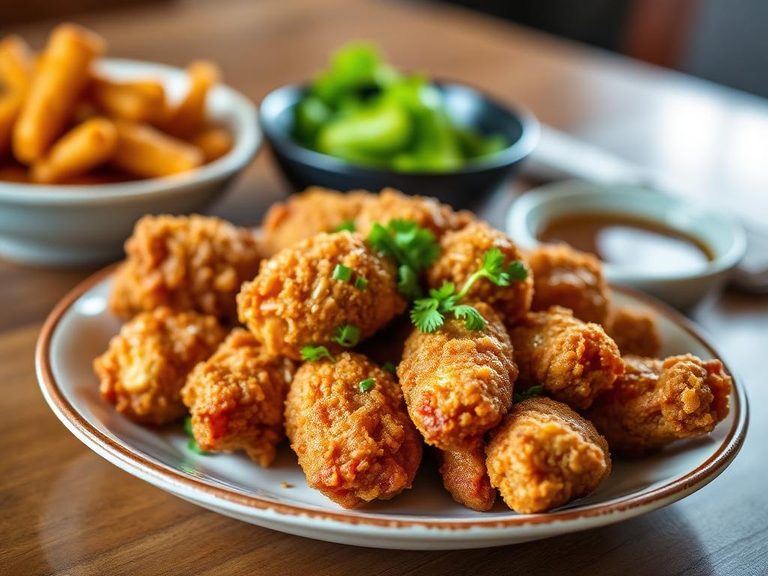
Golden-brown, bite-sized pieces of boneless chicken coated in a seasoned batter or breading and deep-fried to a crisp exterior, encasing tender, juicy white meat. The texture is a satisfying crunch giving way to a soft, savory interior. Nutritionally, it's a high-protein, high-fat food with a moderate calorie density, providing substantial energy per serving.
Calorie split: 21% protein · 19% carbs · 60% fat
↓ Full nutrition💚 Why it's loved
People adore the universal appeal of its crispy, salty, savory coating and the juicy, mild chicken inside—a comforting, craveable combination. Its versatility makes it a staple in everything from quick snacks to elaborate meals, fitting seamlessly into numerous culinary traditions.
⚠️ Watch-outs & how to enjoy it better
The deep-frying process significantly increases the calorie and fat content, which can be a concern for those monitoring intake. The refined flour coating can cause rapid blood sugar spikes, and it is often high in sodium. To counteract this, pair it with fiber-rich vegetables or a salad to slow digestion, practice strict portion control, and choose air-fried or oven-baked versions when possible.
Key benefits
- Excellent source of complete protein for muscle maintenance and satiety.
- Provides quick, dense energy from its combination of fats and carbohydrates.
- Convenient and portable source of cooked protein.
- A familiar, palatable way to increase protein intake for many diets.
🍽️ Popular dishes
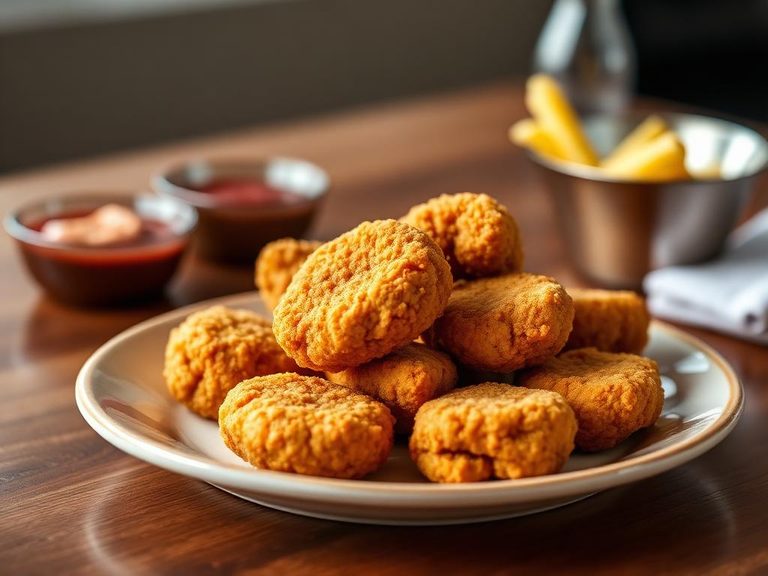
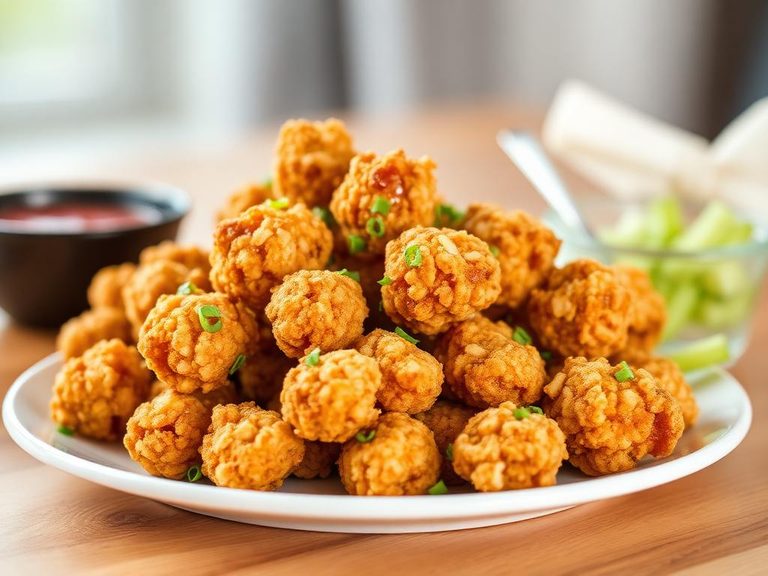
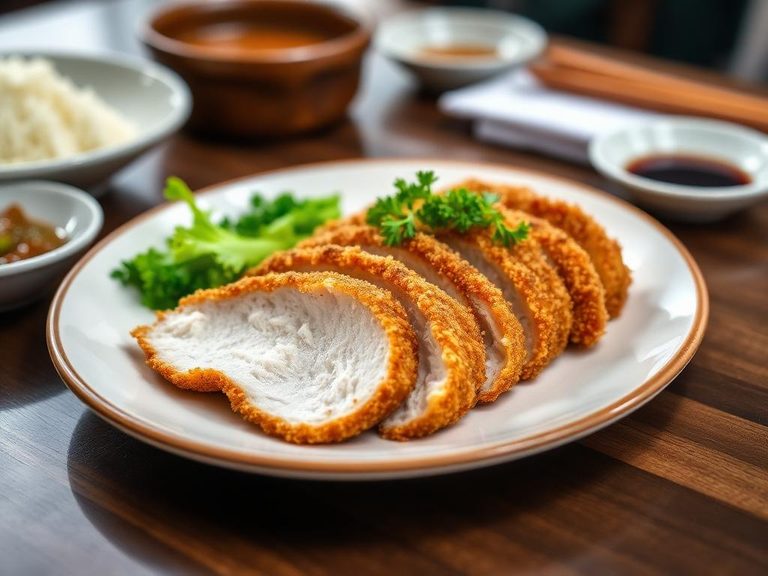
🌍 Where it's eaten
💡 Did you know?
The modern chicken nugget was invented in 1963 by Robert C. Baker, a food science professor at Cornell University, who needed a way to bind ground chicken meat so it could be coated and fried without falling apart.
Full nutrition (USDA data · scales with serving)
| Water | 46.5 g |
| Energy | 307 kcal |
| Energy | 1283 kj |
| Protein | 15.9 g |
| Total lipid (fat) | 20.4 g |
| Ash | 2.3 g |
| Carbohydrate, by difference | 14.9 g |
| Fiber, total dietary | 0.90 g |
| Total Sugars | 0.08 g |
| Sucrose | 0.07 g |
| Glucose | 0.00 g |
| Fructose | 0.00 g |
| Lactose | 0.00 g |
| Maltose | 0.02 g |
| Galactose | 0.00 g |
| Calcium, Ca | 11.0 mg |
| Iron, Fe | 0.83 mg |
| Magnesium, Mg | 24.0 mg |
| Phosphorus, P | 272 mg |
| Potassium, K | 251 mg |
| Sodium, Na | 594 mg |
| Zinc, Zn | 0.59 mg |
| Copper, Cu | 0.05 mg |
| Manganese, Mn | 0.15 mg |
| Selenium, Se | 17.2 ug |
| Vitamin C, total ascorbic acid | 0.60 mg |
| Thiamin | 0.09 mg |
| Riboflavin | 0.20 mg |
| Niacin | 6.0 mg |
| Pantothenic acid | 1.2 mg |
| Vitamin B-6 | 0.15 mg |
| Folate, total | 11.0 ug |
| Folic acid | 5.0 ug |
| Folate, food | 6.0 ug |
| Folate, DFE | 15.0 ug |
| Choline, total | 40.7 mg |
| Betaine | 15.6 mg |
| Vitamin B-12 | 0.33 ug |
| Vitamin B-12, added | 0.00 ug |
| Vitamin A, RAE | 5.0 ug |
| Retinol | 5.0 ug |
| Carotene, beta | 0.00 ug |
| Carotene, alpha | 0.00 ug |
| Cryptoxanthin, beta | 0.00 ug |
| Vitamin A, IU | 16.0 iu |
| Lycopene | 0.00 ug |
| Lutein + zeaxanthin | 2.0 ug |
| Vitamin E (alpha-tocopherol) | 1.1 mg |
| Vitamin E, added | 0.00 mg |
| Tocopherol, beta | 0.05 mg |
| Tocopherol, gamma | 3.6 mg |
| Tocopherol, delta | 1.2 mg |
| Tocotrienol, alpha | 0.01 mg |
| Tocotrienol, beta | 0.00 mg |
| Tocotrienol, gamma | 0.00 mg |
| Tocotrienol, delta | 0.00 mg |
| Vitamin D (D2 + D3), International Units | 7.0 iu |
| Vitamin D (D2 + D3) | 0.20 ug |
| Vitamin D3 (cholecalciferol) | 0.20 ug |
| Vitamin K (phylloquinone) | 7.0 ug |
| Vitamin K (Dihydrophylloquinone) | 10.5 ug |
| Alcohol, ethyl | 0.00 g |
| Caffeine | 0.00 mg |
| Theobromine | 0.00 mg |
Fat & fatty acid profile (per 100g)
| Fatty acids, total saturated | 3.6 g |
| SFA 4:0 | 0.00 g |
| SFA 6:0 | 0.00 g |
| SFA 8:0 | 0.01 g |
| SFA 10:0 | 0.01 g |
| SFA 12:0 | 0.01 g |
| SFA 14:0 | 0.04 g |
| SFA 15:0 | 0.01 g |
| SFA 16:0 | 2.3 g |
| SFA 17:0 | 0.02 g |
| SFA 18:0 | 1.0 g |
| SFA 20:0 | 0.07 g |
| SFA 22:0 | 0.04 g |
| SFA 24:0 | 0.02 g |
| Fatty acids, total monounsaturated | 7.7 g |
| MUFA 14:1 | 0.01 g |
| MUFA 15:1 | 0.00 g |
| MUFA 16:1 | 0.30 g |
| MUFA 16:1 c | 0.29 g |
| MUFA 17:1 | 0.01 g |
| MUFA 18:1 | 7.3 g |
| MUFA 18:1 c | 7.2 g |
| MUFA 20:1 | 0.13 g |
| MUFA 22:1 | 0.00 g |
| MUFA 22:1 c | 0.00 g |
| MUFA 24:1 c | 0.01 g |
| Fatty acids, total polyunsaturated | 6.5 g |
| PUFA 18:2 | 6.0 g |
| PUFA 18:2 n-6 c,c | 5.9 g |
| PUFA 18:2 CLAs | 0.02 g |
| PUFA 18:3 | 0.42 g |
| PUFA 18:3 n-3 c,c,c (ALA) | 0.39 g |
| PUFA 18:3 n-6 c,c,c | 0.03 g |
| PUFA 18:4 | 0.00 g |
| PUFA 20:2 n-6 c,c | 0.01 g |
| PUFA 20:3 | 0.02 g |
| PUFA 20:3 n-3 | 0.00 g |
| PUFA 20:3 n-6 | 0.01 g |
| PUFA 20:4 | 0.05 g |
| PUFA 20:5 n-3 (EPA) | 0.00 g |
| PUFA 22:4 | 0.02 g |
| PUFA 22:5 n-3 (DPA) | 0.01 g |
| PUFA 22:6 n-3 (DHA) | 0.00 g |
| Fatty acids, total trans | 0.12 g |
| Fatty acids, total trans-monoenoic | 0.05 g |
| TFA 16:1 t | 0.00 g |
| TFA 18:1 t | 0.05 g |
| TFA 22:1 t | 0.00 g |
| TFA 18:2 t not further defined | 0.07 g |
| Fatty acids, total trans-polyenoic | 0.07 g |
| Cholesterol | 55.0 mg |
Amino acid profile (per 100g)
Estimated from Fast foods, english muffin, with egg, cheese, and sausage — USDA does not publish this profile for Fast foods.
| Tryptophan | 0.16 g |
| Threonine | 0.52 g |
| Isoleucine | 0.54 g |
| Leucine | 0.98 g |
| Lysine | 0.75 g |
| Methionine | 0.29 g |
| Cystine | 0.20 g |
| Phenylalanine | 0.59 g |
| Tyrosine | 0.41 g |
| Valine | 0.65 g |
| Arginine | 0.65 g |
| Histidine | 0.33 g |
| Alanine | 0.60 g |
| Aspartic acid | 1.1 g |
| Glutamic acid | 2.5 g |
| Glycine | 0.54 g |
| Proline | 0.90 g |
| Serine | 0.70 g |
FAQ
Is this the same as chicken tenders?
Not exactly. Chicken tenders (or strips) are typically whole muscle cuts from the tenderloin of the breast. Breaded and fried boneless pieces can be made from ground and formed chicken or various breast cuts, resulting in a different texture.
How can I make it healthier at home?
Use whole-grain breadcrumbs or panko, coat with egg white or buttermilk instead of whole egg, and bake in a preheated oven or use an air fryer to achieve crispiness with significantly less oil.
Why does the coating sometimes get soggy?
Sogginess is caused by steam from the hot chicken trapped under the coating. To prevent it, let fried pieces rest on a wire rack instead of a plate, and avoid covering them while they're still very hot.
Nutrient density (calculated · NRF9.3)
Nutrient Rich Foods index: beneficial nutrients (protein, fiber, vitamins, minerals) minus saturated fat, added sugar & sodium, per 100 kcal.
NRF9.3 index — Fulgoni, Keast & Drewnowski, 2009. Computed from USDA nutrients.
Weight-loss friendliness (composite index)
Energy density 3.07 kcal/g · 21% calories from protein · 0.9 g fiber · 0.1 g sugar per 100 g.
Composite of energy density (Rolls et al., 1999), protein & fiber satiety, minus sugar. A calculated heuristic — ranks satiety-per-calorie, not a clinical measure.
Dietary load (calculated from USDA values)
Potential renal acid load. Positive = acid-forming, negative = alkaline-forming.
Sodium-to-potassium ratio: 2.37 (lower is better — aim for ≤ 1)
Sodium:potassium per WHO potassium guidance. Computed from USDA nutrients.