

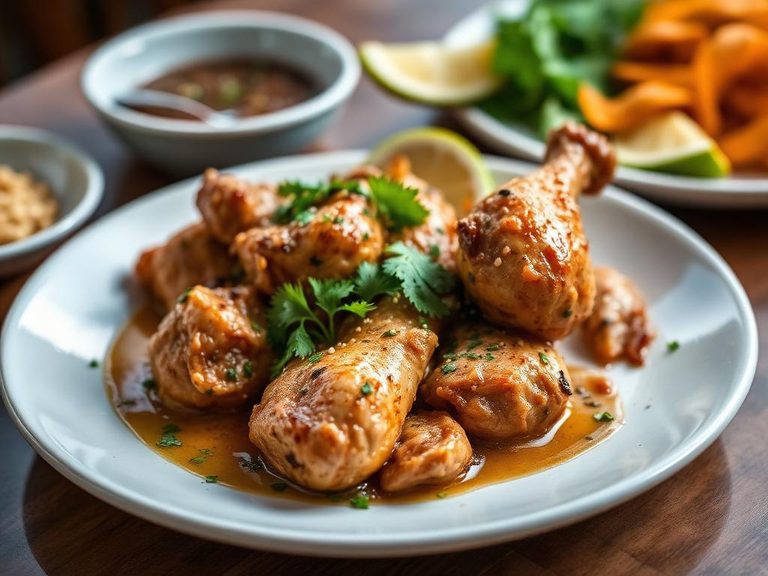
Chicken, dark meat, drumstick, meat and skin, with added solution, cooked, roasted
Whole food · Poultry Products
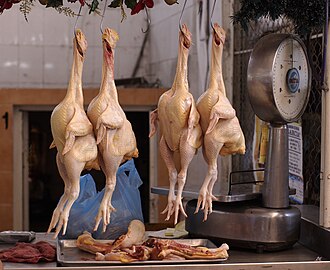
Photo: Wikipedia
This is a juicy, roasted chicken drumstick with the skin on, offering a satisfyingly crisp, golden exterior and tender, flavorful dark meat beneath. Its robust, savory taste and succulent texture make it a classic comfort food, while its high-protein, low-carb profile makes it a staple for many diets.
Calorie split: 55% protein · 0% carbs · 45% fat
↓ Full nutrition💚 Why it's loved
People love it for its perfect balance of crispy skin and juicy, flavorful meat, offering a deeply satisfying eating experience. It's a versatile, affordable, and universally recognized comfort food central to countless family meals and cultural traditions.
⚠️ Watch-outs & how to enjoy it better
The skin is high in saturated fat and calories, which may be a concern for those managing heart health or weight. The added solution can increase sodium content, so those with hypertension should be mindful. To counteract, enjoy it occasionally, remove the skin if needed, and pair it with fiber-rich vegetables to balance the meal.
Key benefits
- Excellent source of complete protein for muscle maintenance and repair.
- Rich in essential minerals like iron and zinc.
- Provides B vitamins, particularly niacin and B6, for energy metabolism.
- The skin contains collagen and adds flavor without added carbs.
🍽️ Popular dishes
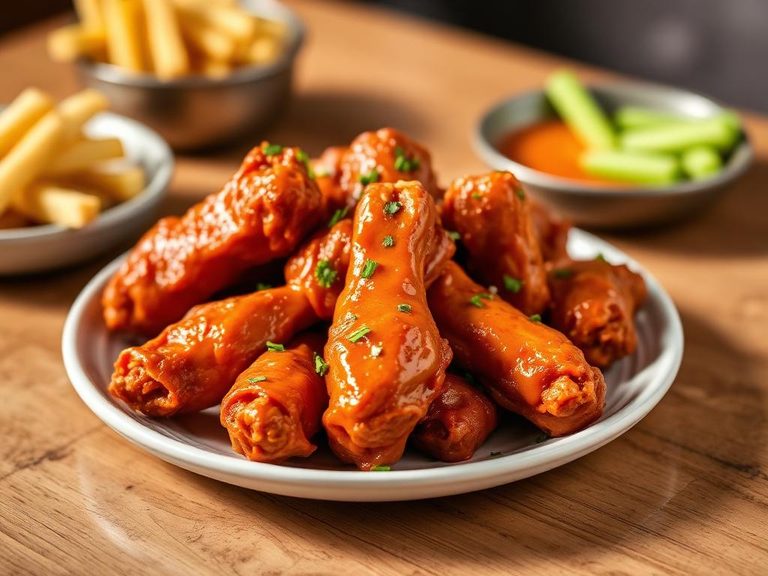
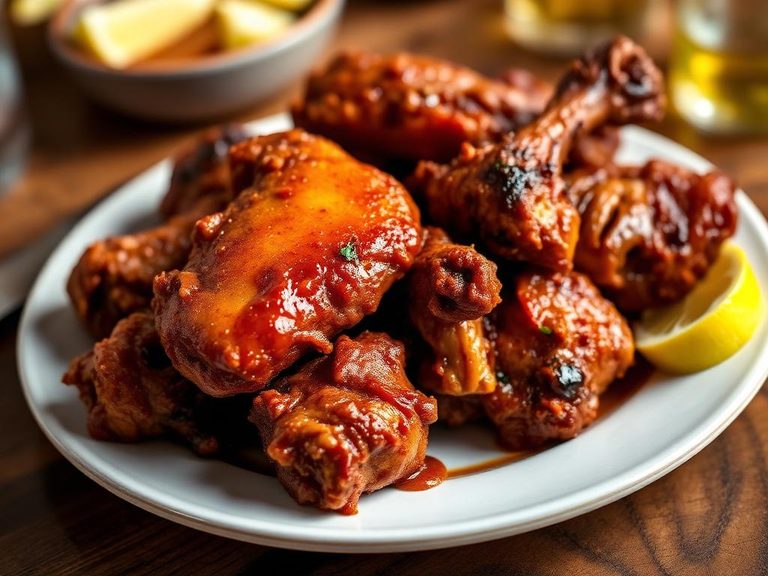
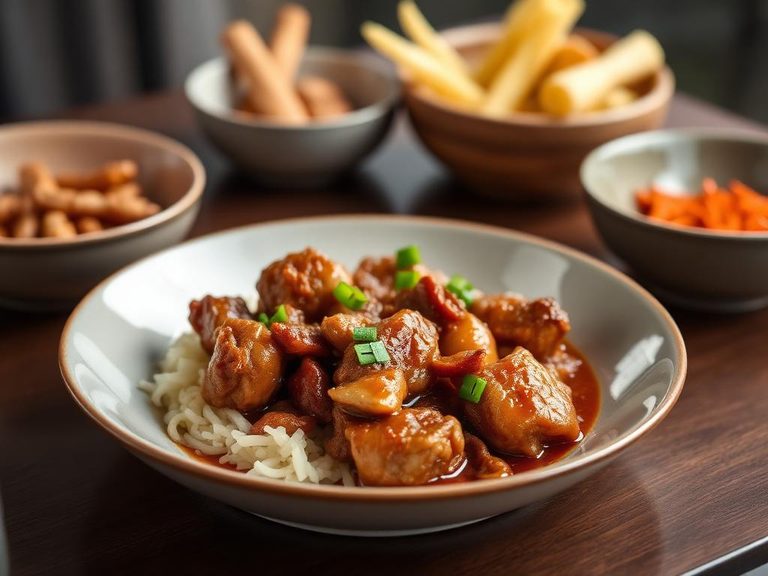

🌍 Where it's eaten
💡 Did you know?
The 'added solution' often refers to a brine or marinade injected to enhance moisture and flavor, which can account for up to 15% of the product's weight.
Full nutrition (USDA data · scales with serving)
| Water | 66.0 g |
| Energy | 180 kcal |
| Energy | 754 kj |
| Protein | 24.7 g |
| Total lipid (fat) | 9.0 g |
| Ash | 1.2 g |
| Carbohydrate, by difference | 0.05 g |
| Fiber, total dietary | 0.00 g |
| Total Sugars | 0.00 g |
| Calcium, Ca | 13.0 mg |
| Iron, Fe | 1.1 mg |
| Magnesium, Mg | 20.0 mg |
| Phosphorus, P | 194 mg |
| Potassium, K | 244 mg |
| Sodium, Na | 186 mg |
| Zinc, Zn | 2.5 mg |
| Copper, Cu | 0.08 mg |
| Manganese, Mn | 0.01 mg |
| Selenium, Se | 29.5 ug |
| Vitamin C, total ascorbic acid | 0.00 mg |
| Thiamin | 0.10 mg |
| Riboflavin | 0.28 mg |
| Niacin | 5.7 mg |
| Pantothenic acid | 1.1 mg |
| Vitamin B-6 | 0.39 mg |
| Folate, total | 4.0 ug |
| Folic acid | 0.00 ug |
| Folate, food | 4.0 ug |
| Folate, DFE | 4.0 ug |
| Choline, total | 110 mg |
| Betaine | 15.9 mg |
| Vitamin B-12 | 0.43 ug |
| Vitamin B-12, added | 0.00 ug |
| Vitamin A, RAE | 12.0 ug |
| Retinol | 12.0 ug |
| Carotene, beta | 0.00 ug |
| Carotene, alpha | 0.00 ug |
| Cryptoxanthin, beta | 0.00 ug |
| Vitamin A, IU | 39.0 iu |
| Lycopene | 0.00 ug |
| Lutein + zeaxanthin | 88.0 ug |
| Vitamin E (alpha-tocopherol) | 0.26 mg |
| Vitamin E, added | 0.00 mg |
| Tocopherol, beta | 0.00 mg |
| Tocopherol, gamma | 0.12 mg |
| Tocopherol, delta | 0.00 mg |
| Tocotrienol, alpha | 0.01 mg |
| Tocotrienol, beta | 0.00 mg |
| Tocotrienol, gamma | 0.07 mg |
| Tocotrienol, delta | 0.00 mg |
| Vitamin D (D2 + D3), International Units | 7.0 iu |
| Vitamin D (D2 + D3) | 0.20 ug |
| Vitamin D3 (cholecalciferol) | 0.20 ug |
| Vitamin K (phylloquinone) | 0.00 ug |
| Vitamin K (Dihydrophylloquinone) | 0.00 ug |
| Vitamin K (Menaquinone-4) | 13.5 ug |
| Alcohol, ethyl | 0.00 g |
| Caffeine | 0.00 mg |
| Theobromine | 0.00 mg |
Fat & fatty acid profile (per 100g)
| Fatty acids, total saturated | 2.7 g |
| SFA 4:0 | 0.00 g |
| SFA 6:0 | 0.00 g |
| SFA 8:0 | 0.00 g |
| SFA 10:0 | 0.01 g |
| SFA 12:0 | 0.01 g |
| SFA 14:0 | 0.05 g |
| SFA 15:0 | 0.01 g |
| SFA 16:0 | 2.0 g |
| SFA 17:0 | 0.01 g |
| SFA 18:0 | 0.53 g |
| SFA 20:0 | 0.01 g |
| SFA 22:0 | 0.01 g |
| SFA 24:0 | 0.00 g |
| Fatty acids, total monounsaturated | 4.1 g |
| MUFA 14:1 | 0.02 g |
| MUFA 15:1 | 0.00 g |
| MUFA 16:1 | 0.61 g |
| MUFA 16:1 c | 0.61 g |
| MUFA 17:1 | 0.01 g |
| MUFA 18:1 | 3.4 g |
| MUFA 18:1 c | 3.3 g |
| MUFA 20:1 | 0.06 g |
| MUFA 22:1 | 0.00 g |
| MUFA 22:1 c | 0.00 g |
| MUFA 24:1 c | 0.00 g |
| Fatty acids, total polyunsaturated | 2.2 g |
| PUFA 18:2 | 1.9 g |
| PUFA 18:2 n-6 c,c | 1.8 g |
| PUFA 18:2 CLAs | 0.01 g |
| PUFA 18:3 | 0.10 g |
| PUFA 18:3 n-3 c,c,c (ALA) | 0.09 g |
| PUFA 18:3 n-6 c,c,c | 0.00 g |
| PUFA 18:4 | 0.00 g |
| PUFA 20:2 n-6 c,c | 0.02 g |
| PUFA 20:3 | 0.03 g |
| PUFA 20:3 n-3 | 0.00 g |
| PUFA 20:3 n-6 | 0.03 g |
| PUFA 20:4 | 0.11 g |
| PUFA 20:5 n-3 (EPA) | 0.00 g |
| PUFA 22:4 | 0.03 g |
| PUFA 22:5 n-3 (DPA) | 0.01 g |
| PUFA 22:6 n-3 (DHA) | 0.01 g |
| Fatty acids, total trans | 0.06 g |
| Fatty acids, total trans-monoenoic | 0.04 g |
| TFA 16:1 t | 0.00 g |
| TFA 18:1 t | 0.04 g |
| TFA 22:1 t | 0.00 g |
| TFA 18:2 t not further defined | 0.02 g |
| Fatty acids, total trans-polyenoic | 0.02 g |
| Cholesterol | 128 mg |
Amino acid profile (per 100g)
| Tryptophan | 0.25 g |
| Threonine | 1.1 g |
| Isoleucine | 1.1 g |
| Leucine | 1.9 g |
| Lysine | 2.1 g |
| Methionine | 0.64 g |
| Cystine | 0.26 g |
| Phenylalanine | 0.89 g |
| Tyrosine | 0.84 g |
| Valine | 1.1 g |
| Arginine | 1.6 g |
| Histidine | 0.66 g |
| Alanine | 1.3 g |
| Aspartic acid | 2.2 g |
| Glutamic acid | 3.6 g |
| Glycine | 1.0 g |
| Proline | 0.90 g |
| Serine | 0.93 g |
FAQ
What does 'with added solution' mean?
It means the chicken was treated with a water-based mixture, often containing salt, broth, or flavor enhancers, to increase juiciness and weight before cooking.
Is the skin nutritious?
The skin is a concentrated source of fat and calories but also contains some protein and minerals. Its consumption is a matter of personal dietary preference.
How does dark meat differ from white meat?
Dark meat (from legs and thighs) has more myoglobin, iron, and fat, giving it a richer flavor and more forgiving, juicy texture when cooked compared to leaner white breast meat.
Nutrient density (calculated · NRF9.3)
Nutrient Rich Foods index: beneficial nutrients (protein, fiber, vitamins, minerals) minus saturated fat, added sugar & sodium, per 100 kcal.
NRF9.3 index — Fulgoni, Keast & Drewnowski, 2009. Computed from USDA nutrients.
Weight-loss friendliness (composite index)
Energy density 1.80 kcal/g · 55% calories from protein · 0.0 g fiber · 0.0 g sugar per 100 g.
Composite of energy density (Rolls et al., 1999), protein & fiber satiety, minus sugar. A calculated heuristic — ranks satiety-per-calorie, not a clinical measure.
Dietary load (calculated from USDA values)
Potential renal acid load. Positive = acid-forming, negative = alkaline-forming.
Sodium-to-potassium ratio: 0.76 (lower is better — aim for ≤ 1)
Sodium:potassium per WHO potassium guidance. Computed from USDA nutrients.