

Bread, gluten-free, white, made with rice flour, corn starch, and/or tapioca
Whole food · Baked Products
This is a soft, spongy white bread made primarily from rice flour, corn starch, and/or tapioca starch, designed as a gluten-free alternative to traditional wheat loaves. Its texture is typically light and slightly chewy with a mild, neutral flavor, often with a crust that is less crisp than wheat bread. Nutritionally, it provides a quick source of energy with its high carbohydrate content (45.78g per 100g) but is relatively low in protein and fat.
Calorie split: 7% protein · 74% carbs · 19% fat
↓ Full nutrition💚 Why it's loved
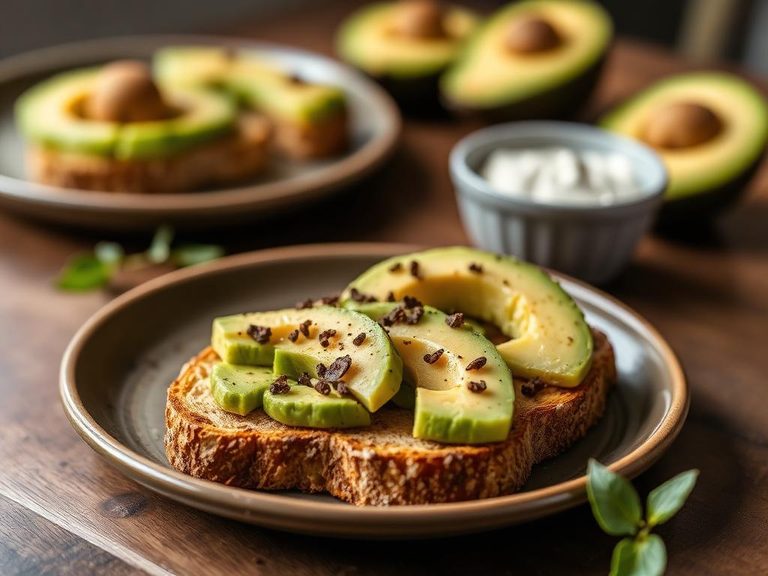
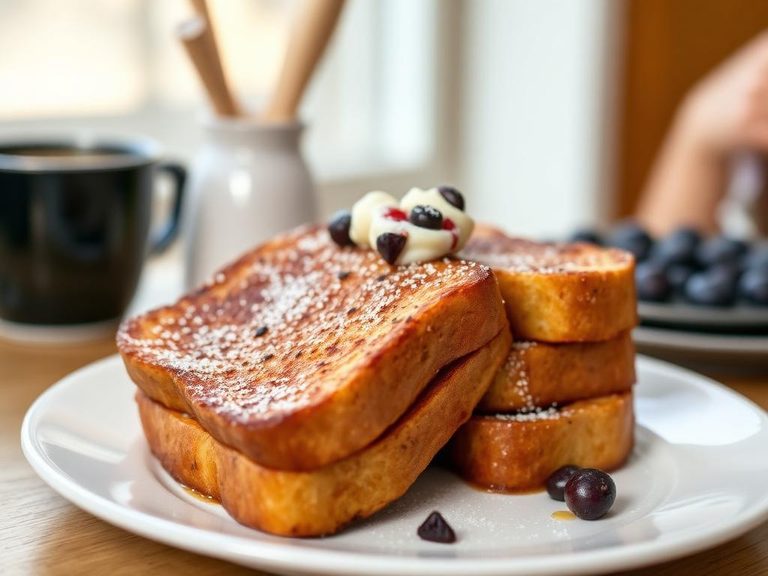
People love it for its soft, pillowy texture that closely mimics traditional white bread, making it a comforting staple for those avoiding gluten. Its mild flavor makes it an incredibly versatile canvas for everything from avocado toast to French toast.
⚠️ Watch-outs & how to enjoy it better
Due to its high-glycemic ingredients like rice flour and tapioca, it can cause rapid blood-sugar spikes, which is a concern for diabetics or those monitoring glucose levels. It is also often lower in protein and fiber than whole-grain alternatives, which can lead to less sustained fullness. To counteract this, pair a slice with protein (like eggs or nut butter) and healthy fats (like avocado or cheese) to slow digestion and increase satiety.
Key benefits
- Naturally gluten-free, suitable for celiac disease or gluten sensitivity.
- Provides a quick source of energy from carbohydrates.
- Low in fat and contains some dietary fiber.
- Versatile base for both sweet and savory toppings.
- Widely available in specialty and mainstream grocery stores.
🍽️ Popular dishes
🌍 Where it's eaten
💡 Did you know?
The use of tapioca starch in gluten-free bread is a technique borrowed from Brazilian cuisine, where it's a staple in making 'pão de queijo' (cheese bread), contributing to a distinctive chewy texture.
Full nutrition (USDA data · scales with serving)
| Water | 43.0 g |
| Energy | 248 kcal |
| Energy | 1036 kj |
| Protein | 4.3 g |
| Total lipid (fat) | 5.2 g |
| Ash | 1.7 g |
| Carbohydrate, by difference | 45.8 g |
| Fiber, total dietary | 4.3 g |
| Total Sugars | 3.5 g |
| Sucrose | 0.00 g |
| Glucose | 0.99 g |
| Fructose | 1.0 g |
| Lactose | 0.00 g |
| Maltose | 1.5 g |
| Galactose | 0.00 g |
| Starch | 33.3 g |
| Calcium, Ca | 138 mg |
| Iron, Fe | 2.6 mg |
| Magnesium, Mg | 12.0 mg |
| Phosphorus, P | 51.0 mg |
| Potassium, K | 75.0 mg |
| Sodium, Na | 447 mg |
| Zinc, Zn | 0.48 mg |
| Copper, Cu | 0.07 mg |
| Manganese, Mn | 0.21 mg |
| Selenium, Se | 0.40 ug |
| Vitamin C, total ascorbic acid | 0.00 mg |
| Thiamin | 0.38 mg |
| Riboflavin | 0.51 mg |
| Niacin | 2.8 mg |
| Vitamin B-6 | 0.07 mg |
| Folate, total | 36.0 ug |
| Folic acid | 0.00 ug |
| Folate, food | 36.0 ug |
| Folate, DFE | 36.0 ug |
| Choline, total | 12.6 mg |
| Vitamin B-12 | 0.00 ug |
| Vitamin B-12, added | 0.00 ug |
| Vitamin A, RAE | 0.00 ug |
| Retinol | 0.00 ug |
| Carotene, beta | 0.00 ug |
| Carotene, alpha | 0.00 ug |
| Cryptoxanthin, beta | 0.00 ug |
| Vitamin A, IU | 0.00 iu |
| Lycopene | 0.00 ug |
| Lutein + zeaxanthin | 0.00 ug |
| Vitamin E (alpha-tocopherol) | 0.60 mg |
| Vitamin E, added | 0.00 mg |
| Tocopherol, beta | 0.15 mg |
| Tocopherol, gamma | 4.6 mg |
| Tocopherol, delta | 2.0 mg |
| Tocotrienol, alpha | 0.00 mg |
| Tocotrienol, beta | 0.00 mg |
| Tocotrienol, gamma | 0.00 mg |
| Tocotrienol, delta | 0.00 mg |
| Vitamin D (D2 + D3), International Units | 0.00 iu |
| Vitamin D (D2 + D3) | 0.00 ug |
| Vitamin K (phylloquinone) | 0.30 ug |
| Alcohol, ethyl | 0.00 g |
| Caffeine | 0.00 mg |
| Theobromine | 0.00 mg |
Fat & fatty acid profile (per 100g)
| Fatty acids, total saturated | 0.98 g |
| SFA 4:0 | 0.00 g |
| SFA 6:0 | 0.00 g |
| SFA 8:0 | 0.02 g |
| SFA 10:0 | 0.02 g |
| SFA 12:0 | 0.01 g |
| SFA 14:0 | 0.04 g |
| SFA 15:0 | 0.00 g |
| SFA 16:0 | 0.71 g |
| SFA 17:0 | 0.01 g |
| SFA 18:0 | 0.15 g |
| SFA 20:0 | 0.01 g |
| SFA 22:0 | 0.00 g |
| SFA 24:0 | 0.00 g |
| Fatty acids, total monounsaturated | 2.0 g |
| MUFA 14:1 | 0.00 g |
| MUFA 15:1 | 0.72 g |
| MUFA 16:1 | 0.01 g |
| MUFA 16:1 c | 0.01 g |
| MUFA 17:1 | 0.00 g |
| MUFA 18:1 | 1.3 g |
| MUFA 18:1 c | 1.3 g |
| MUFA 20:1 | 0.01 g |
| MUFA 22:1 | 0.00 g |
| MUFA 22:1 c | 0.00 g |
| MUFA 24:1 c | 0.00 g |
| Fatty acids, total polyunsaturated | 0.52 g |
| PUFA 18:2 | 0.50 g |
| PUFA 18:2 n-6 c,c | 0.49 g |
| PUFA 18:2 CLAs | 0.00 g |
| PUFA 18:3 | 0.01 g |
| PUFA 18:3 n-3 c,c,c (ALA) | 0.01 g |
| PUFA 18:3 n-6 c,c,c | 0.00 g |
| PUFA 18:3i | 0.00 g |
| PUFA 18:4 | 0.00 g |
| PUFA 20:2 n-6 c,c | 0.00 g |
| PUFA 20:3 | 0.00 g |
| PUFA 20:3 n-3 | 0.00 g |
| PUFA 20:3 n-6 | 0.00 g |
| PUFA 20:4 | 0.00 g |
| PUFA 20:5 n-3 (EPA) | 0.00 g |
| PUFA 22:4 | 0.00 g |
| PUFA 22:5 n-3 (DPA) | 0.00 g |
| PUFA 22:6 n-3 (DHA) | 0.00 g |
| Fatty acids, total trans | 0.01 g |
| Fatty acids, total trans-monoenoic | 0.00 g |
| TFA 16:1 t | 0.00 g |
| TFA 18:1 t | 0.00 g |
| TFA 22:1 t | 0.00 g |
| TFA 18:2 t not further defined | 0.01 g |
| Fatty acids, total trans-polyenoic | 0.01 g |
| Cholesterol | 0.00 mg |
Amino acid profile (per 100g)
Estimated from Bread, salvadoran sweet cheese (quesadilla salvadorena) — USDA does not publish this profile for Bread.
| Tryptophan | 0.07 g |
| Threonine | 0.21 g |
| Isoleucine | 0.30 g |
| Leucine | 0.65 g |
| Lysine | 0.50 g |
| Methionine | 0.28 g |
| Cystine | 0.06 g |
| Phenylalanine | 0.37 g |
| Tyrosine | 0.23 g |
| Valine | 0.43 g |
| Arginine | 0.25 g |
| Histidine | 0.15 g |
| Alanine | 0.36 g |
| Aspartic acid | 0.59 g |
| Glutamic acid | 1.3 g |
| Glycine | 0.20 g |
| Proline | 0.83 g |
| Serine | 0.45 g |
| Hydroxyproline | 0.00 g |
FAQ
Why does gluten-free bread often have a gummy texture?
The absence of gluten's elastic protein network means binders like xanthan gum or psyllium husk are used, and starches like tapioca or rice flour can retain moisture differently, sometimes resulting in a denser or gummier crumb if not properly formulated.
Is this bread suitable for a low-carb or keto diet?
No. With over 45g of carbohydrates per 100g, it is a high-carb food. Low-carb/keto diets typically require breads made primarily from almond flour, coconut flour, or flaxseed meal.
How can I improve the texture of store-bought gluten-free bread?
Toasting is highly recommended. It crisps the exterior and revives the interior's softness, significantly improving the eating experience. Lightly buttering before toasting also adds flavor and moisture.
Nutrient density (calculated · NRF9.3)
Nutrient Rich Foods index: beneficial nutrients (protein, fiber, vitamins, minerals) minus saturated fat, added sugar & sodium, per 100 kcal.
NRF9.3 index — Fulgoni, Keast & Drewnowski, 2009. Computed from USDA nutrients.
Weight-loss friendliness (composite index)
Energy density 2.48 kcal/g · 7% calories from protein · 4.3 g fiber · 3.5 g sugar per 100 g.
Composite of energy density (Rolls et al., 1999), protein & fiber satiety, minus sugar. A calculated heuristic — ranks satiety-per-calorie, not a clinical measure.
Dietary load (calculated from USDA values)
Potential renal acid load. Positive = acid-forming, negative = alkaline-forming.
Sodium-to-potassium ratio: 5.96 (lower is better — aim for ≤ 1)
Sodium:potassium per WHO potassium guidance. Computed from USDA nutrients.