

Biscuits, plain or buttermilk, refrigerated dough, higher fat, baked
Whole food · Baked Products

Photo: Wikipedia
These are the golden, flaky, buttery rounds that emerge from a refrigerated tube, offering a tender, layered interior and a crisp, slightly salty exterior. Nutritionally, they are a dense source of quick energy, with a high carbohydrate content of about 49g per 100g, but they also provide a modest protein boost from the buttermilk. Their convenience and satisfying, rich flavor make them a staple for quick meals and comfort food.
Calorie split: 8% protein · 60% carbs · 31% fat
↓ Full nutrition💚 Why it's loved
People adore these biscuits for their incredible convenience—transforming from cold dough to warm, flaky perfection in minutes. Their rich, buttery flavor and tender texture make them the ultimate comfort food, perfect for sopping up gravy, topping a casserole, or enjoying with a pat of jam.
⚠️ Watch-outs & how to enjoy it better
The high carbohydrate and fat content can contribute to blood sugar spikes and may not suit low-carb or heart-healthy diets. To counteract this, pair a biscuit with a protein-rich food like eggs, sausage, or a bean-based dish, and practice portion control by enjoying one biscuit as part of a balanced plate.
Key benefits
- Provides quick energy from carbohydrates
- Offers a modest source of protein (6.79g/100g)
- Contains dietary fiber (2.8g/100g)
- Versatile base for both sweet and savory dishes
- Convenient and fast to prepare from refrigerated dough
🍽️ Popular dishes

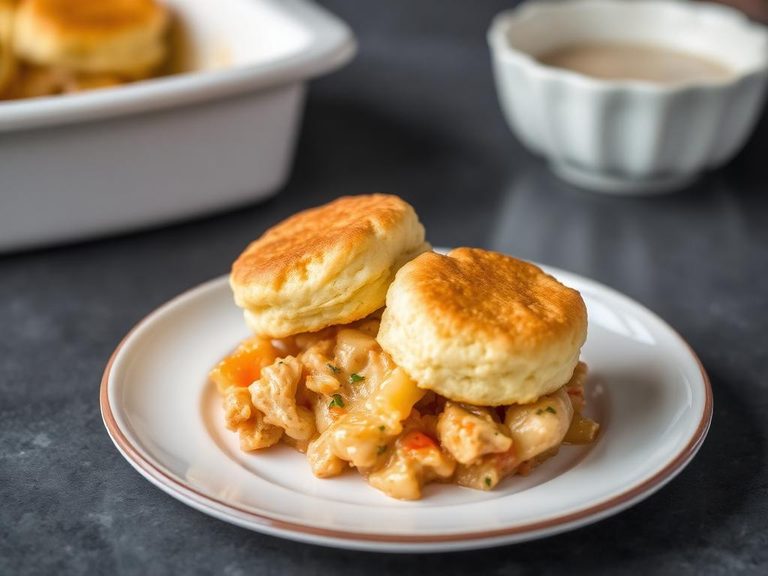

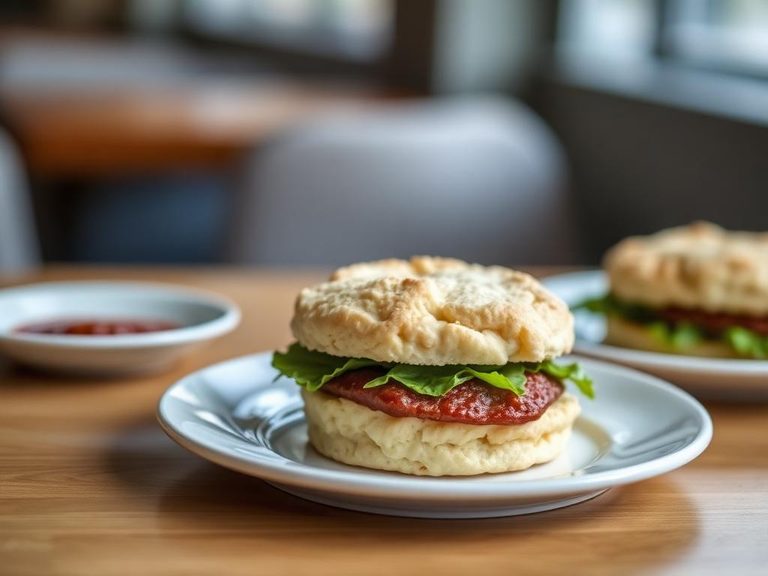
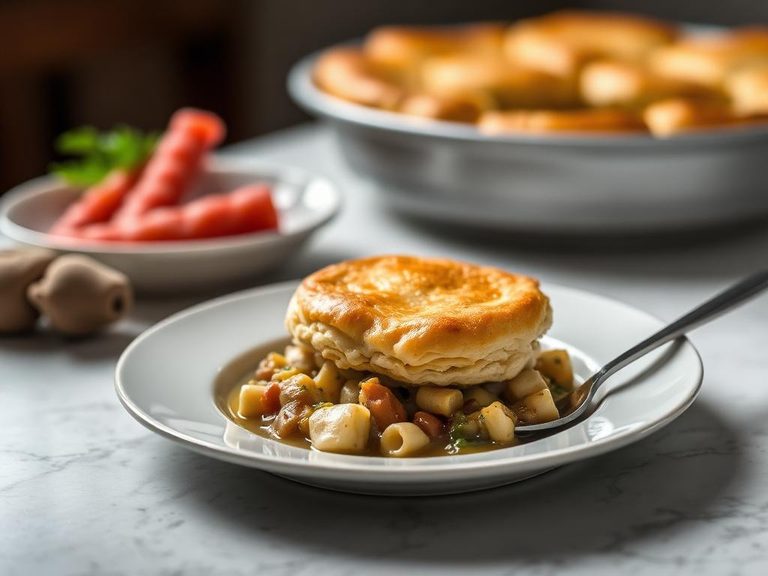
🌍 Where it's eaten
💡 Did you know?
The 'refrigerated dough' biscuit was popularized in the 1930s by the inventor of the cardboard tube, which was originally a milk carton.
Full nutrition (USDA data · scales with serving)
| Water | 29.7 g |
| Energy | 324 kcal |
| Energy | 1357 kj |
| Protein | 6.8 g |
| Total lipid (fat) | 11.2 g |
| Ash | 3.3 g |
| Carbohydrate, by difference | 49.0 g |
| Fiber, total dietary | 2.8 g |
| Total Sugars | 8.2 g |
| Sucrose | 3.6 g |
| Glucose | 2.5 g |
| Fructose | 0.71 g |
| Lactose | 0.00 g |
| Maltose | 1.3 g |
| Galactose | 0.10 g |
| Starch | 36.4 g |
| Calcium, Ca | 27.0 mg |
| Iron, Fe | 2.6 mg |
| Magnesium, Mg | 18.0 mg |
| Phosphorus, P | 446 mg |
| Potassium, K | 152 mg |
| Sodium, Na | 1002 mg |
| Zinc, Zn | 0.41 mg |
| Copper, Cu | 0.09 mg |
| Manganese, Mn | 0.49 mg |
| Selenium, Se | 13.6 ug |
| Vitamin C, total ascorbic acid | 0.00 mg |
| Thiamin | 0.45 mg |
| Riboflavin | 0.30 mg |
| Niacin | 3.7 mg |
| Pantothenic acid | 0.38 mg |
| Vitamin B-6 | 0.05 mg |
| Folate, total | 63.0 ug |
| Folic acid | 53.0 ug |
| Folate, food | 10.0 ug |
| Folate, DFE | 100 ug |
| Choline, total | 19.8 mg |
| Vitamin B-12 | 0.00 ug |
| Vitamin B-12, added | 0.00 ug |
| Vitamin A, RAE | 0.00 ug |
| Retinol | 0.00 ug |
| Carotene, beta | 0.00 ug |
| Carotene, alpha | 0.00 ug |
| Cryptoxanthin, beta | 0.00 ug |
| Vitamin A, IU | 2.0 iu |
| Lycopene | 0.00 ug |
| Lutein + zeaxanthin | 8.0 ug |
| Vitamin E (alpha-tocopherol) | 0.67 mg |
| Vitamin E, added | 0.00 mg |
| Tocopherol, beta | 0.10 mg |
| Tocopherol, gamma | 3.7 mg |
| Tocopherol, delta | 1.4 mg |
| Tocotrienol, alpha | 0.04 mg |
| Tocotrienol, beta | 0.15 mg |
| Tocotrienol, gamma | 0.15 mg |
| Tocotrienol, delta | 0.00 mg |
| Vitamin D (D2 + D3), International Units | 0.00 iu |
| Vitamin D (D2 + D3) | 0.00 ug |
| Vitamin K (phylloquinone) | 9.5 ug |
| Vitamin K (Dihydrophylloquinone) | 3.8 ug |
| Vitamin K (Menaquinone-4) | 0.00 ug |
| Alcohol, ethyl | 0.00 g |
| Caffeine | 0.00 mg |
| Theobromine | 0.00 mg |
Fat & fatty acid profile (per 100g)
| Fatty acids, total saturated | 5.5 g |
| SFA 4:0 | 0.00 g |
| SFA 6:0 | 0.00 g |
| SFA 8:0 | 0.00 g |
| SFA 10:0 | 0.01 g |
| SFA 12:0 | 0.01 g |
| SFA 14:0 | 0.05 g |
| SFA 15:0 | 0.01 g |
| SFA 16:0 | 2.6 g |
| SFA 17:0 | 0.01 g |
| SFA 18:0 | 2.8 g |
| SFA 20:0 | 0.04 g |
| SFA 22:0 | 0.03 g |
| SFA 24:0 | 0.01 g |
| Fatty acids, total monounsaturated | 2.3 g |
| MUFA 14:1 | 0.00 g |
| MUFA 15:1 | 0.00 g |
| MUFA 16:1 | 0.01 g |
| MUFA 16:1 c | 0.01 g |
| MUFA 17:1 | 0.00 g |
| MUFA 18:1 | 2.3 g |
| MUFA 18:1 c | 2.1 g |
| MUFA 20:1 | 0.02 g |
| MUFA 22:1 | 0.00 g |
| MUFA 22:1 c | 0.00 g |
| MUFA 24:1 c | 0.00 g |
| Fatty acids, total polyunsaturated | 2.7 g |
| PUFA 18:2 | 2.4 g |
| PUFA 18:2 n-6 c,c | 2.4 g |
| PUFA 18:2 CLAs | 0.01 g |
| PUFA 18:3 | 0.27 g |
| PUFA 18:3 n-3 c,c,c (ALA) | 0.26 g |
| PUFA 18:3 n-6 c,c,c | 0.01 g |
| PUFA 18:3i | 0.00 g |
| PUFA 18:4 | 0.00 g |
| PUFA 20:2 n-6 c,c | 0.00 g |
| PUFA 20:3 | 0.00 g |
| PUFA 20:3 n-3 | 0.00 g |
| PUFA 20:3 n-6 | 0.00 g |
| PUFA 20:4 | 0.00 g |
| PUFA 20:5 n-3 (EPA) | 0.00 g |
| PUFA 22:4 | 0.00 g |
| PUFA 22:5 n-3 (DPA) | 0.00 g |
| PUFA 22:6 n-3 (DHA) | 0.00 g |
| Fatty acids, total trans | 0.22 g |
| Fatty acids, total trans-monoenoic | 0.19 g |
| TFA 16:1 t | 0.00 g |
| TFA 18:1 t | 0.19 g |
| TFA 22:1 t | 0.00 g |
| TFA 18:2 t not further defined | 0.03 g |
| Fatty acids, total trans-polyenoic | 0.03 g |
| Cholesterol | 0.00 mg |
Amino acid profile (per 100g)
Estimated from Cookies, animal crackers (includes arrowroot, tea biscuits) — USDA does not publish this profile for Biscuits.
| Tryptophan | 0.10 g |
| Threonine | 0.19 g |
| Isoleucine | 0.26 g |
| Leucine | 0.47 g |
| Lysine | 0.24 g |
| Methionine | 0.12 g |
| Cystine | 0.15 g |
| Phenylalanine | 0.32 g |
| Tyrosine | 0.20 g |
| Valine | 0.30 g |
| Arginine | 0.26 g |
| Histidine | 0.14 g |
| Alanine | 0.21 g |
| Aspartic acid | 0.29 g |
| Glutamic acid | 2.3 g |
| Glycine | 0.23 g |
| Proline | 0.76 g |
| Serine | 0.36 g |
FAQ
Can I freeze unbaked biscuit dough?
Yes, you can freeze individual unbaked biscuits on a baking sheet, then transfer to a bag. Bake from frozen, adding 2-3 minutes to the cook time.
Nutrient density (calculated · NRF9.3)
Nutrient Rich Foods index: beneficial nutrients (protein, fiber, vitamins, minerals) minus saturated fat, added sugar & sodium, per 100 kcal.
NRF9.3 index — Fulgoni, Keast & Drewnowski, 2009. Computed from USDA nutrients.
Weight-loss friendliness (composite index)
Energy density 3.24 kcal/g · 8% calories from protein · 2.8 g fiber · 8.2 g sugar per 100 g.
Composite of energy density (Rolls et al., 1999), protein & fiber satiety, minus sugar. A calculated heuristic — ranks satiety-per-calorie, not a clinical measure.
Dietary load (calculated from USDA values)
Potential renal acid load. Positive = acid-forming, negative = alkaline-forming.
Sodium-to-potassium ratio: 6.59 (lower is better — aim for ≤ 1)
Sodium:potassium per WHO potassium guidance. Computed from USDA nutrients.