Bologna, beef
Whole food · Sausages and Luncheon Meats

Photo: Wikipedia
Beef bologna is a finely ground, emulsified sausage with a smooth, springy texture and a mild, savory, slightly smoky flavor. Nutritionally, it is a high-fat, high-protein food with virtually no carbohydrates or fiber, making it a dense source of calories and fat-soluble vitamins.
💚 Why it's loved
People love its mild, salty, smoky flavor and incredibly versatile, soft texture that works in everything from sandwiches to fried dishes. It's a nostalgic, affordable staple in many cultures, representing quick comfort food.
⚠️ Watch-outs & how to enjoy it better
It is very high in sodium and saturated fat, which can be a concern for heart health and blood pressure. To mitigate, pair it with potassium-rich foods like lettuce, tomato, or avocado, and practice strict portion control. It is also a processed meat, so moderation is key.
Key benefits
- Excellent source of complete protein for muscle maintenance.
- Provides significant energy from fats, useful for high-calorie needs.
- Contains B vitamins like B12 and niacin for metabolic function.
- Offers minerals like zinc and selenium for immune support.
- Requires no cooking, offering ultimate convenience.
🍽️ Popular dishes
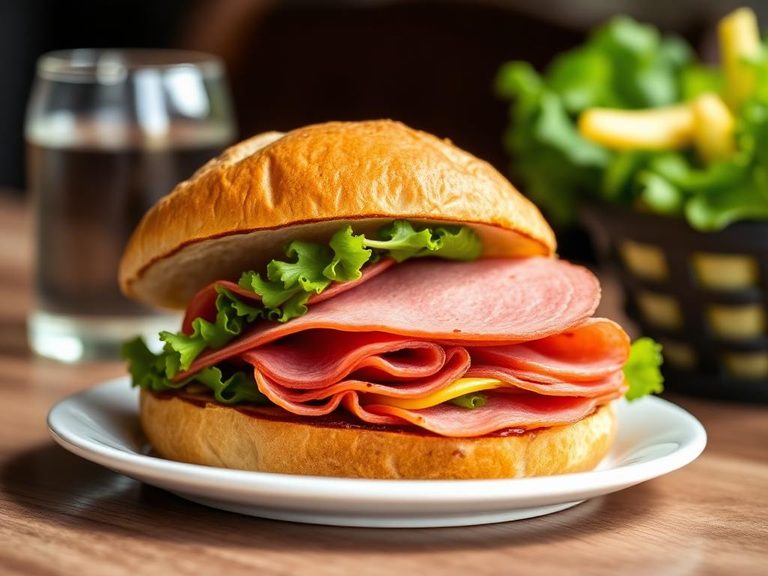
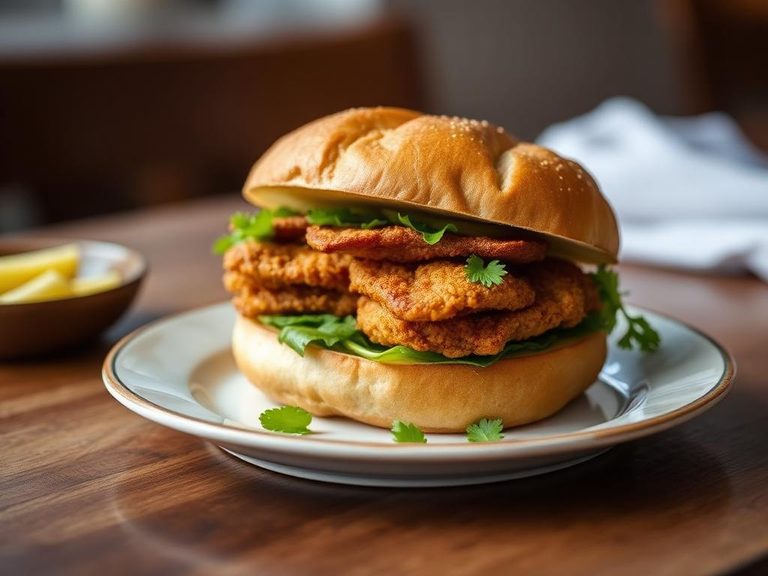
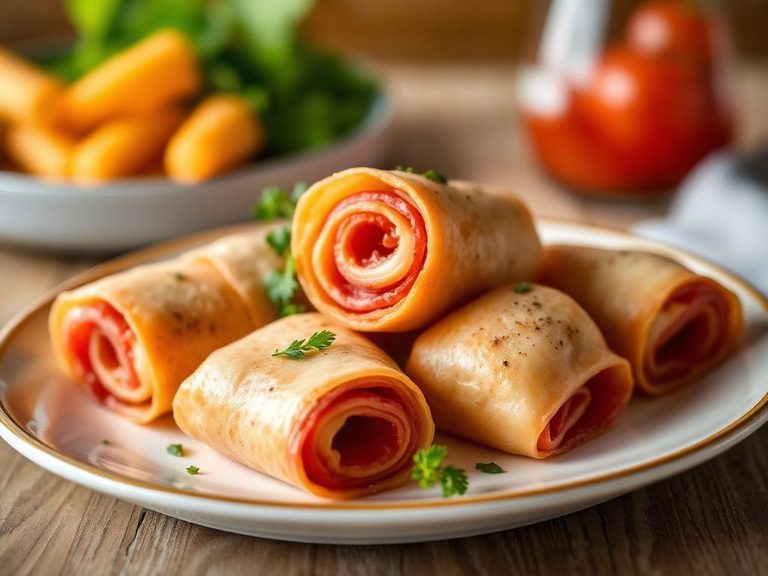
🌍 Where it's eaten
💡 Did you know?
The city of Bologna, Italy, where the original Mortadella comes from, has a law that specifies the exact size of the fat cubes allowed in authentic Mortadella di Bologna.
Full nutrition (scales with serving)
| Water | 55.3 g |
| Energy | 299 kcal |
| Energy | 1250 kj |
| Protein | 10.9 g |
| Total lipid (fat) | 26.1 g |
| Ash | 3.4 g |
| Carbohydrate, by difference | 4.3 g |
| Fiber, total dietary | 0.00 g |
| Total Sugars | 2.0 g |
| Sucrose | 0.00 g |
| Glucose | 1.6 g |
| Fructose | 0.00 g |
| Lactose | 0.00 g |
| Maltose | 0.40 g |
| Galactose | 0.00 g |
| Calcium, Ca | 21.0 mg |
| Iron, Fe | 1.3 mg |
| Magnesium, Mg | 13.0 mg |
| Phosphorus, P | 154 mg |
| Potassium, K | 351 mg |
| Sodium, Na | 1013 mg |
| Zinc, Zn | 1.9 mg |
| Copper, Cu | 0.05 mg |
| Manganese, Mn | 0.04 mg |
| Selenium, Se | 11.6 ug |
| Fluoride, F | 36.0 ug |
| Vitamin C, total ascorbic acid | 15.2 mg |
| Thiamin | 0.03 mg |
| Riboflavin | 0.07 mg |
| Niacin | 2.3 mg |
| Pantothenic acid | 0.39 mg |
| Vitamin B-6 | 0.16 mg |
| Folate, total | 3.0 ug |
| Folic acid | 0.00 ug |
| Folate, food | 3.0 ug |
| Folate, DFE | 3.0 ug |
| Choline, total | 29.7 mg |
| Betaine | 6.1 mg |
| Vitamin B-12 | 1.2 ug |
| Vitamin B-12, added | 0.00 ug |
| Vitamin A, RAE | 19.0 ug |
| Retinol | 17.0 ug |
| Carotene, beta | 11.0 ug |
| Carotene, alpha | 6.0 ug |
| Cryptoxanthin, beta | 11.0 ug |
| Vitamin A, IU | 90.0 iu |
| Lycopene | 11.0 ug |
| Lutein + zeaxanthin | 0.00 ug |
| Vitamin E (alpha-tocopherol) | 0.56 mg |
| Vitamin E, added | 0.00 mg |
| Tocopherol, beta | 0.11 mg |
| Tocopherol, gamma | 0.31 mg |
| Tocopherol, delta | 0.01 mg |
| Tocotrienol, alpha | 0.03 mg |
| Tocotrienol, beta | 0.03 mg |
| Tocotrienol, gamma | 0.01 mg |
| Tocotrienol, delta | 0.00 mg |
| Vitamin D (D2 + D3), International Units | 28.0 iu |
| Vitamin D (D2 + D3) | 0.70 ug |
| Vitamin K (phylloquinone) | 2.4 ug |
| Vitamin K (Menaquinone-4) | 6.3 ug |
| Alcohol, ethyl | 0.00 g |
| Caffeine | 0.00 mg |
| Theobromine | 0.00 mg |
Fat & fatty acid profile (per 100g)
| Fatty acids, total saturated | 10.5 g |
| SFA 4:0 | 0.00 g |
| SFA 6:0 | 0.00 g |
| SFA 8:0 | 0.00 g |
| SFA 10:0 | 0.03 g |
| SFA 12:0 | 0.02 g |
| SFA 14:0 | 0.82 g |
| SFA 15:0 | 0.12 g |
| SFA 16:0 | 5.9 g |
| SFA 17:0 | 0.28 g |
| SFA 18:0 | 3.3 g |
| SFA 20:0 | 0.03 g |
| SFA 22:0 | 0.01 g |
| SFA 24:0 | 0.00 g |
| Fatty acids, total monounsaturated | 12.2 g |
| MUFA 14:1 | 0.25 g |
| MUFA 15:1 | 0.00 g |
| MUFA 16:1 | 1.1 g |
| MUFA 16:1 c | 1.0 g |
| MUFA 17:1 | 0.21 g |
| MUFA 18:1 | 10.4 g |
| MUFA 18:1 c | 9.3 g |
| MUFA 20:1 | 0.11 g |
| MUFA 22:1 | 0.09 g |
| MUFA 22:1 c | 0.09 g |
| MUFA 24:1 c | 0.01 g |
| Fatty acids, total polyunsaturated | 1.2 g |
| PUFA 18:2 | 0.98 g |
| PUFA 18:2 n-6 c,c | 0.66 g |
| PUFA 18:2 CLAs | 0.16 g |
| PUFA 18:3 | 0.10 g |
| PUFA 18:3 n-3 c,c,c (ALA) | 0.10 g |
| PUFA 18:3 n-6 c,c,c | 0.00 g |
| PUFA 18:4 | 0.00 g |
| PUFA 20:2 n-6 c,c | 0.01 g |
| PUFA 20:3 | 0.03 g |
| PUFA 20:3 n-3 | 0.00 g |
| PUFA 20:3 n-6 | 0.02 g |
| PUFA 20:4 | 0.03 g |
| PUFA 20:5 n-3 (EPA) | 0.00 g |
| PUFA 22:4 | 0.01 g |
| PUFA 22:5 n-3 (DPA) | 0.01 g |
| PUFA 22:6 n-3 (DHA) | 0.00 g |
| Fatty acids, total trans | 1.4 g |
| Fatty acids, total trans-monoenoic | 1.2 g |
| TFA 16:1 t | 0.08 g |
| TFA 18:1 t | 1.1 g |
| TFA 22:1 t | 0.00 g |
| TFA 18:2 t not further defined | 0.16 g |
| Fatty acids, total trans-polyenoic | 0.16 g |
| Cholesterol | 57.0 mg |
Amino acid profile (per 100g)
| Tryptophan | 0.12 g |
| Threonine | 0.51 g |
| Isoleucine | 0.51 g |
| Leucine | 0.94 g |
| Lysine | 1.0 g |
| Methionine | 0.29 g |
| Cystine | 0.11 g |
| Phenylalanine | 0.44 g |
| Tyrosine | 0.41 g |
| Valine | 0.55 g |
| Arginine | 0.74 g |
| Histidine | 0.41 g |
| Alanine | 0.68 g |
| Aspartic acid | 1.1 g |
| Glutamic acid | 1.8 g |
| Glycine | 0.54 g |
| Proline | 0.49 g |
| Serine | 0.45 g |
| Hydroxyproline | 0.07 g |
FAQ
Is beef bologna the same as Mortadella?
They are similar but distinct. Mortadella is the Italian original, often with visible fat cubes and pistachios, while American-style beef bologna is typically a smoother, more finely emulsified sausage with a different spice profile.
Can I eat bologna on a low-carb diet?
Yes, it's very low in carbs (about 4g per 100g), making it suitable for low-carb and keto diets. However, its high fat and calorie content means portion control is essential.
Why is bologna sometimes called 'mystery meat'?
This is a colloquial term stemming from its use in institutional settings like school cafeterias, where its uniform, pasty texture led to jokes about its unknown origins. In reality, it's made from specific cuts of beef and pork.