

Yogurt, Greek, vanilla, nonfat
Whole food · Dairy and Egg Products
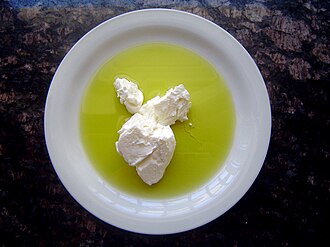
Photo: Wikipedia
This is a thick, strained yogurt with a velvety, spoonable texture and a sweet, creamy vanilla flavor. It packs a significant protein punch while remaining virtually fat-free, making it a staple for high-protein, low-calorie diets. The nonfat formulation relies on the yogurt's natural tang and vanilla to deliver a rich mouthfeel without the heaviness of cream.
Calorie split: 45% protein · 53% carbs · 2% fat
↓ Full nutrition💚 Why it's loved
People love it for its thick, indulgent texture that feels like a dessert but functions as a nutritious snack or breakfast. Its mild vanilla flavor makes it incredibly versatile, easily pairing with fruits, granolas, or even being used in savory dips and baking.
⚠️ Watch-outs & how to enjoy it better
The added sugars (around 10g per 100g) can cause a blood-sugar spike, which is a concern for those monitoring glucose levels. To counteract this, pair it with high-fiber foods like berries or nuts to slow sugar absorption, or choose a plain, unsweetened version and add your own vanilla extract. Some may also find the tanginess too sharp if they prefer very sweet yogurts.
Key benefits
- Excellent source of high-quality protein for muscle maintenance
- Very low in fat and calories, ideal for weight management
- Rich in calcium and probiotics for bone and gut health
- Provides a quick energy boost from natural and added sugars
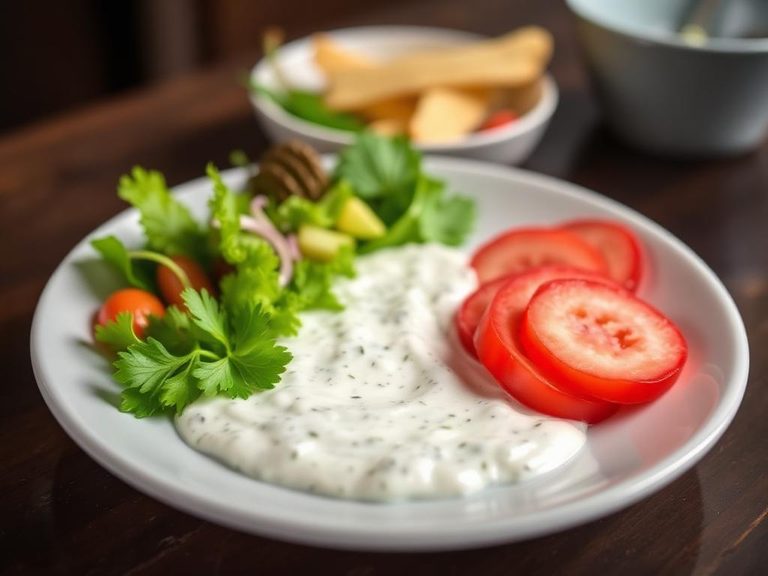
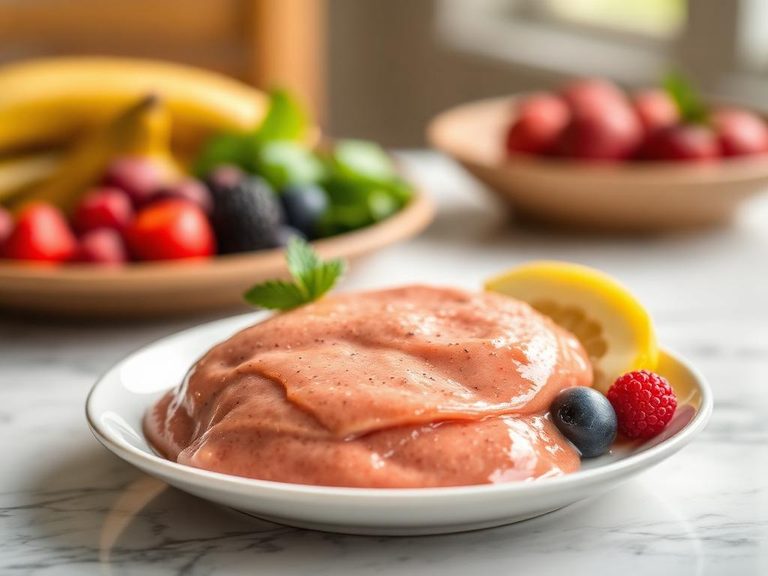
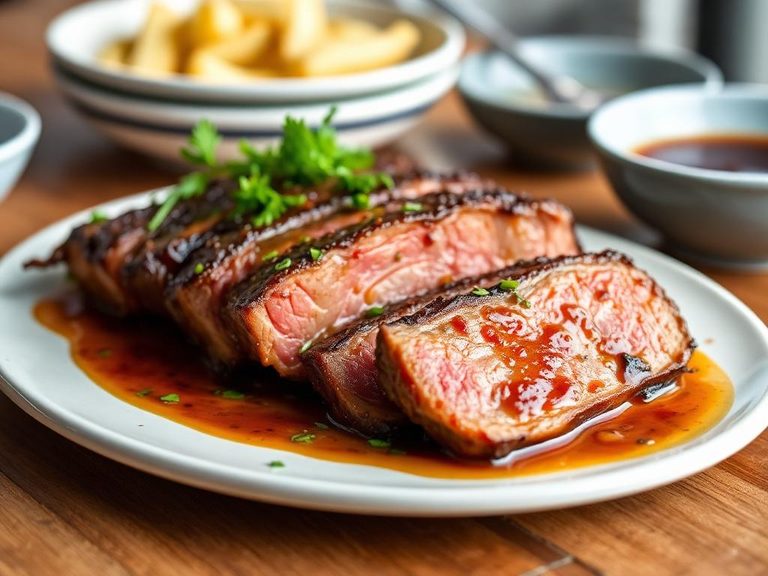
🍽️ Popular dishes



🌍 Where it's eaten
💡 Did you know?
The straining process that gives Greek yogurt its thick texture is what originally made it a practical food for ancient farmers—it was a way to preserve milk by removing the liquid whey, which could spoil quickly.
Full nutrition (USDA data · scales with serving)
| Water | 80.3 g |
| Energy | 78.0 kcal |
| Energy | 325 kj |
| Protein | 8.6 g |
| Total lipid (fat) | 0.18 g |
| Ash | 0.55 g |
| Carbohydrate, by difference | 10.4 g |
| Fiber, total dietary | 0.50 g |
| Total Sugars | 9.5 g |
| Sucrose | 4.1 g |
| Glucose | 0.32 g |
| Fructose | 1.9 g |
| Lactose | 2.6 g |
| Maltose | 0.00 g |
| Galactose | 0.60 g |
| Starch | 0.00 g |
| Calcium, Ca | 99.0 mg |
| Iron, Fe | 0.04 mg |
| Magnesium, Mg | 10.0 mg |
| Phosphorus, P | 119 mg |
| Potassium, K | 123 mg |
| Sodium, Na | 34.0 mg |
| Zinc, Zn | 0.46 mg |
| Copper, Cu | 0.02 mg |
| Manganese, Mn | 0.01 mg |
| Selenium, Se | 9.7 ug |
| Vitamin C, total ascorbic acid | 0.00 mg |
| Thiamin | 0.04 mg |
| Riboflavin | 0.24 mg |
| Niacin | 0.20 mg |
| Pantothenic acid | 0.39 mg |
| Vitamin B-6 | 0.05 mg |
| Folate, total | 11.0 ug |
| Folic acid | 0.00 ug |
| Folate, food | 11.0 ug |
| Folate, DFE | 11.0 ug |
| Choline, total | 15.2 mg |
| Vitamin B-12 | 0.64 ug |
| Vitamin B-12, added | 0.00 ug |
| Vitamin A, RAE | 0.00 ug |
| Retinol | 0.00 ug |
| Carotene, beta | 0.00 ug |
| Carotene, alpha | 0.00 ug |
| Cryptoxanthin, beta | 0.00 ug |
| Vitamin A, IU | 0.00 iu |
| Lycopene | 0.00 ug |
| Lutein + zeaxanthin | 0.00 ug |
| Vitamin E (alpha-tocopherol) | 0.02 mg |
| Vitamin E, added | 0.00 mg |
| Vitamin D (D2 + D3), International Units | 35.0 iu |
| Vitamin D (D2 + D3) | 0.90 ug |
| Vitamin D2 (ergocalciferol) | 0.00 ug |
| Vitamin D3 (cholecalciferol) | 0.90 ug |
| Vitamin K (phylloquinone) | 0.10 ug |
| Alcohol, ethyl | 0.00 g |
| Caffeine | 0.00 mg |
| Theobromine | 0.00 mg |
Fat & fatty acid profile (per 100g)
| Fatty acids, total saturated | 0.13 g |
| SFA 4:0 | 0.01 g |
| SFA 6:0 | 0.00 g |
| SFA 8:0 | 0.00 g |
| SFA 10:0 | 0.02 g |
| SFA 12:0 | 0.01 g |
| SFA 14:0 | 0.02 g |
| SFA 15:0 | 0.00 g |
| SFA 16:0 | 0.05 g |
| SFA 17:0 | 0.00 g |
| SFA 18:0 | 0.02 g |
| SFA 20:0 | 0.00 g |
| SFA 22:0 | 0.00 g |
| SFA 24:0 | 0.00 g |
| Fatty acids, total monounsaturated | 0.04 g |
| MUFA 14:1 | 0.00 g |
| MUFA 15:1 | 0.00 g |
| MUFA 16:1 | 0.00 g |
| MUFA 16:1 c | 0.00 g |
| MUFA 17:1 | 0.00 g |
| MUFA 18:1 | 0.04 g |
| MUFA 18:1 c | 0.03 g |
| MUFA 20:1 | 0.00 g |
| MUFA 22:1 | 0.00 g |
| MUFA 22:1 c | 0.00 g |
| MUFA 24:1 c | 0.00 g |
| Fatty acids, total polyunsaturated | 0.01 g |
| PUFA 18:2 | 0.01 g |
| PUFA 18:2 n-6 c,c | 0.01 g |
| PUFA 18:2 CLAs | 0.00 g |
| PUFA 18:3 | 0.00 g |
| PUFA 18:3 n-3 c,c,c (ALA) | 0.00 g |
| PUFA 18:3 n-6 c,c,c | 0.00 g |
| PUFA 18:3i | 0.00 g |
| PUFA 18:4 | 0.00 g |
| PUFA 20:2 n-6 c,c | 0.00 g |
| PUFA 20:3 | 0.00 g |
| PUFA 20:3 n-3 | 0.00 g |
| PUFA 20:3 n-6 | 0.00 g |
| PUFA 20:4 | 0.00 g |
| PUFA 20:5 n-3 (EPA) | 0.00 g |
| PUFA 22:4 | 0.00 g |
| PUFA 22:5 n-3 (DPA) | 0.00 g |
| PUFA 22:6 n-3 (DHA) | 0.00 g |
| Fatty acids, total trans | 0.00 g |
| Fatty acids, total trans-monoenoic | 0.00 g |
| TFA 16:1 t | 0.00 g |
| TFA 18:1 t | 0.00 g |
| TFA 22:1 t | 0.00 g |
| TFA 18:2 t not further defined | 0.00 g |
| Fatty acids, total trans-polyenoic | 0.00 g |
| Cholesterol | 3.0 mg |
Amino acid profile (per 100g)
| Tryptophan | 0.03 g |
| Threonine | 0.20 g |
| Isoleucine | 0.27 g |
| Leucine | 0.50 g |
| Lysine | 0.44 g |
| Methionine | 0.14 g |
| Cystine | 0.04 g |
| Phenylalanine | 0.27 g |
| Tyrosine | 0.25 g |
| Valine | 0.41 g |
| Arginine | 0.15 g |
| Histidine | 0.12 g |
| Alanine | 0.21 g |
| Aspartic acid | 0.39 g |
| Glutamic acid | 0.96 g |
| Glycine | 0.12 g |
| Proline | 0.58 g |
| Serine | 0.30 g |
FAQ
Is nonfat Greek yogurt as nutritious as full-fat?
Yes, it retains the same high protein and calcium content. The main difference is the fat and calorie count; nonfat versions are lower in calories and fat-soluble vitamins but are still a nutrient-dense choice.
Can I use vanilla Greek yogurt in cooking?
Absolutely. It's excellent in marinades to tenderize meat, in baking to add moisture and protein, or as a base for creamy sauces. However, its sweetness may need to be balanced in savory dishes.
How does it differ from regular yogurt?
Greek yogurt is strained to remove whey, resulting in a thicker texture and higher protein concentration per serving. Regular yogurt is thinner and often has less protein and more sugar.
Nutrient density (calculated · NRF9.3)
Nutrient Rich Foods index: beneficial nutrients (protein, fiber, vitamins, minerals) minus saturated fat, added sugar & sodium, per 100 kcal.
NRF9.3 index — Fulgoni, Keast & Drewnowski, 2009. Computed from USDA nutrients.
Weight-loss friendliness (composite index)
Energy density 0.78 kcal/g · 44% calories from protein · 0.5 g fiber · 9.5 g sugar per 100 g.
Composite of energy density (Rolls et al., 1999), protein & fiber satiety, minus sugar. A calculated heuristic — ranks satiety-per-calorie, not a clinical measure.
Dietary load (calculated from USDA values)
Potential renal acid load. Positive = acid-forming, negative = alkaline-forming.
Sodium-to-potassium ratio: 0.28 (lower is better — aim for ≤ 1)
Sodium:potassium per WHO potassium guidance. Computed from USDA nutrients.