

Marinades for Meat
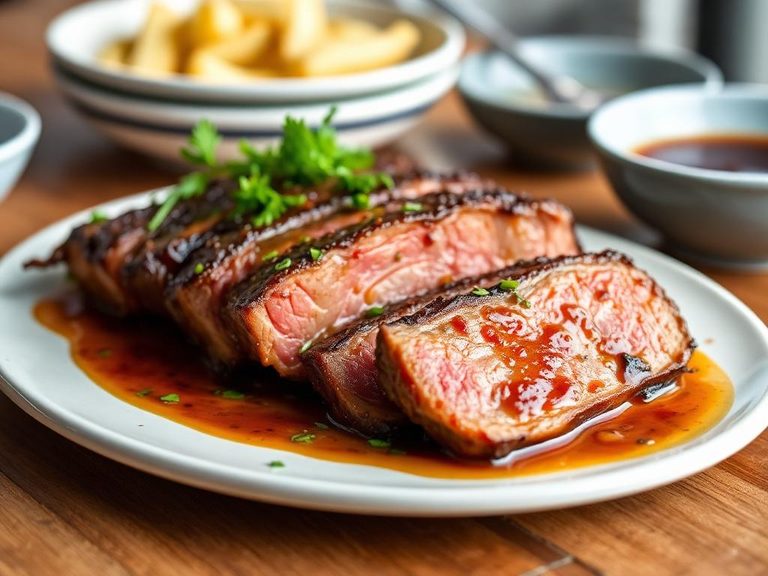
Marinades for meat are flavorful liquid mixtures used to tenderize and infuse meats with taste before cooking. They typically combine an acidic component like citrus juice or vinegar, oil, and a variety of herbs and spices. This culinary technique is found worldwide, with distinct regional variations from Asian soy-based marinades to Latin American citrus and herb blends.
🍳 View the full Marinades for Meat recipe →
🍽️ Nutrition at a glance
The nutritional profile of a marinade itself is generally low in calories and carbohydrates, with most of its nutrients coming from the herbs and spices used. The primary contribution to the dish's nutrition comes from the meat it's applied to, which is typically a significant source of protein and fat.
Nutrition breakdown
| Calories | 85 kcal |
| Protein | 1.5 g |
| Carbs | 12 g |
| Fat | 3 g |
| Fiber | 1 g |
| Sugar | 8 g |
| Sodium | 980 mg |
| Sodium | 980 mg |
| Potassium | 120 mg |
| Vitamin C | 3 mg |
| Iron | 0.5 mg |
| Calcium | 20 mg |
| Vitamin B6 | 0.1 mg |
| Magnesium | 10 mg |
| Manganese | 0.2 mg |
Per 1/2 cup (120 g) · estimated, varies by recipe
💡 What's interesting
Culturally, marinades are a fascinating reflection of local geography and history, using available ingredients like tropical fruits, fermented sauces, or native herbs to preserve and flavor food. Nutritionally, the acidic or enzymatic components in some marinades can help break down tough muscle fibers, making the meat more tender and potentially easier to digest.
🍽️ Related dishes


AI estimate may be inaccurate · Terms