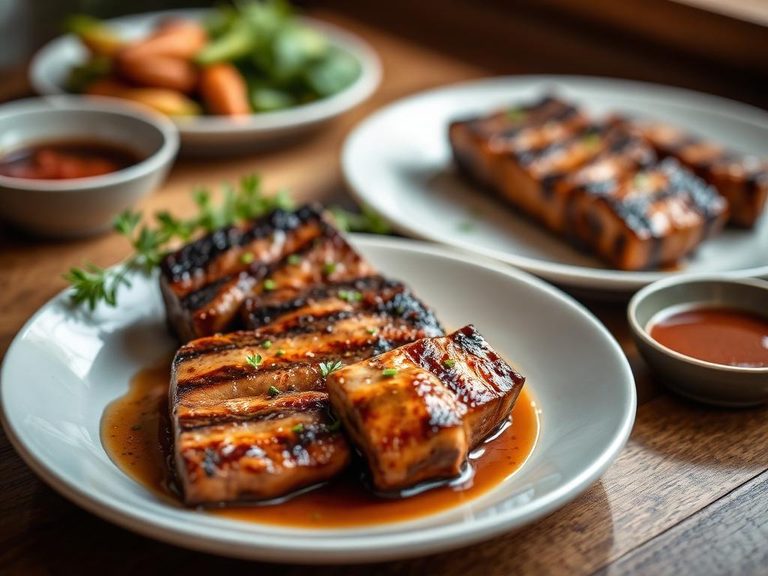
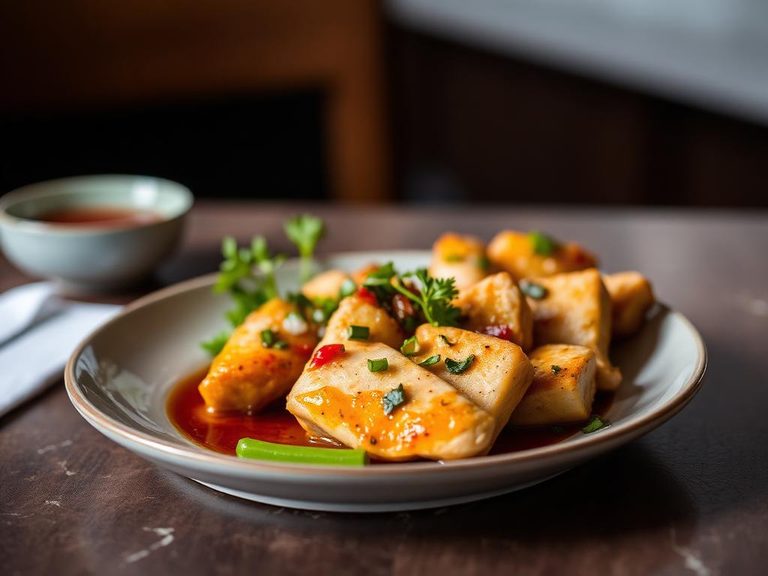
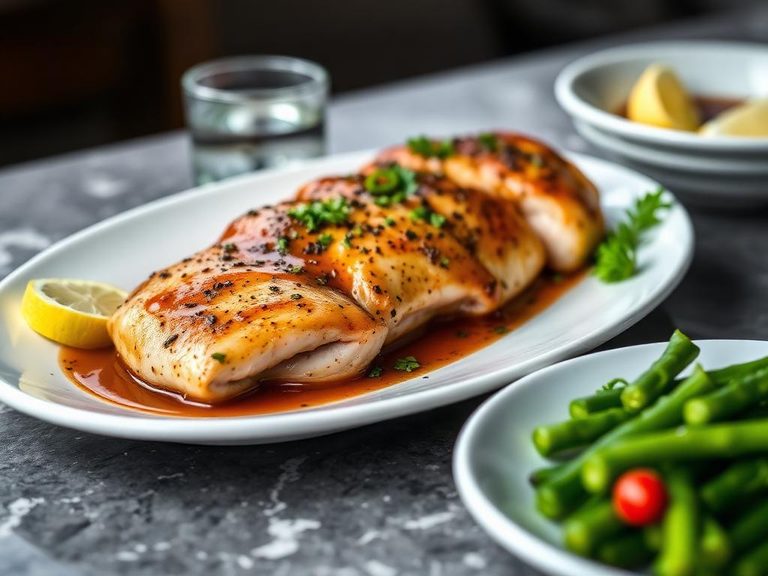
Marinades for meats and tofu
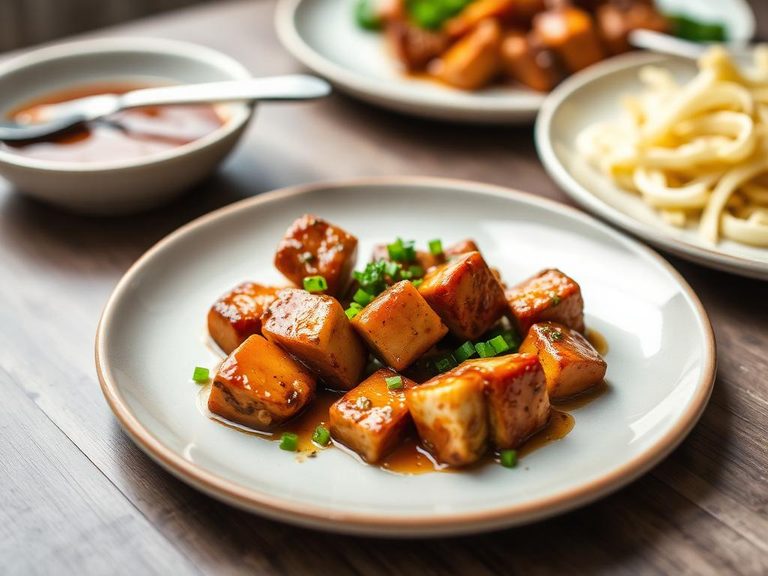
Marinades are flavorful liquid mixtures used to tenderize and infuse meats and tofu with taste before cooking. They typically combine an acid (like vinegar, citrus juice, or wine), oil, and a blend of herbs, spices, and aromatics. While used globally, the practice is a cornerstone in many cuisines, from Asian soy-based marinades to Latin American citrus and herb blends.
🍽️ Nutrition at a glance
A marinade itself is generally low in calories, with most of its nutritional value coming from the oil (healthy fats) and herbs. It contributes minimal carbs and protein, but can be high in sodium depending on the salt or soy sauce content. A typical serving of the liquid marinade might add around 40-80 calories.
Nutrition breakdown
| Calories | 65 kcal |
| Protein | 0.5 g |
| Carbs | 2 g |
| Fat | 6 g |
| Fiber | 0.3 g |
| Sugar | 1 g |
| Sodium | 480 mg |
| Vitamin C | 4 mg |
| Vitamin K | 8 mcg |
| Potassium | 45 mg |
| Manganese | 0.1 mg |
| Iron | 0.3 mg |
| Vitamin B6 | 0.02 mg |
| Folate | 5 mcg |
| Magnesium | 3 mg |
Per 1/4 cup (60 g) · estimated, varies by recipe
💡 What's interesting
Marinades work through a combination of science and art; the acid helps break down tough muscle fibers, while the oil and salt help transfer fat-soluble flavors deep into the food. Culturally, they are a signature of regional identity, with recipes often passed down through generations.