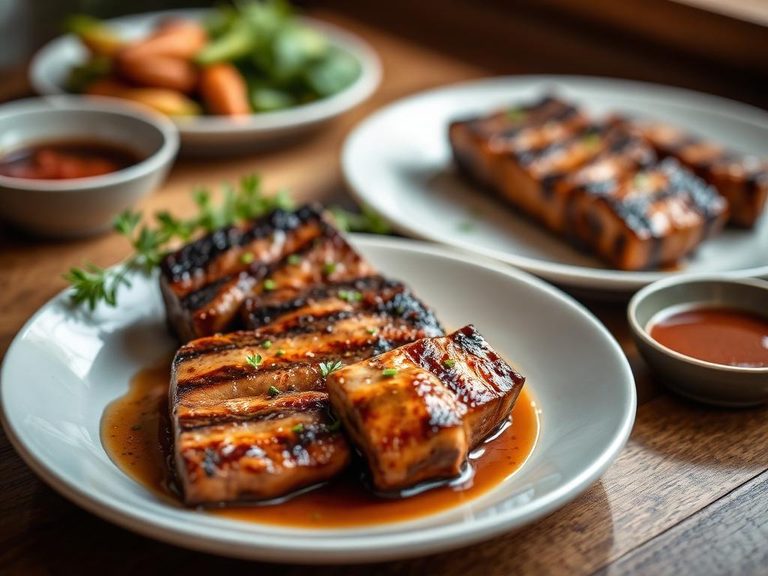
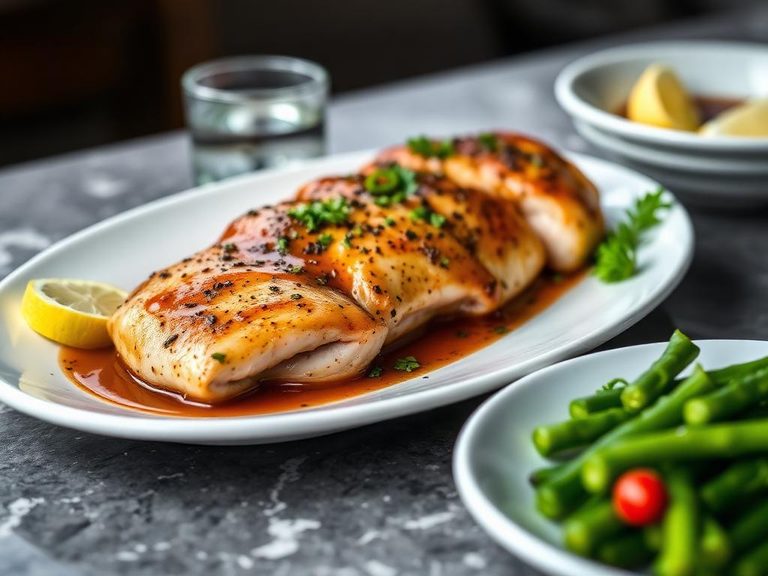
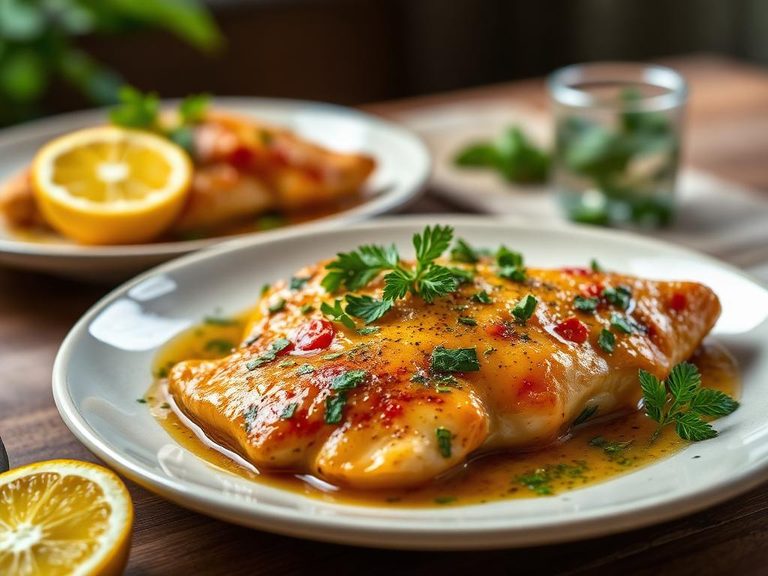
Marinades for grilled meats and fish
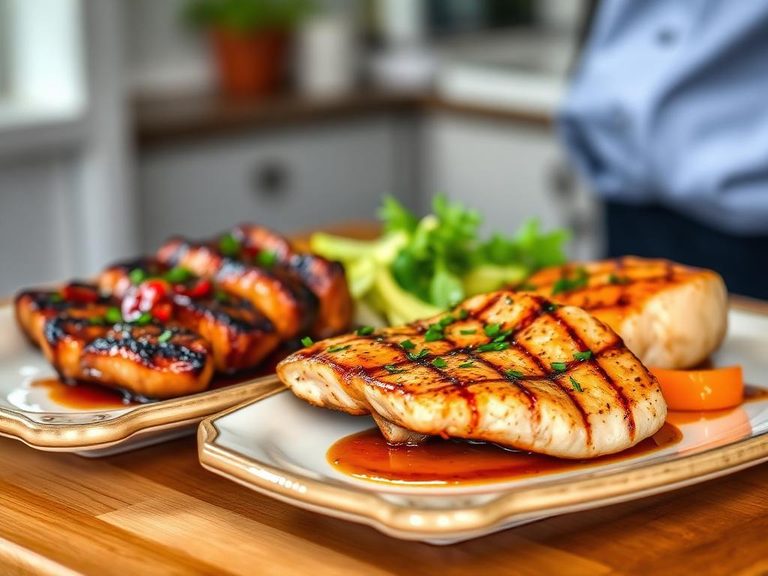
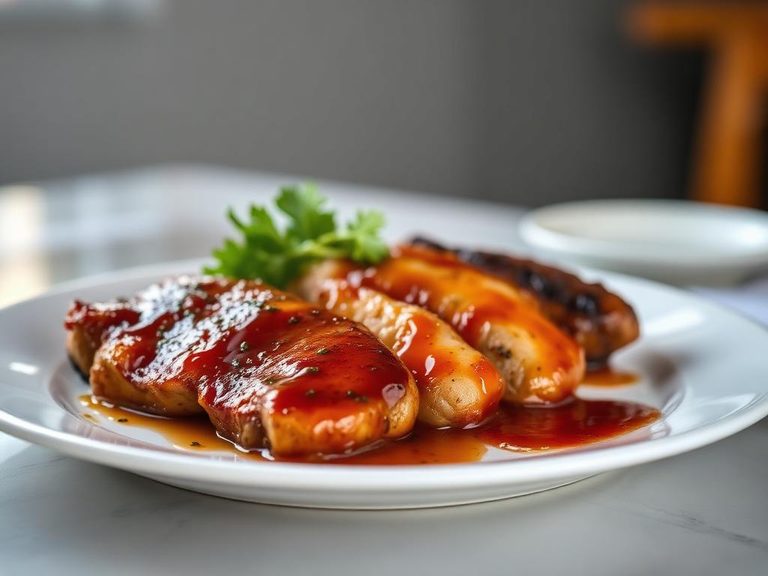
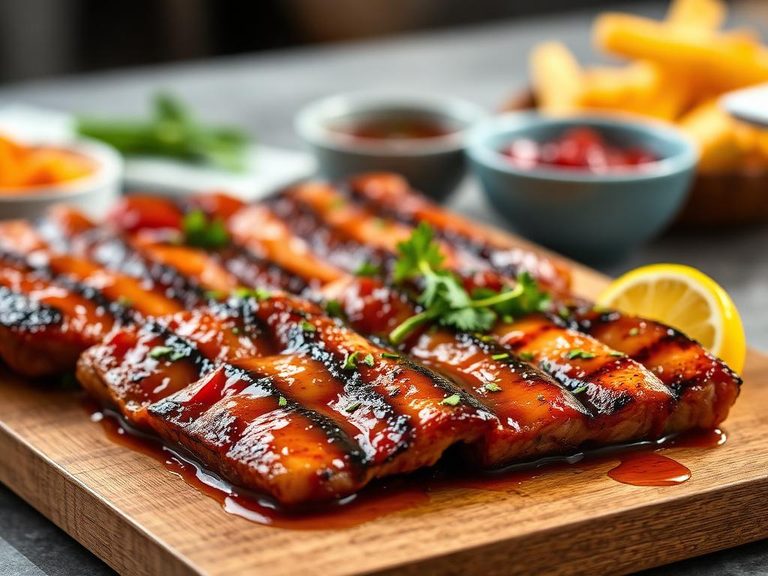
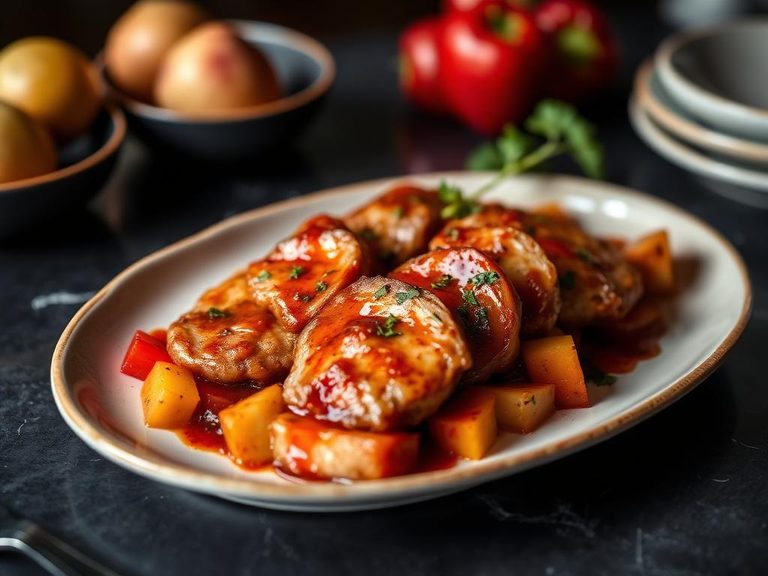
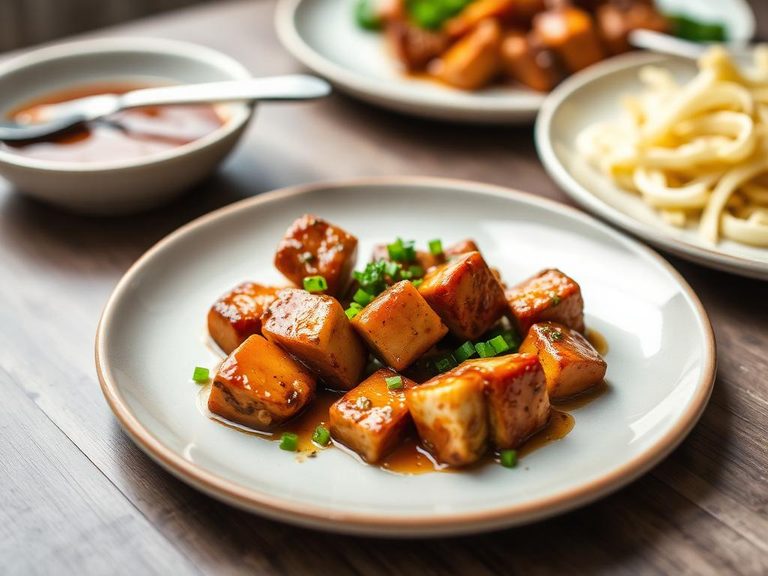
Marinades are flavorful liquid mixtures used to tenderize and season meats and fish before grilling. They typically combine an acidic component like citrus juice or vinegar, oil, and a blend of herbs, spices, and aromatics. While used globally, specific profiles like Caribbean jerk or Argentinian chimichurri have distinct regional identities.
🍽️ Nutrition at a glance
Marinades themselves are generally low in carbohydrates and protein but can be moderate in fat due to oil content. The key nutrients they provide come from their ingredients, such as vitamin C from citrus, antioxidants from herbs, and sodium from salt.
Nutrition breakdown
| Calories | 120 kcal |
| Protein | 0 g |
| Carbs | 2 g |
| Fat | 14 g |
| Fiber | 0.5 g |
| Sugar | 1 g |
| Sodium | 400 mg |
| Vitamin C | 8 mg |
| Vitamin K | 30 mcg |
| Potassium | 45 mg |
| Iron | 0.5 mg |
| Manganese | 0.2 mg |
| Sodium | 400 mg |
Per 1/4 cup (60 g) of a typical oil-and-herb based marinade · estimated, varies by recipe
💡 What's interesting
The acidic component in a marinade (like citrus or vinegar) helps break down protein fibers on the surface of the meat, aiding in tenderization and flavor absorption, while the oil helps transfer fat-soluble flavors.