

Turkey, whole, wing, meat only, cooked, roasted
Whole food · Poultry Products
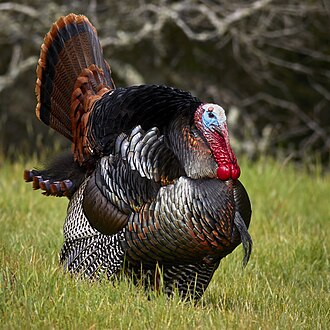
Photo: Wikipedia
This is the lean, tender meat from a roasted turkey wing, prized for its mild, savory flavor and satisfying, slightly chewy texture. It's a powerhouse of pure protein, with virtually no fat or carbohydrates, making it a staple for clean-eating and high-protein diets. The meat is typically moist when cooked properly, with a subtle, poultry sweetness that pairs well with bold seasonings.
Calorie split: 87% protein · 0% carbs · 13% fat
↓ Full nutrition💚 Why it's loved
People love it for its versatile, mild flavor that acts as a perfect canvas for herbs, spices, and marinades. It's a culturally significant centerpiece for holidays like Thanksgiving in the U.S., symbolizing family gatherings and tradition.
⚠️ Watch-outs & how to enjoy it better
The meat can become dry and tough if overcooked, which is a common pitfall. To counteract this, use a meat thermometer to cook to 165°F (74°C), and consider brining or marinating beforehand to lock in moisture. Those watching sodium intake should be cautious with pre-seasoned or deli-style turkey wings; opt for plain and season yourself.
Key benefits
- Excellent source of complete protein for muscle maintenance
- Extremely low in fat and carbohydrates
- Rich in B vitamins like niacin and B6 for energy metabolism
- Provides essential minerals like selenium and phosphorus
- Naturally gluten-free and sugar-free
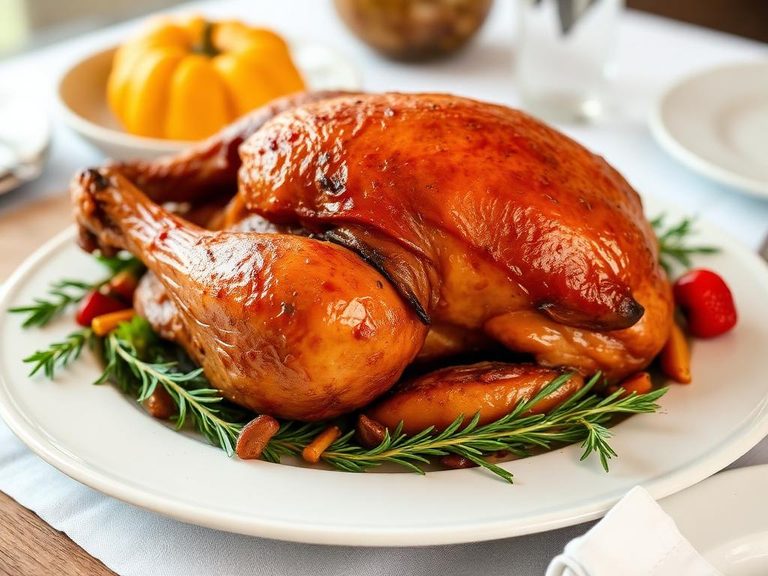
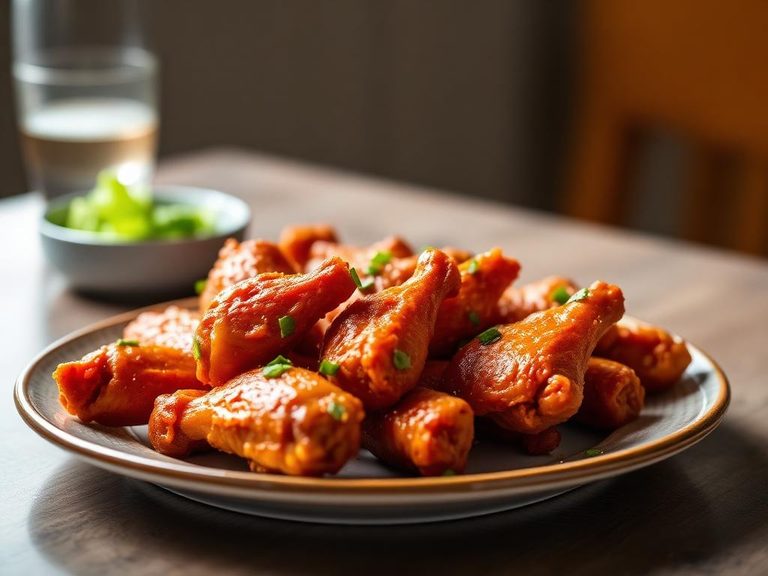
🍽️ Popular dishes



🌍 Where it's eaten
💡 Did you know?
A single roasted turkey wing can provide over 50 grams of protein, which is more than the recommended daily intake for many adults.
Full nutrition (USDA data · scales with serving)
| Water | 67.9 g |
| Energy | 147 kcal |
| Energy | 617 kj |
| Protein | 30.1 g |
| Total lipid (fat) | 2.1 g |
| Ash | 1.2 g |
| Carbohydrate, by difference | 0.00 g |
| Fiber, total dietary | 0.00 g |
| Total Sugars | 0.00 g |
| Calcium, Ca | 9.0 mg |
| Iron, Fe | 0.71 mg |
| Magnesium, Mg | 32.0 mg |
| Phosphorus, P | 230 mg |
| Potassium, K | 249 mg |
| Sodium, Na | 99.0 mg |
| Zinc, Zn | 1.7 mg |
| Copper, Cu | 0.06 mg |
| Manganese, Mn | 0.01 mg |
| Selenium, Se | 30.2 ug |
| Vitamin C, total ascorbic acid | 0.00 mg |
| Thiamin | 0.04 mg |
| Riboflavin | 0.20 mg |
| Niacin | 11.8 mg |
| Pantothenic acid | 0.90 mg |
| Vitamin B-6 | 0.81 mg |
| Folate, total | 10.0 ug |
| Folic acid | 0.00 ug |
| Folate, food | 10.0 ug |
| Folate, DFE | 10.0 ug |
| Choline, total | 84.7 mg |
| Betaine | 6.2 mg |
| Vitamin B-12 | 0.81 ug |
| Vitamin B-12, added | 0.00 ug |
| Vitamin A, RAE | 3.0 ug |
| Retinol | 3.0 ug |
| Carotene, beta | 0.00 ug |
| Carotene, alpha | 0.00 ug |
| Cryptoxanthin, beta | 0.00 ug |
| Vitamin A, IU | 11.0 iu |
| Lycopene | 0.00 ug |
| Lutein + zeaxanthin | 0.00 ug |
| Vitamin E (alpha-tocopherol) | 0.06 mg |
| Vitamin E, added | 0.00 mg |
| Tocopherol, beta | 0.00 mg |
| Tocopherol, gamma | 0.03 mg |
| Tocopherol, delta | 0.01 mg |
| Tocotrienol, alpha | 0.00 mg |
| Tocotrienol, beta | 0.00 mg |
| Tocotrienol, gamma | 0.03 mg |
| Tocotrienol, delta | 0.00 mg |
| Vitamin D (D2 + D3), International Units | 10.0 iu |
| Vitamin D (D2 + D3) | 0.30 ug |
| Vitamin D3 (cholecalciferol) | 0.30 ug |
| Vitamin K (phylloquinone) | 0.00 ug |
| Vitamin K (Dihydrophylloquinone) | 0.00 ug |
| Alcohol, ethyl | 0.00 g |
| Caffeine | 0.00 mg |
| Theobromine | 0.00 mg |
Fat & fatty acid profile (per 100g)
| Fatty acids, total saturated | 0.59 g |
| SFA 4:0 | 0.00 g |
| SFA 6:0 | 0.00 g |
| SFA 8:0 | 0.00 g |
| SFA 10:0 | 0.00 g |
| SFA 12:0 | 0.01 g |
| SFA 14:0 | 0.02 g |
| SFA 15:0 | 0.00 g |
| SFA 16:0 | 0.37 g |
| SFA 17:0 | 0.01 g |
| SFA 18:0 | 0.18 g |
| SFA 20:0 | 0.00 g |
| SFA 22:0 | 0.00 g |
| SFA 24:0 | 0.00 g |
| Fatty acids, total monounsaturated | 0.63 g |
| MUFA 14:1 | 0.00 g |
| MUFA 15:1 | 0.00 g |
| MUFA 16:1 | 0.06 g |
| MUFA 16:1 c | 0.06 g |
| MUFA 17:1 | 0.00 g |
| MUFA 18:1 | 0.56 g |
| MUFA 18:1 c | 0.54 g |
| MUFA 20:1 | 0.01 g |
| MUFA 22:1 | 0.00 g |
| MUFA 22:1 c | 0.00 g |
| MUFA 24:1 c | 0.00 g |
| Fatty acids, total polyunsaturated | 0.53 g |
| PUFA 18:2 | 0.43 g |
| PUFA 18:2 n-6 c,c | 0.43 g |
| PUFA 18:2 CLAs | 0.00 g |
| PUFA 18:3 | 0.02 g |
| PUFA 18:3 n-3 c,c,c (ALA) | 0.02 g |
| PUFA 18:3 n-6 c,c,c | 0.00 g |
| PUFA 18:4 | 0.00 g |
| PUFA 20:2 n-6 c,c | 0.01 g |
| PUFA 20:3 | 0.01 g |
| PUFA 20:3 n-3 | 0.00 g |
| PUFA 20:3 n-6 | 0.01 g |
| PUFA 20:4 | 0.04 g |
| PUFA 20:5 n-3 (EPA) | 0.00 g |
| PUFA 22:4 | 0.01 g |
| PUFA 22:5 n-3 (DPA) | 0.01 g |
| PUFA 22:6 n-3 (DHA) | 0.00 g |
| Fatty acids, total trans | 0.02 g |
| Fatty acids, total trans-monoenoic | 0.02 g |
| TFA 16:1 t | 0.00 g |
| TFA 18:1 t | 0.02 g |
| TFA 22:1 t | 0.00 g |
| TFA 18:2 t not further defined | 0.00 g |
| Fatty acids, total trans-polyenoic | 0.00 g |
| Cholesterol | 80.0 mg |
Amino acid profile (per 100g)
| Tryptophan | 0.32 g |
| Threonine | 1.1 g |
| Isoleucine | 0.86 g |
| Leucine | 2.1 g |
| Lysine | 2.5 g |
| Methionine | 0.79 g |
| Cystine | 0.28 g |
| Phenylalanine | 0.97 g |
| Tyrosine | 0.90 g |
| Valine | 0.96 g |
| Arginine | 1.7 g |
| Histidine | 0.82 g |
| Alanine | 1.6 g |
| Aspartic acid | 2.4 g |
| Glutamic acid | 4.1 g |
| Glycine | 1.3 g |
| Proline | 1.6 g |
| Serine | 1.2 g |
FAQ
Is turkey wing meat healthier than chicken wing meat?
Generally, yes. Roasted turkey wing meat (meat only) is significantly leaner and lower in fat than chicken wing meat, which includes skin and a higher fat content. It offers a similar protein profile with fewer calories.
How do I keep roasted turkey wing meat from drying out?
Brining the wings in a saltwater solution for a few hours before cooking is highly effective. You can also roast at a moderate temperature (325-350°F / 165-175°C) and baste with pan juices. Always use a meat thermometer to avoid overcooking.
What's the best way to reheat leftover turkey wing meat?
For the best texture, reheat slices or shredded meat in a covered pan with a splash of broth or gravy over medium-low heat. This gently steams the meat, preventing it from becoming rubbery. Avoid the microwave if possible.
Nutrient density (calculated · NRF9.3)
Nutrient Rich Foods index: beneficial nutrients (protein, fiber, vitamins, minerals) minus saturated fat, added sugar & sodium, per 100 kcal.
NRF9.3 index — Fulgoni, Keast & Drewnowski, 2009. Computed from USDA nutrients.
Weight-loss friendliness (composite index)
Energy density 1.47 kcal/g · 82% calories from protein · 0.0 g fiber · 0.0 g sugar per 100 g.
Composite of energy density (Rolls et al., 1999), protein & fiber satiety, minus sugar. A calculated heuristic — ranks satiety-per-calorie, not a clinical measure.
Dietary load (calculated from USDA values)
Potential renal acid load. Positive = acid-forming, negative = alkaline-forming.
Sodium-to-potassium ratio: 0.40 (lower is better — aim for ≤ 1)
Sodium:potassium per WHO potassium guidance. Computed from USDA nutrients.