

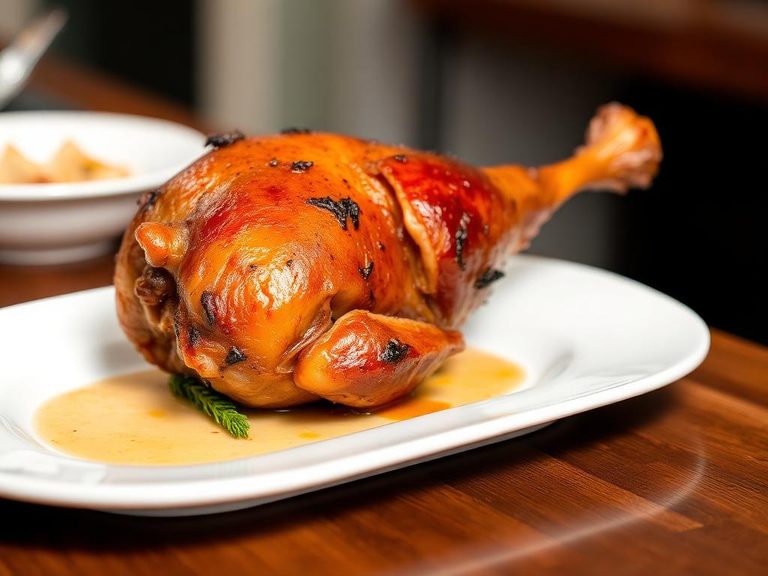
Turkey, whole, dark meat, meat and skin, cooked, roasted
Whole food · Poultry Products

Photo: Wikipedia
Roasted whole dark turkey meat with skin is a succulent, richly flavored cut known for its tender, juicy texture and deep, savory taste. The skin adds a delightful crispness and a layer of flavorful fat that bastes the meat during cooking. Nutritionally, it's a powerhouse of protein with virtually no carbohydrates, making it a cornerstone of high-protein, low-carb diets.
Calorie split: 55% protein · 0% carbs · 45% fat
↓ Full nutrition💚 Why it's loved
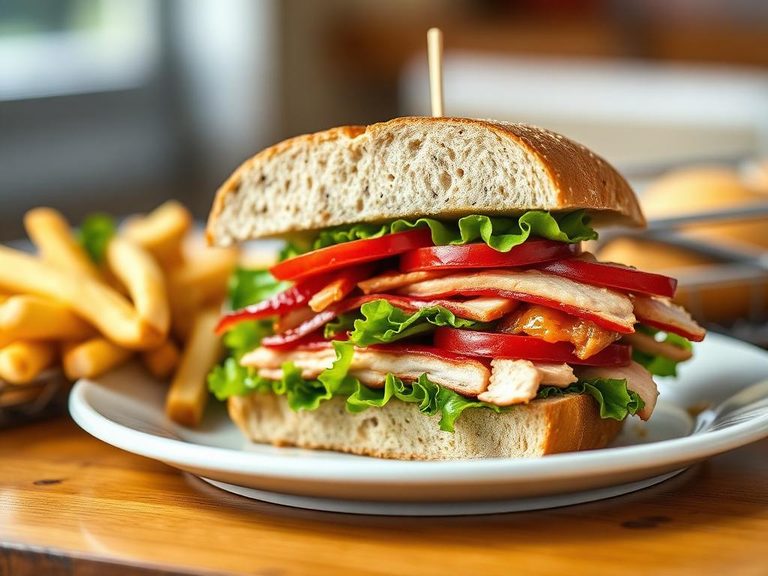
People love it for its robust, savory flavor and satisfyingly tender texture that absorbs herbs and spices beautifully. It's the centerpiece of holiday traditions and a versatile weeknight protein that can be sliced for sandwiches, chopped for salads, or served as a hearty main course.
⚠️ Watch-outs & how to enjoy it better
The skin and dark meat are higher in saturated fat and calories than white meat, which may concern those monitoring fat intake. It can also be high in sodium if heavily seasoned or brined, and is a common poultry allergen. To counteract, opt for skinless portions, use dry rubs instead of salty brines, and ensure it's cooked thoroughly to avoid foodborne illness.
Key benefits
- Excellent source of complete, high-quality protein for muscle maintenance.
- Rich in essential minerals like selenium and zinc.
- Provides B vitamins, notably niacin (B3) and B6, for energy metabolism.
- Contains conjugated linoleic acid (CLA), a fatty acid studied for potential health benefits.
- Zero carbohydrates, making it ideal for ketogenic and low-glycemic diets.
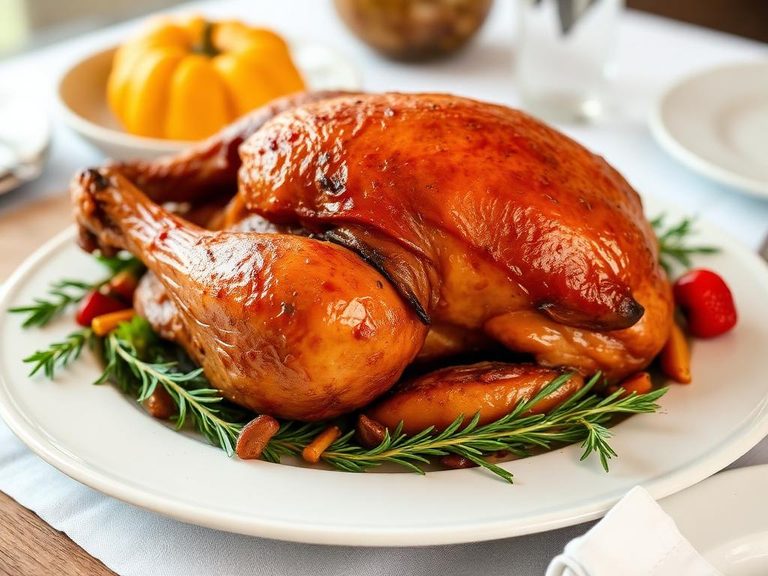
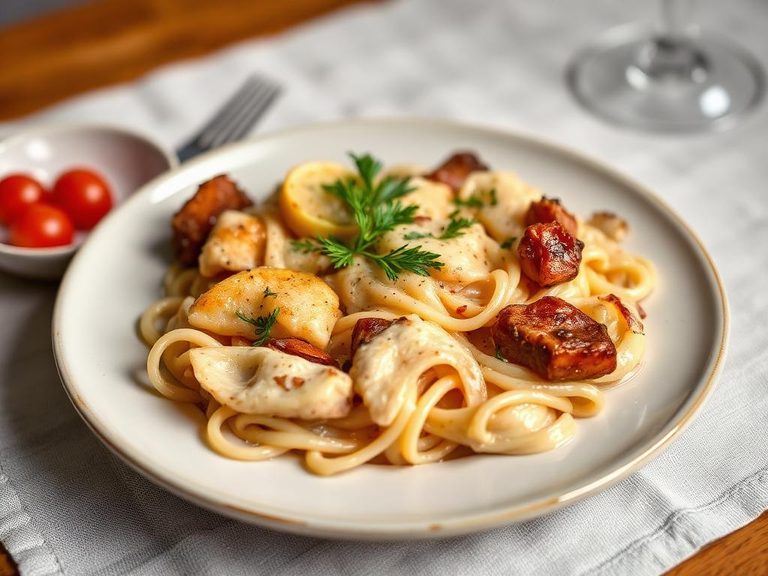
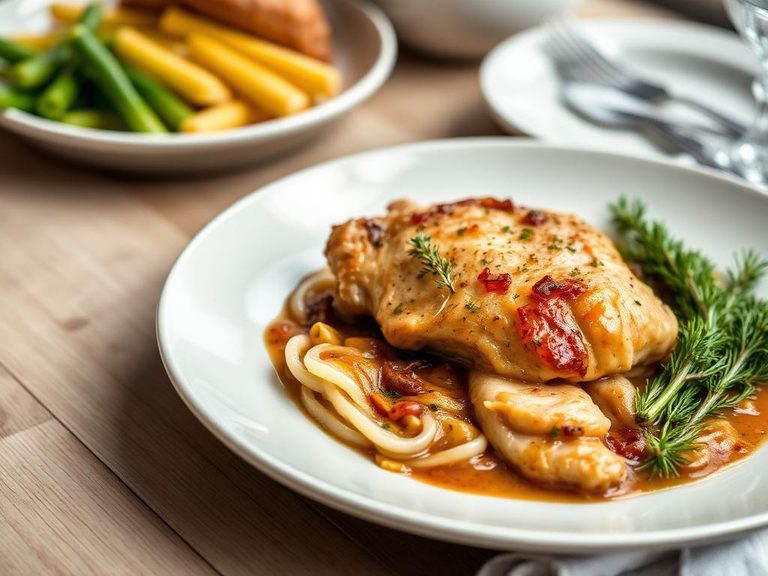
🍽️ Popular dishes
🌍 Where it's eaten
💡 Did you know?
The tradition of eating turkey on Thanksgiving became widespread in the U.S. partly because Charles Dickens' 'A Christmas Carol' popularized turkey as a festive meal, and Abraham Lincoln declared Thanksgiving a national holiday in 1863.
Full nutrition (USDA data · scales with serving)
| Water | 61.7 g |
| Energy | 206 kcal |
| Energy | 864 kj |
| Protein | 27.3 g |
| Total lipid (fat) | 9.9 g |
| Ash | 1.1 g |
| Carbohydrate, by difference | 0.07 g |
| Fiber, total dietary | 0.00 g |
| Total Sugars | 0.00 g |
| Calcium, Ca | 17.0 mg |
| Iron, Fe | 1.4 mg |
| Magnesium, Mg | 27.0 mg |
| Phosphorus, P | 215 mg |
| Potassium, K | 228 mg |
| Sodium, Na | 105 mg |
| Zinc, Zn | 3.4 mg |
| Copper, Cu | 0.13 mg |
| Manganese, Mn | 0.02 mg |
| Selenium, Se | 30.2 ug |
| Vitamin C, total ascorbic acid | 0.00 mg |
| Thiamin | 0.06 mg |
| Riboflavin | 0.36 mg |
| Niacin | 7.1 mg |
| Pantothenic acid | 1.0 mg |
| Vitamin B-6 | 0.43 mg |
| Folate, total | 9.0 ug |
| Folic acid | 0.00 ug |
| Folate, food | 9.0 ug |
| Folate, DFE | 9.0 ug |
| Choline, total | 93.2 mg |
| Betaine | 0.50 mg |
| Vitamin B-12 | 1.7 ug |
| Vitamin B-12, added | 0.00 ug |
| Vitamin A, RAE | 14.0 ug |
| Retinol | 14.0 ug |
| Carotene, beta | 0.00 ug |
| Carotene, alpha | 0.00 ug |
| Cryptoxanthin, beta | 0.00 ug |
| Vitamin A, IU | 47.0 iu |
| Lycopene | 0.00 ug |
| Lutein + zeaxanthin | 0.00 ug |
| Vitamin E (alpha-tocopherol) | 0.08 mg |
| Vitamin E, added | 0.00 mg |
| Tocopherol, beta | 0.00 mg |
| Tocopherol, gamma | 0.04 mg |
| Tocopherol, delta | 0.03 mg |
| Tocotrienol, alpha | 0.00 mg |
| Tocotrienol, beta | 0.00 mg |
| Tocotrienol, gamma | 0.06 mg |
| Tocotrienol, delta | 0.00 mg |
| Vitamin D (D2 + D3), International Units | 15.0 iu |
| Vitamin D (D2 + D3) | 0.40 ug |
| Vitamin D3 (cholecalciferol) | 0.40 ug |
| Vitamin K (phylloquinone) | 0.00 ug |
| Vitamin K (Dihydrophylloquinone) | 0.00 ug |
| Alcohol, ethyl | 0.00 g |
| Caffeine | 0.00 mg |
| Theobromine | 0.00 mg |
Fat & fatty acid profile (per 100g)
| Fatty acids, total saturated | 2.9 g |
| SFA 4:0 | 0.00 g |
| SFA 6:0 | 0.00 g |
| SFA 8:0 | 0.00 g |
| SFA 10:0 | 0.01 g |
| SFA 12:0 | 0.03 g |
| SFA 14:0 | 0.10 g |
| SFA 15:0 | 0.02 g |
| SFA 16:0 | 2.0 g |
| SFA 17:0 | 0.03 g |
| SFA 18:0 | 0.76 g |
| SFA 20:0 | 0.01 g |
| SFA 22:0 | 0.00 g |
| SFA 24:0 | 0.00 g |
| Fatty acids, total monounsaturated | 3.6 g |
| MUFA 14:1 | 0.01 g |
| MUFA 15:1 | 0.00 g |
| MUFA 16:1 | 0.34 g |
| MUFA 16:1 c | 0.34 g |
| MUFA 17:1 | 0.01 g |
| MUFA 18:1 | 3.2 g |
| MUFA 18:1 c | 3.1 g |
| MUFA 20:1 | 0.05 g |
| MUFA 22:1 | 0.00 g |
| MUFA 22:1 c | 0.00 g |
| MUFA 24:1 c | 0.00 g |
| Fatty acids, total polyunsaturated | 2.9 g |
| PUFA 18:2 | 2.5 g |
| PUFA 18:2 n-6 c,c | 2.5 g |
| PUFA 18:2 CLAs | 0.02 g |
| PUFA 18:3 | 0.15 g |
| PUFA 18:3 n-3 c,c,c (ALA) | 0.14 g |
| PUFA 18:3 n-6 c,c,c | 0.01 g |
| PUFA 18:4 | 0.00 g |
| PUFA 20:2 n-6 c,c | 0.02 g |
| PUFA 20:3 | 0.01 g |
| PUFA 20:3 n-3 | 0.00 g |
| PUFA 20:3 n-6 | 0.01 g |
| PUFA 20:4 | 0.10 g |
| PUFA 20:5 n-3 (EPA) | 0.01 g |
| PUFA 22:4 | 0.02 g |
| PUFA 22:5 n-3 (DPA) | 0.01 g |
| PUFA 22:6 n-3 (DHA) | 0.01 g |
| Fatty acids, total trans | 0.14 g |
| Fatty acids, total trans-monoenoic | 0.11 g |
| TFA 16:1 t | 0.01 g |
| TFA 18:1 t | 0.10 g |
| TFA 22:1 t | 0.00 g |
| TFA 18:2 t not further defined | 0.03 g |
| Fatty acids, total trans-polyenoic | 0.03 g |
| Cholesterol | 134 mg |
Amino acid profile (per 100g)
| Tryptophan | 0.28 g |
| Threonine | 0.95 g |
| Isoleucine | 0.76 g |
| Leucine | 1.8 g |
| Lysine | 2.2 g |
| Methionine | 0.69 g |
| Cystine | 0.25 g |
| Phenylalanine | 0.86 g |
| Tyrosine | 0.78 g |
| Valine | 0.86 g |
| Arginine | 1.6 g |
| Histidine | 0.71 g |
| Alanine | 1.5 g |
| Aspartic acid | 2.1 g |
| Glutamic acid | 3.6 g |
| Glycine | 1.4 g |
| Proline | 1.6 g |
| Serine | 1.1 g |
FAQ
Is dark turkey meat less healthy than white meat?
Dark meat has slightly more fat and calories but also contains more iron and zinc. Both are excellent lean protein sources; the 'healthier' choice depends on your specific dietary goals.
How do I keep roasted dark turkey meat from drying out?
Brining before cooking helps, as does roasting at a moderate temperature (325°F/165°C). Using a meat thermometer to pull it at 165°F (74°C) and letting it rest for 20-30 minutes before carving is crucial for juicy results.
Can I eat the skin?
Yes, the skin is edible and adds flavor and texture, but it significantly increases the fat and calorie content. You can remove it after cooking to enjoy the flavor of the meat while reducing fat intake.
Nutrient density (calculated · NRF9.3)
Nutrient Rich Foods index: beneficial nutrients (protein, fiber, vitamins, minerals) minus saturated fat, added sugar & sodium, per 100 kcal.
NRF9.3 index — Fulgoni, Keast & Drewnowski, 2009. Computed from USDA nutrients.
Weight-loss friendliness (composite index)
Energy density 2.06 kcal/g · 53% calories from protein · 0.0 g fiber · 0.0 g sugar per 100 g.
Composite of energy density (Rolls et al., 1999), protein & fiber satiety, minus sugar. A calculated heuristic — ranks satiety-per-calorie, not a clinical measure.
Dietary load (calculated from USDA values)
Potential renal acid load. Positive = acid-forming, negative = alkaline-forming.
Sodium-to-potassium ratio: 0.46 (lower is better — aim for ≤ 1)
Sodium:potassium per WHO potassium guidance. Computed from USDA nutrients.