

Spices, cloves, ground
Whole food · Spices and Herbs

Photo: Wikipedia
Ground cloves are the potent, aromatic powder made from dried flower buds of the clove tree, delivering an intense, warm, and slightly sweet flavor with a pungent, almost numbing sensation. Nutritionally, they are a fiber powerhouse, packing nearly 34 grams of dietary fiber per 100 grams, alongside a notable concentration of antioxidants like eugenol. This spice is used sparingly due to its overwhelming strength, making it a cornerstone of both sweet and savory spice blends across global cuisines.
Calorie split: 6% protein · 65% carbs · 29% fat
↓ Full nutrition💚 Why it's loved
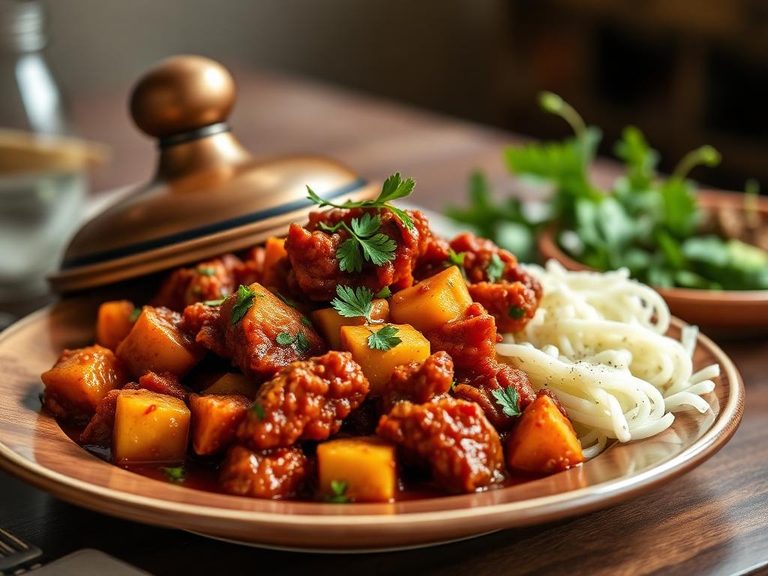
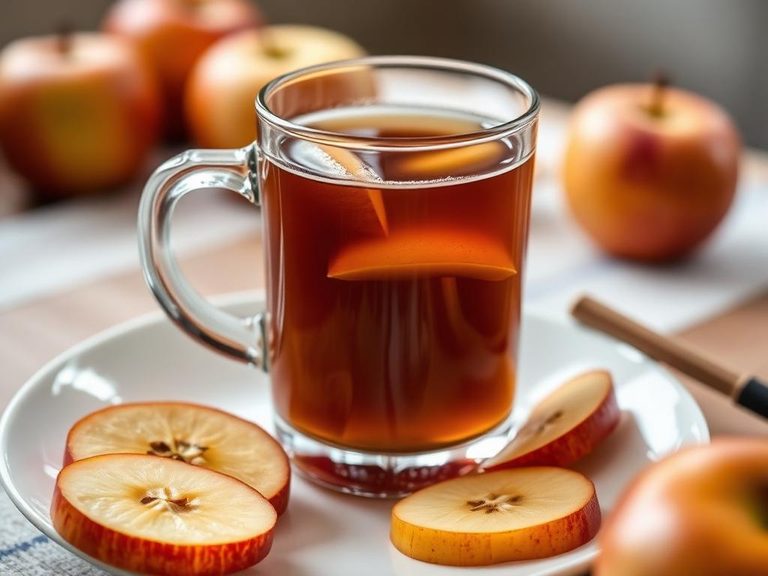
People love ground cloves for their uniquely powerful, warming aroma that instantly evokes comfort and festivity, especially in holiday baking and spiced beverages. Their versatility allows them to bridge sweet and savory dishes, from pumpkin pie to Moroccan tagines, adding a deep, complex layer of flavor.
⚠️ Watch-outs & how to enjoy it better
The intense, pungent flavor of ground cloves can be overpowering if used excessively, potentially causing a bitter or medicinal taste. Due to its high fiber content, consuming large amounts may cause digestive discomfort like bloating; it's best to use it in small, measured quantities (typically 1/4 to 1/2 teaspoon per recipe) and pair it with other spices or fats to balance its strength.
Key benefits
- Extremely high in dietary fiber, supporting digestive health
- Rich in antioxidants, particularly eugenol, which combats oxidative stress
- Contains manganese, an essential mineral for bone health and metabolism
- May have natural antibacterial properties
- Provides a concentrated source of iron and calcium in small amounts
🍽️ Popular dishes



🌍 Where it's eaten
💡 Did you know?
Cloves were once so valuable in medieval Europe that they were used as a form of currency and were worth more than their weight in gold.
Full nutrition (USDA data · scales with serving)
| Water | 9.9 g |
| Energy | 274 kcal |
| Energy | 1145 kj |
| Protein | 6.0 g |
| Total lipid (fat) | 13.0 g |
| Ash | 5.6 g |
| Carbohydrate, by difference | 65.5 g |
| Fiber, total dietary | 33.9 g |
| Total Sugars | 2.4 g |
| Sucrose | 0.02 g |
| Glucose | 1.1 g |
| Fructose | 1.1 g |
| Lactose | 0.00 g |
| Maltose | 0.00 g |
| Galactose | 0.15 g |
| Calcium, Ca | 632 mg |
| Iron, Fe | 11.8 mg |
| Magnesium, Mg | 259 mg |
| Phosphorus, P | 104 mg |
| Potassium, K | 1020 mg |
| Sodium, Na | 277 mg |
| Zinc, Zn | 2.3 mg |
| Copper, Cu | 0.37 mg |
| Manganese, Mn | 60.1 mg |
| Selenium, Se | 7.2 ug |
| Vitamin C, total ascorbic acid | 0.20 mg |
| Thiamin | 0.16 mg |
| Riboflavin | 0.22 mg |
| Niacin | 1.6 mg |
| Pantothenic acid | 0.51 mg |
| Vitamin B-6 | 0.39 mg |
| Folate, total | 25.0 ug |
| Folic acid | 0.00 ug |
| Folate, food | 25.0 ug |
| Folate, DFE | 25.0 ug |
| Choline, total | 37.4 mg |
| Betaine | 1.4 mg |
| Vitamin B-12 | 0.00 ug |
| Vitamin B-12, added | 0.00 ug |
| Vitamin A, RAE | 8.0 ug |
| Retinol | 0.00 ug |
| Carotene, beta | 45.0 ug |
| Carotene, alpha | 0.00 ug |
| Cryptoxanthin, beta | 103 ug |
| Vitamin A, IU | 160 iu |
| Lycopene | 0.00 ug |
| Lutein + zeaxanthin | 0.00 ug |
| Vitamin E (alpha-tocopherol) | 8.8 mg |
| Vitamin E, added | 0.00 mg |
| Tocopherol, beta | 0.00 mg |
| Tocopherol, gamma | 0.00 mg |
| Tocopherol, delta | 0.00 mg |
| Tocotrienol, alpha | 0.00 mg |
| Tocotrienol, beta | 0.00 mg |
| Tocotrienol, gamma | 0.00 mg |
| Tocotrienol, delta | 0.00 mg |
| Vitamin D (D2 + D3), International Units | 0.00 iu |
| Vitamin D (D2 + D3) | 0.00 ug |
| Vitamin K (phylloquinone) | 142 ug |
| Vitamin K (Dihydrophylloquinone) | 0.00 ug |
| Alcohol, ethyl | 0.00 g |
| Caffeine | 0.00 mg |
| Theobromine | 0.00 mg |
Fat & fatty acid profile (per 100g)
| Fatty acids, total saturated | 4.0 g |
| SFA 4:0 | 0.00 g |
| SFA 6:0 | 0.01 g |
| SFA 8:0 | 0.03 g |
| SFA 10:0 | 0.13 g |
| SFA 12:0 | 0.04 g |
| SFA 14:0 | 0.26 g |
| SFA 15:0 | 0.02 g |
| SFA 16:0 | 1.9 g |
| SFA 17:0 | 0.04 g |
| SFA 18:0 | 0.68 g |
| SFA 20:0 | 0.19 g |
| SFA 22:0 | 0.17 g |
| SFA 24:0 | 0.49 g |
| Fatty acids, total monounsaturated | 1.4 g |
| MUFA 16:1 | 0.03 g |
| MUFA 16:1 c | 0.03 g |
| MUFA 18:1 | 0.99 g |
| MUFA 18:1 c | 0.78 g |
| MUFA 20:1 | 0.36 g |
| MUFA 22:1 | 0.02 g |
| MUFA 22:1 c | 0.02 g |
| MUFA 24:1 c | 0.00 g |
| Fatty acids, total polyunsaturated | 3.6 g |
| PUFA 18:2 | 2.7 g |
| PUFA 18:2 n-6 c,c | 2.6 g |
| PUFA 18:2 CLAs | 0.06 g |
| PUFA 18:3 | 0.58 g |
| PUFA 18:3 n-3 c,c,c (ALA) | 0.58 g |
| PUFA 18:4 | 0.00 g |
| PUFA 20:2 n-6 c,c | 0.02 g |
| PUFA 20:3 | 0.01 g |
| PUFA 20:3 n-6 | 0.01 g |
| PUFA 20:4 | 0.10 g |
| PUFA 20:5 n-3 (EPA) | 0.01 g |
| PUFA 22:4 | 0.06 g |
| PUFA 22:5 n-3 (DPA) | 0.18 g |
| PUFA 22:6 n-3 (DHA) | 0.00 g |
| Fatty acids, total trans | 0.25 g |
| Fatty acids, total trans-monoenoic | 0.21 g |
| TFA 18:1 t | 0.21 g |
| TFA 18:2 t not further defined | 0.04 g |
| Fatty acids, total trans-polyenoic | 0.04 g |
| Cholesterol | 0.00 mg |
| Phytosterols | 256 mg |
Amino acid profile (per 100g)
| Tryptophan | 0.03 g |
| Threonine | 0.18 g |
| Isoleucine | 0.24 g |
| Leucine | 0.40 g |
| Lysine | 0.37 g |
| Methionine | 0.08 g |
| Cystine | 0.07 g |
| Phenylalanine | 0.23 g |
| Tyrosine | 0.19 g |
| Valine | 0.34 g |
| Arginine | 0.32 g |
| Histidine | 0.13 g |
| Alanine | 0.29 g |
| Aspartic acid | 0.60 g |
| Glutamic acid | 0.56 g |
| Glycine | 0.28 g |
| Proline | 0.39 g |
| Serine | 0.24 g |
| Hydroxyproline | 0.00 g |
FAQ
How much ground cloves should I use in a recipe?
Due to its potent flavor, start with 1/4 to 1/2 teaspoon for most recipes serving 4-6 people. It's always better to add a little at a time and taste, as the flavor intensifies with cooking.
Can ground cloves be used in savory dishes?
Yes, ground cloves are a key ingredient in many savory spice blends like garam masala, Chinese five-spice, and Moroccan ras el hanout. They add warmth and depth to stews, curries, and roasted meats.
Is ground clove the same as clove powder?
Yes, ground cloves and clove powder are the same thing—the dried flower buds of the clove tree ground into a fine powder.
Nutrient density (calculated · NRF9.3)
Nutrient Rich Foods index: beneficial nutrients (protein, fiber, vitamins, minerals) minus saturated fat, added sugar & sodium, per 100 kcal.
NRF9.3 index — Fulgoni, Keast & Drewnowski, 2009. Computed from USDA nutrients.
Weight-loss friendliness (composite index)
Energy density 2.74 kcal/g · 9% calories from protein · 33.9 g fiber · 2.4 g sugar per 100 g.
Composite of energy density (Rolls et al., 1999), protein & fiber satiety, minus sugar. A calculated heuristic — ranks satiety-per-calorie, not a clinical measure.
Dietary load (calculated from USDA values)
Potential renal acid load. Positive = acid-forming, negative = alkaline-forming.
Sodium-to-potassium ratio: 0.27 (lower is better — aim for ≤ 1)
Sodium:potassium per WHO potassium guidance. Computed from USDA nutrients.