

Pork, cured, ham with natural juices, spiral slice, meat only, boneless, separable lean only, heated, roasted
Whole food · Pork Products
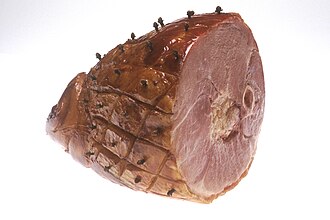
Photo: Wikipedia
This is lean, boneless pork ham that has been cured, spiral-sliced, and roasted, offering a tender, savory, and slightly sweet flavor profile with a moist, meaty texture. Nutritionally, it stands out as an exceptionally high-protein, low-fat, and low-carb option, providing substantial satiety with minimal calories. Its natural juices enhance its succulence, making it a flavorful centerpiece for meals without heavy sauces.
Calorie split: 70% protein · 3% carbs · 26% fat
↓ Full nutrition💚 Why it's loved
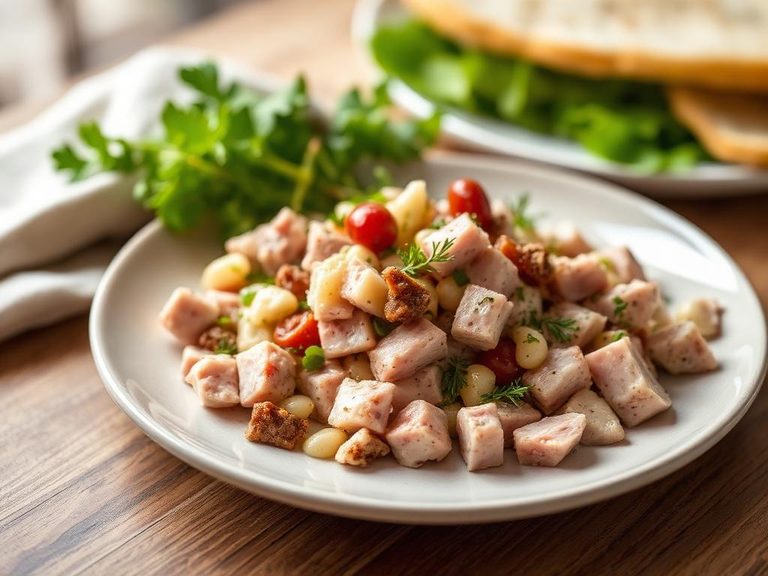
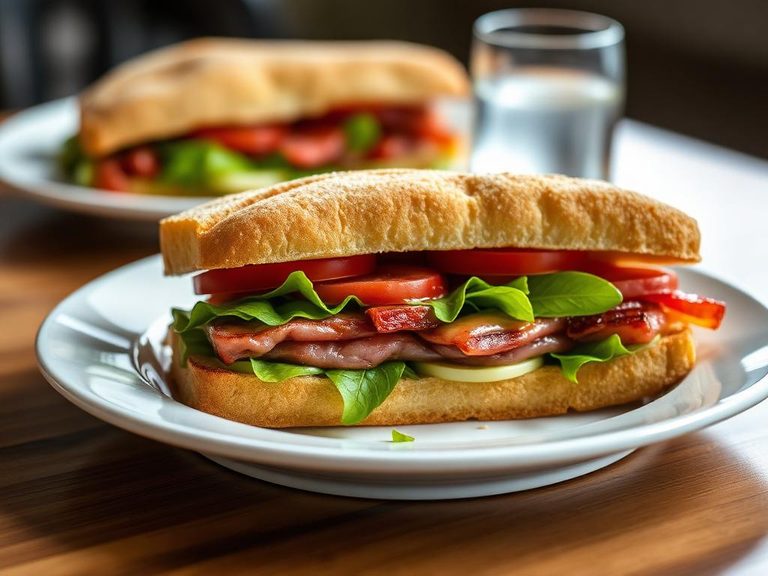
People love it for its deep, savory umami flavor with a hint of sweetness from the curing process, and its tender, easy-to-slice texture that makes it incredibly versatile for sandwiches, salads, and main dishes. It also carries cultural significance as a traditional centerpiece for holiday meals and family gatherings in many Western cuisines.
⚠️ Watch-outs & how to enjoy it better
The main downside is its high sodium content from the curing process, which can be a concern for those monitoring blood pressure or fluid retention. To counteract this, pair it with potassium-rich foods like leafy greens or sweet potatoes, and practice portion control by using it as a flavorful accent rather than the main protein. Additionally, some individuals may be sensitive to nitrates or nitrites used in curing; choosing uncured varieties or balancing with antioxidant-rich vegetables can help mitigate this.
Key benefits
- High protein content supports muscle maintenance and satiety
- Very low in fat and carbohydrates, suitable for low-carb diets
- Rich in essential B vitamins like thiamine and niacin
- Provides minerals such as phosphorus and selenium
- Convenient pre-cooked format for quick meal preparation
🍽️ Popular dishes
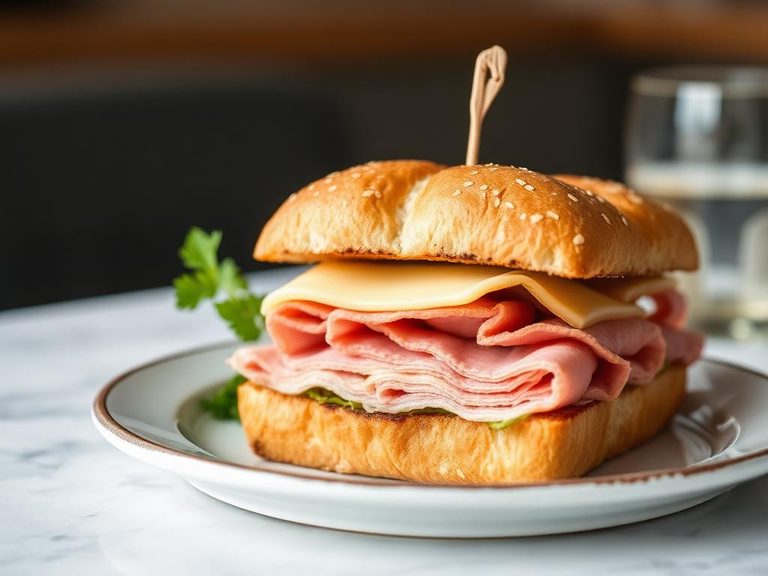
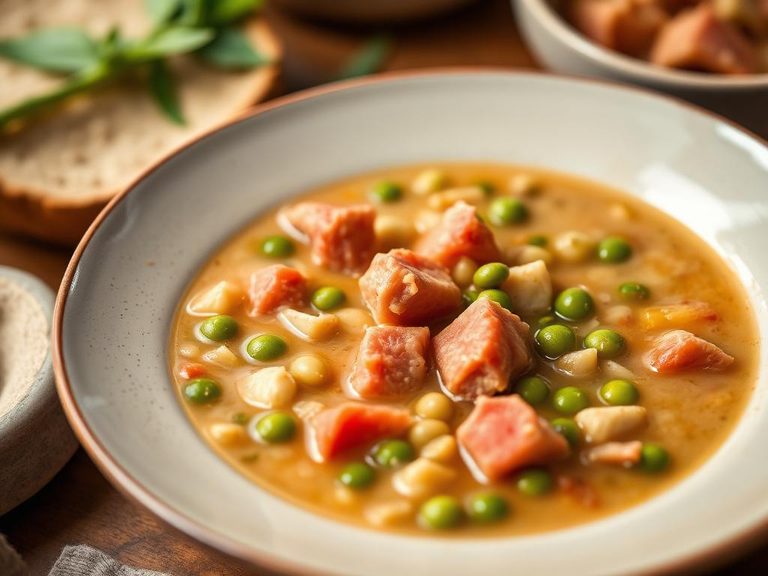
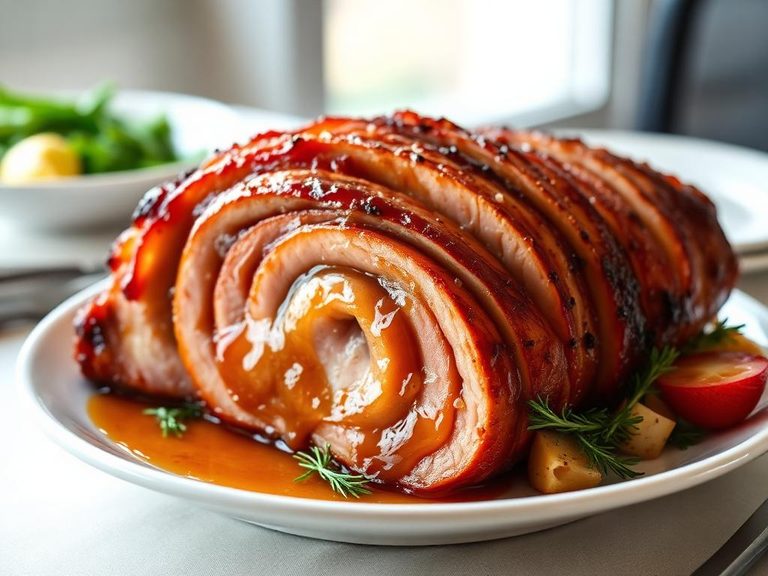

🌍 Where it's eaten
💡 Did you know?
Spiral slicing was popularized in the 1950s by a machine invented by a meatpacking plant worker, which allowed for uniform, easy-to-serve slices that became a staple of holiday feasts.
Full nutrition (USDA data · scales with serving)
| Water | 69.5 g |
| Energy | 126 kcal |
| Energy | 527 kj |
| Protein | 22.6 g |
| Total lipid (fat) | 3.8 g |
| Ash | 3.8 g |
| Carbohydrate, by difference | 1.1 g |
| Fiber, total dietary | 0.00 g |
| Total Sugars | 1.1 g |
| Sucrose | 0.49 g |
| Glucose | 0.59 g |
| Fructose | 0.00 g |
| Lactose | 0.00 g |
| Maltose | 0.00 g |
| Galactose | 0.00 g |
| Calcium, Ca | 4.0 mg |
| Iron, Fe | 0.84 mg |
| Magnesium, Mg | 22.0 mg |
| Phosphorus, P | 312 mg |
| Potassium, K | 349 mg |
| Sodium, Na | 986 mg |
| Zinc, Zn | 1.8 mg |
| Copper, Cu | 0.19 mg |
| Manganese, Mn | 0.02 mg |
| Selenium, Se | 41.8 ug |
| Vitamin C, total ascorbic acid | 0.00 mg |
| Thiamin | 0.47 mg |
| Riboflavin | 0.23 mg |
| Niacin | 6.7 mg |
| Pantothenic acid | 1.1 mg |
| Vitamin B-6 | 0.43 mg |
| Folate, total | 1.0 ug |
| Folic acid | 0.00 ug |
| Folate, food | 1.0 ug |
| Folate, DFE | 1.0 ug |
| Choline, total | 86.1 mg |
| Betaine | 3.7 mg |
| Vitamin B-12 | 0.51 ug |
| Vitamin B-12, added | 0.00 ug |
| Vitamin A, RAE | 13.0 ug |
| Retinol | 13.0 ug |
| Carotene, beta | 0.00 ug |
| Carotene, alpha | 0.00 ug |
| Cryptoxanthin, beta | 0.00 ug |
| Vitamin A, IU | 43.0 iu |
| Lycopene | 0.00 ug |
| Lutein + zeaxanthin | 0.00 ug |
| Vitamin E (alpha-tocopherol) | 0.19 mg |
| Vitamin E, added | 0.00 mg |
| Tocopherol, beta | 0.00 mg |
| Tocopherol, gamma | 0.03 mg |
| Tocopherol, delta | 0.00 mg |
| Tocotrienol, alpha | 0.00 mg |
| Tocotrienol, beta | 0.00 mg |
| Tocotrienol, gamma | 0.00 mg |
| Tocotrienol, delta | 0.00 mg |
| Vitamin D (D2 + D3), International Units | 32.0 iu |
| Vitamin D (D2 + D3) | 0.80 ug |
| Vitamin D3 (cholecalciferol) | 0.80 ug |
| Vitamin K (phylloquinone) | 0.00 ug |
| Vitamin K (Dihydrophylloquinone) | 0.00 ug |
| Vitamin K (Menaquinone-4) | 3.6 ug |
| Alcohol, ethyl | 0.00 g |
| Caffeine | 0.00 mg |
| Theobromine | 0.00 mg |
Fat & fatty acid profile (per 100g)
| Fatty acids, total saturated | 0.49 g |
| SFA 4:0 | 0.00 g |
| SFA 6:0 | 0.00 g |
| SFA 8:0 | 0.00 g |
| SFA 10:0 | 0.00 g |
| SFA 12:0 | 0.00 g |
| SFA 14:0 | 0.01 g |
| SFA 15:0 | 0.00 g |
| SFA 16:0 | 0.30 g |
| SFA 17:0 | 0.00 g |
| SFA 18:0 | 0.16 g |
| SFA 20:0 | 0.00 g |
| SFA 22:0 | 0.01 g |
| Fatty acids, total monounsaturated | 0.68 g |
| MUFA 14:1 | 0.00 g |
| MUFA 15:1 | 0.00 g |
| MUFA 16:1 | 0.04 g |
| MUFA 17:1 | 0.00 g |
| MUFA 18:1 | 0.62 g |
| MUFA 18:1 c | 0.62 g |
| MUFA 20:1 | 0.01 g |
| MUFA 22:1 | 0.00 g |
| Fatty acids, total polyunsaturated | 0.29 g |
| PUFA 18:2 | 0.21 g |
| PUFA 18:2 n-6 c,c | 0.20 g |
| PUFA 18:3 | 0.01 g |
| PUFA 18:3 n-3 c,c,c (ALA) | 0.01 g |
| PUFA 18:3 n-6 c,c,c | 0.00 g |
| PUFA 18:4 | 0.00 g |
| PUFA 20:2 n-6 c,c | 0.01 g |
| PUFA 20:3 | 0.00 g |
| PUFA 20:4 | 0.07 g |
| PUFA 20:5 n-3 (EPA) | 0.00 g |
| PUFA 22:5 n-3 (DPA) | 0.00 g |
| PUFA 22:6 n-3 (DHA) | 0.00 g |
| Fatty acids, total trans | 0.01 g |
| Fatty acids, total trans-monoenoic | 0.01 g |
| TFA 18:1 t | 0.01 g |
| TFA 18:2 t,t | 0.01 g |
| Fatty acids, total trans-polyenoic | 0.01 g |
| Cholesterol | 63.0 mg |
Amino acid profile (per 100g)
| Tryptophan | 0.21 g |
| Threonine | 1.0 g |
| Isoleucine | 1.0 g |
| Leucine | 1.8 g |
| Lysine | 1.9 g |
| Methionine | 0.54 g |
| Cystine | 0.25 g |
| Phenylalanine | 0.90 g |
| Tyrosine | 0.73 g |
| Valine | 1.1 g |
| Arginine | 1.4 g |
| Histidine | 0.98 g |
| Alanine | 1.3 g |
| Aspartic acid | 2.0 g |
| Glutamic acid | 3.2 g |
| Glycine | 1.2 g |
| Proline | 0.97 g |
| Serine | 0.88 g |
| Hydroxyproline | 0.15 g |
FAQ
Is this ham suitable for a low-carb or keto diet?
Yes, with only about 1 gram of carbs per 100 grams, it fits well into low-carb and ketogenic eating plans, especially when paired with non-starchy vegetables.
How should I store leftover roasted ham?
Store it in an airtight container in the refrigerator for up to 3-4 days, or freeze for up to 1-2 months. Reheat gently in the oven or microwave to retain moisture.
What makes spiral-sliced ham different from regular ham?
Spiral slicing cuts the ham in a continuous spiral around the bone, creating thin, uniform slices that are easier to serve and often more visually appealing for presentations.
Nutrient density (calculated · NRF9.3)
Nutrient Rich Foods index: beneficial nutrients (protein, fiber, vitamins, minerals) minus saturated fat, added sugar & sodium, per 100 kcal.
NRF9.3 index — Fulgoni, Keast & Drewnowski, 2009. Computed from USDA nutrients.
Weight-loss friendliness (composite index)
Energy density 1.26 kcal/g · 72% calories from protein · 0.0 g fiber · 1.1 g sugar per 100 g.
Composite of energy density (Rolls et al., 1999), protein & fiber satiety, minus sugar. A calculated heuristic — ranks satiety-per-calorie, not a clinical measure.
Dietary load (calculated from USDA values)
Potential renal acid load. Positive = acid-forming, negative = alkaline-forming.
Sodium-to-potassium ratio: 2.83 (lower is better — aim for ≤ 1)
Sodium:potassium per WHO potassium guidance. Computed from USDA nutrients.