

Pizza, pepperoni topping, regular crust, frozen, cooked
Whole food · Fast Foods
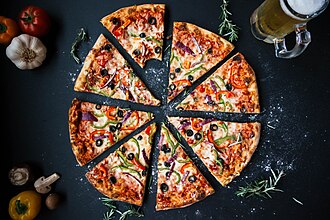
Photo: Wikipedia
This is the quintessential frozen pizza, transformed by heat into a bubbling, golden meal with a crisp, chewy crust. The classic pepperoni topping renders its savory, slightly spicy fat, creating a rich, salty contrast to the mild tomato sauce and melted mozzarella. Nutritionally, it's a dense energy source, delivering a solid protein punch alongside a significant carbohydrate and fat load per 100g.
Calorie split: 21% protein · 36% carbs · 43% fat
↓ Full nutrition💚 Why it's loved
People adore it for the perfect marriage of salty, spicy pepperoni with gooey cheese and a crispy crust, delivering a powerful umami hit. It's the ultimate versatile comfort food, equally suited for a solo dinner, a party, or a late-night snack, deeply embedded in casual dining culture.
⚠️ Watch-outs & how to enjoy it better
The high sodium and saturated fat content can be problematic for heart health and blood pressure, and the refined carbs may cause blood-sugar spikes. To counteract, pair a smaller slice with a large, leafy green salad to add volume and fiber, and opt for a side of vegetables to balance the meal's glycemic impact.
Key benefits
- Provides a quick, high-protein meal solution (14g protein per 100g)
- Offers a good source of energy from carbohydrates and fats
- Contains dietary fiber, albeit in a modest amount
- A familiar, comforting food that can be prepared in minutes
🍽️ Popular dishes
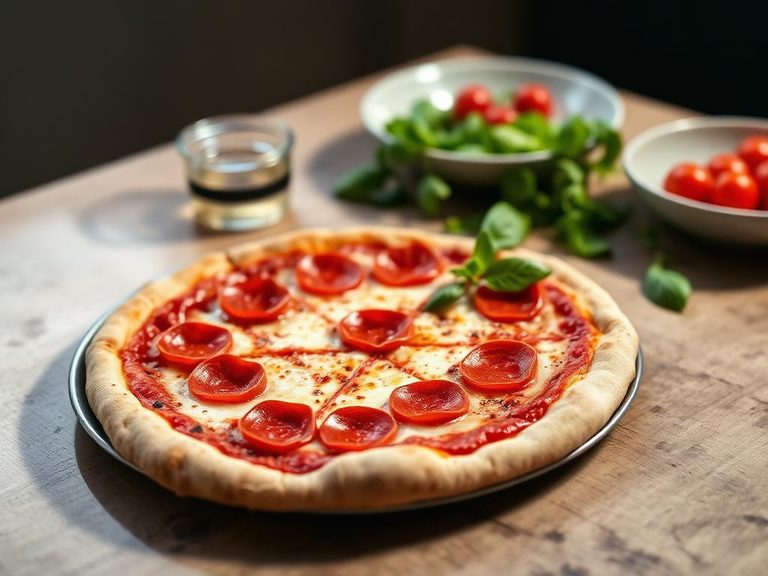
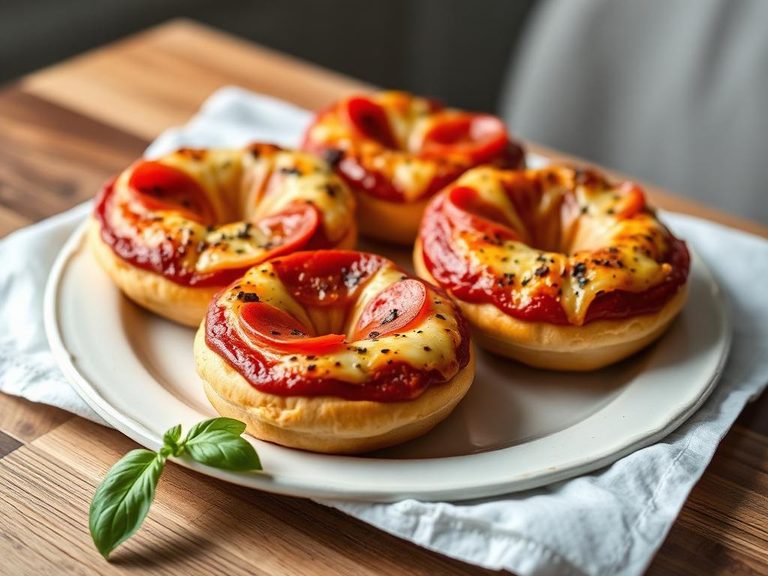
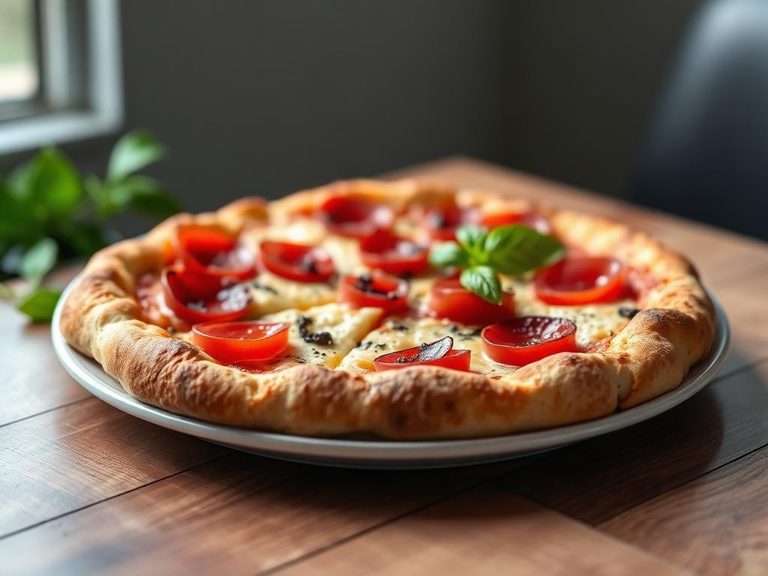
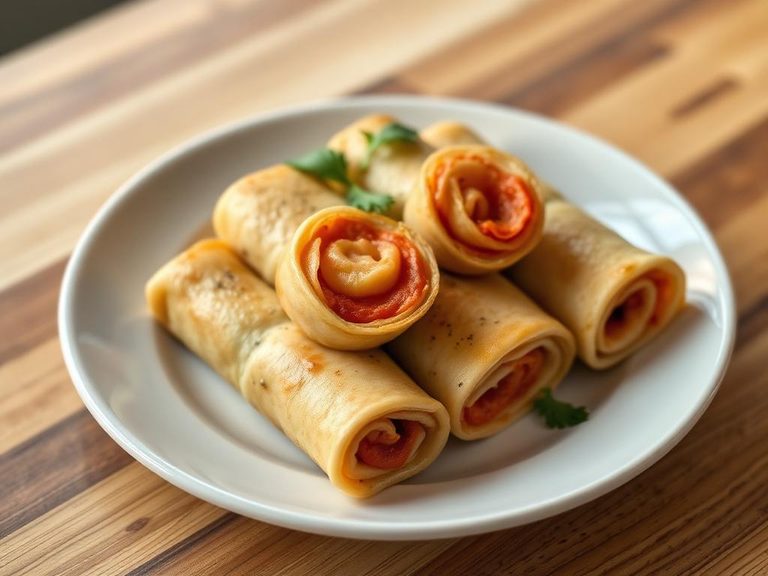
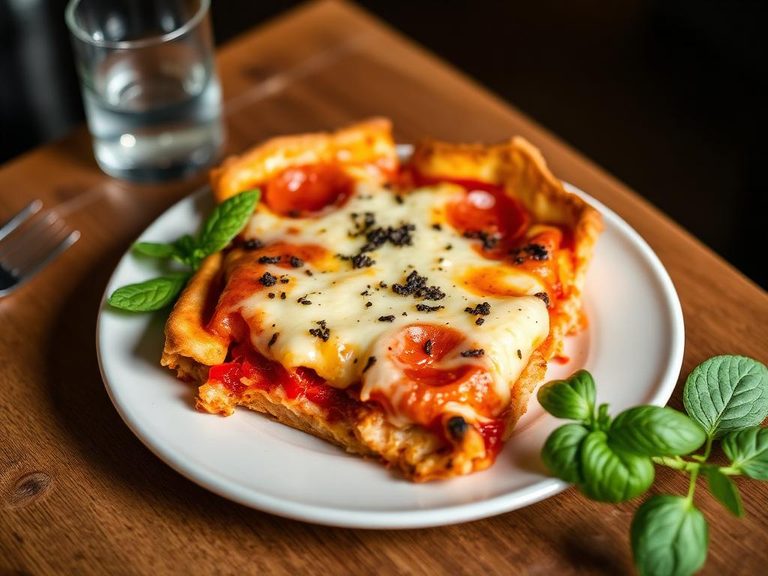
🌍 Where it's eaten
💡 Did you know?
The cup-and-char style of pepperoni, where the slices curl into crispy little cups, is a prized feature caused by the natural casing shrinking faster than the meat during cooking.
Full nutrition (USDA data · scales with serving)
| Water | 45.4 g |
| Energy | 274 kcal |
| Energy | 1148 kj |
| Protein | 14.4 g |
| Total lipid (fat) | 13.1 g |
| Ash | 2.4 g |
| Carbohydrate, by difference | 24.7 g |
| Fiber, total dietary | 2.0 g |
| Total Sugars | 3.4 g |
| Sucrose | 0.00 g |
| Glucose | 0.95 g |
| Fructose | 1.1 g |
| Lactose | 0.36 g |
| Maltose | 0.85 g |
| Galactose | 0.11 g |
| Starch | 17.6 g |
| Calcium, Ca | 168 mg |
| Iron, Fe | 2.4 mg |
| Magnesium, Mg | 27.0 mg |
| Phosphorus, P | 196 mg |
| Potassium, K | 239 mg |
| Sodium, Na | 590 mg |
| Zinc, Zn | 1.5 mg |
| Copper, Cu | 0.11 mg |
| Manganese, Mn | 0.35 mg |
| Selenium, Se | 20.1 ug |
| Vitamin C, total ascorbic acid | 1.9 mg |
| Thiamin | 0.31 mg |
| Riboflavin | 0.33 mg |
| Niacin | 3.2 mg |
| Pantothenic acid | 0.27 mg |
| Vitamin B-6 | 0.15 mg |
| Folate, total | 75.0 ug |
| Folic acid | 46.0 ug |
| Folate, food | 30.0 ug |
| Folate, DFE | 107 ug |
| Choline, total | 23.1 mg |
| Betaine | 14.2 mg |
| Vitamin B-12 | 0.61 ug |
| Vitamin B-12, added | 0.00 ug |
| Vitamin A, RAE | 69.0 ug |
| Retinol | 69.0 ug |
| Carotene, beta | 0.00 ug |
| Carotene, alpha | 0.00 ug |
| Cryptoxanthin, beta | 0.00 ug |
| Vitamin A, IU | 229 iu |
| Lycopene | 2157 ug |
| Lutein + zeaxanthin | 26.0 ug |
| Vitamin E (alpha-tocopherol) | 1.4 mg |
| Vitamin E, added | 0.00 mg |
| Tocopherol, beta | 0.16 mg |
| Tocopherol, gamma | 1.7 mg |
| Tocopherol, delta | 0.00 mg |
| Tocotrienol, alpha | 0.09 mg |
| Tocotrienol, beta | 0.32 mg |
| Tocotrienol, gamma | 0.00 mg |
| Tocotrienol, delta | 0.00 mg |
| Vitamin D (D2 + D3), International Units | 0.00 iu |
| Vitamin D (D2 + D3) | 0.00 ug |
| Vitamin K (phylloquinone) | 7.1 ug |
| Alcohol, ethyl | 0.00 g |
| Caffeine | 0.00 mg |
| Theobromine | 0.00 mg |
Fat & fatty acid profile (per 100g)
| Fatty acids, total saturated | 4.8 g |
| SFA 4:0 | 0.09 g |
| SFA 6:0 | 0.07 g |
| SFA 8:0 | 0.04 g |
| SFA 10:0 | 0.10 g |
| SFA 12:0 | 0.11 g |
| SFA 14:0 | 0.47 g |
| SFA 15:0 | 0.04 g |
| SFA 16:0 | 2.8 g |
| SFA 17:0 | 0.04 g |
| SFA 18:0 | 1.00 g |
| SFA 20:0 | 0.02 g |
| SFA 22:0 | 0.01 g |
| SFA 24:0 | 0.01 g |
| Fatty acids, total monounsaturated | 4.1 g |
| MUFA 14:1 | 0.05 g |
| MUFA 15:1 | 0.00 g |
| MUFA 16:1 | 0.23 g |
| MUFA 16:1 c | 0.21 g |
| MUFA 17:1 | 0.02 g |
| MUFA 18:1 | 3.7 g |
| MUFA 18:1 c | 3.6 g |
| MUFA 20:1 | 0.07 g |
| MUFA 22:1 | 0.02 g |
| MUFA 22:1 c | 0.02 g |
| MUFA 24:1 c | 0.00 g |
| Fatty acids, total polyunsaturated | 2.7 g |
| PUFA 18:2 | 2.5 g |
| PUFA 18:2 n-6 c,c | 2.4 g |
| PUFA 18:2 CLAs | 0.03 g |
| PUFA 18:3 | 0.14 g |
| PUFA 18:3 n-3 c,c,c (ALA) | 0.13 g |
| PUFA 18:3 n-6 c,c,c | 0.01 g |
| PUFA 18:3i | 0.00 g |
| PUFA 18:4 | 0.00 g |
| PUFA 20:2 n-6 c,c | 0.02 g |
| PUFA 20:3 | 0.01 g |
| PUFA 20:3 n-3 | 0.00 g |
| PUFA 20:3 n-6 | 0.01 g |
| PUFA 20:4 | 0.03 g |
| PUFA 20:5 n-3 (EPA) | 0.00 g |
| PUFA 22:4 | 0.01 g |
| PUFA 22:5 n-3 (DPA) | 0.01 g |
| PUFA 22:6 n-3 (DHA) | 0.00 g |
| Fatty acids, total trans | 0.21 g |
| Fatty acids, total trans-monoenoic | 0.16 g |
| TFA 16:1 t | 0.01 g |
| TFA 18:1 t | 0.15 g |
| TFA 22:1 t | 0.00 g |
| TFA 18:2 t not further defined | 0.05 g |
| Fatty acids, total trans-polyenoic | 0.05 g |
| Cholesterol | 27.0 mg |
Amino acid profile (per 100g)
Estimated from Fast Food, Pizza Chain, 14" pizza, cheese topping, stuffed crust — USDA does not publish this profile for Pizza.
| Tryptophan | 0.12 g |
| Threonine | 0.39 g |
| Isoleucine | 0.57 g |
| Leucine | 1.1 g |
| Lysine | 0.59 g |
| Methionine | 0.27 g |
| Phenylalanine | 0.64 g |
| Tyrosine | 0.40 g |
| Valine | 0.71 g |
| Arginine | 0.44 g |
| Histidine | 0.32 g |
| Alanine | 0.38 g |
| Aspartic acid | 0.81 g |
| Glutamic acid | 3.4 g |
| Glycine | 0.31 g |
| Proline | 1.7 g |
| Serine | 0.58 g |
| Hydroxyproline | 0.00 g |
FAQ
Is frozen pepperoni pizza a good source of protein?
Yes, it provides a substantial amount of protein (about 14g per 100g), primarily from the cheese and meat toppings, making it more protein-rich than many other frozen convenience foods.
How does the nutrition compare to a fresh pizzeria pizza?
Frozen versions often have a similar macronutrient profile but can be higher in sodium and preservatives for shelf stability. Fresh pizzeria pizza may use higher-quality ingredients but can also be very high in calories and fat depending on the style.
What's the best way to cook it for a crispier crust?
For a crispier base, bake it directly on the oven rack or on a preheated pizza stone or steel, rather than on a baking sheet. This allows hot air to circulate underneath, preventing a soggy bottom.
Nutrient density (calculated · NRF9.3)
Nutrient Rich Foods index: beneficial nutrients (protein, fiber, vitamins, minerals) minus saturated fat, added sugar & sodium, per 100 kcal.
NRF9.3 index — Fulgoni, Keast & Drewnowski, 2009. Computed from USDA nutrients.
Weight-loss friendliness (composite index)
Energy density 2.74 kcal/g · 21% calories from protein · 2.0 g fiber · 3.4 g sugar per 100 g.
Composite of energy density (Rolls et al., 1999), protein & fiber satiety, minus sugar. A calculated heuristic — ranks satiety-per-calorie, not a clinical measure.
Dietary load (calculated from USDA values)
Potential renal acid load. Positive = acid-forming, negative = alkaline-forming.
Sodium-to-potassium ratio: 2.47 (lower is better — aim for ≤ 1)
Sodium:potassium per WHO potassium guidance. Computed from USDA nutrients.