

Chicken, broilers or fryers, thigh, meat and skin, cooked, roasted
Whole food · Poultry Products

Photo: Wikipedia
This is the juicy, flavorful cut of chicken from the upper leg, roasted with its skin on for a rich, savory taste and a satisfyingly tender yet firm texture. Nutritionally, it's a powerhouse of protein and provides a significant amount of healthy fats, especially when the skin is consumed, making it a very satiating food.
Calorie split: 41% protein · 0% carbs · 59% fat
↓ Full nutrition💚 Why it's loved
People adore it for its deep, savory flavor and juiciness, which comes from the higher fat content compared to breast meat. It's incredibly versatile, taking on marinades and seasonings beautifully, and is a centerpiece in comfort foods and celebratory meals across countless cultures.
⚠️ Watch-outs & how to enjoy it better
The higher fat content, especially from the skin, makes it more calorie-dense than leaner cuts. Those monitoring fat intake or following specific medical diets may need to practice portion control or remove the skin before eating. To counteract this, pair it with fiber-rich vegetables or salads to balance the meal and increase fullness without excess calories.
Key benefits
- Excellent source of complete protein for muscle maintenance and repair.
- Rich in B vitamins, particularly niacin (B3) and B6, essential for energy metabolism.
- Provides important minerals like selenium and phosphorus.
- The skin contributes healthy monounsaturated fats and adds significant flavor.
- High satiety factor due to the protein and fat content.
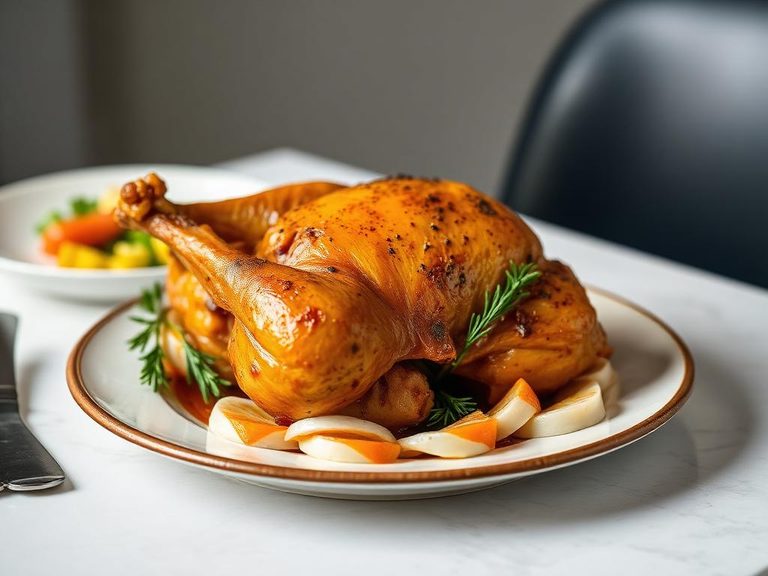
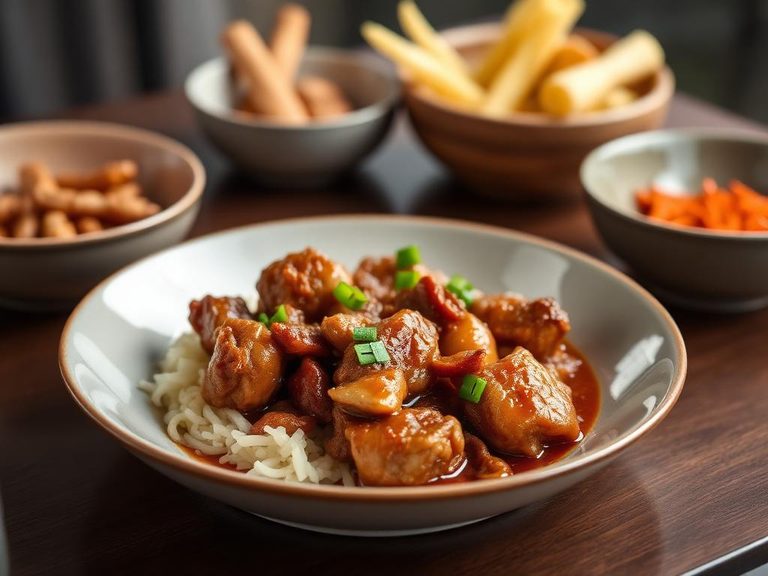
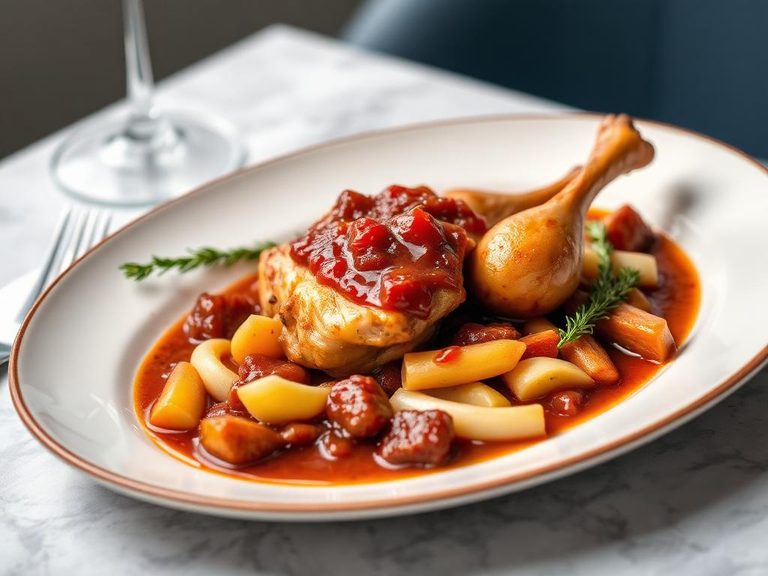
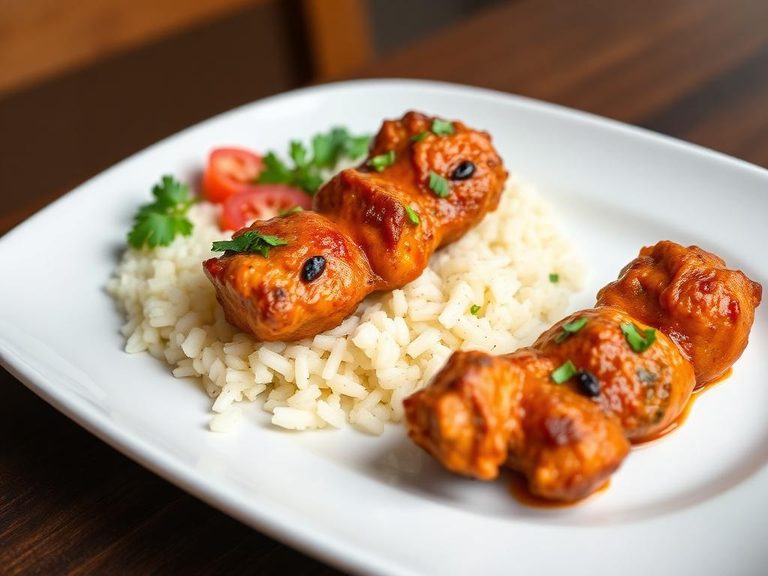
🍽️ Popular dishes
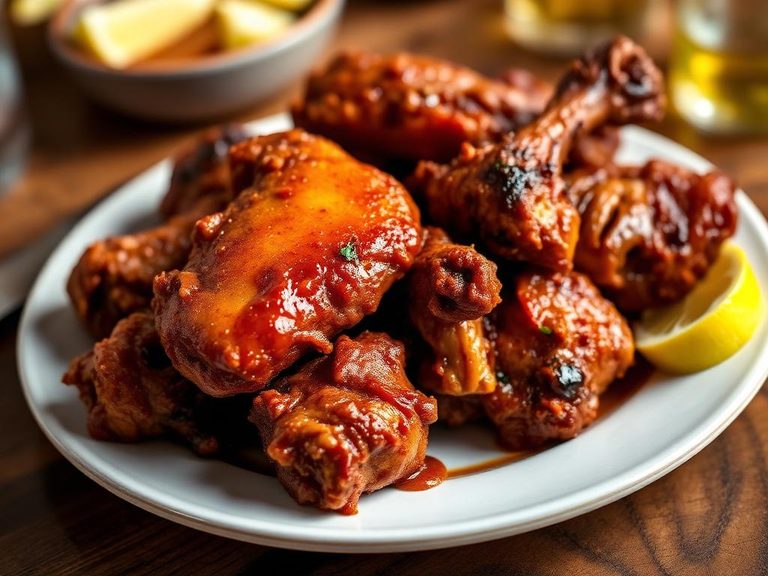
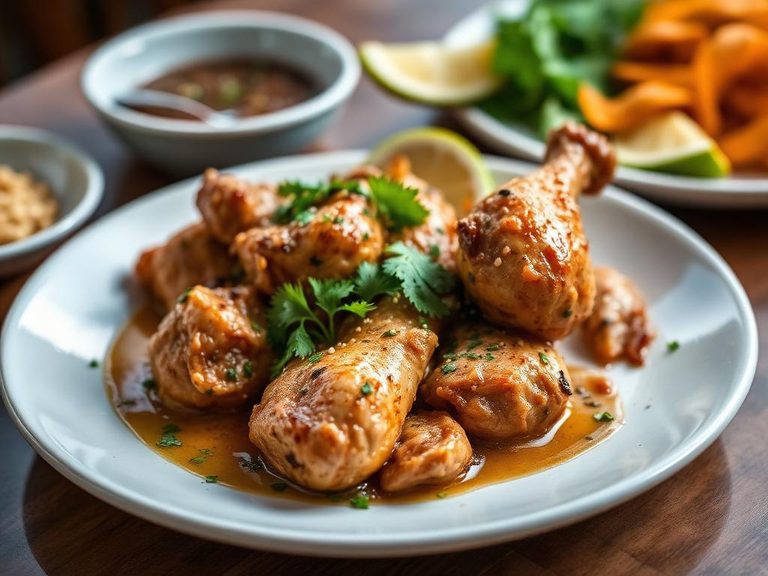
🌍 Where it's eaten
💡 Did you know?
The thigh is considered the most forgiving cut of chicken for home cooks because its higher fat and connective tissue content makes it much harder to overcook and dry out compared to the breast.
Full nutrition (USDA data · scales with serving)
| Water | 62.0 g |
| Energy | 232 kcal |
| Energy | 971 kj |
| Protein | 23.3 g |
| Total lipid (fat) | 14.7 g |
| Ash | 0.98 g |
| Carbohydrate, by difference | 0.00 g |
| Fiber, total dietary | 0.00 g |
| Total Sugars | 0.00 g |
| Calcium, Ca | 9.0 mg |
| Iron, Fe | 1.1 mg |
| Magnesium, Mg | 22.0 mg |
| Phosphorus, P | 216 mg |
| Potassium, K | 253 mg |
| Sodium, Na | 102 mg |
| Zinc, Zn | 1.7 mg |
| Copper, Cu | 0.06 mg |
| Manganese, Mn | 0.02 mg |
| Selenium, Se | 25.3 ug |
| Vitamin C, total ascorbic acid | 0.00 mg |
| Thiamin | 0.09 mg |
| Riboflavin | 0.19 mg |
| Niacin | 5.8 mg |
| Pantothenic acid | 1.2 mg |
| Vitamin B-6 | 0.41 mg |
| Folate, total | 4.0 ug |
| Folic acid | 0.00 ug |
| Folate, food | 4.0 ug |
| Folate, DFE | 4.0 ug |
| Choline, total | 67.6 mg |
| Betaine | 6.9 mg |
| Vitamin B-12 | 0.44 ug |
| Vitamin B-12, added | 0.00 ug |
| Vitamin A, RAE | 16.0 ug |
| Retinol | 16.0 ug |
| Carotene, beta | 0.00 ug |
| Carotene, alpha | 0.00 ug |
| Cryptoxanthin, beta | 0.00 ug |
| Vitamin A, IU | 55.0 iu |
| Lycopene | 0.00 ug |
| Lutein + zeaxanthin | 17.0 ug |
| Vitamin E (alpha-tocopherol) | 0.19 mg |
| Vitamin E, added | 0.00 mg |
| Tocopherol, beta | 0.00 mg |
| Tocopherol, gamma | 0.09 mg |
| Tocopherol, delta | 0.00 mg |
| Tocotrienol, alpha | 0.02 mg |
| Tocotrienol, beta | 0.00 mg |
| Tocotrienol, gamma | 0.06 mg |
| Tocotrienol, delta | 0.00 mg |
| Vitamin D (D2 + D3), International Units | 7.0 iu |
| Vitamin D (D2 + D3) | 0.20 ug |
| Vitamin D3 (cholecalciferol) | 0.20 ug |
| Vitamin K (phylloquinone) | 3.3 ug |
| Vitamin K (Dihydrophylloquinone) | 0.00 ug |
| Alcohol, ethyl | 0.00 g |
| Caffeine | 0.00 mg |
| Theobromine | 0.00 mg |
Fat & fatty acid profile (per 100g)
| Fatty acids, total saturated | 4.1 g |
| SFA 4:0 | 0.00 g |
| SFA 6:0 | 0.00 g |
| SFA 8:0 | 0.00 g |
| SFA 10:0 | 0.00 g |
| SFA 12:0 | 0.01 g |
| SFA 14:0 | 0.08 g |
| SFA 15:0 | 0.01 g |
| SFA 16:0 | 3.2 g |
| SFA 17:0 | 0.02 g |
| SFA 18:0 | 0.78 g |
| SFA 20:0 | 0.01 g |
| SFA 22:0 | 0.01 g |
| SFA 24:0 | 0.00 g |
| Fatty acids, total monounsaturated | 6.3 g |
| MUFA 14:1 | 0.03 g |
| MUFA 15:1 | 0.00 g |
| MUFA 16:1 | 0.91 g |
| MUFA 16:1 c | 0.91 g |
| MUFA 17:1 | 0.01 g |
| MUFA 18:1 | 5.2 g |
| MUFA 18:1 c | 5.2 g |
| MUFA 20:1 | 0.07 g |
| MUFA 22:1 | 0.00 g |
| MUFA 22:1 c | 0.00 g |
| MUFA 24:1 c | 0.00 g |
| Fatty acids, total polyunsaturated | 3.0 g |
| PUFA 18:2 | 2.7 g |
| PUFA 18:2 n-6 c,c | 2.6 g |
| PUFA 18:2 CLAs | 0.02 g |
| PUFA 18:3 | 0.13 g |
| PUFA 18:3 n-3 c,c,c (ALA) | 0.12 g |
| PUFA 18:3 n-6 c,c,c | 0.01 g |
| PUFA 18:4 | 0.00 g |
| PUFA 20:2 n-6 c,c | 0.02 g |
| PUFA 20:3 | 0.03 g |
| PUFA 20:3 n-3 | 0.00 g |
| PUFA 20:3 n-6 | 0.03 g |
| PUFA 20:4 | 0.10 g |
| PUFA 20:5 n-3 (EPA) | 0.01 g |
| PUFA 22:4 | 0.02 g |
| PUFA 22:5 n-3 (DPA) | 0.01 g |
| PUFA 22:6 n-3 (DHA) | 0.01 g |
| Fatty acids, total trans | 0.08 g |
| Fatty acids, total trans-monoenoic | 0.06 g |
| TFA 16:1 t | 0.01 g |
| TFA 18:1 t | 0.05 g |
| TFA 22:1 t | 0.00 g |
| TFA 18:2 t not further defined | 0.03 g |
| Fatty acids, total trans-polyenoic | 0.03 g |
| Cholesterol | 133 mg |
Amino acid profile (per 100g)
| Tryptophan | 0.24 g |
| Threonine | 1.1 g |
| Isoleucine | 1.1 g |
| Leucine | 1.9 g |
| Lysine | 2.1 g |
| Methionine | 0.63 g |
| Cystine | 0.26 g |
| Phenylalanine | 0.90 g |
| Tyrosine | 0.83 g |
| Valine | 1.1 g |
| Arginine | 1.6 g |
| Histidine | 0.67 g |
| Alanine | 1.4 g |
| Aspartic acid | 2.2 g |
| Glutamic acid | 3.7 g |
| Glycine | 1.3 g |
| Proline | 1.0 g |
| Serine | 0.96 g |
FAQ
Is chicken thigh healthier than chicken breast?
It depends on your goals. Thighs have more fat and calories but also more iron, zinc, and certain B vitamins. Breast meat is leaner and higher in protein per calorie. Both are excellent sources of nutrition.
Should I remove the skin to reduce calories?
Removing the skin significantly reduces the fat and calorie content of the meat. However, the skin adds flavor and contains some nutrients. It's a personal choice based on taste and dietary needs.
How do I know when a roasted chicken thigh is cooked through?
The most reliable method is to use a meat thermometer inserted into the thickest part, avoiding bone. It should read 165°F (74°C). The juices should run clear, and the meat should pull away from the bone easily.
Nutrient density (calculated · NRF9.3)
Nutrient Rich Foods index: beneficial nutrients (protein, fiber, vitamins, minerals) minus saturated fat, added sugar & sodium, per 100 kcal.
NRF9.3 index — Fulgoni, Keast & Drewnowski, 2009. Computed from USDA nutrients.
Weight-loss friendliness (composite index)
Energy density 2.32 kcal/g · 40% calories from protein · 0.0 g fiber · 0.0 g sugar per 100 g.
Composite of energy density (Rolls et al., 1999), protein & fiber satiety, minus sugar. A calculated heuristic — ranks satiety-per-calorie, not a clinical measure.
Dietary load (calculated from USDA values)
Potential renal acid load. Positive = acid-forming, negative = alkaline-forming.
Sodium-to-potassium ratio: 0.40 (lower is better — aim for ≤ 1)
Sodium:potassium per WHO potassium guidance. Computed from USDA nutrients.