

Chicken, broilers or fryers, drumstick, meat and skin, raw
Whole food · Poultry Products
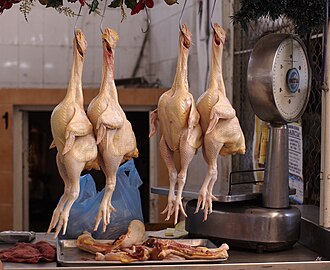
Photo: Wikipedia
A raw chicken drumstick with skin is a classic, meaty cut prized for its rich, dark meat and satisfying texture. Nutritionally, it's a powerhouse of protein and healthy fats, with virtually no carbohydrates. The skin adds a layer of flavor and calories, promising crispiness when cooked properly.
Calorie split: 46% protein · 0% carbs · 53% fat
↓ Full nutrition💚 Why it's loved
People adore the drumstick for its deep, savory flavor and the delightful contrast between tender meat and crispy skin. It's a versatile, handheld staple in cuisines worldwide, perfect for everything from simple roasts to complex stews.
⚠️ Watch-outs & how to enjoy it better
The skin significantly increases the saturated fat and calorie content, which may be a concern for some diets. To mitigate this, you can remove the skin before or after cooking to reduce fat intake, or choose cooking methods like baking or grilling that allow excess fat to render off. As a common allergen, those with poultry allergies must avoid it entirely.
Key benefits
- Excellent source of high-quality protein for muscle maintenance.
- Rich in essential minerals like selenium and phosphorus.
- Provides B vitamins, particularly niacin and B6.
- Contains healthy monounsaturated fats, especially from the skin.
🍽️ Popular dishes
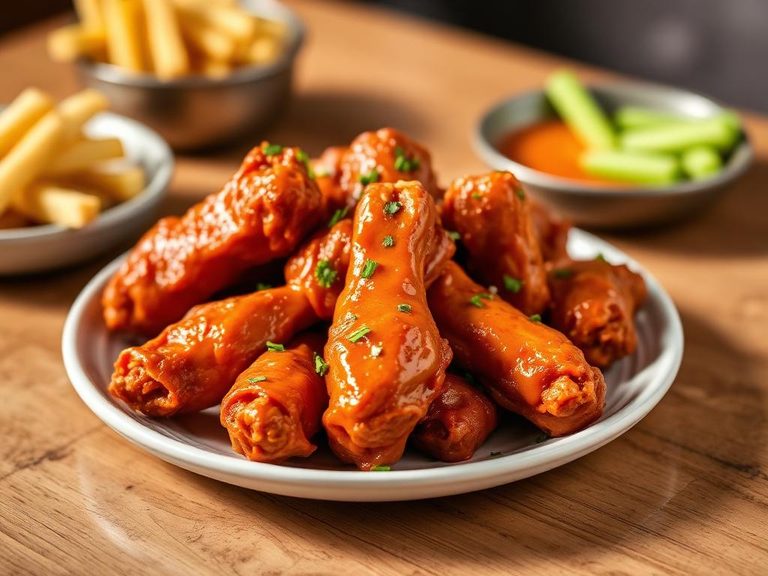
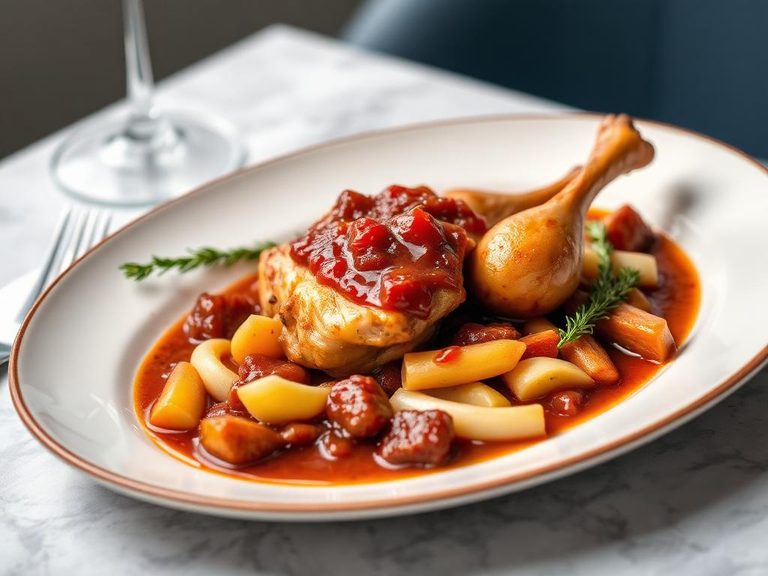
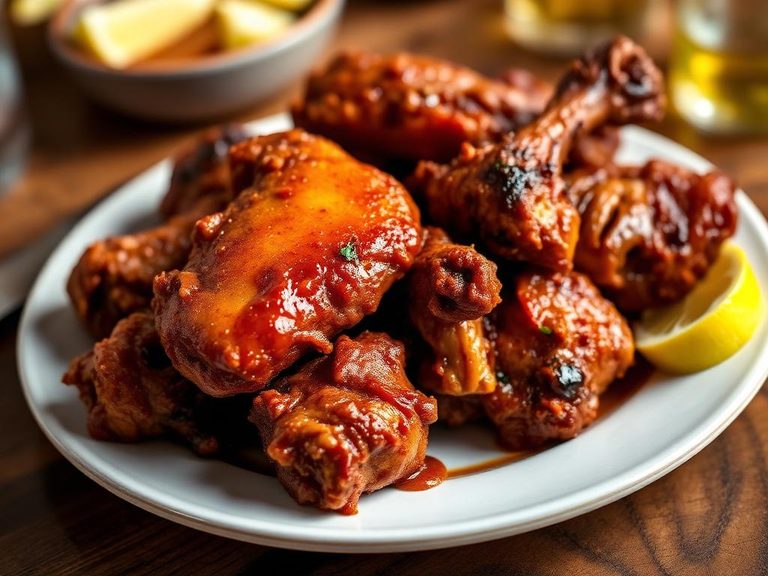
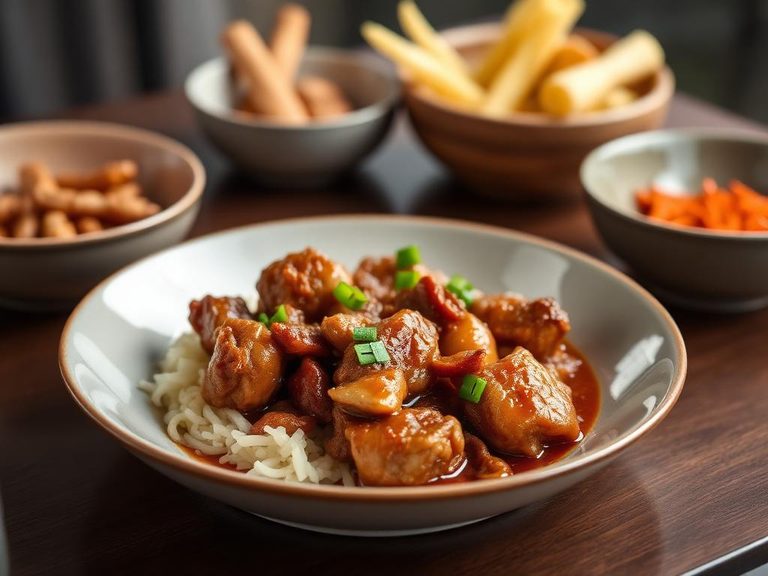


🌍 Where it's eaten
💡 Did you know?
A chicken's drumstick is anatomically equivalent to our lower leg, containing two bones (the tibia and fibula), though the smaller fibula is often removed in butchery.
Full nutrition (USDA data · scales with serving)
| Water | 72.5 g |
| Energy | 161 kcal |
| Energy | 672 kj |
| Protein | 18.1 g |
| Total lipid (fat) | 9.2 g |
| Ash | 0.86 g |
| Carbohydrate, by difference | 0.11 g |
| Fiber, total dietary | 0.00 g |
| Total Sugars | 0.00 g |
| Calcium, Ca | 8.0 mg |
| Iron, Fe | 0.71 mg |
| Magnesium, Mg | 18.0 mg |
| Phosphorus, P | 163 mg |
| Potassium, K | 211 mg |
| Sodium, Na | 106 mg |
| Zinc, Zn | 1.9 mg |
| Copper, Cu | 0.06 mg |
| Manganese, Mn | 0.01 mg |
| Selenium, Se | 20.2 ug |
| Vitamin C, total ascorbic acid | 0.00 mg |
| Thiamin | 0.08 mg |
| Riboflavin | 0.20 mg |
| Niacin | 4.8 mg |
| Pantothenic acid | 1.0 mg |
| Vitamin B-6 | 0.34 mg |
| Folate, total | 3.0 ug |
| Folic acid | 0.00 ug |
| Folate, food | 3.0 ug |
| Folate, DFE | 3.0 ug |
| Choline, total | 52.8 mg |
| Betaine | 8.7 mg |
| Vitamin B-12 | 0.53 ug |
| Vitamin B-12, added | 0.00 ug |
| Vitamin A, RAE | 14.0 ug |
| Retinol | 14.0 ug |
| Carotene, beta | 0.00 ug |
| Carotene, alpha | 0.00 ug |
| Cryptoxanthin, beta | 0.00 ug |
| Vitamin A, IU | 46.0 iu |
| Lycopene | 0.00 ug |
| Lutein + zeaxanthin | 102 ug |
| Vitamin E (alpha-tocopherol) | 0.19 mg |
| Vitamin E, added | 0.00 mg |
| Tocopherol, beta | 0.00 mg |
| Tocopherol, gamma | 0.08 mg |
| Tocopherol, delta | 0.00 mg |
| Tocotrienol, alpha | 0.02 mg |
| Tocotrienol, beta | 0.01 mg |
| Tocotrienol, gamma | 0.02 mg |
| Tocotrienol, delta | 0.00 mg |
| Vitamin D (D2 + D3), International Units | 2.0 iu |
| Vitamin D (D2 + D3) | 0.10 ug |
| Vitamin D3 (cholecalciferol) | 0.10 ug |
| Vitamin K (phylloquinone) | 2.5 ug |
| Vitamin K (Dihydrophylloquinone) | 0.00 ug |
| Alcohol, ethyl | 0.00 g |
| Caffeine | 0.00 mg |
| Theobromine | 0.00 mg |
Fat & fatty acid profile (per 100g)
| Fatty acids, total saturated | 2.5 g |
| SFA 4:0 | 0.00 g |
| SFA 6:0 | 0.00 g |
| SFA 8:0 | 0.00 g |
| SFA 10:0 | 0.00 g |
| SFA 12:0 | 0.01 g |
| SFA 14:0 | 0.05 g |
| SFA 15:0 | 0.01 g |
| SFA 16:0 | 1.9 g |
| SFA 17:0 | 0.01 g |
| SFA 18:0 | 0.48 g |
| SFA 20:0 | 0.01 g |
| SFA 22:0 | 0.01 g |
| SFA 24:0 | 0.00 g |
| Fatty acids, total monounsaturated | 3.7 g |
| MUFA 14:1 | 0.02 g |
| MUFA 15:1 | 0.00 g |
| MUFA 16:1 | 0.54 g |
| MUFA 16:1 c | 0.53 g |
| MUFA 17:1 | 0.01 g |
| MUFA 18:1 | 3.1 g |
| MUFA 18:1 c | 3.1 g |
| MUFA 20:1 | 0.04 g |
| MUFA 22:1 | 0.00 g |
| MUFA 22:1 c | 0.00 g |
| MUFA 24:1 c | 0.00 g |
| Fatty acids, total polyunsaturated | 2.0 g |
| PUFA 18:2 | 1.7 g |
| PUFA 18:2 n-6 c,c | 1.7 g |
| PUFA 18:2 CLAs | 0.01 g |
| PUFA 18:3 | 0.09 g |
| PUFA 18:3 n-3 c,c,c (ALA) | 0.08 g |
| PUFA 18:3 n-6 c,c,c | 0.01 g |
| PUFA 18:4 | 0.00 g |
| PUFA 20:2 n-6 c,c | 0.01 g |
| PUFA 20:3 | 0.02 g |
| PUFA 20:3 n-3 | 0.00 g |
| PUFA 20:3 n-6 | 0.02 g |
| PUFA 20:4 | 0.10 g |
| PUFA 20:5 n-3 (EPA) | 0.00 g |
| PUFA 22:4 | 0.02 g |
| PUFA 22:5 n-3 (DPA) | 0.01 g |
| PUFA 22:6 n-3 (DHA) | 0.01 g |
| Fatty acids, total trans | 0.05 g |
| Fatty acids, total trans-monoenoic | 0.03 g |
| TFA 16:1 t | 0.00 g |
| TFA 18:1 t | 0.03 g |
| TFA 22:1 t | 0.00 g |
| TFA 18:2 t not further defined | 0.01 g |
| Fatty acids, total trans-polyenoic | 0.01 g |
| Cholesterol | 92.0 mg |
Amino acid profile (per 100g)
| Tryptophan | 0.20 g |
| Threonine | 0.83 g |
| Isoleucine | 0.84 g |
| Leucine | 1.5 g |
| Lysine | 1.7 g |
| Methionine | 0.50 g |
| Cystine | 0.21 g |
| Phenylalanine | 0.71 g |
| Tyrosine | 0.66 g |
| Valine | 0.86 g |
| Arginine | 1.3 g |
| Histidine | 0.53 g |
| Alanine | 1.1 g |
| Aspartic acid | 1.7 g |
| Glutamic acid | 2.9 g |
| Glycine | 0.94 g |
| Proline | 0.78 g |
| Serine | 0.75 g |
FAQ
How many calories are in a chicken drumstick with skin?
A single, medium-sized raw drumstick with skin (about 118g) contains approximately 190 calories, with about 108 calories from protein and 82 calories from fat.
Is chicken drumstick meat considered red or white meat?
Chicken drumstick is classified as 'dark meat' because it comes from muscles used more frequently for movement, which contain more myoglobin and fat than breast meat.
What's the best way to cook a drumstick to keep it juicy?
Cooking with the skin on helps retain moisture. Methods like braising, stewing, or roasting at moderate heat are excellent for keeping the meat juicy and flavorful.
Nutrient density (calculated · NRF9.3)
Nutrient Rich Foods index: beneficial nutrients (protein, fiber, vitamins, minerals) minus saturated fat, added sugar & sodium, per 100 kcal.
NRF9.3 index — Fulgoni, Keast & Drewnowski, 2009. Computed from USDA nutrients.
Weight-loss friendliness (composite index)
Energy density 1.61 kcal/g · 45% calories from protein · 0.0 g fiber · 0.0 g sugar per 100 g.
Composite of energy density (Rolls et al., 1999), protein & fiber satiety, minus sugar. A calculated heuristic — ranks satiety-per-calorie, not a clinical measure.
Dietary load (calculated from USDA values)
Potential renal acid load. Positive = acid-forming, negative = alkaline-forming.
Sodium-to-potassium ratio: 0.50 (lower is better — aim for ≤ 1)
Sodium:potassium per WHO potassium guidance. Computed from USDA nutrients.