

Chicken, broilers or fryers, drumstick, meat and skin, cooked, roasted
Whole food · Poultry Products
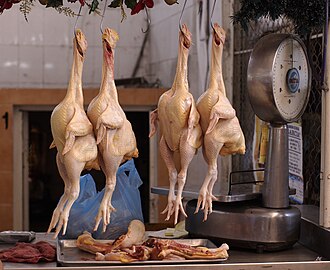
Photo: Wikipedia
A roasted chicken drumstick with skin is a savory, juicy cut with a satisfyingly crisp exterior and tender, flavorful meat. It's a protein powerhouse, delivering over 23 grams of high-quality protein per 100g with zero carbs, making it a staple for low-carb and keto diets.
Calorie split: 51% protein · 0% carbs · 49% fat
↓ Full nutrition💚 Why it's loved
People love its classic, comforting flavor and the textural contrast between the crispy skin and succulent meat. It's incredibly versatile, easy to cook, and central to countless family meals and global cuisines.
⚠️ Watch-outs & how to enjoy it better
The skin significantly increases the saturated fat and calorie content, which may be a concern for heart health or calorie-controlled diets. To counteract this, simply remove the skin before eating to instantly reduce fat intake while retaining the lean protein.
Key benefits
- Excellent source of complete protein for muscle maintenance
- Zero carbohydrates, suitable for ketogenic diets
- Rich in B vitamins like niacin and B6 for energy metabolism
- Contains minerals such as selenium and phosphorus
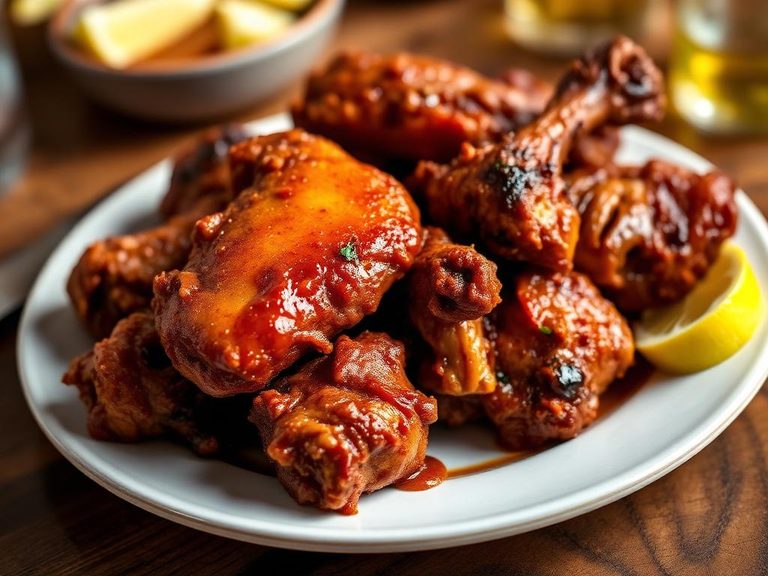
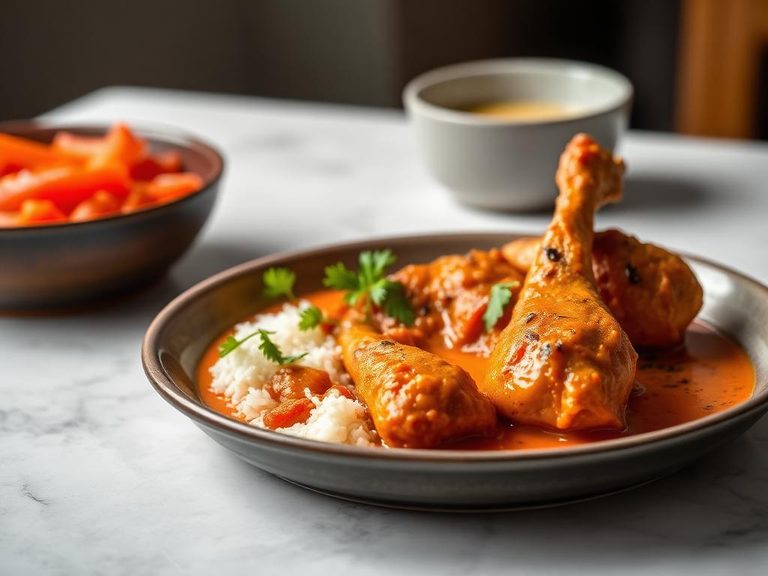
🍽️ Popular dishes
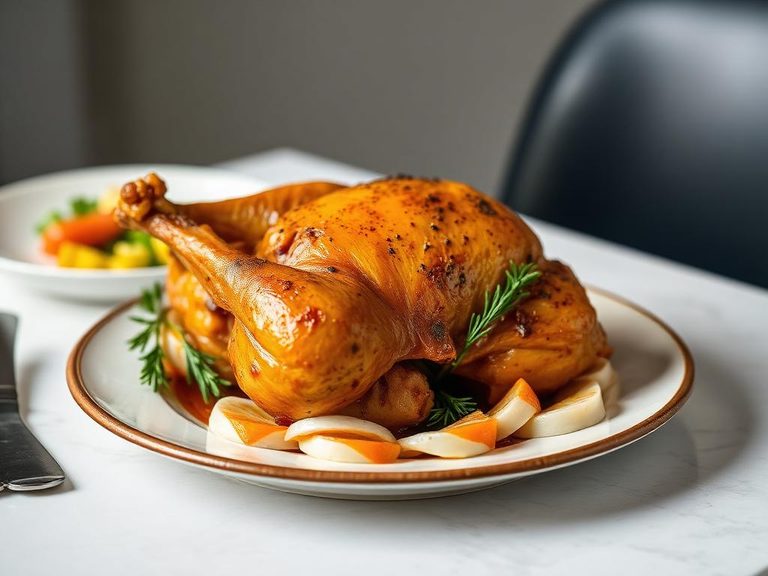
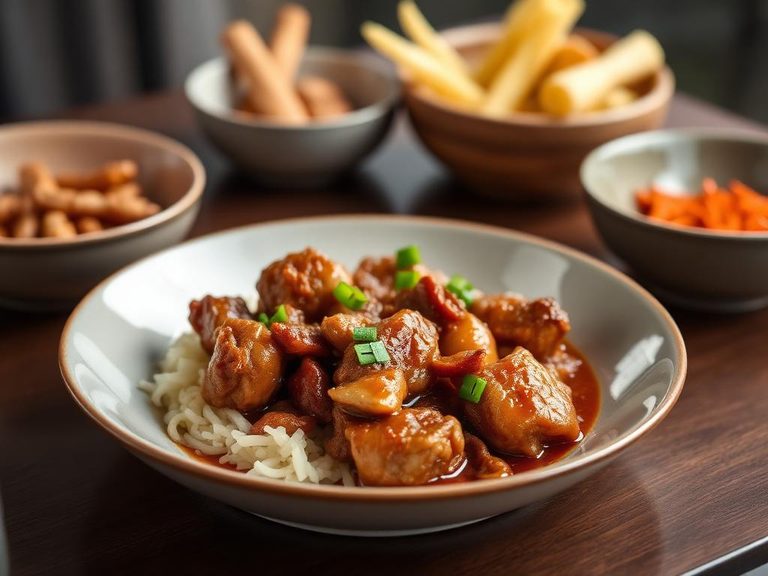
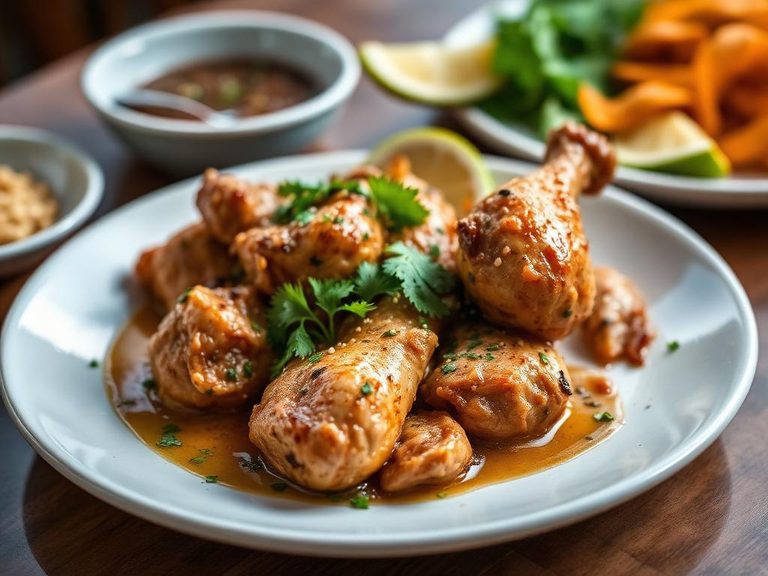

🌍 Where it's eaten
💡 Did you know?
The drumstick is one of the most exercised muscles on a chicken, which is why it contains more connective tissue and dark meat, requiring slightly longer cooking times to become tender compared to the breast.
Full nutrition (USDA data · scales with serving)
| Water | 66.4 g |
| Energy | 191 kcal |
| Energy | 797 kj |
| Protein | 23.4 g |
| Total lipid (fat) | 10.2 g |
| Ash | 1.0 g |
| Carbohydrate, by difference | 0.00 g |
| Fiber, total dietary | 0.00 g |
| Total Sugars | 0.00 g |
| Calcium, Ca | 11.0 mg |
| Iron, Fe | 1.1 mg |
| Magnesium, Mg | 22.0 mg |
| Phosphorus, P | 195 mg |
| Potassium, K | 247 mg |
| Sodium, Na | 123 mg |
| Zinc, Zn | 2.4 mg |
| Copper, Cu | 0.07 mg |
| Manganese, Mn | 0.01 mg |
| Selenium, Se | 26.9 ug |
| Vitamin C, total ascorbic acid | 0.00 mg |
| Thiamin | 0.09 mg |
| Riboflavin | 0.20 mg |
| Niacin | 5.4 mg |
| Pantothenic acid | 1.1 mg |
| Vitamin B-6 | 0.38 mg |
| Folate, total | 4.0 ug |
| Folic acid | 0.00 ug |
| Folate, food | 4.0 ug |
| Folate, DFE | 4.0 ug |
| Choline, total | 67.8 mg |
| Betaine | 11.3 mg |
| Vitamin B-12 | 0.39 ug |
| Vitamin B-12, added | 0.00 ug |
| Vitamin A, RAE | 12.0 ug |
| Retinol | 12.0 ug |
| Carotene, beta | 0.00 ug |
| Carotene, alpha | 0.00 ug |
| Cryptoxanthin, beta | 0.00 ug |
| Vitamin A, IU | 40.0 iu |
| Lycopene | 0.00 ug |
| Lutein + zeaxanthin | 11.0 ug |
| Vitamin E (alpha-tocopherol) | 0.19 mg |
| Vitamin E, added | 0.00 mg |
| Tocopherol, beta | 0.00 mg |
| Tocopherol, gamma | 0.09 mg |
| Tocopherol, delta | 0.00 mg |
| Tocotrienol, alpha | 0.02 mg |
| Tocotrienol, beta | 0.02 mg |
| Tocotrienol, gamma | 0.06 mg |
| Tocotrienol, delta | 0.00 mg |
| Vitamin D (D2 + D3), International Units | 2.0 iu |
| Vitamin D (D2 + D3) | 0.10 ug |
| Vitamin D3 (cholecalciferol) | 0.10 ug |
| Vitamin K (phylloquinone) | 3.2 ug |
| Vitamin K (Dihydrophylloquinone) | 0.00 ug |
| Alcohol, ethyl | 0.00 g |
| Caffeine | 0.00 mg |
| Theobromine | 0.00 mg |
Fat & fatty acid profile (per 100g)
| Fatty acids, total saturated | 2.7 g |
| SFA 4:0 | 0.00 g |
| SFA 6:0 | 0.00 g |
| SFA 8:0 | 0.00 g |
| SFA 10:0 | 0.00 g |
| SFA 12:0 | 0.01 g |
| SFA 14:0 | 0.06 g |
| SFA 15:0 | 0.01 g |
| SFA 16:0 | 2.1 g |
| SFA 17:0 | 0.01 g |
| SFA 18:0 | 0.55 g |
| SFA 20:0 | 0.01 g |
| SFA 22:0 | 0.01 g |
| SFA 24:0 | 0.00 g |
| Fatty acids, total monounsaturated | 4.2 g |
| MUFA 14:1 | 0.02 g |
| MUFA 15:1 | 0.00 g |
| MUFA 16:1 | 0.62 g |
| MUFA 16:1 c | 0.61 g |
| MUFA 17:1 | 0.01 g |
| MUFA 18:1 | 3.5 g |
| MUFA 18:1 c | 3.4 g |
| MUFA 20:1 | 0.05 g |
| MUFA 22:1 | 0.00 g |
| MUFA 22:1 c | 0.00 g |
| MUFA 24:1 c | 0.00 g |
| Fatty acids, total polyunsaturated | 2.1 g |
| PUFA 18:2 | 1.8 g |
| PUFA 18:2 n-6 c,c | 1.8 g |
| PUFA 18:2 CLAs | 0.01 g |
| PUFA 18:3 | 0.09 g |
| PUFA 18:3 n-3 c,c,c (ALA) | 0.08 g |
| PUFA 18:3 n-6 c,c,c | 0.01 g |
| PUFA 18:4 | 0.00 g |
| PUFA 20:2 n-6 c,c | 0.01 g |
| PUFA 20:3 | 0.03 g |
| PUFA 20:3 n-3 | 0.00 g |
| PUFA 20:3 n-6 | 0.03 g |
| PUFA 20:4 | 0.10 g |
| PUFA 20:5 n-3 (EPA) | 0.00 g |
| PUFA 22:4 | 0.03 g |
| PUFA 22:5 n-3 (DPA) | 0.01 g |
| PUFA 22:6 n-3 (DHA) | 0.01 g |
| Fatty acids, total trans | 0.06 g |
| Fatty acids, total trans-monoenoic | 0.04 g |
| TFA 16:1 t | 0.01 g |
| TFA 18:1 t | 0.03 g |
| TFA 22:1 t | 0.00 g |
| TFA 18:2 t not further defined | 0.02 g |
| Fatty acids, total trans-polyenoic | 0.02 g |
| Cholesterol | 130 mg |
Amino acid profile (per 100g)
| Tryptophan | 0.25 g |
| Threonine | 1.1 g |
| Isoleucine | 1.1 g |
| Leucine | 1.9 g |
| Lysine | 2.1 g |
| Methionine | 0.65 g |
| Cystine | 0.27 g |
| Phenylalanine | 0.91 g |
| Tyrosine | 0.85 g |
| Valine | 1.1 g |
| Arginine | 1.6 g |
| Histidine | 0.68 g |
| Alanine | 1.4 g |
| Aspartic acid | 2.3 g |
| Glutamic acid | 3.7 g |
| Glycine | 1.2 g |
| Proline | 1.0 g |
| Serine | 0.97 g |
FAQ
Is the skin edible and nutritious?
Yes, the skin is edible and contains most of the fat and some vitamins. However, it is high in calories and saturated fat. For a healthier option, you can remove it after cooking.
How does roasting compare to frying for nutrition?
Roasting allows some fat to render out, while frying (especially deep-frying) adds significant oil and calories. Baking or air-frying are healthier cooking methods that can achieve crispiness with less added fat.
What's a safe internal temperature for cooked chicken?
For food safety, chicken should be cooked to an internal temperature of 165°F (74°C) as measured by a food thermometer in the thickest part of the meat, avoiding bone.
Nutrient density (calculated · NRF9.3)
Nutrient Rich Foods index: beneficial nutrients (protein, fiber, vitamins, minerals) minus saturated fat, added sugar & sodium, per 100 kcal.
NRF9.3 index — Fulgoni, Keast & Drewnowski, 2009. Computed from USDA nutrients.
Weight-loss friendliness (composite index)
Energy density 1.91 kcal/g · 49% calories from protein · 0.0 g fiber · 0.0 g sugar per 100 g.
Composite of energy density (Rolls et al., 1999), protein & fiber satiety, minus sugar. A calculated heuristic — ranks satiety-per-calorie, not a clinical measure.
Dietary load (calculated from USDA values)
Potential renal acid load. Positive = acid-forming, negative = alkaline-forming.
Sodium-to-potassium ratio: 0.50 (lower is better — aim for ≤ 1)
Sodium:potassium per WHO potassium guidance. Computed from USDA nutrients.