

Chicken, broilers or fryers, dark meat, thigh, meat only, cooked, braised
Whole food · Poultry Products
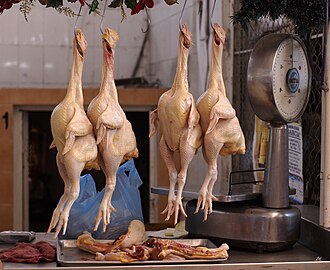
Photo: Wikipedia
Braised chicken thigh is the succulent, dark-meat portion of the bird, slow-cooked until it becomes fork-tender and deeply flavorful. The braising process renders its fat and collagen, creating a rich, juicy texture that stands in stark contrast to drier breast meat. It's a powerhouse of protein (24.55g per 100g) with a satisfying fat content that carries flavor exceptionally well.
Calorie split: 56% protein · 0% carbs · 44% fat
↓ Full nutrition💚 Why it's loved
People adore braised chicken thigh for its unparalleled depth of flavor and foolproof tenderness; the meat practically falls off the bone. It's a culinary workhorse, absorbing the aromatics of whatever sauce or broth it's cooked in, making it a beloved staple in countless comfort food traditions worldwide.
⚠️ Watch-outs & how to enjoy it better
The primary downside is its higher fat content compared to breast meat, which increases calorie density. For those monitoring fat intake or managing certain health conditions, portion control is key. To counteract this, pair it with a large serving of fibrous, non-starchy vegetables (like steamed broccoli or a vinegar-based slaw) to add volume and balance the meal without excess calories.
Key benefits
- Excellent source of complete protein for muscle maintenance and repair.
- Rich in heme iron, which is more easily absorbed by the body than plant-based iron.
- Contains zinc and B vitamins, particularly niacin (B3) and B6, crucial for energy metabolism.
- The slow-cooking method helps break down connective tissue, making nutrients more bioavailable.
🍽️ Popular dishes
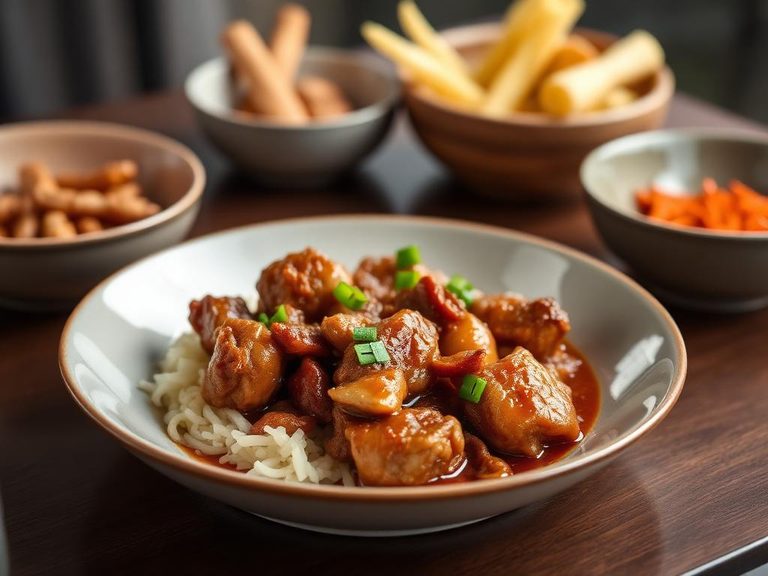
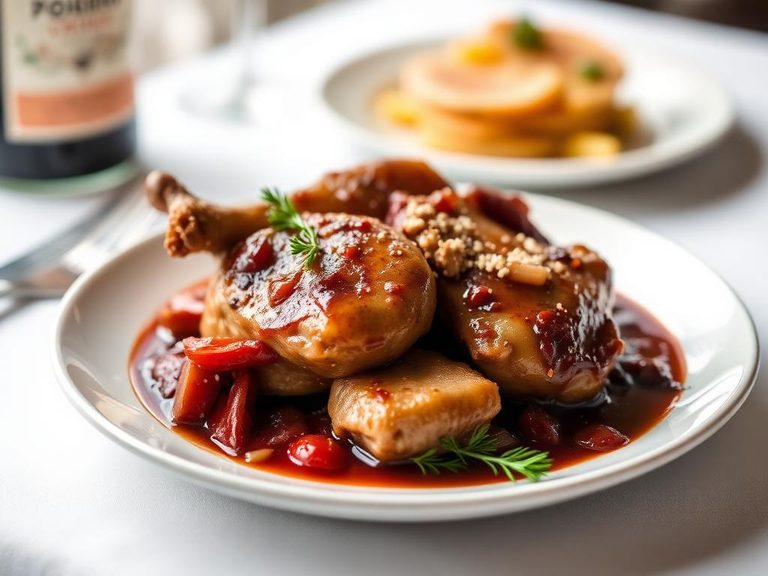
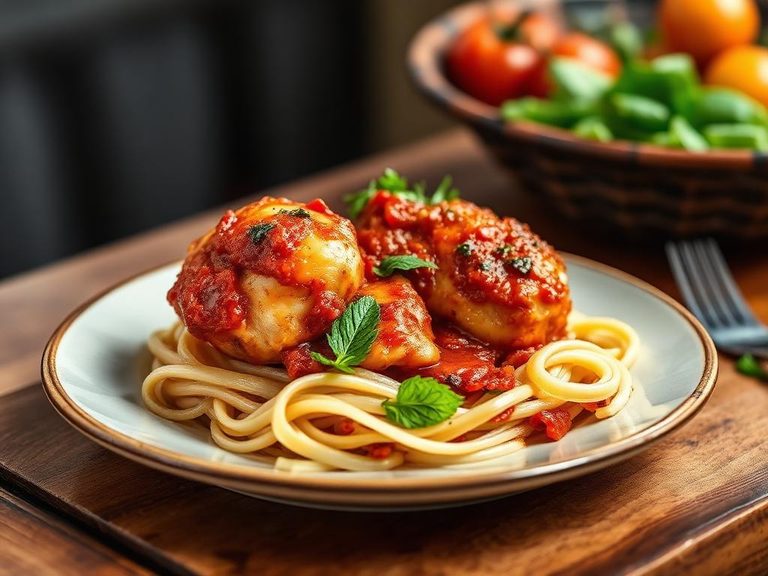
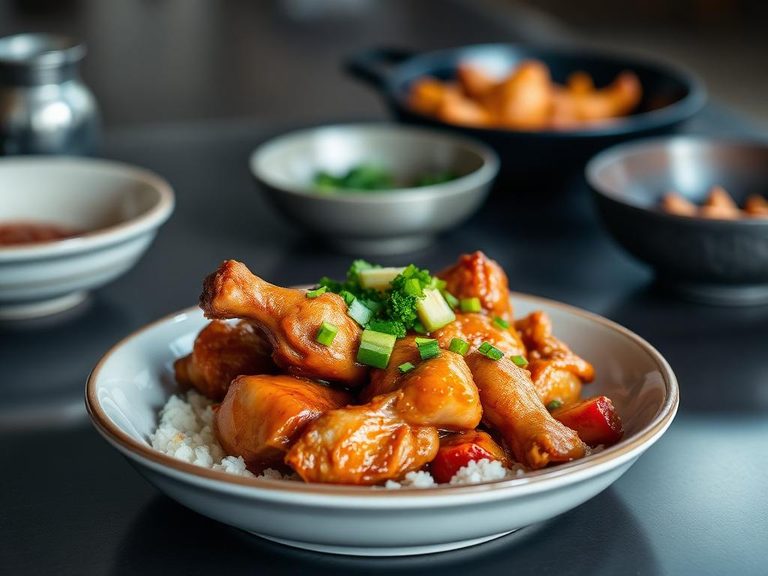
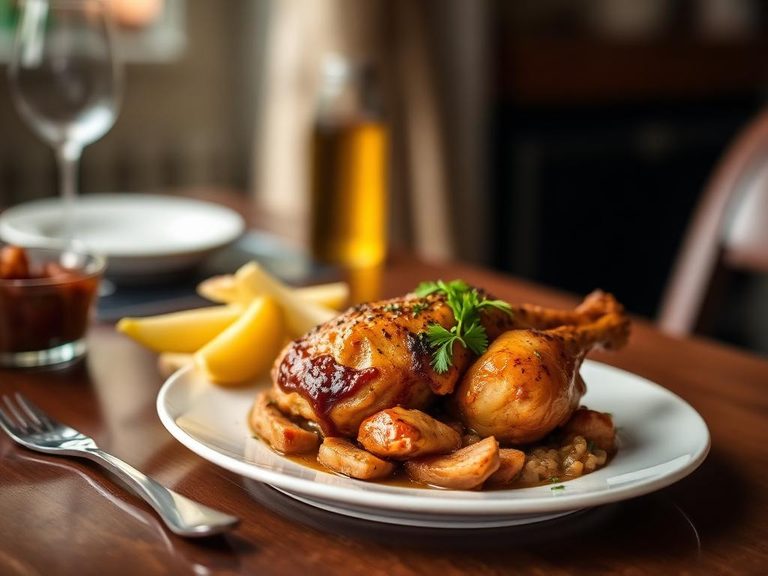
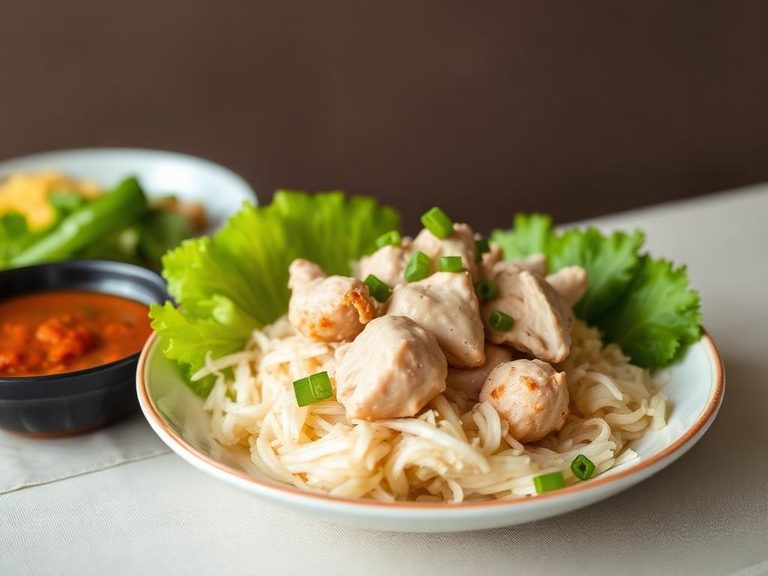
🌍 Where it's eaten
💡 Did you know?
A chicken thigh has about twice the iron and three times the zinc of a chicken breast, making it a more nutrient-dense choice in those specific minerals.
Full nutrition (USDA data · scales with serving)
| Water | 66.9 g |
| Energy | 176 kcal |
| Energy | 736 kj |
| Protein | 24.6 g |
| Total lipid (fat) | 8.6 g |
| Ash | 0.99 g |
| Carbohydrate, by difference | 0.00 g |
| Fiber, total dietary | 0.00 g |
| Total Sugars | 0.00 g |
| Calcium, Ca | 12.0 mg |
| Iron, Fe | 1.3 mg |
| Magnesium, Mg | 25.0 mg |
| Phosphorus, P | 201 mg |
| Potassium, K | 266 mg |
| Sodium, Na | 77.0 mg |
| Zinc, Zn | 1.9 mg |
| Copper, Cu | 0.05 mg |
| Manganese, Mn | 0.02 mg |
| Selenium, Se | 29.2 ug |
| Vitamin C, total ascorbic acid | 0.00 mg |
| Thiamin | 0.09 mg |
| Riboflavin | 0.18 mg |
| Niacin | 5.7 mg |
| Pantothenic acid | 1.2 mg |
| Vitamin B-6 | 0.44 mg |
| Folate, total | 5.0 ug |
| Folic acid | 0.00 ug |
| Folate, food | 5.0 ug |
| Folate, DFE | 5.0 ug |
| Choline, total | 68.3 mg |
| Betaine | 13.4 mg |
| Vitamin B-12 | 0.42 ug |
| Vitamin B-12, added | 0.00 ug |
| Vitamin A, RAE | 8.0 ug |
| Retinol | 8.0 ug |
| Carotene, beta | 0.00 ug |
| Carotene, alpha | 0.00 ug |
| Cryptoxanthin, beta | 0.00 ug |
| Vitamin A, IU | 27.0 iu |
| Lycopene | 0.00 ug |
| Lutein + zeaxanthin | 0.00 ug |
| Vitamin E (alpha-tocopherol) | 0.17 mg |
| Vitamin E, added | 0.00 mg |
| Tocopherol, beta | 0.00 mg |
| Tocopherol, gamma | 0.09 mg |
| Tocopherol, delta | 0.00 mg |
| Tocotrienol, alpha | 0.01 mg |
| Tocotrienol, beta | 0.00 mg |
| Tocotrienol, gamma | 0.03 mg |
| Tocotrienol, delta | 0.00 mg |
| Vitamin D (D2 + D3), International Units | 13.0 iu |
| Vitamin D (D2 + D3) | 0.30 ug |
| Vitamin D3 (cholecalciferol) | 0.30 ug |
| Vitamin K (phylloquinone) | 0.30 ug |
| Alcohol, ethyl | 0.00 g |
| Caffeine | 0.00 mg |
| Theobromine | 0.00 mg |
Fat & fatty acid profile (per 100g)
| Fatty acids, total saturated | 2.3 g |
| SFA 4:0 | 0.00 g |
| SFA 6:0 | 0.00 g |
| SFA 8:0 | 0.00 g |
| SFA 10:0 | 0.00 g |
| SFA 12:0 | 0.00 g |
| SFA 14:0 | 0.04 g |
| SFA 15:0 | 0.01 g |
| SFA 16:0 | 1.8 g |
| SFA 17:0 | 0.01 g |
| SFA 18:0 | 0.48 g |
| SFA 20:0 | 0.00 g |
| SFA 22:0 | 0.01 g |
| SFA 24:0 | 0.00 g |
| Fatty acids, total monounsaturated | 3.4 g |
| MUFA 14:1 | 0.02 g |
| MUFA 15:1 | 0.00 g |
| MUFA 16:1 | 0.51 g |
| MUFA 16:1 c | 0.50 g |
| MUFA 17:1 | 0.01 g |
| MUFA 18:1 | 2.9 g |
| MUFA 18:1 c | 2.9 g |
| MUFA 20:1 | 0.03 g |
| MUFA 22:1 | 0.00 g |
| MUFA 22:1 c | 0.00 g |
| MUFA 24:1 c | 0.01 g |
| Fatty acids, total polyunsaturated | 1.6 g |
| PUFA 18:2 | 1.3 g |
| PUFA 18:2 n-6 c,c | 1.3 g |
| PUFA 18:2 CLAs | 0.01 g |
| PUFA 18:3 | 0.06 g |
| PUFA 18:3 n-3 c,c,c (ALA) | 0.05 g |
| PUFA 18:3 n-6 c,c,c | 0.01 g |
| PUFA 18:4 | 0.00 g |
| PUFA 20:2 n-6 c,c | 0.01 g |
| PUFA 20:3 | 0.02 g |
| PUFA 20:3 n-3 | 0.00 g |
| PUFA 20:3 n-6 | 0.02 g |
| PUFA 20:4 | 0.08 g |
| PUFA 20:5 n-3 (EPA) | 0.01 g |
| PUFA 22:4 | 0.02 g |
| PUFA 22:5 n-3 (DPA) | 0.01 g |
| PUFA 22:6 n-3 (DHA) | 0.00 g |
| Fatty acids, total trans | 0.05 g |
| Fatty acids, total trans-monoenoic | 0.03 g |
| TFA 16:1 t | 0.00 g |
| TFA 18:1 t | 0.03 g |
| TFA 22:1 t | 0.00 g |
| TFA 18:2 t not further defined | 0.01 g |
| Fatty acids, total trans-polyenoic | 0.01 g |
| Cholesterol | 141 mg |
Amino acid profile (per 100g)
| Tryptophan | 0.23 g |
| Threonine | 1.0 g |
| Isoleucine | 1.0 g |
| Leucine | 1.8 g |
| Lysine | 2.0 g |
| Methionine | 0.61 g |
| Cystine | 0.26 g |
| Phenylalanine | 0.90 g |
| Tyrosine | 0.81 g |
| Valine | 1.1 g |
| Arginine | 1.7 g |
| Histidine | 0.66 g |
| Alanine | 1.5 g |
| Aspartic acid | 2.2 g |
| Glutamic acid | 3.7 g |
| Glycine | 1.8 g |
| Proline | 1.3 g |
| Serine | 0.98 g |
FAQ
Is braised chicken thigh healthy?
It can be part of a healthy diet. It's an excellent source of protein, iron, and zinc. The key is mindful preparation—using a flavorful broth instead of heavy cream, and balancing the meal with plenty of vegetables to manage overall calorie and fat intake.
Why is my braised chicken thigh tough?
Toughness usually means it wasn't cooked long enough. Braising requires low, slow heat (typically 300-325°F / 150-165°C) for 45-90 minutes to fully break down the collagen into gelatin, which creates tenderness and a silky sauce.
Can I use chicken breast for braising recipes?
You can, but the result will be very different. Breast meat lacks the fat and connective tissue of thighs, so it will cook much faster and is prone to drying out. If you substitute, reduce the cooking time significantly and monitor it closely.
Nutrient density (calculated · NRF9.3)
Nutrient Rich Foods index: beneficial nutrients (protein, fiber, vitamins, minerals) minus saturated fat, added sugar & sodium, per 100 kcal.
NRF9.3 index — Fulgoni, Keast & Drewnowski, 2009. Computed from USDA nutrients.
Weight-loss friendliness (composite index)
Energy density 1.76 kcal/g · 56% calories from protein · 0.0 g fiber · 0.0 g sugar per 100 g.
Composite of energy density (Rolls et al., 1999), protein & fiber satiety, minus sugar. A calculated heuristic — ranks satiety-per-calorie, not a clinical measure.
Dietary load (calculated from USDA values)
Potential renal acid load. Positive = acid-forming, negative = alkaline-forming.
Sodium-to-potassium ratio: 0.29 (lower is better — aim for ≤ 1)
Sodium:potassium per WHO potassium guidance. Computed from USDA nutrients.